
From the W Hotel to beyond Port Olímpic, the coastline of the Catalan capital will become an extensive grandstand for the America's Cup regattas starting in August. The beaches, the promenade, new spaces gained by the sea and even coastal restaurants and establishments will serve as viewpoints for the races of what is known as the Formula 1 of the sea. However, the best way to follow the competition on land will be from the Race Village and from the fan zones that the organization will set up, with the aim of bringing the regatta closer to the public.
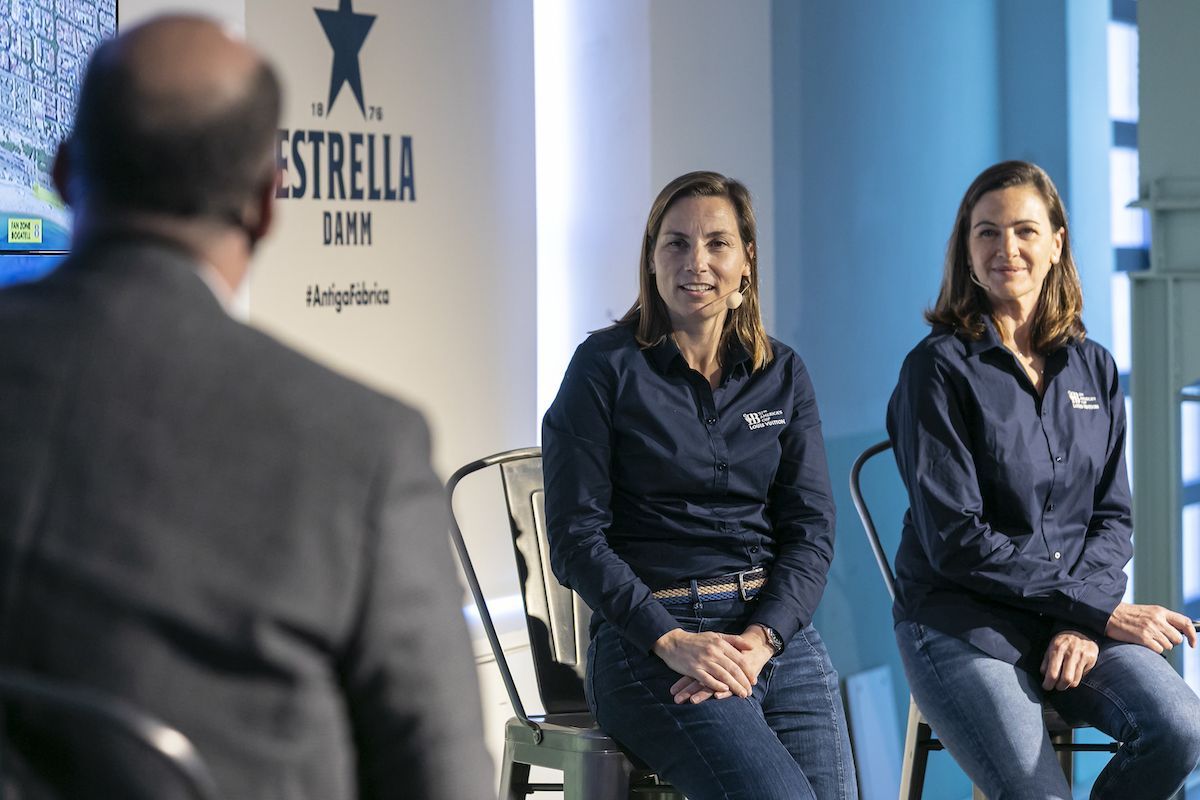
"The competition can be followed by land, water, and television," Pizá highlighted at the meeting, moderated by journalist Jordi Basté at the Antigua Fábrica Estrella Damm and named Sumérgete en las reglas del juego (Immerse yourself in the rules of the game). On land, free fan zones will be made available to the public at Platja del Bogatell and Plaça del Mar, another space in Port Olímpic, and the Race Village, which will offer activities from August 22 at Moll de la Fusta from noon. "It will be a totally open, inclusive, and free event," reiterated Pizá, who has committed to "breaking the stigma that the America's Cup is elitist and bringing the competition closer to citizens, and citizens closer to the sea."
Valls argues that not only does the America's Cup reinforce Barcelona's image, but "Barcelona reinforces the America's Cup brand and brings it values."In fact, a differential and novel element of this edition is the will to bring the competition as close as possible to the city and the general public, as Via-Dufresne has recalled. "It would be an immense joy if it stayed in Barcelona for another edition," defended the Olympic medalist from the '92 Games. And what would have to happen for Barcelona to repeat as host city for the competition? "That Barcelona enjoys it and gets involved," Pizá stated. This citizen involvement is being articulated through initiatives and also through the volunteer team most numerous in the competition's 173-year history, which is preparing for its start less than 100 days before it begins.
This role of citizens will be decisive for an eventual continuity of the regatta in the Catalan capital, but it will not be the only element to take into account. And there is another crucial factor that escapes the organization and the city: the wind and good weather that allows the regattas to be held in optimal conditions. Thus, according to Pizá, it is a key element for Barcelona to have options to host this competition again in the future.
And the America's Cup reinforces the image of the city. But not only that: "Barcelona reinforces the America's Cup brand and brings it values," proclaimed the Deputy Mayor for Economy, Finance, Economic Promotion and Tourism of Barcelona, Jordi Valls. "Barcelona is a powerful brand; Barcelona brings a lot to any activity that takes place in the city," declared the councilor.

Valls recalled that Barcelona was chosen as the venue for the America's Cup at a time "of depression," fear, and collective anxiety due to the pandemic. Barcelona's designation was a boost and showed "that the city matters globally for a top-level competition." In fact, Barcelona will become the first city to host the three most relevant global events: the regatta, the Football World Cup, and, of course, the Olympic Games. And the America's Cup will contribute to culminating an approach to the Mediterranean that, according to Valls, was left halfway with the Olympics: "With the Olympic Games, Barcelona discovered its beaches, but it did not discover the sea," something that is now intended to be changed by taking advantage of the competition.
Thus, it is not only about bringing the competition closer to the citizens, but about bringing the citizens closer to the competition. With this objective, the City Council has promoted a cultural program with more than 200 activities, as Claverol recalled. Under the name of Cultural Regatta, some of the program's proposals are destined to become massive events and memorable occasions, among which stand out the concerts on Sant Sebastià Beach directed by Gustavo Dudamel and Ludovic Morlot on July 11 and 12, and the largest Habaneras cantada the city has ever seen, on June 15. The closing of the Viu la Vela program will also be massive, with 2,000 children on June 12 at Port Olímpic, with the aim that the program continues beyond the competition. In addition, "the whole city is tinged with Cultural Regatta," with activities in libraries and museums.

The cultural program promoted by the City Council, which also includes gastronomic activities and a large exhibition of Catalan sailing skates, will have as one of its highlights the inauguration of the final regatta. The ceremony is "the great secret" of the Cultural Regatta, with the aim that "it forms part of the magic of the popular part of the event", according to Claverol. The manager has hinted at some details: from Bogatell Beach, it will consist of a "first-class artistic local production as was done with the Olympic Games," which will combine light, music, and color by the sea, just before the final match regattas begin, in which the New Zealand team will compete against the winner from among the other five participants: the British, Swiss, American, Italian, and French teams.
But, how is the winner proclaimed? Do all teams compete at once? How long does each regatta last? Via-Dufresne has unraveled the details of the competition's operation which, after a four-day preliminary regatta in August, will start on the 29th of the same month and will last until October, with a final date yet to be determined, as it will depend on the scores of the finalist teams and, inevitably, on the wind.
In a first phase starting on August 29, the six teams of the 37th America's Cup will sail simultaneously to eliminate one of them. In this stage, the trophy defender, the New Zealand team, may or may not compete, as their score is not taken into account in this phase. Afterwards, the semifinal begins, without New Zealand and with four teams, from which two more are eliminated. The remaining two compete against each other and with the wind, and the winner will be the one to dispute the final race with the New Zealand team.
The final race will open with a ceremony based on a "first-class local artistic production as was done with the Olympic Games"This final regatta will start on October 12, but it is not known when it will end. This is because the team that achieves seven victories wins the emblematic Hundred Guineas Cup, which means that the date to know the definitive winner depends on how the races develop and what advantage the teams take over each other. To this unknown is added the unpredictability of the weather, in a competition where wind is key and where a race can be postponed if it doesn't blow adequately. At the earliest, the winner will be proclaimed on October 18, and at the latest, on October 27.
The youth and women's regattas, the first in history, are developed following a different scheme. Instead of being contested with various elimination phases, all teams compete at once. And this time there are not six, but 12: the six from the 37th America's Cup, and also the Netherlands, Canada, Germany, Sweden, Australia, and Spain, which will be represented by Sail Team BCN, competing with its youth team and with its women's team. From the first regatta, six participants will be eliminated; of the remaining six, two finalists will remain, and the winner will be decided between them.
Always dependent on the wind
Both the new women's category and the youth category, which is being held for the second time, will compete with AC40 boats, which have batteries to generate the energy required for the boat to rise above the water. In contrast, the AC75s with which the 37th America's Cup is contested do not have these batteries, and all energy is generated based on "human power," according to Via-Dufresne.
So much so, that the New Zealanders surprised in the last edition with a pedal system and with cyclists on board their boat. "Now, almost all teams have incorporated cyclists to generate energy," added the Olympic medalist. The energy generated by the sailors allows the boats to fly on their hydrofoils, and the less they touch the water, the faster they move: "They try to stay out of the water as much as possible" and, for this, a minimum of six knots of wind is required, a constant companion and at the same time rival in this competition.
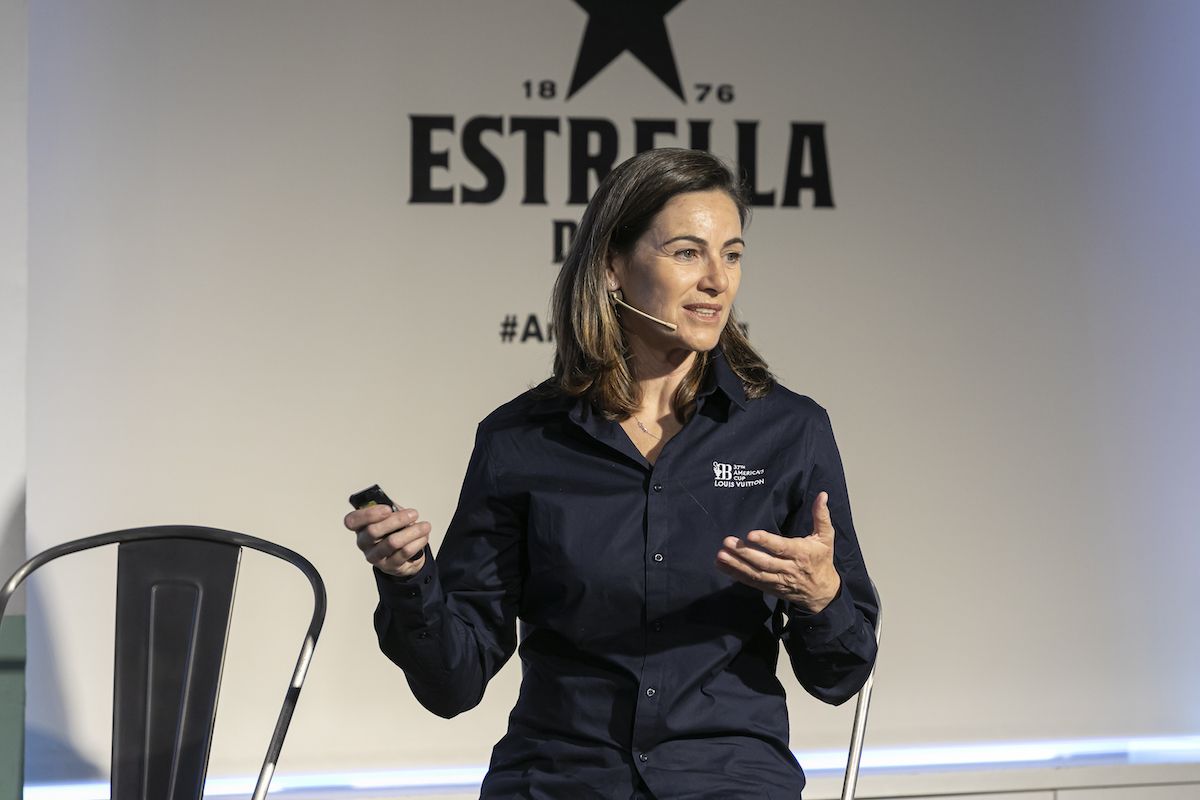
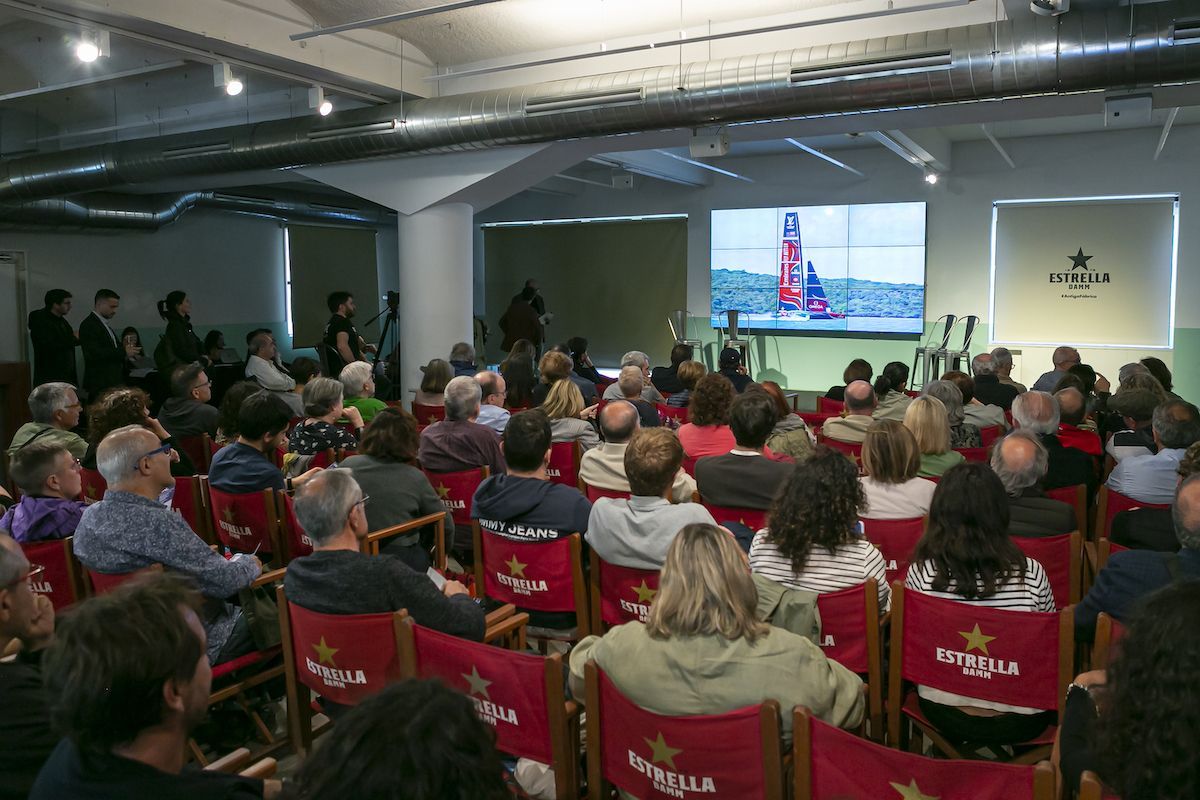
All teams will sail in a race course that will be located between the W Hotel and the Port Olímpic. In races lasting 20 minutes and starting at 2 PM, teams must go around a circuit parallel to the coast, which has been located as close as possible to the coast so that the public can watch the races from land. All with the aim of attracting the public and turning the sporting event into a city event beyond sports, a determination that has been confirmed in this second session of the cycle, which began in April reviewing the history of the world's oldest current competition and its arrival in the Catalan capital.
The cycle will be completed with two more sessions, scheduled for June 19 and July 17. The appointments, all before the competition begins in August, will focus on the innovation that characterizes the America's Cup, and on the legacy that the event will leave in the city, where it has accelerated transformations such as that of the Port Olímpic and the Port Vell. However, the legacy that the Barcelona edition of the regatta wants to leave goes beyond urban planning, and includes consolidating the women's category of the competition, the Puig Women's America's Cup, which debuts for the first time in history, as well as extending the practice of sailing and water sports in a Barcelona ready to launch itself into the sea.
Add The New Barcelona Post as your preferred Google source for free
Stay informed with the latest news.
