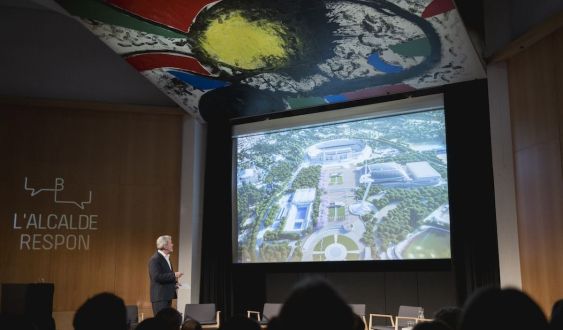
Montjuïc gave rise to Barcelona, it was the quarry for the construction of the city, and it was the setting for the Olympic Games that projected it to the world. Now, the city looks again to Montjuïc, and proposes to convert it into a new metropolitan centrality, renovating emblematic spaces, boosting its neighborhoods and improving its connectivity. In total, the actions will involve an investment of 2.8 billion euros, which will be deployed until 2030.
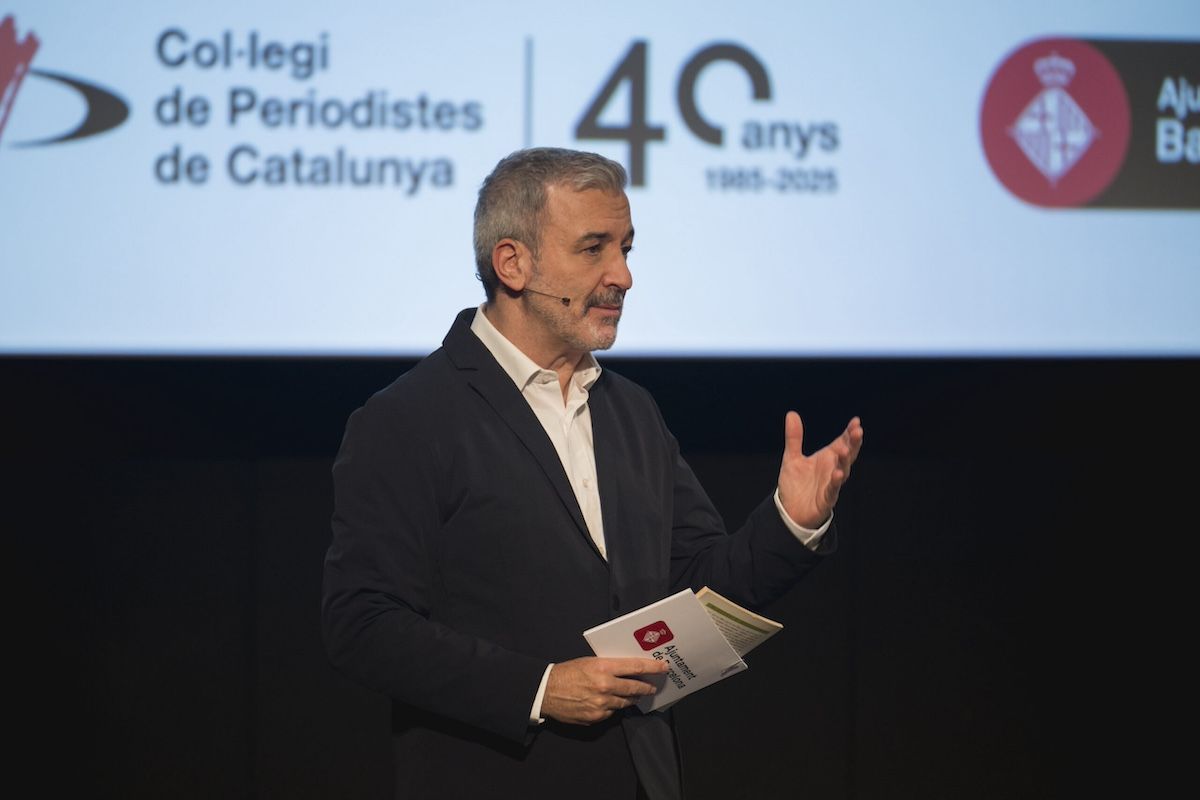
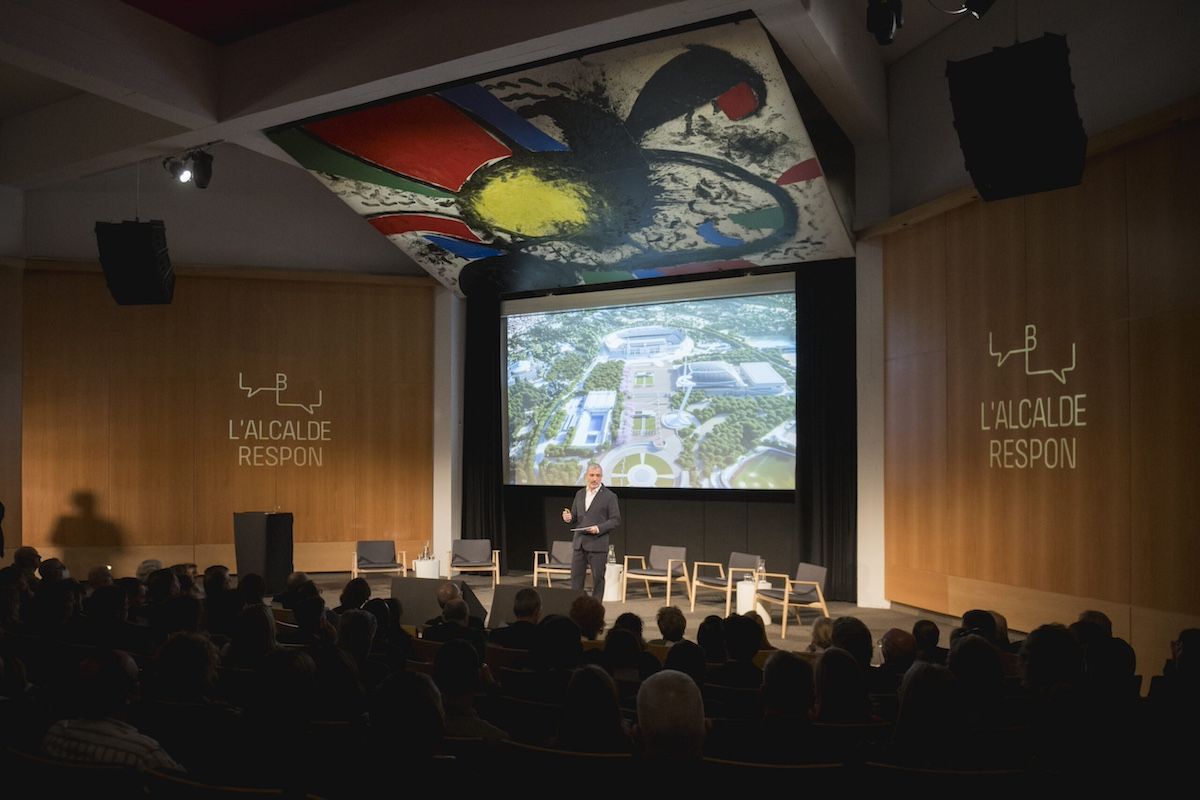
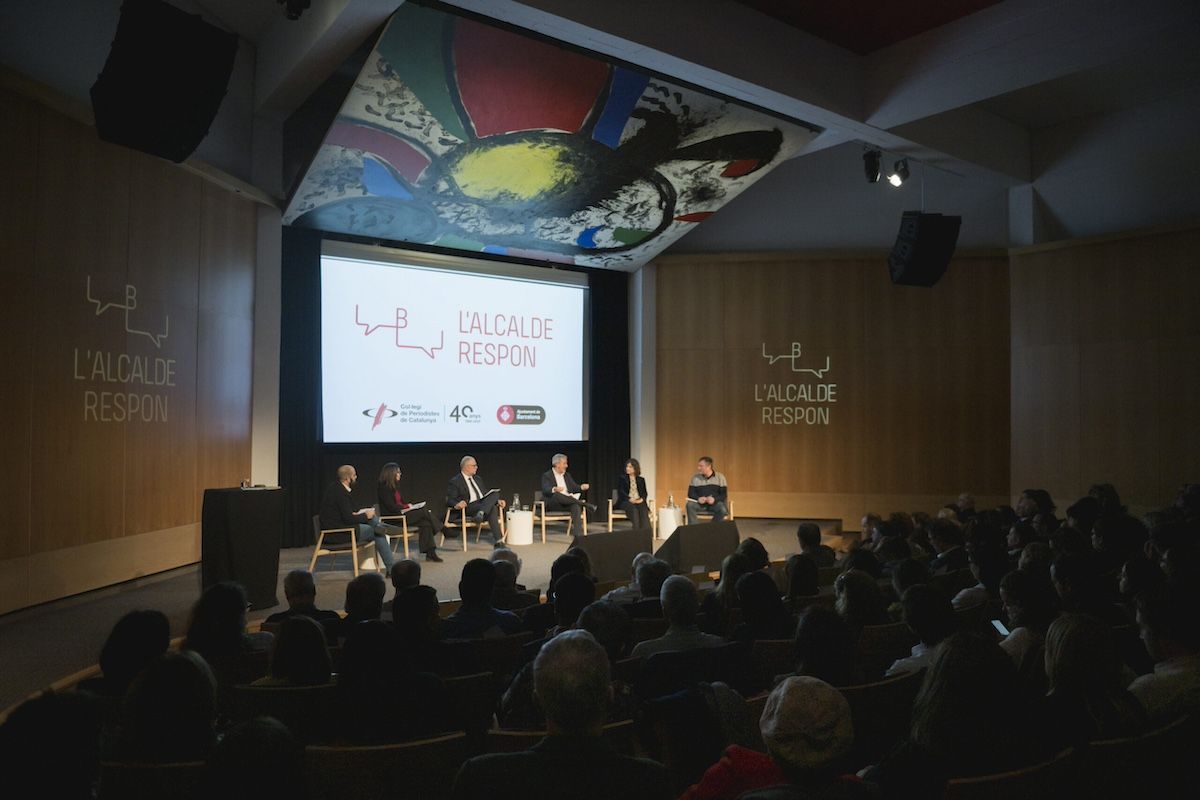
"We propose a new embrace of Montjuïc, starting from its neighborhoods and residents", proclaimed the city's mayor, Jaume Collboni, from the Fundació Miró, one of the numerous facilities that dot the mountain. To this end, the City Council has projected a set of measures that include issues related to mobility as well as culture, economy and neighborhood life, as detailed by the mayor in the conference L'alcalde respon, organized by the Col·legi de Periodistes and which in this edition was titled Nou Montjuïc.
With the forecast of completing the transformation in 2035, the future Montjuïc projects a new pedestrian axis in Plaza Espanya, the transformation of the Fira de Barcelona venue, the renovation of Morrot, the extension of the L2, the consolidation of the Marina del Prat Vermell neighborhood and a novelty: the renovation of the Olympic Ring, among other projects that will revitalize the area.
In total, the multiple actions will require an investment of 2.8 billion euros, as detailed by Collboni. Of this total, the City Council will contribute a quarter through Barcelona de Serveis Municipals (B:SM), while the rest will come from other administrations. The Generalitat will contribute 400 million to improve connectivity with the L8 of FGC, and another 1,000 to bring the L2 to the mountain, while Fira de Barcelona will be responsible for the reform of its Montjuïc venue.
Among the various projects that are called to transform the mountain and its uses, the one announced by Collboni to renovate the Olympic Ring stands out. With an investment of 370 million euros from B:SM, the Palau Sant Jordi and the Estadi Olímpic "will be updated", and the Sant Jordi Club will be expanded and technified to accommodate smaller musical formats than those of Sant Jordi.
The renovation will not be limited to the facilities: the esplanade surrounding them will be filled with cherry trees and resting areas, with restoration zones that will turn it into "a square for citizen use." To achieve this, one more crucial element is required: easy access from other areas of the city. One of the mobility improvements will start circulating this summer: line X3 will be launched, following the route that L2 will take in the future, and the current line 150 will be renamed Montjuïc Bus. The leap in scale will occur with the arrival of the metro, which will stop at Inefc and the MNAC.
Precisely the MNAC will be one of the protagonists of another of Montjuïc's transformation poles: the area around Plaza Espanya, which will become a real square where one can walk to the central fountain, a very distant image from the current configuration, which prioritizes private mobility: "Now it is a roundabout with a fountain, and we want it to reconnect the surrounding neighborhoods and generate pedestrian connectivity," while maintaining traffic lanes. The transformation, with a budget of 10 million euros, will be carried out when the works on L8 are completed, which is scheduled for 2029.
Pedestrians will also become the protagonists of Avenida Maria Cristina, where they will occupy its central roadway. The facilities that extend along the passage will also be renovated, with another novelty: the Palau d'Esports, disused since 2008, will be recovered to give it a new use focused on sport.
While the nearby Victòria Eugènia palace will be allocated to the expansion of the MNAC, the facilities closest to Plaza Espanya will focus on more neighborhood uses: Pavilion 2 will be a municipal sports center, and three new blocks will be created with 500 protected homes, schools, and a primary care center. These actions, which will be developed until 2035, will have a global budget of 460 million euros.
The renovation of the Montjuïc fairgrounds and the Olympic Ring have 2029 as a temporary objective, coinciding with the centenary of the 1929 International Exhibition, which the city will commemorate with "an international event" that involves the entire city and is still to be detailed, according to Collboni.
The 500 new flats in Poble-sec will not be the only ones built in the Montjuïc area: la Marina del Prat Vermell will gain more than 12,000 new homes, half of which will be protected. With a planned investment of 383 million euros, the neighborhood will grow while the Morrot will be transformed to improve its connectivity with the rest of the city.
This transformation will be carried out in two phases, with a first phase led by the Port of Barcelona, which will conclude in 2027 with 10 million euros and will allow for a new road at port level for public transport, pedestrians, and bicycles. By 2035, the Ronda Litoral is expected to be extended at port level and the current Ronda road transformed into a promenade for pedestrians, public transport, and bicycles, in an action that will depend on the central government, with 98 million euros.
In addition, the Paseo de la Zona Franca will be transformed with 21 million euros, the Paral·lel will be revitalized with facilities in its Tres Xemeneies with another 24 million, and the historic gardens of Montjuïc will be renovated with 8.8 million more. All these actions will complete the "third great transformation of Montjuïc", after the International Exhibition of 1929 and the 1992 Olympic Games.
Precisely the improvement and conversion of the area will be advancing when another major event crosses it in 2026: the Tour de France, which will start in Barcelona. "Montjuïc was one of the attractions that the Tour defended as a criterion for coming to Barcelona," the mayor assured. In a debate with journalists still about major events, Collboni also defended the city hosting the America's Cup, as it has accelerated investments with the "excuse" of the competition, such as the opening of port spaces to citizens and the promotion of the blue economy.
Add The New Barcelona Post as your preferred Google source for free
Stay informed with the latest news.
