
Barcelona will perceive signs of reactivation of real estate investment throughout 2024, especially in the second half. This is indicated by the Real Estate Market Outlook 2024 report from the consulting firm CBRE, which predicts an investment growth of over 10% in the Catalan capital, exceeding 2,000 million euros, after a 2023 in which the sector registered a 49% drop in the Barcelona area.
Specifically, the volume of investment in Barcelona's real estate market closed 2023 with 1,821 million euros, almost half of the 3,586 million in 2022 and the 3,654 million in 2021, two record years after the pandemic. The evolution is in line with the 48% drop in real estate investment at a European level. In Barcelona, the hotel segment led the investment, with 578 million euros, followed by the industrial and logistics sector, with 555 million.
The 578 million in real estate investment in hotels represented the third best year in the historical series, in a 2023 marked by several significant operations, such as the purchase of the Mandarin Oriental by the Saudi group The Olayan for 240 million euros, and the acquisition of the Hotel Sofia, which Blasson Property Investments and Axa bought for 180 million. The pace with which 2024 has started in this area has not been less: the luxury hotels Miramar and La Florida have passed into the hands of the REIT Atom Hotels for 50 million euros. All this in a context where the opening of hotels is restricted in the city by the Urban Planning Plan for Tourist Accommodations (Peuat), which the head of CBRE Barcelona, Xavier Güell, has called to make more flexible. "We can reflect in a very controlled, specific, and studied way to allow the entry of high value-added chains. We know there is a lot of desire," he guaranteed.
Residential real estate investment decreased by 68%, although flexible housing modalities soared by 147%, reaching 45 millionWith 555 million euros, the industrial and logistics sector closely followed hotels in terms of real estate investment. This is a "record investment volume," although lower than in 2022, when 16% more was registered. The figure represents 44% of real estate investment in this sector in Spain as a whole. However, contracting fell in 2023 by 43.2%, to 536,000 square meters. This figure is due, in part, to low availability, which will experience a slight rebound in 2024, according to the consultancy, which predicts that in 2024 contracting will increase to 600,000 square meters leased, according to Güell.
For its part, the housing sector registered 323 million euros of investment in Barcelona. The figure represents 68% less than in 2022, which was especially marked by the 600 million purchase of 1,500 homes from Patrizia to BCorp. "If this transaction is not taken into account, the decrease is more moderate," Güell pointed out.
Investment in housing in Barcelona and its surroundings takes into account traditional residences but goes further, as it includes alternative models such as coliving, student residences, senior living and serviced apartments. These flexible housing modalities have soared by 147% in 2023 and reached 45.4 million euros, as detailed by the Head of Research at CBRE Barcelona, Marta Tarrío.
Reconverting offices
Given the high demand and lack of supply in the residential sector, Güell has advocated for public administrations to facilitate the work of private developers so that between 12,000 and 15,000 new homes enter the market annually, doubling current figures, according to the head of CBRE Barcelona.
Güell believes that one way to bring more housing to the market is the reconversion of offices, in a context where real estate investment in this area registered a 76% drop in Barcelona in 2023, when it reached 261 million euros. Office contracting has fallen by 23.7%, in line with other European cities. "As the international market recovers, Barcelona will probably also experience an above-average recovery," Güell predicted. In this vein, he predicted that 2024 will exceed 250,000 square meters of offices, compared to 231,000 in 2023.
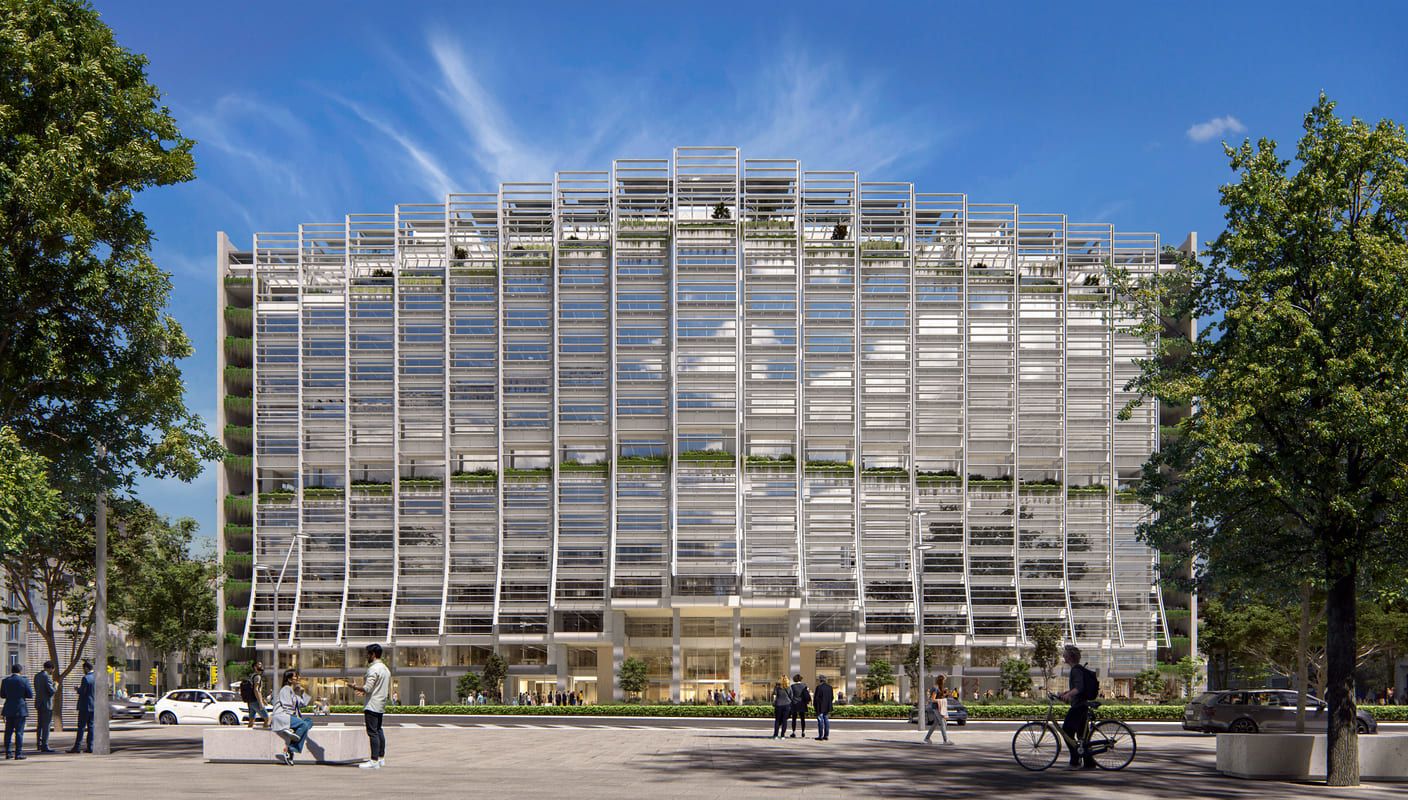
Looking ahead to the year that has just begun, Güell predicts that the office vacancy rate will increase, also due to the forecast that new developments will enter the market, such as that of the Estel Building. They also foresee that vacancies will expand in certain areas of 22@, while remaining stable in the city center.
In these circumstances, the CBRE executive has opted to facilitate that obsolete offices host other uses, such as residential and hotels. "Cities must be alive and adapt to new times," which is why he has called for greater flexibility in regulations to admit these changes and bring back to life office buildings that have become obsolete: "There is nothing worse for a city than an abandoned building."
A future of health and AI
In this situation, the head of CBRE Barcelona has advocated for rethinking offices, especially in 22@, mainly intended for this use. The city decided to articulate this technological district two decades ago and did so successfully, according to him. Now, more than 20 years later, he believes that the city must choose again in which areas it wants to position itself: "We have to choose where we want to be for the next 10 or 15 years. Technology will continue to lead the way, but no longer in such generic terms; now we have to be more specific."
CBRE believes that Barcelona should concentrate its focus on health sciences and AI in the coming decadesThe powerful technological fabric that Barcelona has developed over the last decades gives it the necessary flexibility to focus on specific technologies, which CBRE argues should be AI and health-related sciences. "It is difficult to find another European city that has the structure that Barcelona has to be one of the great hubs of life science of Europe."
In fact, this sector is expected to develop 950,000 square meters in the coming years in Barcelona, which include 45,000 square meters of the future Ciutadella del Coneixement, 19,000 of the CaixaResearch Institute and the consolidation of the Parc Científic de Barcelona, with 330,000 square meters, in addition to more than 550,000 square meters of the future BioClúster de Innovación y Salud in L'Hospitalet de Llobregat.
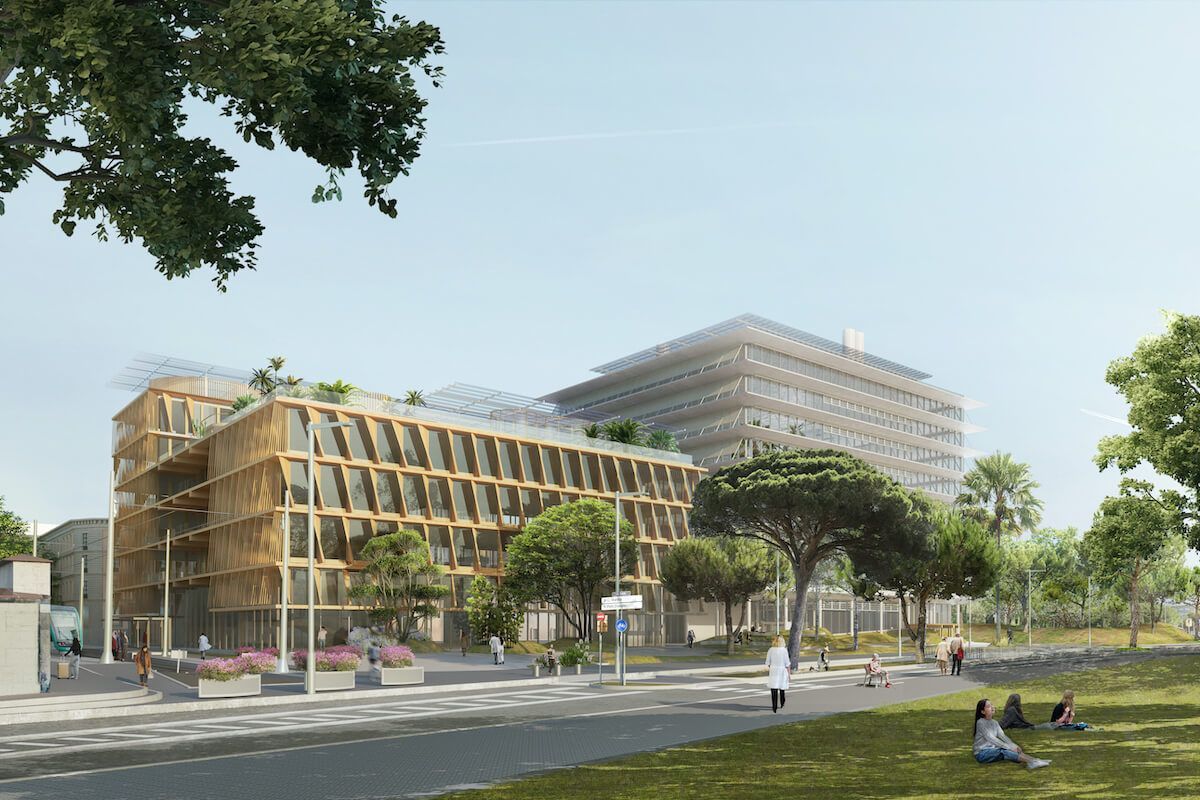
The life science sector in Barcelona and its surroundings is made up of about 420 startups, 20 university hospitals, 12 universities, 91 research institutions, and 247,000 jobs. It also has public-private collaboration projects that must be "promoted and leveraged," according to Güell, who highlighted the relevance of this sector and also the importance that AI will have in the future: "We believe that this is where Barcelona should pivot in the coming years."
It is a future that Barcelona faces after a 2023 that represented "the close of an expansive stage in real estate," according to Güell. The end of this cycle, which began in 2014, opens a scenario with new rules of the game. "Given this decline, some believe the game is over; I believe the game has just begun," Güell emphasized, as sector strategists await moments like this to configure their investment portfolios.
Add The New Barcelona Post as your preferred Google source for free
Stay informed with the latest news.
