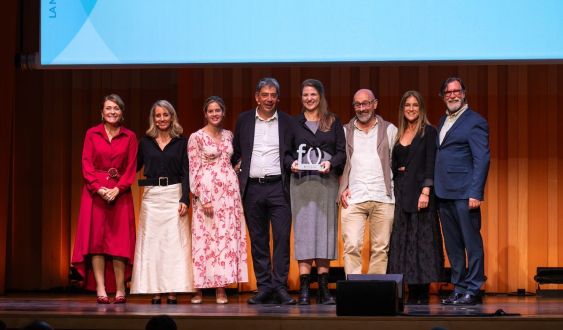
A country without culture is a country without a soul. And a country is not limited to large cities and metropolises; if it wants to be a cohesive and vibrant territory, it must look to all corners. And this is precisely the objective pursued by the project that has emerged as the winner of the Nit de l'Empresa i la Cultura: Fastt, performing arts festival for micro-towns, which aims to bring culture, in the form of performances, workshops, and artistic co-creation projects with residents, to the smallest towns in Catalonia.
It all arose, precisely, from a micro-town: Garrigàs. Among its 350 inhabitants, a family used to organize a theater festival at their Mas Gironí, where Rebeca Alabert grew up. Taking over from her parents and those encounters with theater, Alabert has extended this cultural proposal to towns with fewer than a thousand inhabitants. And there are quite a few: "They represent 51% of the municipalities of Catalonia," she remarked in front of the more than 500 people who packed the Petit Palau of the Palau de la Música Catalana.
With a packed hall —with improvised added chairs and attendees trying to reach the few free seats minutes before the evening began—, Fastt has been awarded for its willingness to bring the right of access to culture to every town in Catalonia: "It's not just culture, it's social transformation," Alabert declared. It is a trait that Fastt shares with other initiatives presented during the gala, which also competed for the Fundació Catalunya Cultura award, endowed with 15,000 euros.
Girem Full is one of them: an initiative that links the promotion of reading with cancer research. With the impulse of Hospital Clínic, the project generates a virtuous circle between readers of all ages, educational centers, and researchers, connected through sponsors who donate 20 euros for each literary review linked to the project, which is equivalent to ten minutes of cancer research. In its second edition, more than 15,300 reviews were surpassed last year, which translated into 2,000 hours of research. "We offer society a simple and effective instrument within anyone's reach to be part of the change," defended Núria Vilamajó, project manager from the Clínic, who was recognized with the The New Barcelona Post Culture Award.
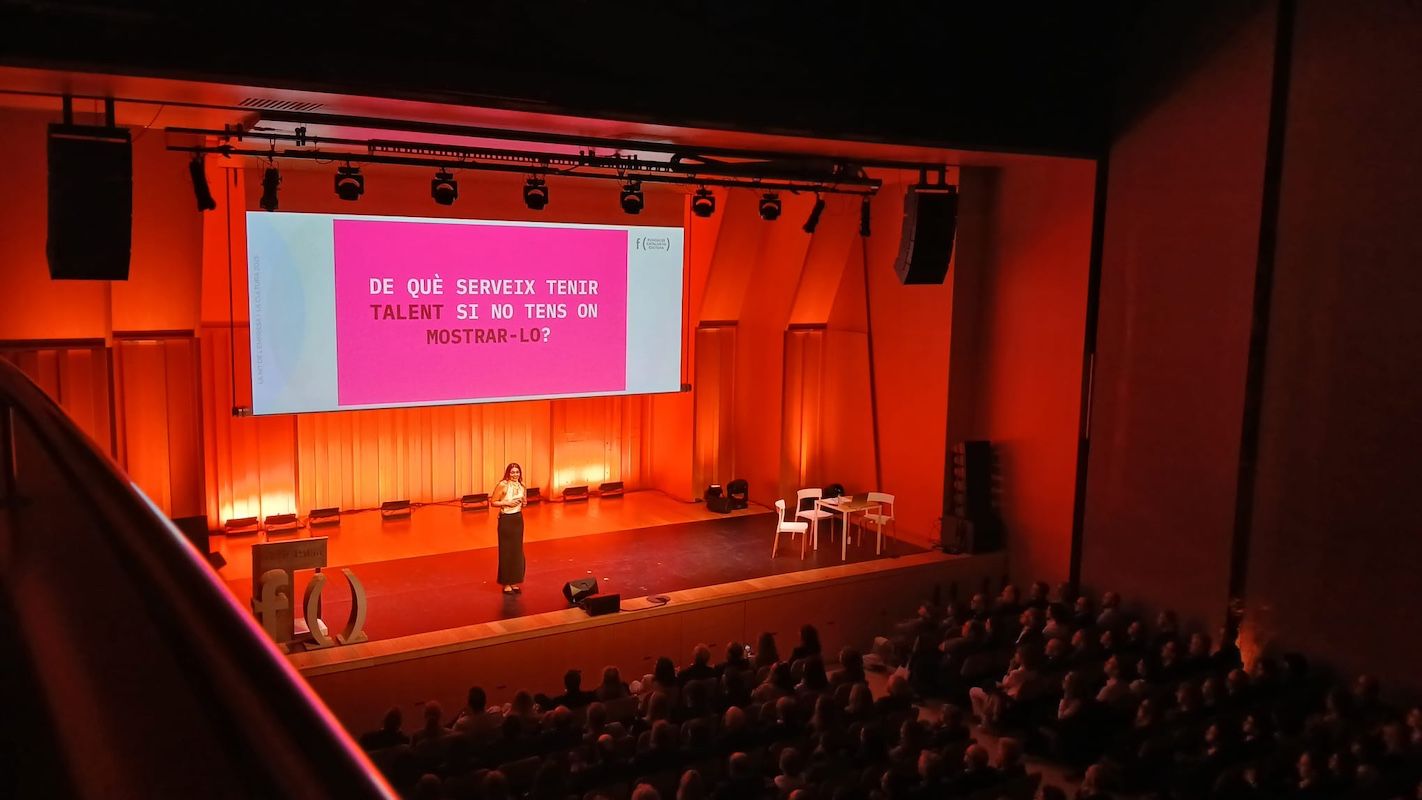
Amidst audience applause and based on brief three-minute pitches, the gala moved from Fastt's performing arts and Girem Full's reading to the music of Gio Symphonia and Sinèrgic, two projects with a musical soul but different natures. Gio Symphonia, "transforms classical music to connect with new audiences," explained Jaume Sabaté; Sinèrgic, for its part, brings music to hospitals to accompany patients and their families to "improve their emotional well-being," as Mariona Montaña explained, before an audience that mixed the cultural and business spheres, with the presence of authorities included. The ministers from both worlds —the Minister of Culture, Sònia Hernández, and the Minister of Business, Jordi Sàmper—; the president of the Parliament, Josep Rull, and the former president of the Generalitat, Artur Mas, followed the presentations, which were completed with that of Vibez, a young digital culture festival that connects artists and initiatives with companies. "Betting on Vibez is not supporting a festival, but sponsoring a generation," proclaimed Nàhia Gironès, standing as a representative of generation Z on stage, where the Fastt initiative finally went up as an award winner.
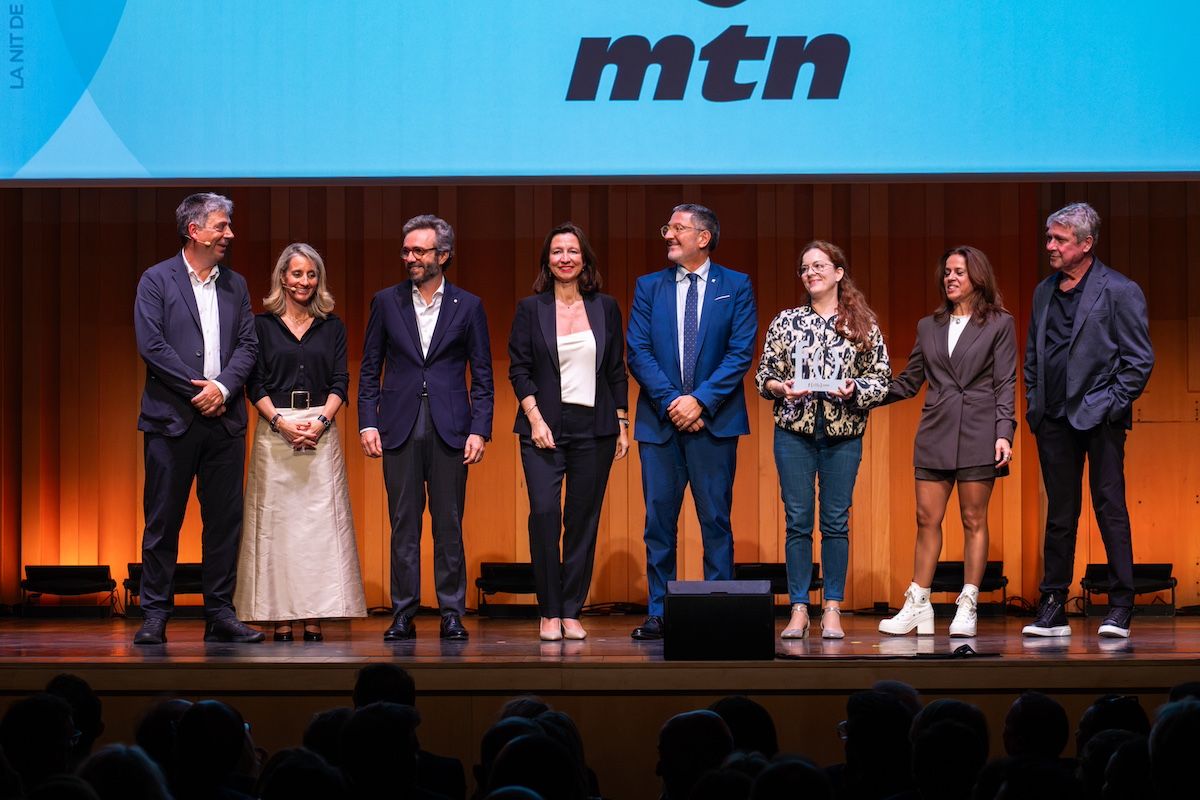
But at the Nit de l'Empresa i la Cultura, there were also recognitions, of course, for the business sector. Borges International Group was awarded the Great Company award for promoting cultural initiatives, such as those carried out at Mas de Colom, the Borges farmhouse that is filled with cultural proposals ranging from concerts to acrobatic circus. And, as patronage does not depend on the size of the company, the evening also reserved a recognition in the SME category: it went to Montana Colors, a company that produces spray paint products and doesn't stop there, but has supported urban artistic expression for three decades.
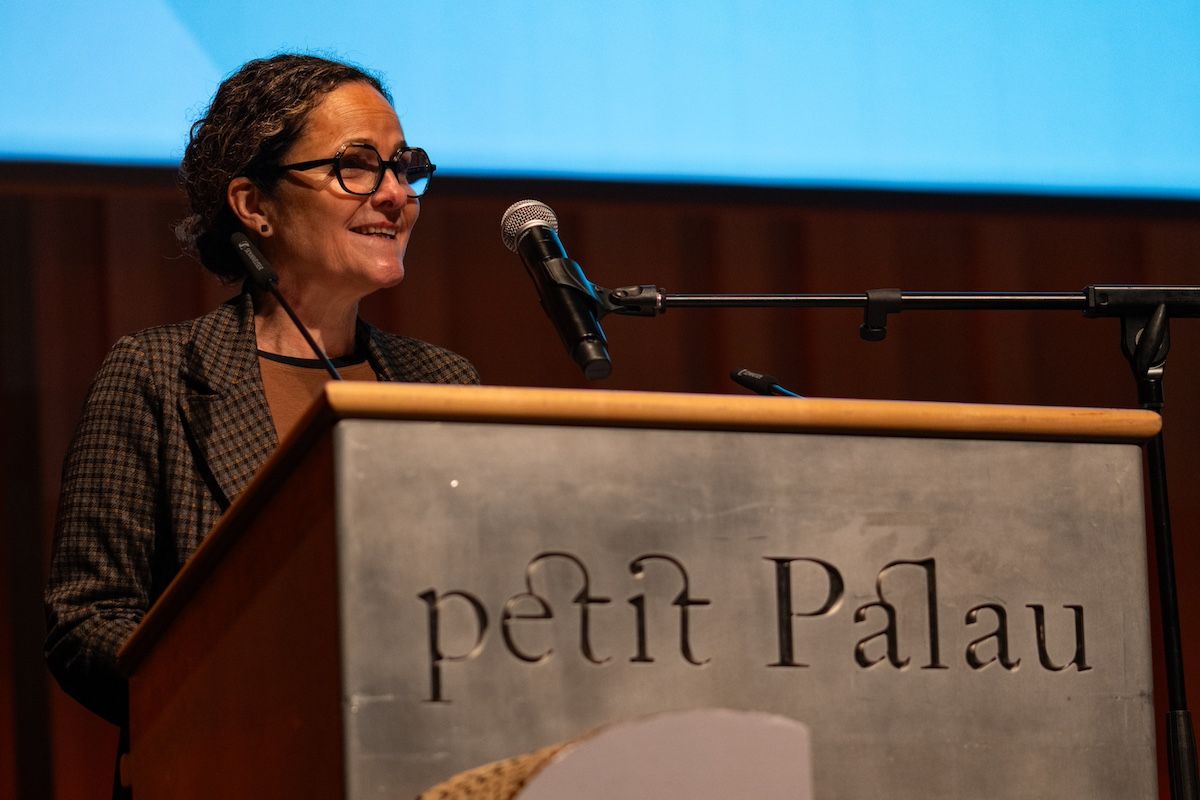
All of this in a gala where music —from the Conservatori del Liceu— and dance —with the Eidart school, a special mention from the last edition— were not missing. Theater was also present, with theatrical interventions by the director of the Fundació Catalunya Cultura, Maite Esteve, along with entity officials in organizing the evening. The fine line between interpretation and reality blurred even further in the speech by the foundation's president, Eloi Planes, who started with forgotten glasses and two borrowed ones. But it wasn't necessary to see much to follow his speech: he invited attendees to close their eyes and imagine a Catalonia without cultural initiatives or institutions and without research or social entities: "Without culture, without patrons, it would be a sad, poor country without impulse."
"We are all or can be patrons, and every gesture counts. Like in a sardana, every step and every intertwined hand makes the circle grow," highlighted Planes, who thanked the role of patrons in supporting culture. "Without this generosity, Catalonia would not be what it is. Progress is born from shared generosity," insisted the also executive president of Fluidra. And he could not close his intervention without mentioning the main demand of patrons in Catalonia: to have a Catalan patronage law that facilitates "entering once and for all into a virtuous cycle that generates more culture, more opportunities, and more life." The spontaneous applause from attendees made it clear that this is a demand shared by the audience.
The Minister of Culture took up the gauntlet: "We are working on the preliminary draft of the Patronage Law," she recalled. The ball is in the court of the Ministry of Economy, with which Culture is working "hand in hand" to ensure it moves forward with "the maximum possible consensus." This consensus will have to be sought in the Parliament, presided over by Josep Rull, who praised the "optimism and talent" exuded by the gala, on a night that intertwines business and culture not only specifically for the evening, but builds lasting and transformative bridges.
Add The New Barcelona Post as your preferred Google source for free
Stay informed with the latest news.
