Beneath the visible surface of the art world —the openings, the recognized big names, and the network of galleries that enriches the city— lies an entire less visible structure that keeps the ecosystem alive. In this mechanism, the collector is a key piece: discreet, often in the shadows, but essential for the machinery to keep rolling. Despite its importance within the system and the art market, collecting is still too often associated with great fortunes, private salons, and exclusivity, enveloped in an aura of distance that keeps it away from a large part of the citizenry.
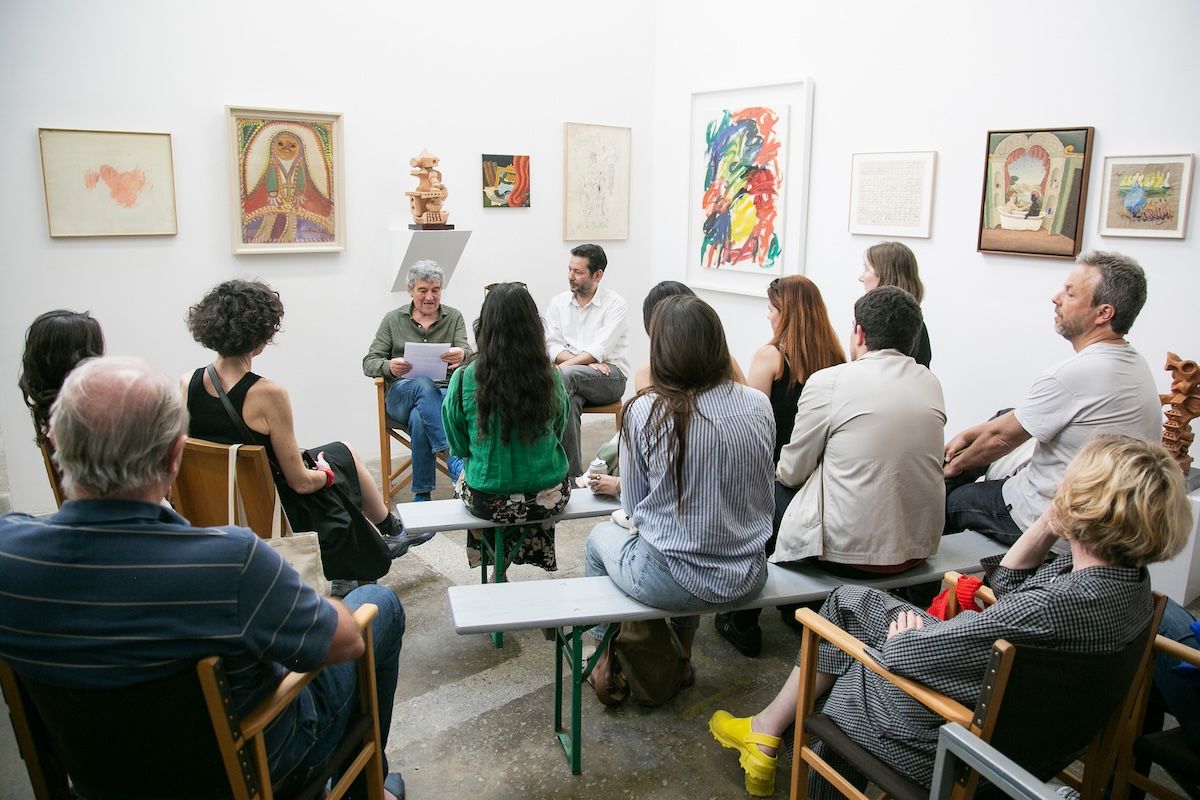
The initiative The Collector is Present arises precisely from the desire to move the collector from the margins to the center of the narrative. From this Thursday, May 14, until Sunday, May 17, 19 collectors and 15 contemporary art galleries in Barcelona, L'Hospitalet de Llobregat, and Santa Margarida i els Monjos (Alt Penedès) open their doors with exhibitions, conversations, guided tours, walks, and free encounters with collectors to demystify their figure and explain, in the first person, how and why they started buying art.
More than a program of exhibitions and activities, The Collector is Present —promoted by the ArtBarcelona galleries association— is an open invitation to approach galleries, listen to the stories behind the collections, and dismantle the preconceived idea that collecting is an inaccessible field. "The figure of the collector is still associated with people with a high purchasing power," explains Mariña Á. Piño, director of the Barcelona Gallery Weekend and The Collector is Present. "Precisely, the objective of the program is to show that there are many ways to approach art and, even, to acquire contemporary art," she adds.
A particularly relevant purpose in an art market like the Catalan one, where, despite the existence of an active network of galleries that resists, innovates and renews itself to continue attracting new audiences, collecting remains one of the great pending subjects. Especially when compared to cities like Paris or Brussels, with a much more consolidated collecting tradition.
According to the director of The Collector is Present, this difference is not only due to a question of economic capacity, but also to a lack of pedagogy and transparency around the art market itself. Often, it is unknown how works circulate, who acquires them, or what role collectors play within the cultural ecosystem. "We must reclaim the figure of the collector without complexes. After all, for the entire art wheel to keep turning, works have to be sold," says Á. Piño.
"The figure of the collector is a thematic focus that, although present transversally in the activity of galleries, deserved a specific program," adds the director of The Collector is Present. The initiative, which this year celebrates its fourth edition, also arose from the need to give continuity to the activity of galleries and reclaim them as open, free, and accessible spaces, regardless of whether one goes to buy or simply to look.
With this same objective, in addition to the free exhibitions that each gallery organizes individually, the ArtBarcelona association also promotes throughout the year different joint programs and festivals that seek to bring contemporary art closer to new audiences: from the Art Nou festival in summer, dedicated to creators under thirty-five years old, to the Barcelona Gallery Weekend, the great autumn event for art galleries, which this year will be held from September 17 to 20. In this same vein, the Art a la Pàgina cycle has also been recovered, organized together with the city's public libraries, where artists and gallery owners converse based on artist books and contemporary publications.
Collecting in the first person
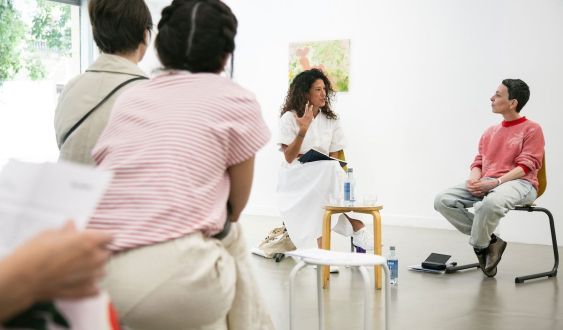
The Collector is Present thus occupies the spring calendar as a specific space to reflect on the role of collecting within the cultural ecosystem. Its desire for openness and transparency translates into a heterogeneous program, designed so that each collector can express themselves in their own language. "Each proposal is conceived by one of the participating galleries, in collaboration with one or more collectors, so that they find the format in which they feel most comfortable: there are those who publicly exhibit part of their collection for a few days; others prefer a conversation or a debate; and there are also more participatory activities," summarizes Piño.
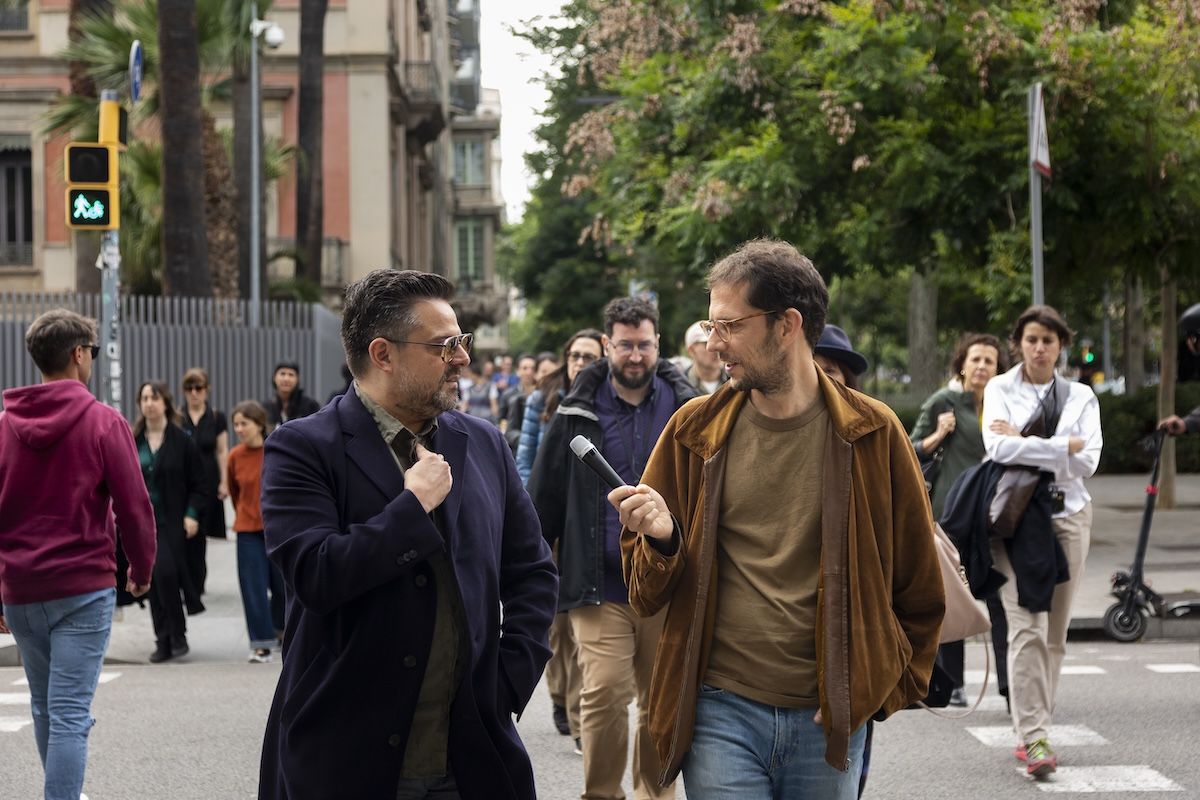
This is the case of Escat Gallery, which organizes a meeting on young collecting —one of the main focuses of galleries to ensure generational renewal— with collectors Manuel Expósito and Carlos Muñoz. Guided by Carmen Corbera, they will lead an open session to resolve doubts, dismantle prejudices, and bring collecting closer to new generations.
This will not be the only open conversation, as other galleries will also address collecting from diverse perspectives: from the need to build a more inclusive canon, at SELTZ by Ritter Ferrer —with the participation of Natalia Foguet, director of the Fundació Úniques; the artist Mónica Jover Calvo; Pepa Reverter, representative in Catalonia of MAV (Women in Visual Arts), and the critic and curator José Luis Pérez Pont— to the international circulation of local art, the focus of the conversation proposed by Dilalica between the artist Lucía Bayón and Mónica Carroquino, director of the international projection platform Catapulta.
With the aim of explaining and being explained, the program also includes activities linked to the galleries' exhibitions to make them more accessible to the general public. This is the case of Pigment Gallery, with a proposal around Francesca Poza's exhibition, or RocioSantaCruz, within the framework of the exhibition Ouka Leele. Barcelona. Even the collector Josselin Souris, hand in hand with Suburbia Contemporary, proposes a walk through Barcelona with artists Gregory Thielker, Mar Hernández and Peter Eastman to discuss drawing and painting.
Add The New Barcelona Post as your preferred Google source for free
Stay informed with the latest news.