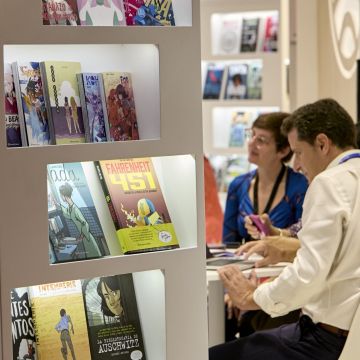
A book written by a Catalan author, produced by a Barcelona publishing house, ends up displayed in a bookstore in Buenos Aires. Another title crosses the Atlantic and arrives in New York; while another changes language to find readers in Frankfurt, New Delhi, or Beijing. Sometimes, that story even transcends paper to become a film, series, or video game. Because literary stories often have a longer journey than one usually thinks, and fairs like Liber —which will celebrate its 44th edition from September 29 to October 1 at Fira de Barcelona— act as one of the bridges that make this journey possible, connecting Spanish publishers with professionals, agents, and buyers from other markets.
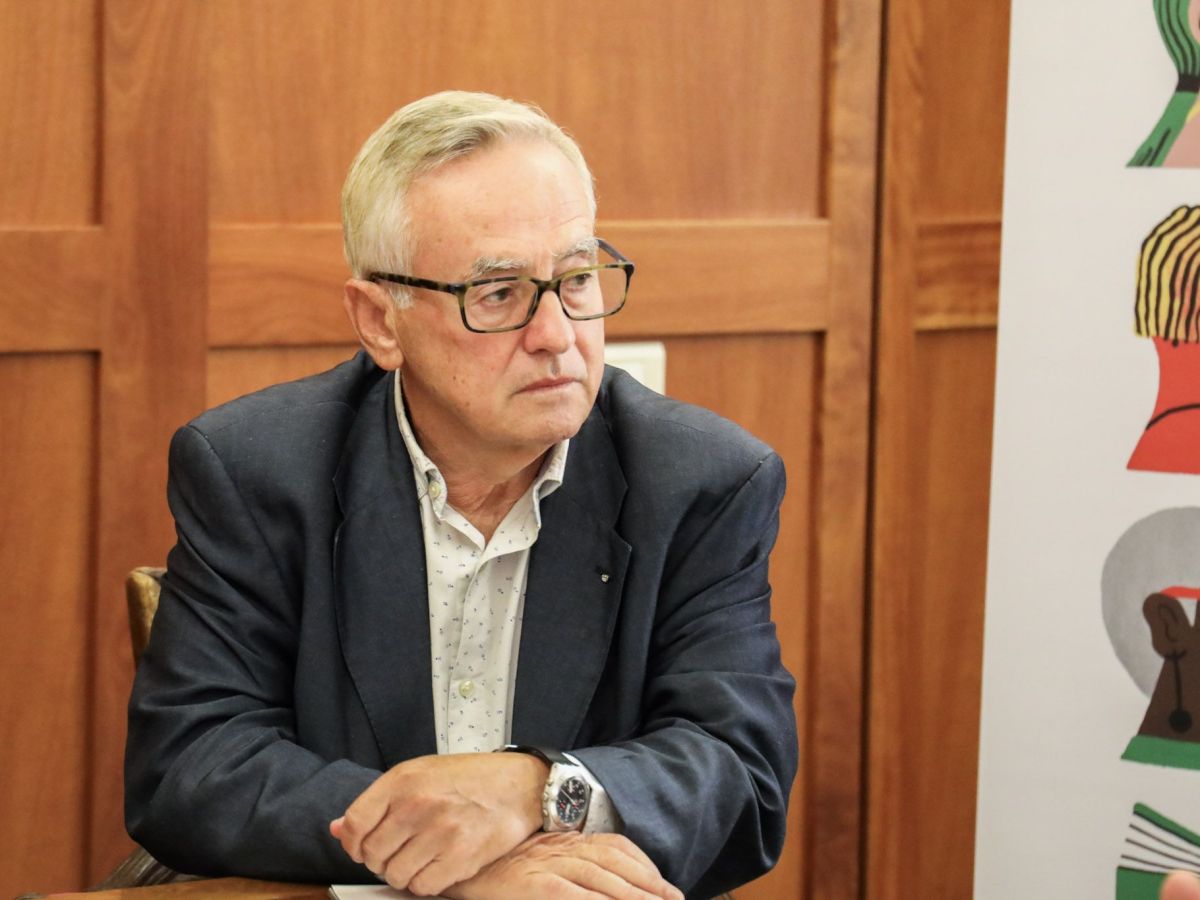
With nearly 250 exhibitors and 9,000 professionals in its next edition, Liber not only promotes the journey of books from the Spanish publishing industry but also showcases the transformation of a sector that has not stopped evolving. New reading habits, markets, and formats coexist today with challenges such as reading comprehension, once again in focus after the latest PISA report, and the irruption of artificial intelligence. We spoke about these changes and the future of the book with Manuel González Moreno, the new president of the Federation of Publishers' Guilds of Spain and of Liber. A sector that, despite the transformations, continues to seek new ways to make stories travel.
— The death of the book has been predicted many times, first with television, then with the internet, and now with social media or artificial intelligence. Why does it keep resisting?
— As a historian, I tend to go back even to prehistory. But the truth is that even then, human beings felt the need to transmit stories, knowledge, and ideas. First through oral narration; then came writing and different ways of fixing and reproducing texts, from clay tablets, parchments, and even paper.
The format, therefore, has been transforming, but not that need to tell stories. For all these reasons, the future of the book is not in danger: the industry has known how to adapt to each technological revolution. The printing press transformed the dissemination of the written word, but it did not end other forms of transmission; neither did radio, television, the internet, or audiobooks. The different formats coexist and respond to different ways of reading and accessing content.
However, to understand the growth of the publishing industry, we also need to consider where we started from. In 1975, around 25% of the population had difficulties understanding texts of a certain complexity. Spain then had much lower reading levels than today and, therefore, the sector had ample room for growth. After the 2008 crisis, which also impacted the sector, the industry began a recovery that has continued to this day.
"Knowing how to read, but not being able to fully understand what is being read, makes us more vulnerable to simplistic messages and manipulation"
— However, despite the positive figures in sales and turnover, the latest PISA report warns about reading comprehension. What do these data tell us about how young people read?
— Young people are the segment of the population that reads the most, but that does not necessarily mean that they understand better what they read. The latest PISA report has raised an alarm signal: reading comprehension is low among the evaluated students. We are not talking about them having to read works of enormous complexity like The Brothers Karamazov, but about being able to delve, analyze, and understand what they are reading, to go beyond brief messages.
— What is this deterioration due to?
— It has a lot to do with the way we interact with information, especially through social media, where brief, fragmented, and simplified content predominates. This makes it difficult for some young people to develop the ability to face texts that require greater attention and depth.
And all this entails dangers. Low reading comprehension can end up leading to a form of functional illiteracy: knowing how to read, but not being able to fully understand what is being read, makes us more vulnerable to simplistic messages and manipulation. That is why it is important for the reader to have access to a great diversity of books, authors, and perspectives, which allow them to compare, reflect, and form their own criteria.
— With the enormous quantity of titles published each year, is there not a certain risk of editorial overproduction?
— I don't believe there is overproduction. Spain has particular characteristics that explain a good part of those 65,000 titles published annually as novelties. Educational books alone in the four official languages exceed 20,000, and there are also many re-editions and necessary updates in fields such as law, medicine, or engineering.
Not all these titles are new works aimed at the same audience. They respond to different realities and needs. Therefore, rather than overproduction, I would speak of cultural richness.

— And all that diversity in the sector also has a meeting point in Liber. What role does the fair play for the Spanish publishing industry?
— Liber has evolved a lot in these four decades. At first, it also served to show abroad that Spain had a publishing industry capable of producing quality books and competing internationally. Today we no longer need to prove it: the Spanish industry has consolidated, and Liber has become a reference point for the Spanish-language publishing sector and with the rest of the world. It increasingly brings together more companies, visitors, and buyers from distant countries, including librarians who come to acquire books in Spanish.

— How is the diversity of sizes and profiles of publishing houses reflected in Liber?
— It is reflected in the variety of publishing houses and catalogs that participate. In Spain, there are about 3,000 publishing houses, but the nearly 900 integrated into the Federation of Publishers' Guilds of Spain represent more than 90% of the turnover. What's more: the six largest publishing houses concentrate around 48% of the 3.1 billion euros that the market turned over last year, while about 800 are small and, in many cases, turn over less than 200,000 euros a year and have fewer than six employees.
Liber brings together publishing houses of very different sizes and profiles, but especially those for whom it makes sense to seek new markets, sell rights, or establish professional contacts.
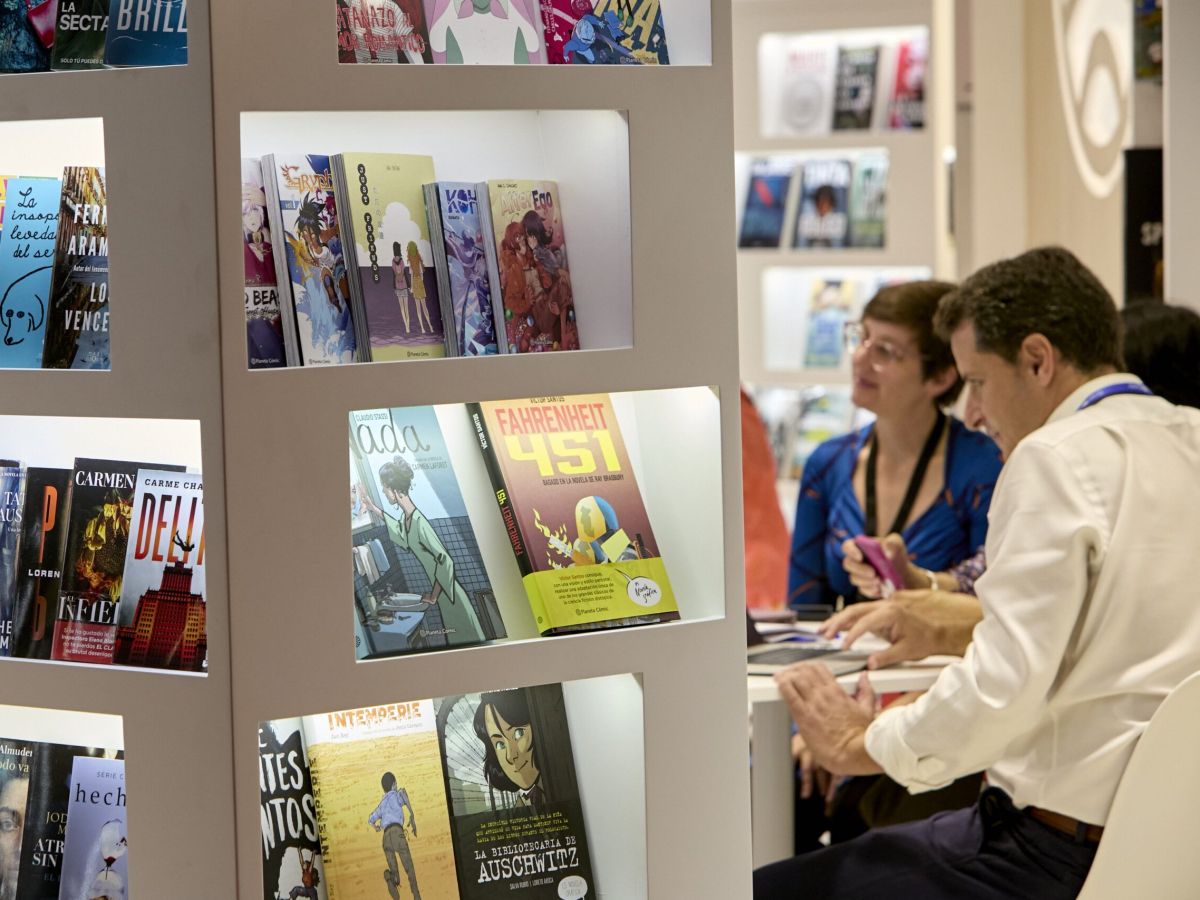
— Liber has been evolving, and this edition incorporates a novelty premiered in its previous edition in Madrid that arrives this year in Barcelona: the Rights Hall. What does this new space respond to?
— When we talk about selling rights, we mean, for example, that a publisher from another country acquires the right to publish a Spanish work in its market or that it can be translated into another language. Years ago, the Spanish publishing industry was more accustomed to buying than to selling rights, but the situation has changed: our authors and books have gained international recognition.
There are authors with great international appeal, such as Javier Cercas, more than 48 Spanish companies with subsidiaries in different American countries, and a growing interest in Spanish: in New Delhi alone there are some 20,000 Spanish students in the Cervantes Institutes, and in China they are approaching one million. All of this means that the sale of rights is becoming increasingly important, both economically and culturally.
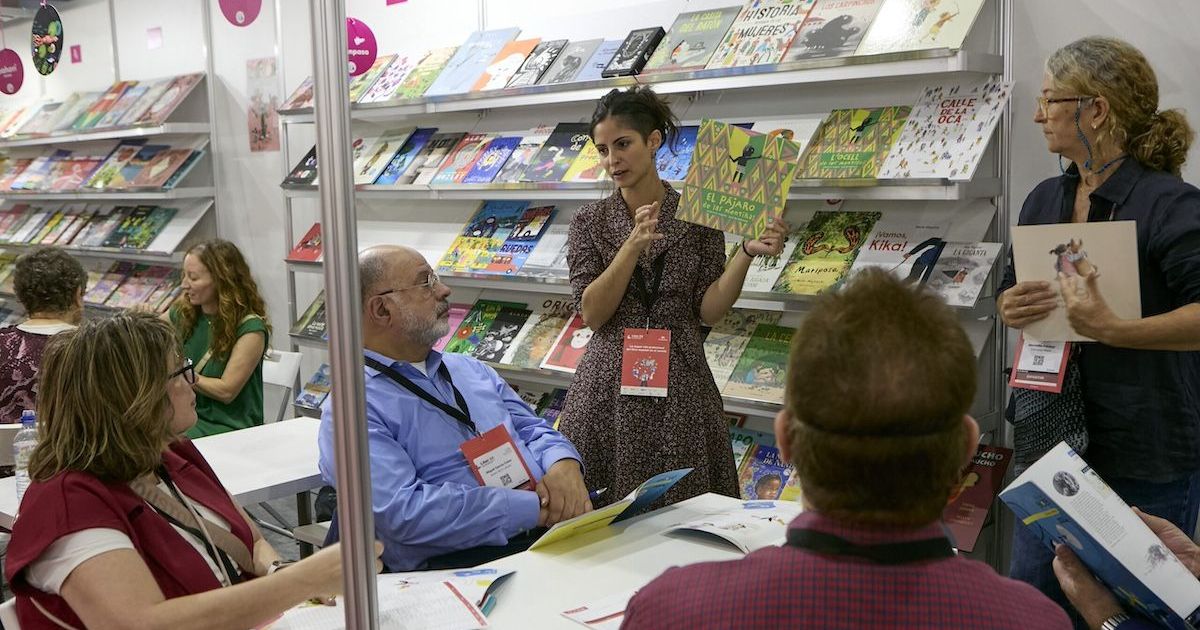
— Beyond international publishing rights, what other opportunities does Liber detect?
— The audiovisual field is one of them. Series, platforms, and cinema need stories, and books are a fundamental source of characters, plots, and storylines. Therefore, more and more authors are selling the rights to a book to adapt a work into a film, a series, or even a video game. And I believe that the sale of rights for audiovisual adaptations will be one of the great opportunities for the sector in the coming years. A novelty that Liber also wants to accompany.
"Artificial intelligence can help us and facilitate processes, but it cannot replace the creator"
— The sector also faces challenges: how is artificial intelligence affecting the publishing industry and what particularly concerns publishers?
— Artificial intelligence can be a very useful tool for streamlining processes and consulting large amounts of information. The problem arises when it uses content created by other people without acknowledging its origin or respecting their rights.
That is why it is essential to guarantee traceability: knowing where content comes from and indicating when a work or a cover has been generated with artificial intelligence. AI can help us and facilitate processes, but it cannot replace the creator. A machine can be a tool to generate content, but it is not the owner of intellectual property rights. Intellectual property belongs exclusively to the people who create the works and, therefore, we must ensure that technology respects and does not replace the authorship of creators.
— Intellectual property, therefore, belongs to an intellect.
— Exactly, to a human intellect, with ideas and emotions, something that the machine cannot easily imitate.
Add The New Barcelona Post as your preferred Google source for free
Stay informed with the latest news.