"I have always thought —Julio Cortázar once said— that literature was not born to give answers, a task that specifically belongs to science and philosophy, but rather to ask questions, to disturb, to open intelligence and sensibility to new perspectives of reality." And it is precisely this capacity to question, to shake us, and to look at the world from unexpected perspectives that explains why —despite screens, algorithms, and infinite time thieves— literature remains alive and, above all, continues to transform with new formats, new readers, and new technologies that will redefine how we write, what we read, and even what we consider literature.
The future of the book is not a closed certainty, but an open question in which these 9 keys can bring us closer to the answer:
1. The future belongs to those who read
In a digital and hyperconnected world where some predicted the end of the physical book, the reality is that reading habits are growing, and book invoicing has not stopped increasing since 2013. In 2024, the industry reached 3,037.51 million euros, 6.3% more than the previous year, according to figures from the Federation of Publishers' Guilds of Spain. And the increase does not come from the rising cost of books —the average price only went up four cents—, but from the volume of copies sold (+5.6%).And that is because more and more readers are joining the habit of reading regularly: the percentage of readers over 14 years old grows year after year —today it is already 70.3%— and the age group that reads the most is 14 to 24 years old (75.5%), a fact that disproves the cliché that young people do not read. It is an audience, moreover, that not only reads, but also prescribes, recommends, and viralizes reading, causing some titles to go from anonymity to global phenomenon in a matter of days.
At a time when the reading comprehension rates of young Spaniards are below the European average according to the latest PISA report and when social networks impose infinite scrolling and fast content, many have fallen into the trap of thinking that young people do not read. But the numbers say exactly the opposite and, moreover, place Catalans well above the European average.
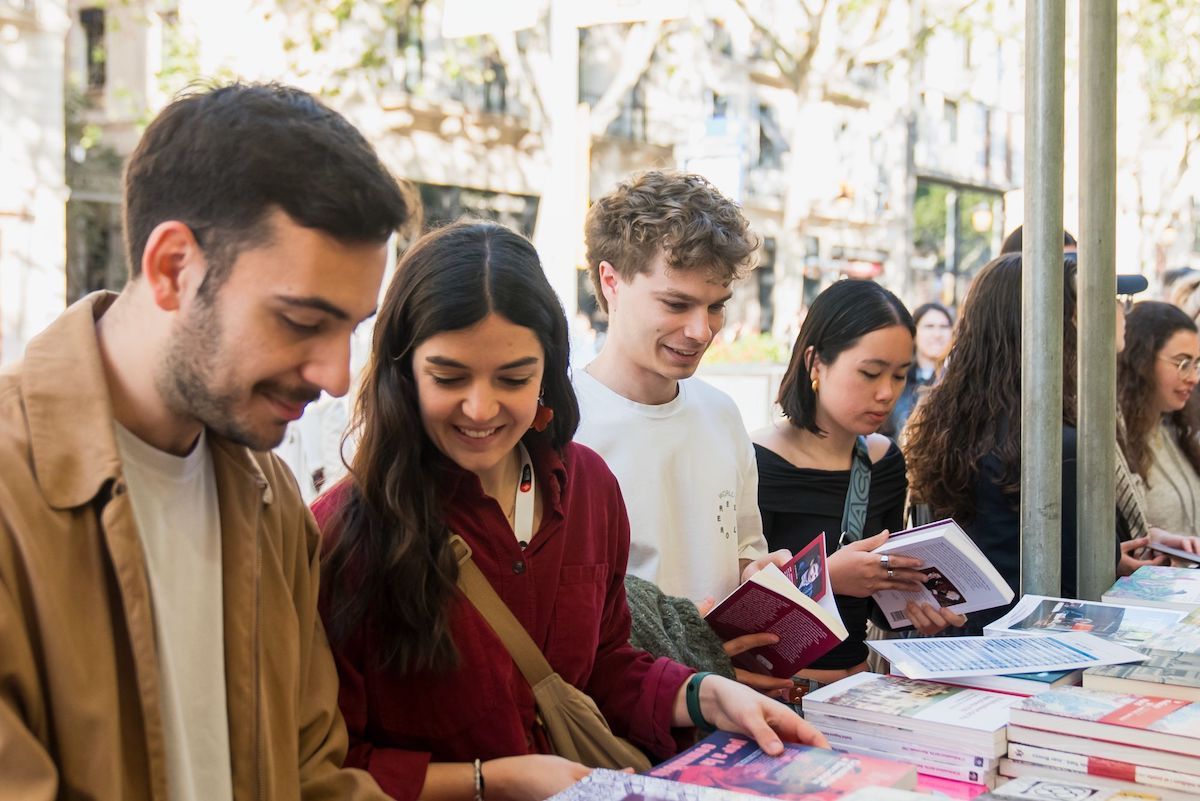
And what do they read? Genres that often bypass traditional circuits, such as young adult —with adolescent themes—, romantasy —which combines romance and fantasy—, manga, comics, and illustrated novels. According to the Report on Reading Habits and Book Purchases, 37.5% of young people between 14 and 24 years old have read at least one comic in the last quarter.
By the way, curiously, in the ranking of the most avid reading generations, they are followed by adults between 55 and 64 (73% read). And those who read the least are, precisely, those in the middle: adults between 25 and 44 years old, who do not exceed 68%.
2. Literature transcends letters: new consumption formats
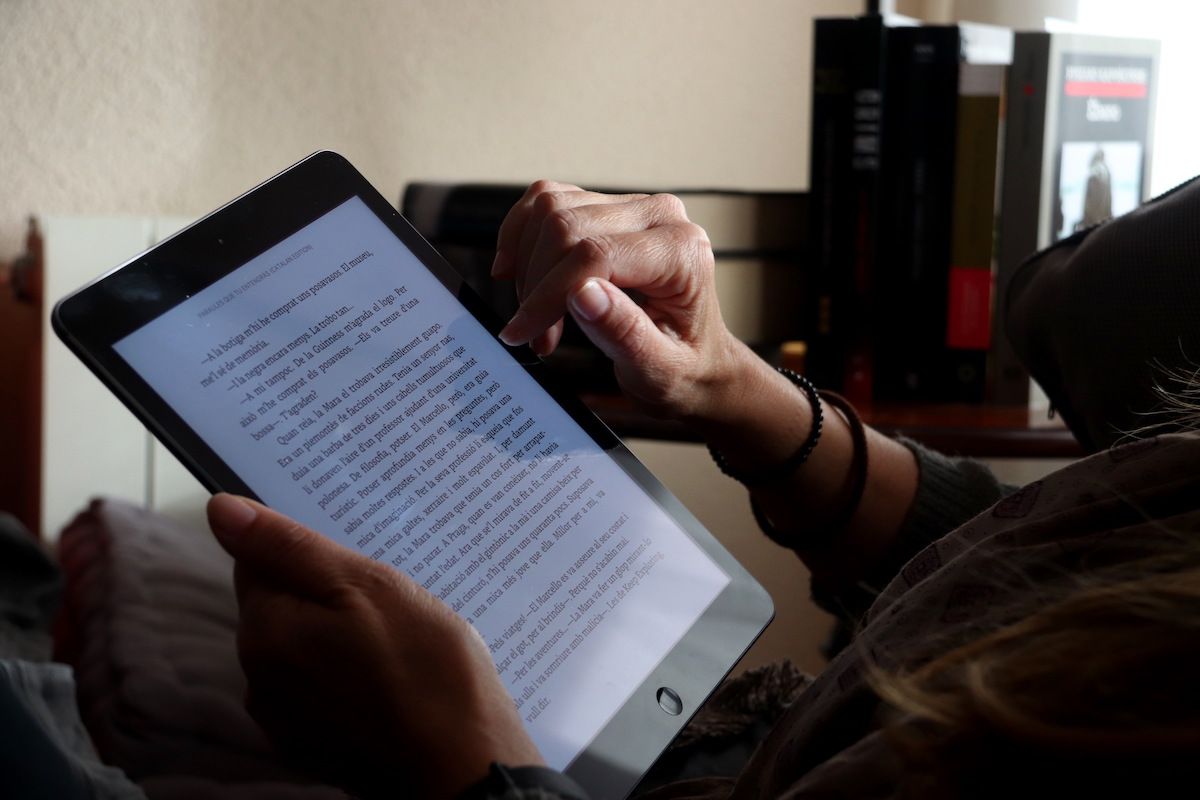
Reading is no longer limited to paper. Audiobooks, ebooks, and narrative podcasts open access windows that adapt to new life rhythms. Although the ebook represents only 5% of invoicing —and audiobooks are growing slowly—, what has changed is the reader's perception: today, the digital format does not compete, but coexists with the physical. In fact, according to the Report on Reading Habits and Book Purchases, 28.3% of the population combines reading in digital and paper formats.
Now, the physical continues to maintain its reign: at Penguin Random House, as its CEO Núria Cabutí explained to us this Tuesday, the physical book represents 90% of sales. And it is not in decline: it is the format that grows the most in the publishing house.
3. The technology that writes with us
AI-assisted writing has entered the literary scene, generating both excitement and concerns in equal measure. Some authors use it as a brainstorming tool, others as stylistic support, and a few are wary for fear of losing their own voice. However, more and more are openly—and not so openly—publishing books that have been entirely co-written with artificial intelligence. In fact, the proliferation of works partially or completely written with AI has forced platforms like Amazon to limit publication to three books per author per day to prevent an uncontrollable flood of content.
And it's no wonder: there's an American "writer," Tim Boucher, who has already published more than 120 books with the help of artificial intelligence. And despite the avalanche of criticism he continuously receives on social media, the numbers work out for him: he dedicates 8 hours to each book and sells them for 5 dollars.
This new tool, which has altered everything from the writing process to translation, cover design, and book illustrations, is already a reality adopted in the publishing sector: 61% of writers already use AI tools, and writers who integrate it generate 64% more income, according to a study by Gotham Ghostwriters.
The change is already underway, but as digital culture expert consultant Genís Roca points out, for now we are in "a first phase of exploration, then will come the use cases, and finally the real change will arrive: the new system," at the earliest, in three or four years.

4. Self-publishing and digital platforms: new paradigm for editorial power
The editorial landscape has become more porous and competitive thanks to platforms like Amazon KDP or Wattpad, which have changed the rules of the game by allowing self-editing and self-publishing in the digital environment. And while it is true that publishing houses remain essential, these new tools have allowed the traditional publishing house not to be the only way to access the market. In fact, many writers who today move masses started outside the publishing industry, such as Americans Sarah J. Maas (A Court of Thorns and Roses) or Rebecca Yarros (Fourth Wing), who started by self-publishing.
This transformation has not only given authors new tools to achieve the goal of publication, but it also transforms the profession of the editor: both for independent and larger publishing houses. The editor and designer Agustí Estruga explained to us this week —through Carme Escales— the challenges presented by "this dual aspect between tradition and innovation," encouraging editors to "be aware of innovations, but without ever losing the tradition that accompanies the craft."
5. Online commerce and bookstores: there is room for both
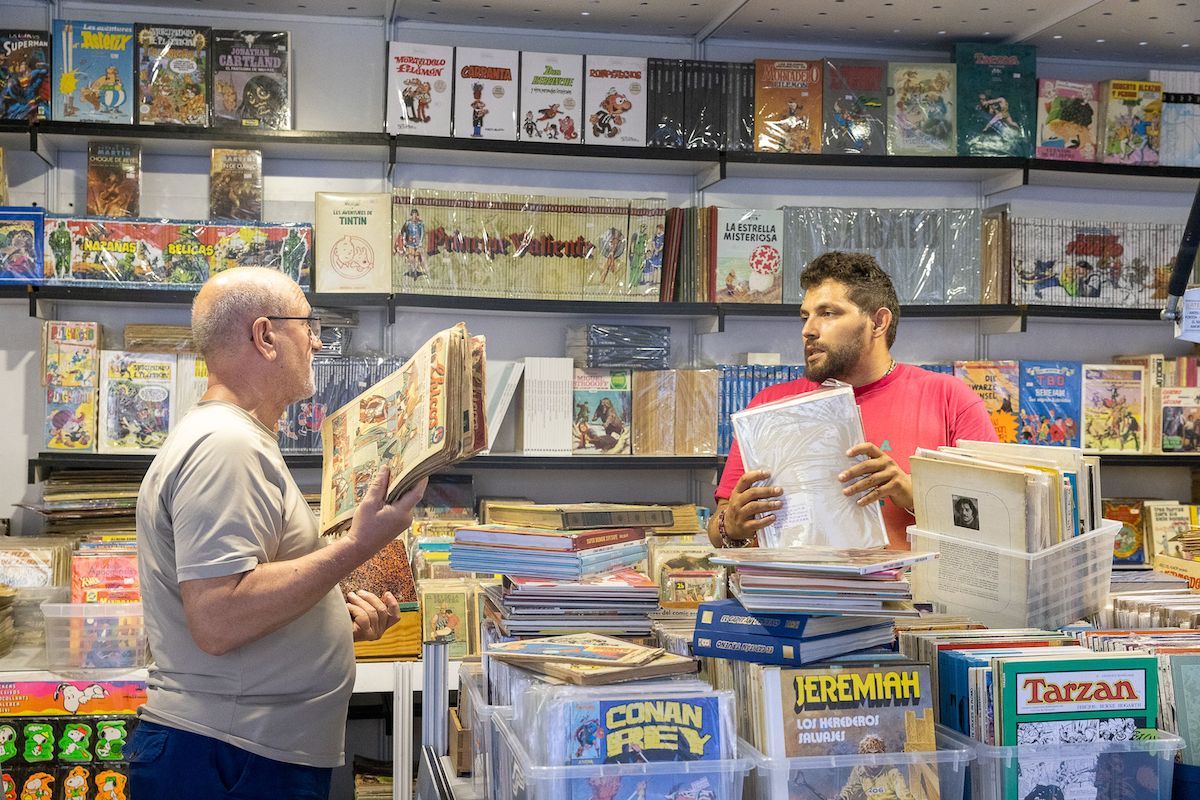
Logistics is today a strategic factor for a client —the reader— who demands immediacy. Groups like Penguin Random House have invested millions this year —as in their new center in Cerdanyola, 42,000 m² and equipped with robotics— to shorten distribution times in a market accustomed to delivery times that do not exceed 24 hours. But the strategy is not new: Planeta has a majority stake in Logista —the largest distributor in Spain— and owns the La Casa del Libro chain. And the Anaya group, third in the publishing ranking, also has a large logistics center in Getafe, from where it manages more than 30,000 references.
Large publishing houses show a clear strategy to cover as many links as possible in the book's value chain. And distribution is not the only way to reach the goal. In fact, bookstores remain the main sales channel, and grew 8% in turnover in 2024. As Jordi Ferrer, director of 9 Grup Editorial, explains, "when we want something, we want it now, but the bookseller maintains an irreplaceable virtue: they know how to listen to the reader and recommend with knowledge".
6. Social media and booktokers
Social media —despite all fatal predictions— has created a new space for prescription for the world of literature. On TikTok, for example, booktokers recommend with spontaneity, emotion, and rhythm, and have managed to transform the act of reading into a shared experience and identity. Many titles that a few years ago would have gone unnoticed are now successes thanks to this virality. And it's no exaggeration: a post by Barcelona booktoker Shula Li can get 200,000 views and over 20,000 "likes." How many purchases can one of her recommendations translate into?
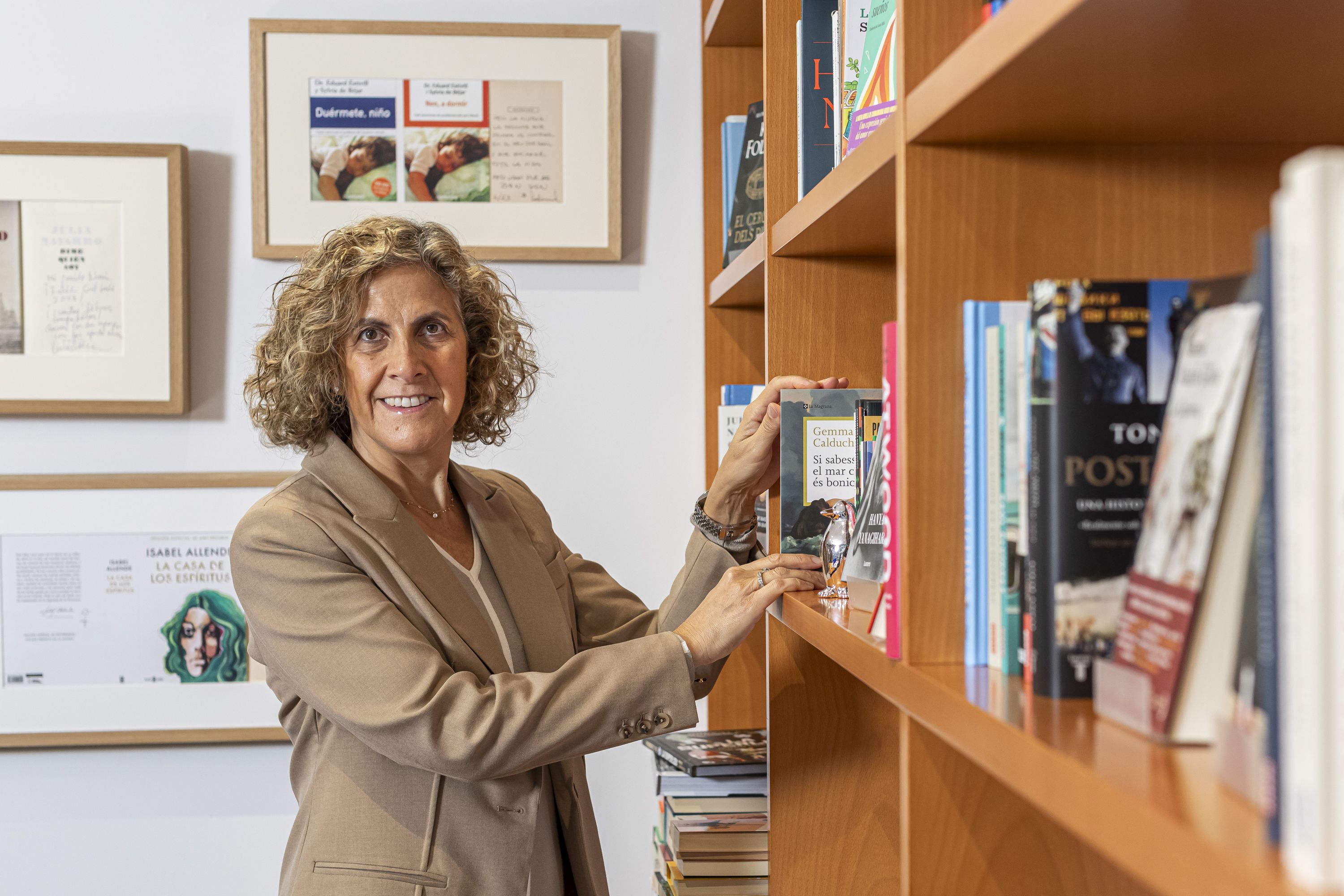
According to Núria Cabutí, CEO of Penguin Random House, "social media is not an enemy, but a loudspeaker that amplifies reading communities and favors the fan phenomenon." And so, literary recommendation is no longer vertical, but horizontal and emotional.
7. Copyright in digital times
AI and digitalization have put pressure on the legal framework that must accompany literature in the digital environment, in order to preserve intellectual property. It mainly poses two major challenges: who is the author when a machine participates in the process, and how should content used to train generative language models be remunerated.
For Eva Güell, professor of the Master's in Publishing at the Universitat Oberta de Catalunya (UOC) and the University of Alcalá, "respect for intellectual property is non-negotiable because it is the raw material of the sector, and legislation must advance to ensure that if technology feeds on published texts, it at least does so by recognizing and remunerating its authors," she concludes.
And in the same boat is Patrici Tixis, corporate communication director of Grupo Planeta and president of the Gremi d'Editors de Catalunya, who sends a strong message to big tech companies: "If they have money to invest in developing these technologies, they should also have the sensitivity to recognize and compensate creators and publishers".

8. The ecosystem of a literary city
Barcelona has landed at the Guadalajara International Book Fair (FIL)this week in a symbolic moment: the city is the guest of the event the same year it celebrated the tenth anniversary of its designation as a UNESCO City of Literature. But despite the relevance of the event, this privilege is not the culmination of any path: it is one more step for a consolidated sector that aspires to continue growing both locally and internationally. Barcelona is not just a literary setting; it is an active agent, with an ecosystem that has been built overmore than a century of complicities between publishers, authors, and readers, and which now also includes a large network of bookstores, distributors, and events with a good reception from Barcelona residents. Or isn't Sant Jordi one of the best days in the city, and in Catalonia?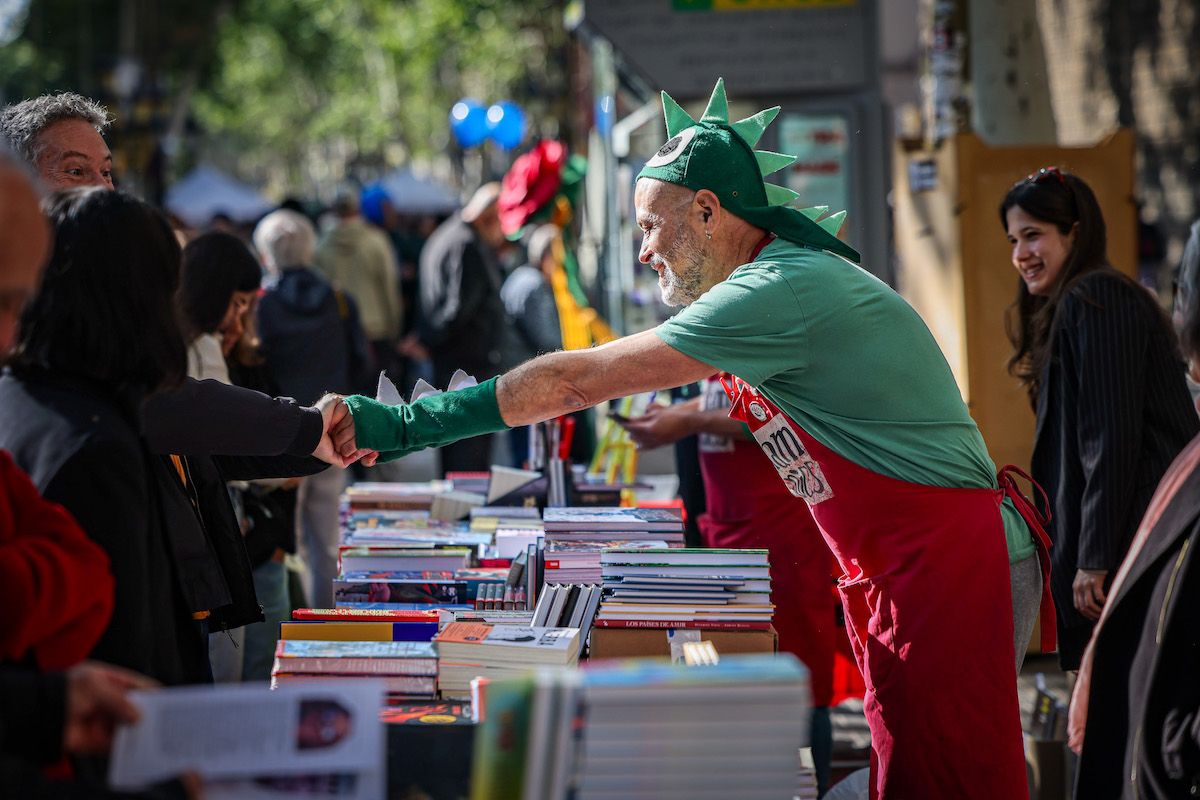
In this context, the city is written from diverse perspectives, which have generated a literary imaginary in which Barcelona acts as a setting and even protagonist of countless stories that traverse its streets and draw histories of those who have inhabited them for decades. Ale Samaniego expressed it in his article this Friday: "Barcelona is not only lived; Barcelona is read". And, in fact, he has given us a few book recommendations that carry Barcelona deep within. Some explicitly and others, "like an underground heartbeat".
Keeping this heartbeat alive, this background setting, this creative fertility, and this complicity will require taking care of all the actors that today form part of this rich ecosystem: authors, editors, distributors, bookstores, and readers.
9. The future also belongs to those who write it
Perhaps the answer is that literature—as always—belongs to everyone. To those who create it, to those who disseminate it, and to those who read it. But if it is not written, it does not exist. The future of literature belongs to the authors of bestsellers who travel the world—like Ildefonso Falcones, who has already sold 11 million copies this year with En el amor y en la guerra—and also to younger profiles, like the Barcelona writer and poet Júlia Peró (1995), who last year won the hearts of many readers with Olor a formiga. It belongs to all those who have shaped our culture throughout history, to contemporary voices—better not to start listing them because any list would be unfair—and to those who still keep a draft in a hidden folder on their computer or a disorganized idea among notebooks.
Because, to be written, literature must first be imagined. And then, let itself be carried away: "I surrender before writing, and the story carries me away," Eva Baltasar has confessed to us.

Add The New Barcelona Post as your preferred Google source for free
Stay informed with the latest news.