Barcelona vibrates with music. This is demonstrated by its extensive musical program, its multiple world-class venues and auditoriums, and the fact that in recent weeks, first-rate institutions such as the Palau de la Música Catalana, L'Auditori, and the Liceu have successfully opened their respective seasons. A city that accommodates institutions of this caliber demonstrates that it is a city of music that reserves a prominent role for classical music.
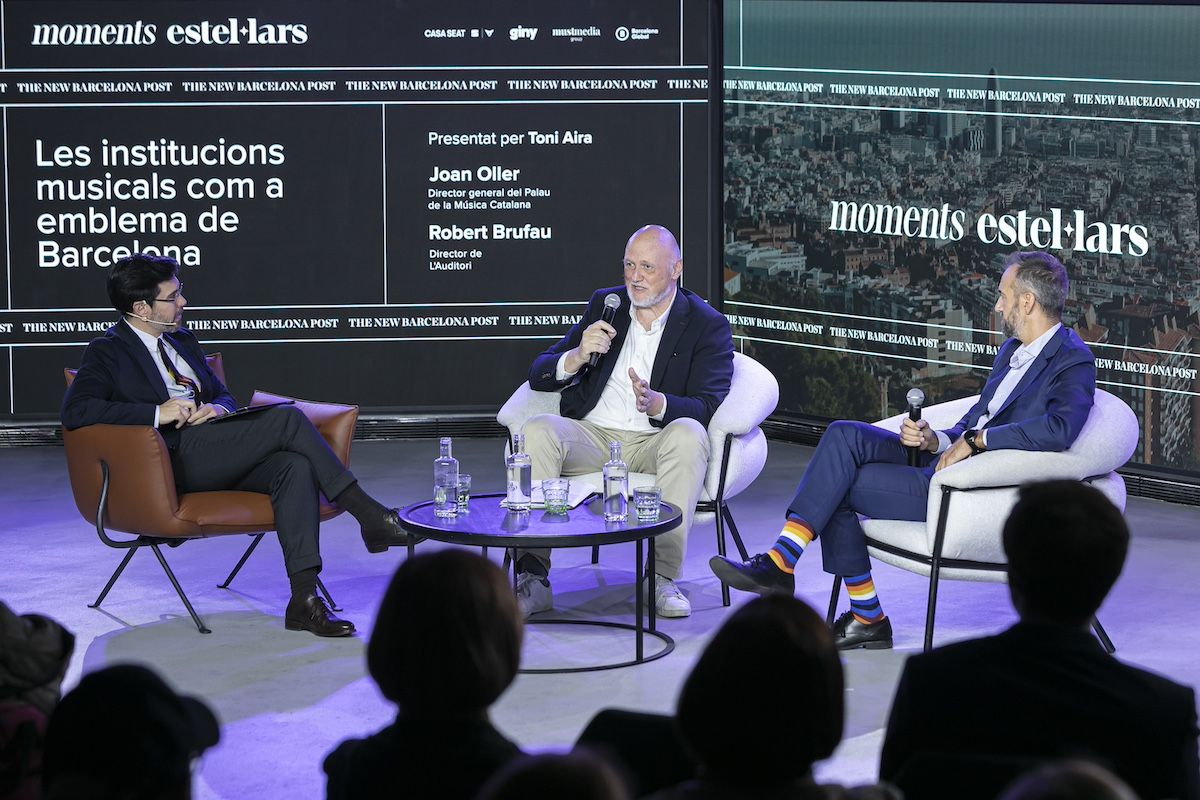
And these institutions face the future with optimism, with an eye on attracting new audiences, as confirmed by the general director of the Palau de la Música Catalana, Joan Oller, and the director of L'Auditori, Robert Brufau, in a new session of the Moments Estel·lars cycle, organized by The New Barcelona Post with the collaboration of CASA SEAT, Barcelona Global, Must Media Group and Giny Barcelona. Indeed, especially since the pandemic, "a lot of new audience is appearing that is not the one that traditionally came to concerts," Oller highlighted.
"Many people have incorporated coming to a concert as another element of their socialization. If we manage to get those who come once to repeat, we won't fit; a third venue will be needed in Barcelona," defended the general director of the Palau in a session moderated by journalist and UPF-BSM professor Toni Aira. This arrival of new audiences is "a very interesting phenomenon that is happening in several cities, and that is also happening strongly in Barcelona," according to Oller, who guaranteed to be "very optimistic about how the audience will evolve."
And this attendance of new spectators "strengthens the possibilities and at the same time represents a challenge, which is that they are unaware of the codes of behavior," such as the moments when one should or should not applaud. Brufau placed the challenge in another area: attracting this audience. "We are very convinced of the proposal we offer; if we convince people to come, we know that the experience will be extraordinary."
"We are not worried about the experience, we are sure it will be transformative. In any case, the challenge is to convince people to come," continued Brufau, who cited an American study based on 400 new spectators that identifies "the packaging" as a deterrent, such as difficulties in access or even parking, but "what never failed was the music."
Thus, "the main deterrent is not the music itself, but the discomfort that going to that space can entail," added Oller, who complemented the study cited by Brufau with another conducted in the United Kingdom that concludes that new spectators value their experience more than regular audiences do. And these new audiences tend to approach these musical institutions more easily, attracted by great universal works, and not so much by new creations, something Oller has identified as another of the challenges for these large auditoriums. "We have to work to make the public more curious about innovative proposals; it is one of the shortcomings where we still have a lot to do," remarked Oller, who claimed that there is room for Barcelona's positioning as a city of classical music.
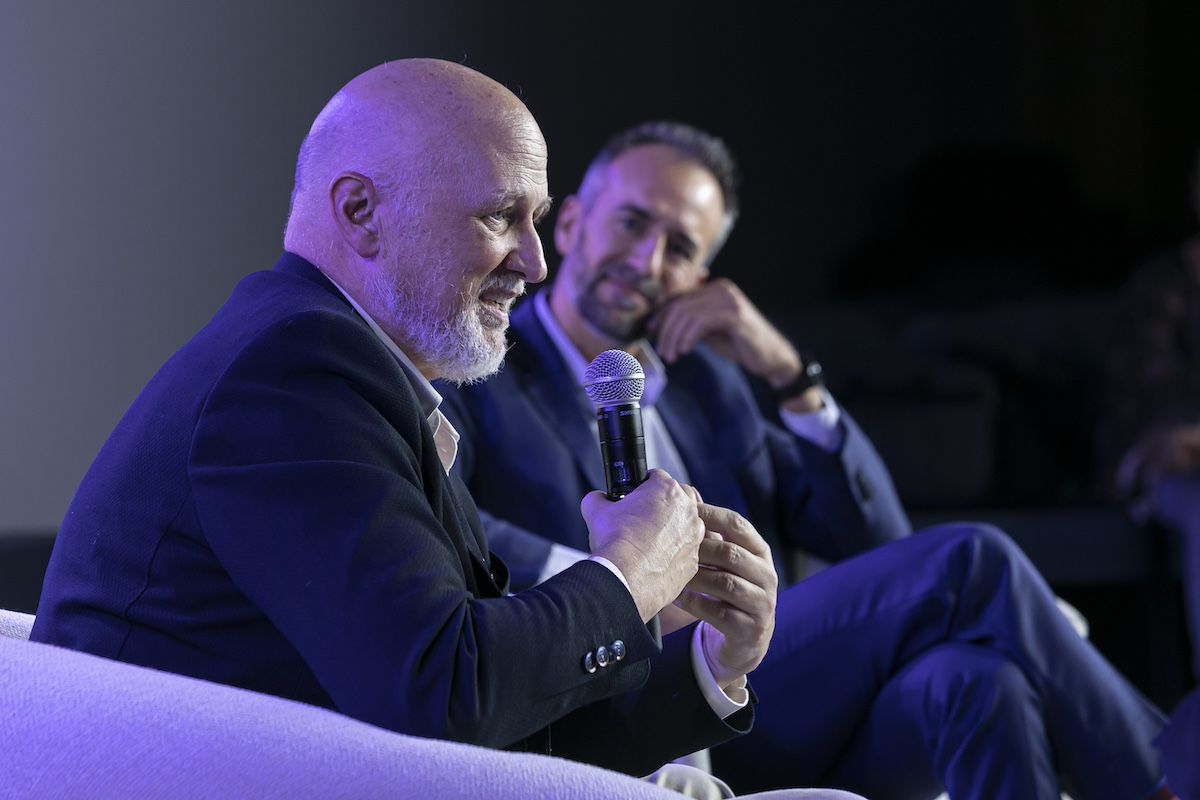
In this journey, artists also play a relevant role: "They must not only be excellent, but also be able to connect with current society," defended the head of the Palau, in a context where artists can now have direct communication with the public and generate community.
Breaking stereotypes
Brufau and Oller have set out to debunk stereotypes about their institutions and classical music, starting with the age of spectators: the average age at the Palau de la Música Catalana is around 47 years old, which "breaks the stereotype that the average age is very high."

To win over young spectators and new audiences, both auditoriums promote initiatives to reach out to them, and they also do so in collaboration with other cultural institutions, with proposals such as Vibe35, aimed at those under 35. Brufau, who highlighted the "collaborative spirit and good rapport among the different cultural institutions," explained that it is a collaborative project between the Teatre Lliure, the TNC, the Mercat de les Flors and the Liceu, in addition to L'Auditori and the Palau, to reach young spectators.
Interinstitutional collaboration acquires its maximum expression in organizations such as the European Concert Hall Organization (ECHO), of which both L'Auditori and the Palau are part and which brings together the main European auditoriums. In fact, only two European cities have more than one institution within ECHO: Vienna and Barcelona.
Initiatives like these are complemented by other programs and proposals, such as those focused on schools and families, and subscriptions with new formats: "It seems that traditional subscriptions are outdated, when in fact we are all subscribing more than ever," said Brufau in reference to digital and streaming platforms.
A third large hall for Barcelona
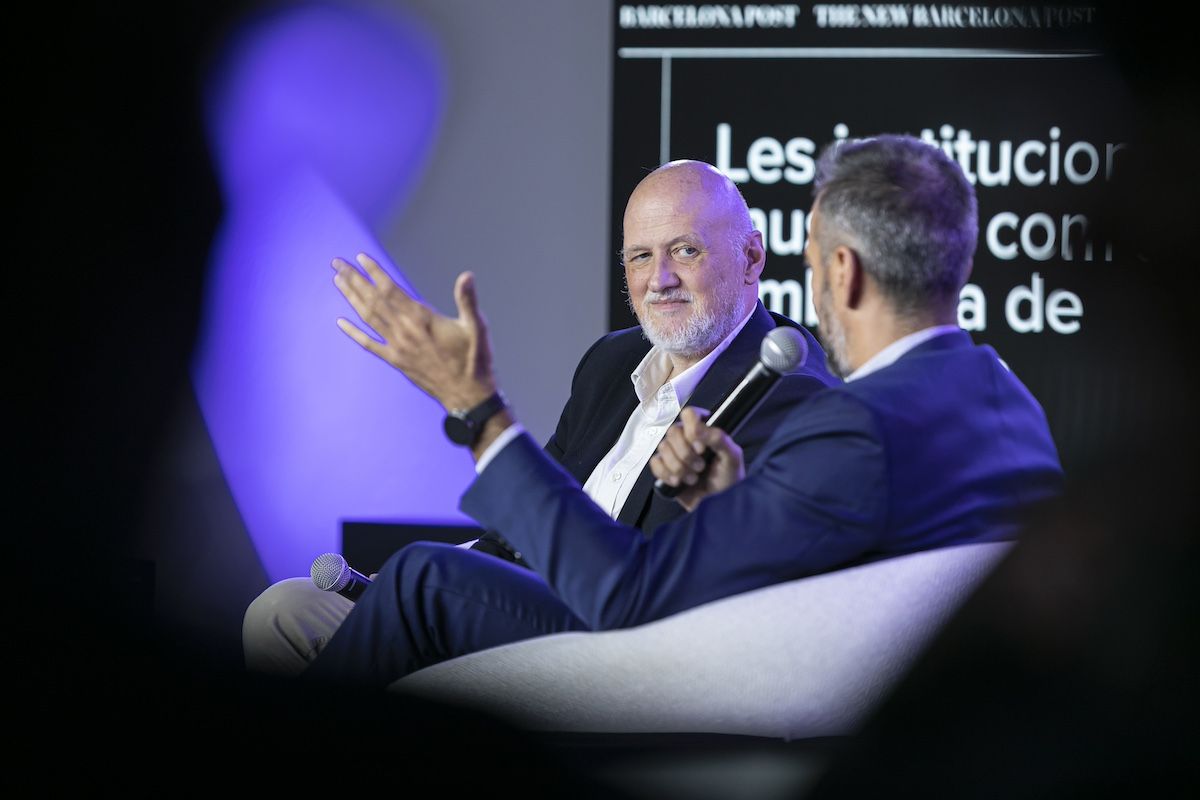
In addition to debunking the stereotype of the high average age, Brufau and Oller have denied the idea that classical music has lost audience in recent years. In fact, Oller has assured that it is something that has been announced recurrently for decades, but that has not happened. According to Oller, it was already said 30 years ago, but 25 years ago L'Auditori was created, and it fills up just like the Palau. "The occupancy level has been absolutely key to being able to grow Barcelona's musical offer. Even a third hall would be needed in the city," Oller reiterated.
To advance Barcelona's positioning as a city of classical music, both Brufau and Oller have agreed on the importance of improving the Patronage Law to "make collaboration with institutions like these more attractive, and to understand this relationship as a collaboration, and not as a cold sponsorship," Brufau highlighted. Oller, who celebrated the reform of the Patronage Law, has asked to go further. In this regard, he has proposed seeking imaginative formulas to continue advancing in this direction, in a Barcelona that, according to Brufau, "has great musical potential."
Add The New Barcelona Post as your preferred Google source for free
Stay informed with the latest news.