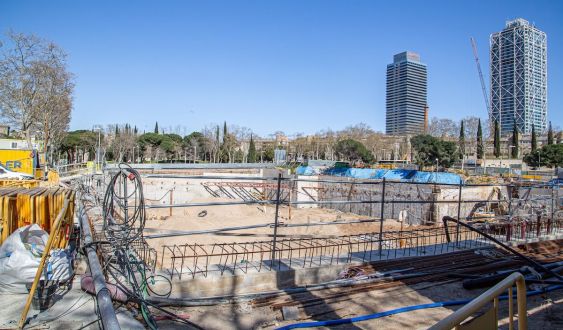
Some students of the Universitat Pompeu Fabra (UPF) will remember that, for years, all of that was an open-air parking lot. Now, trucks and workers have invaded the space where there used to be cars and have set to work to begin constructing the Ciutadella del Coneixement, a scientific, cultural, and urbanistic initiative that aims to transform this area of the city. The earth is being moved and meters are being excavated downwards to define the foundations of three buildings that will form a research complex that will bring together some 2,000 researchers. It will be integrated with the university campus where Law, Economics, and Humanities are studied, a few minutes from Ciutadella Park and almost at the entrance of the Barcelona Zoo.
The UPF, the Spanish National Research Council (CSIC), and the Barcelona Institute of Science and Technology (BIST) are the main promoters of this macro-project, known as the Mercat del Peix because, long before it had a parking lot, that plot had housed the city's Old Central Fish Market. It was there from the 1930s to the 1980s, when it moved to Mercabarna, in the Zona Franca. The Barcelona Biomedical Research Park (PRBB), an actor also very close to the land where the complex will stand, separated by the Ronda Litoral, has just joined this project.
The work is now concentrated on the base of the research complex, nestled in a 7,500 square meter plot. Precisely, what will go there will be a parking lot, this time underground. It will be managed by the public company B:SM, which already managed the old parking lot. The construction schedule has been extended and, with the start in early 2023, it is estimated that the entire complex will be finished between 2027 and 2028, totaling an investment of 150 million euros. If complementary outlays are taken into account, such as all the actions being carried out in Ciutadella Park, the figure rises to 350 million euros.
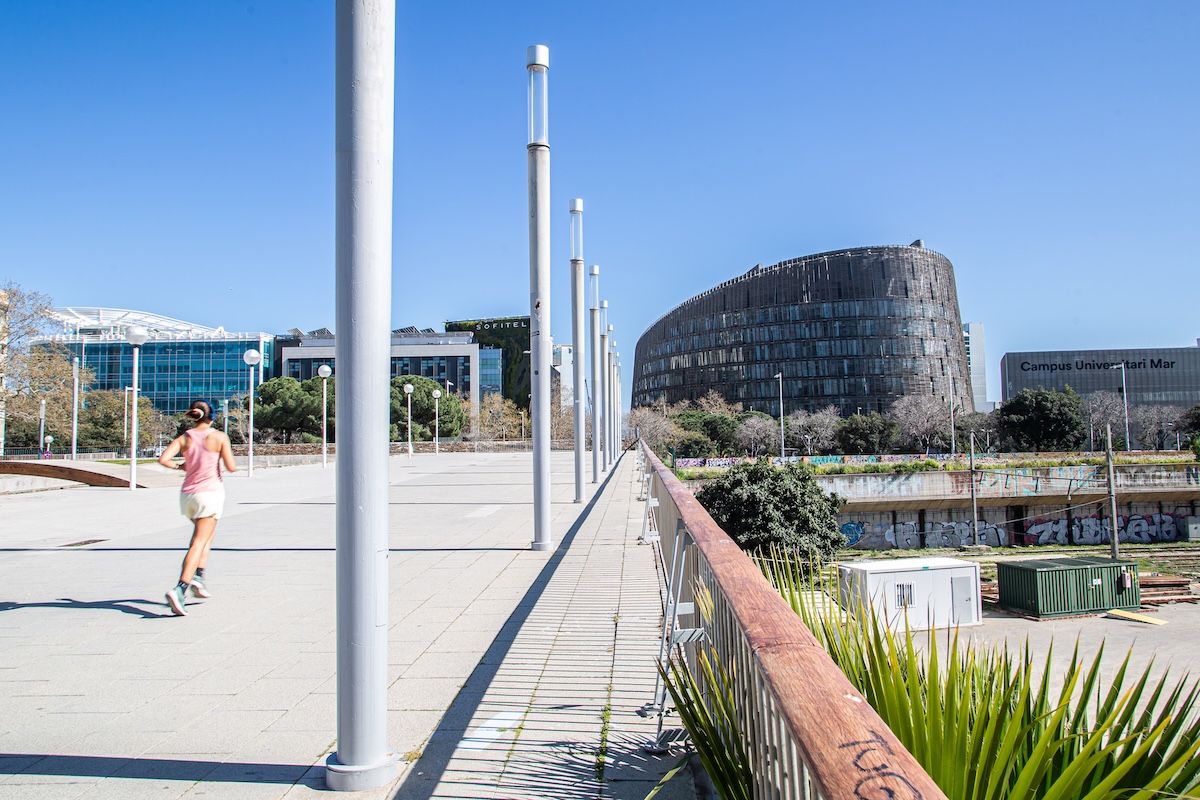
Currently, the open-pit excavation and sand removal are being finalized, with 40,000 cubic meters having been deposited on Sant Sebastià beach. Over the next few weeks, work will begin on the foundations and structure. The parking lot, on floor -2, is expected to come into service in the first quarter of 2026. Floor -1 also needs to be addressed. It will be shared by the three buildings and will house the general services, i.e., technical and IT equipment, as well as spaces for the waste that will be generated in the laboratories located above. This phase, which will also require the underground connection to the UPF's Ciutadella Campus, is estimated to be completed between the end of this year and the beginning of next.
Once the base is done, it will be time to start erecting the three buildings, which will add up to 45,000 square meters of floor space. The largest will be the one defined by BIST, with about 21,000 square meters distributed over eight floors. Its design will be carried out by the Barcelona architecture studio Barozzi Veiga. It will be the main piece of the complex and will be dedicated to precision medicine, bringing together almost a thousand researchers under its roof. This is the main raison d'être of the Mercat del Peix project: to strengthen the different research centers that make up BIST, good at what they do, but of limited size and scattered throughout the city. Providing them with a shared headquarters mobilized this scientific cooperation institution promoted by former minister Andreu Mas-Colell a decade ago.
The forecast is that all professionals from the Institute for Research in Biomedicine (IRB) and half of the staff from the Institute of Bioengineering of Catalonia (IBEC) will move, both currently concentrated in a Barcelona Science Park (PCB) that is full to the brim and originally designed to host companies. There will also be space for the Catalan Institute of Nanoscience and Nanotechnology (ICN2), the Centre for Genomic Regulation (CRG), and the Institute of Photonic Sciences (ICFO).

With a budget of around 92 million euros, the financing of this building has been one of the main difficulties in moving it forward, with a loan from the European Investment Bank (EIB) that has not yet been finalized. The multiple changes in Government in recent years have not helped either. With Illa's entry, the Catalan executive has decided to unblock the situation by assuming the entire investment and putting the PRBB, directed by Dr. Jordi Camí, in charge. Camí was one of the first to argue that the Ciutadella had to recover the scientific tradition that had seen it born with the 1888 Universal Exhibition. The PRBB will now be responsible for the promotion of the building and the bidding for the construction works, leveraging the experience it has accumulated over almost 20 years of managing a building that houses different research centers with a staff of 1,400 workers. "Our model is subjected to a stress test," says Camí.
Then there will be the buildings shared between the UPF and the CSIC, which will have a budget of 29 million euros and will bear the Californian and Barcelona stamp of the architecture studios ZGF Architects, Mirag, and Double Twist. The one with the most novelties is the one that will be occupied by the university, an 8,000 square meter block. The original idea was to dedicate it to planetary well-being, a concept that has materialized in the Àgora Barcelona, a research institute to help better define public policies, with a focus on youth, justice, and social resilience. "We had the container but not the content," summarizes the associate vice-rector, Pablo Pareja. A proposal that is difficult to differentiate from the international innovation center for public services that is being developed at the Industrial School. It is expected that the Àgora Barcelona of the UPF, which will have the participation of the Government, the Generalitat, and the City Council, will begin to look for its researchers next year, so that, when the works are finished, more than 30 professionals can start working. It will have capacity for about 300 employees when fully operational.
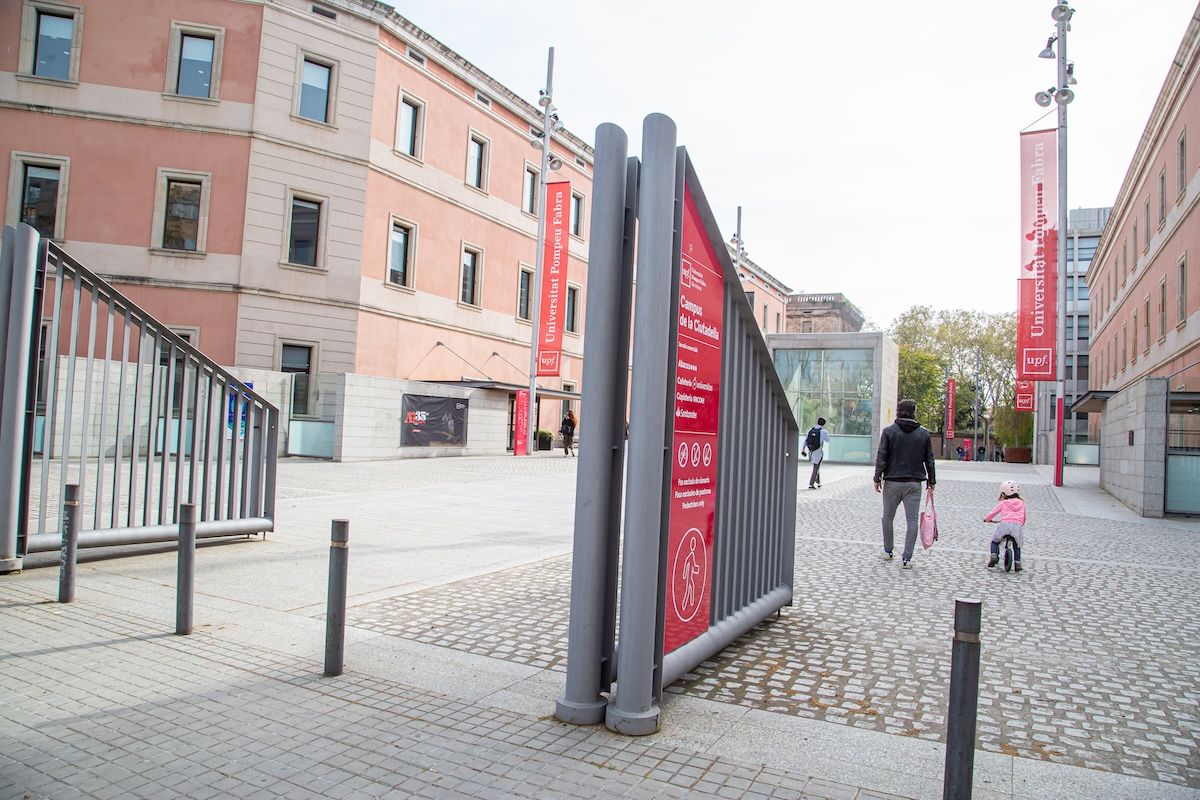
Finally, the smallest building, with 6,000 square meters, will be the headquarters of the Institut de Biologia Evolutiva (IBE), a joint research center of the CSIC and the UPF. Currently, the IBE has a couple of scattered headquarters around the city and the new building will serve to bring together 350 researchers from about 35 research groups. It will focus on biodiversity research and collaborate with its neighbor, the Barcelona Zoo. An example of this alliance is the biological bank they have promoted to preserve endangered species and to be able to recover in the future those that, unfortunately, have not been able to survive the damage caused by people.
The Ciutadella del Coneixement has been strengthened as the years have passed, despite the accumulated delays. The initial proposal has seen the CSIC decide to redouble its involvement. The Government plans to build a building to house two more health research institutes, the Institute of Biomedical Research and the Institute of Molecular Biology, currently located in Clínic and PCB. The executive project is now awaiting tender.
It will do so on a plot very close to the future Mercat del Peix complex, on Ramon Trias Farga street with Doctor Trueta, where there is a headquarters of the State Mobile Park, an organization responsible for managing vehicles for the representation of high-ranking government officials and the Head of State. The new center is estimated to bring together more than 300 professionals and about 40 research groups.
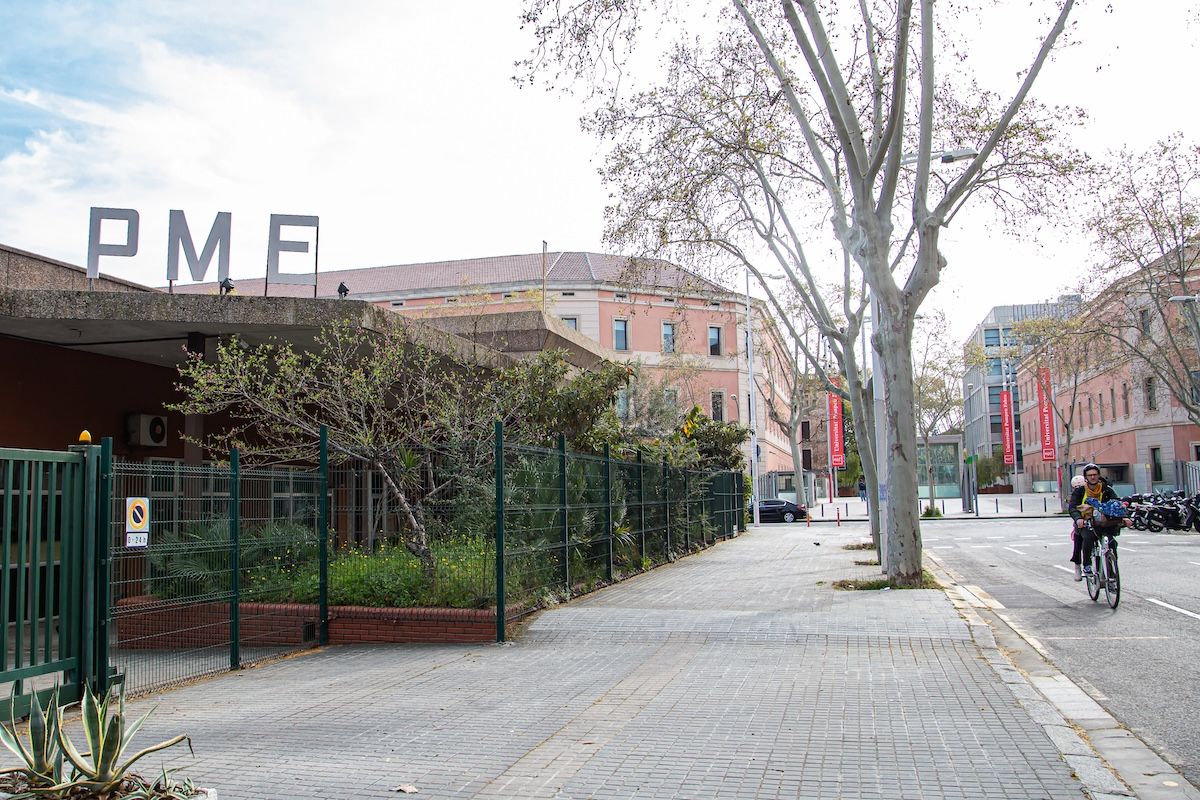
A park that begins to save its inhabitants
Not only are new projects being gained, but it is also being used to give a good shake-up to the Ciutadella, one of the only parks in a city with a lot of concrete, but which fails to convince its neighbors. The first example can be seen in the Hivernacle, recovered since the end of 2023, after years of precariousness. It has been restored to the splendor with which it was conceived for the 1888 Universal Exhibition, with a hundred plants and trees filling its interior.
Not long ago, the Centre Martorell d'Exposicions, has also reopened, formerly the Museu Martorell de Geologia, and the rehabilitation of the Castell dels Tres Dragons, that massive structure that many only remember closed at the park entrance from Arc de Triomf, is beginning to get on track. For now, only the exterior restoration will be worked on, and the interior rehabilitation to give it some use will be left for the next term. All this, to make a very impermeable park more attractive, in which an attempt will also be made to open it up to its surroundings, with a first announcement of recovering its historic entrance through the Zoo. The concretization of the future state public library, which will be built next to Estación de França, will close the squaring of an initiative that is also cultural.
Add The New Barcelona Post as your preferred Google source for free
Stay informed with the latest news.