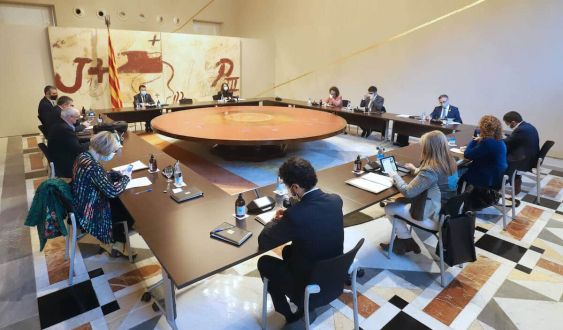
European funds stand as the great promise to overcome the crisis caused by the pandemic. A total of 750,000 million euros will be distributed among member states, with the aim of fostering digitalization and the transition to a green economy. Catalonia does not want to be left behind and has been working for months to choose the best projects to present to the Government. Initially, the Catalan executive will propose a total of 27 projects to compete with the rest of the communities, which represent an investment of 41,000 million euros. This figure considerably exceeds what the Government had previously indicated as Catalonia's share in the distribution of these resources within the State, which was around 30,000 million euros.
[subscribe_newsletter_esp]
The selected projects have been studied by the Commission for the elaboration of the Plan for Economic Reactivation and Social Protection (CORECO), with the support of an expert group composed of Andreu Mas-Colell, Carme Trilla, Montserrat Vendrell, Miquel Martí, and Therese Jamaa, among others. The selection was made according to criteria such as the uniqueness of the projects, their degree of maturity, or the amount, and all of them can begin to be executed this year if the Government chooses them to receive these resources. They were chosen from the 542 initiatives that arrived at the electronic mailboxes enabled by the Generalitat, where administrations, companies, and entities could send proposals that they considered fit the objectives of the Next Generation EU funds. These mailboxes will remain open to receive more ideas until Madrid and the Government make public the initial calls to apply for the funds.
Chips, audiovisual sector, and electric batteries
The chosen projects are committed to the transformation of very diverse areas, such as energy efficiency, decarbonization, mobility, training, and telecommunications. Some were already known, such as the initiative to turn Catalonia into a driver of audiovisual innovation and video games in Southern Europe, led by the Parc Audiovisual de Catalunya, the city councils of Terrassa, L'Hospitalet, Sant Joan Despí and Barcelona, and the Consorci de la Zona Franca, with a budget of 290 million euros; the development of an urban campus of hubs focused on verticals such as mobility, fintech, health, or sports tech, promoted by Barcelona Tech City after the success of Pier 01 and with an investment of 743.7 million, or the promotion of a chip design and prototyping industry, dedicating 371.3 million and leveraging the leadership of the Barcelona Supercomputing Center (BSC-CNS).
The total investment of the projects that the Government will present is 41,000 million euros, although it had initially maintained that 30,000 million corresponded to Catalonia.Among the 27 projects, highlights the one that wants to promote the Battery hub in Catalonia, with the will to strengthen the value chain of electric batteries, an issue that is on the agenda of Catalan industry after the announcement of the closure of the Nissan plant in the Zona Franca. The aim is to finance the construction of a plant for the development of new batteries, another for the production ofbattery box, and a third for battery recycling, as well as the development of a new generation of public chargers. This project will be worked on hand-in-hand with companies from the mobility and technology sectors that the Govern has not specified, universities such as the Universitat Politècnica de Catalunya (UPC), and centers such as the Institut d'Investigació en Energia de Catalunya (IREC) and the Institut de Ciències Fotòniques (ICFO).
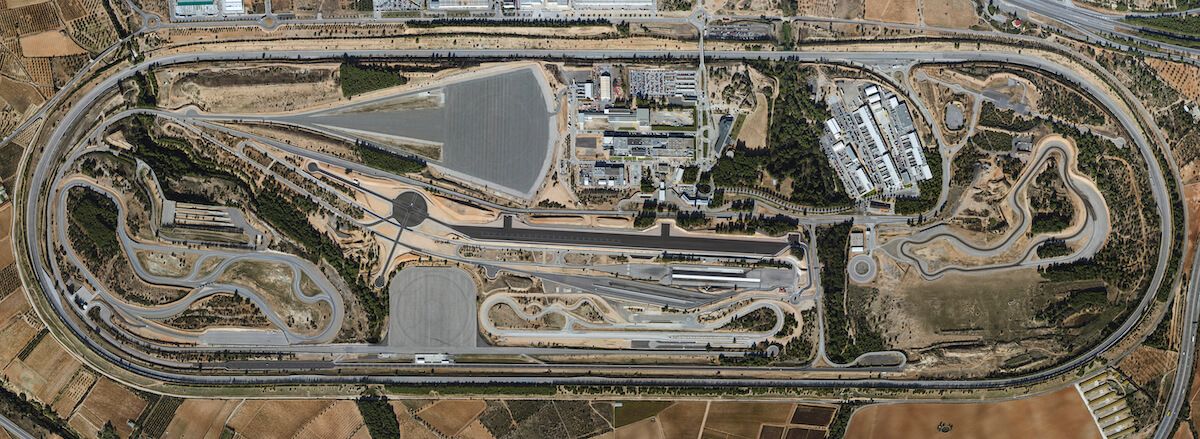
Closely related to this last project is another, more focused on promoting future mobility with companies such as Idiada, Ficosa, Silence, Worldsensing, or Busup Technologies. With a planned investment of 1,237.4 million, it includes the development of new solutions, services, and products, in addition to the development of testing and certification infrastructures for solutions, which may include the expansion of Idiada's tracks in Santa Oliva.
Another project that the Govern will present in Madrid includes the construction of the first quantum computer in Catalonia, led by the BSC-CNS, and the first quantum highway between Barcelona and Madrid, led by the ICFO and with the participation of Cellnex. They also want to create a public-private investment fund with 300 million euros to support companies with high growth potential and capacity to reactivate the Catalan economy, through the Institut Català de Finances (ICF); the development of an hub for innovation and production of plant protein-derived products, with 134.8 million, and a plan to promote the attraction of digital talent, with 65.3 million and the participation of the Mobile World Capital Barcelona (MWCapital).
Projects with larger budgets
The most expensive project of the 27 chosen by the Govern is the Carbon Recovery project, with a total budget of 7,282.1 million euros. This initiative aims to position Catalonia as a European benchmark in decarbonization and circular economy, through the articulation of a regional platform that brings together various proposals related to sustainability, with the participation of companies such as Suez, La Farga, Negdia, Holaluz, Factor Energía or Serradora Boix, and technological centers such as Eurecat and Leitat.
Making Catalonia a European benchmark in decarbonization is the project with the largest budget of those that the Govern will send to Madrid, with 7,282.1 million eurosThe second project that requires a higher investment is that of the Battery hub, with 6,869.9 million, and the third is one calledHidrogen Valley of Catalonia, with 6,555.8 million. The latter must serve to create a regional platform that integrates different initiatives around green hydrogen in Catalonia, with the participation of Celsa, Nedgia, Balfegó, ICL, IREC, Eurecat or the Universitat de Rovira i Virgili.
Funds for Metro Line 9, the tram, and the expansion of the FGC network
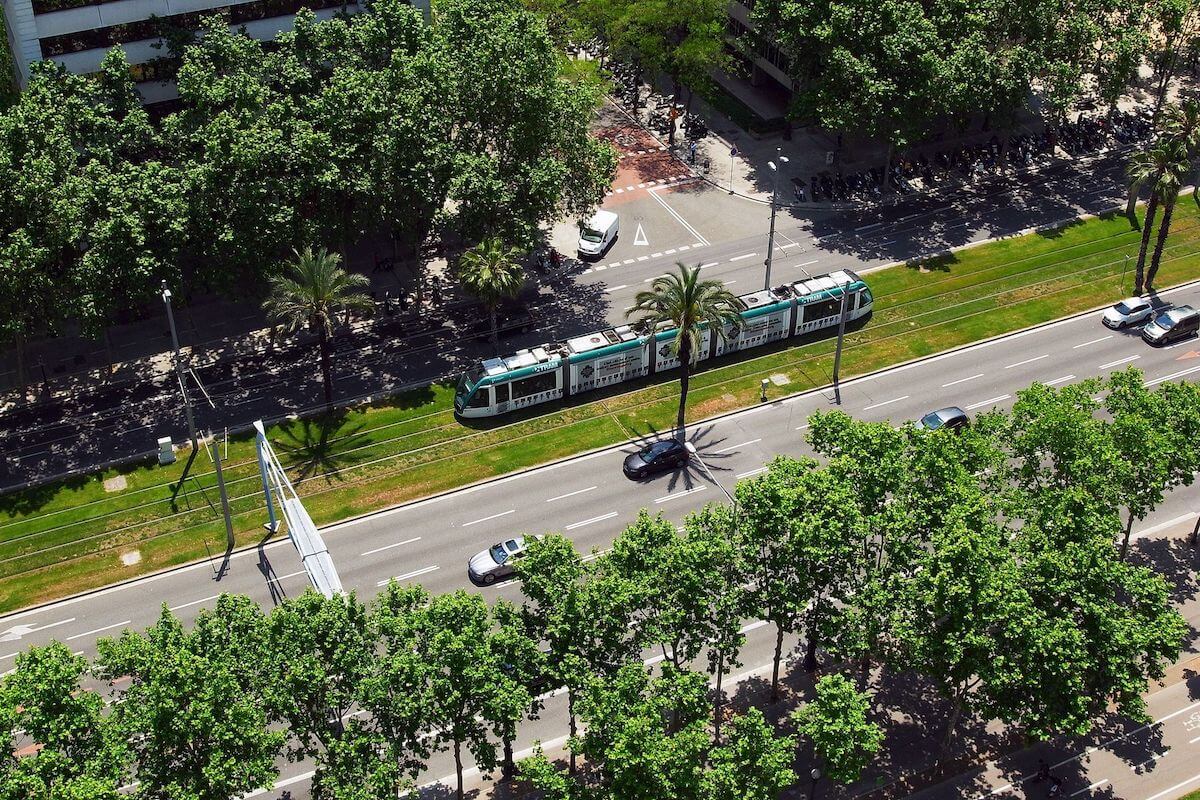
Some of the projects presented this Tuesday will serve to accelerate initiatives that the Generalitat had identified as priorities for Catalonia. In terms of infrastructure, the Government wants to obtain 1,880 million to boost the Catalan railway network. This project includes the proposal to allocate them to finance the construction of Line 9, after years of delays and cost overruns; link the Plaça Espanya and Gràcia stations of Ferrocarrils de la Generalitat de Catalunya (FGC) by extending Line 8, and the construction of the train-tram in Camp de Tarragona, taking into account that cities such as Tarragona, Cambrils or Salou have been left without a practical railway connection with the commissioning of the Vandellòs variant of the Mediterranean Corridor. The union of the tram in Barcelona is also included, an infrastructure whose future has recently been unblocked, with autumn 2021 as the expected date for the start of works.
The strategy promoted by the Department of Digital Policies to foster the space economy also aims to attract European funds, aspiring to a total of 109.6 million. These resources are intended to deepen the development of this industry in Catalonia, based on nanosatellites, which orbit at low altitude and are cheaper than traditional ones. These small satellites can be used to provide homogeneous coverage for the Internet of Things (IoT) throughout the territory or to obtain images from space, which can be used to analyze crop productivity or prevent and detect forest fires.
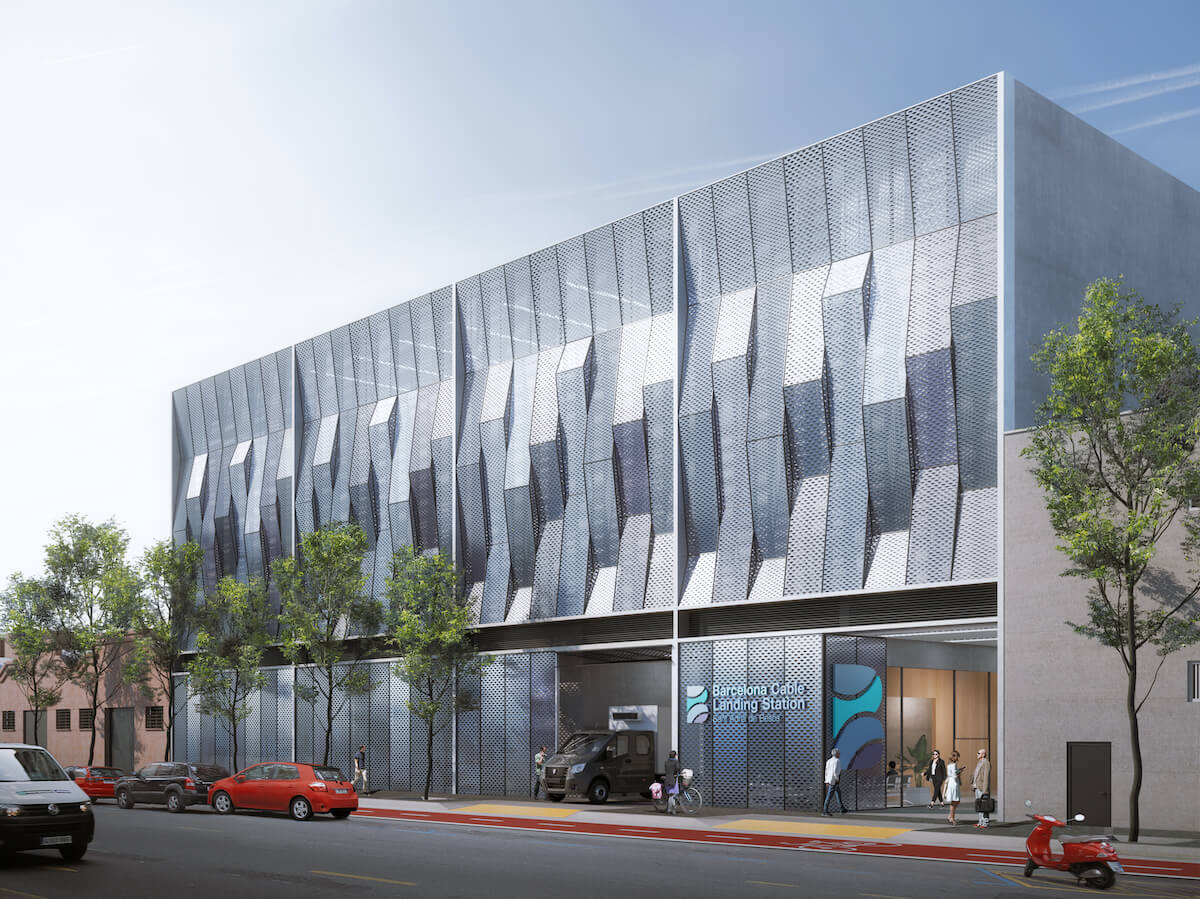
Another strategy promoted by this Department that also wants to be financed with European funds is the deployment of fiber optics in all towns and industrial estates in Catalonia, and the establishment of 5G. The 5G areas promoted by the Government and the different pilots in which it participates to foster this technology can also benefit, as well as the interconnection of the Sant Adrià submarine cable station with the Parc de l'Alba. All these initiatives are integrated into a project that aims to develop digital infrastructures, with a budget of 664.5 million.
CATALONIA'S MAIN INITIATIVES TO ATTRACT NEXT GENERATION EU FUNDS
- New model of autonomy and care for people
- Creation of a digital innovation and video game hub
- Transformation of the Catalan health system through the development and adoption of new technologies
- Innovation and vegetable protein production hub
- Plan to attract digital talent
- Modernize irrigation systems and guarantee water supply from desalination with renewable energies
- Carbon Recovery Project for decarbonization and circular economy
- Promotion of the circular bioeconomy in the valorization of livestock manure
- Activation of the bioeconomic production of Catalonia's forests
- Battery hub Project to make Catalonia a reference center for electric batteries
- Boost to the railway network: completion of metro line L9, connection of FGC's Plaça Espanya and Gràcia stations, construction of the train-tram in Camp de Tarragona and the union of the Diagonal tram
- Plan to promote future mobility
- Revitalize urban habitats
- Promote the natural environment and rural areas
- Foster the space economy and nanosatellite launch plan
- Artificial intelligence and language technologies hub
- Smart Cloud Infrastructure
- FP CAT Hub to modernize vocational training
- Promote the network of urban hubs specialized in sectors with high potential
- Construction of the first quantum computer in Catalonia and the first quantum highway between Barcelona and Madrid
- Promote knowledge regions
- Institutional reform and strengthening of the capacities of the Catalan science, technology and innovation system
- Creation of a chip design and prototyping hub
- Hydrogen Valley of Catalonia Project for the production of green hydrogen
- Digital and technological transformation of Catalan industry
- Creation of a public-private investment fund to invest in growing companies
- Deployment of the fiber optic network and 5G technology, including the interconnection of the Sant Adrià submarine fiber optic cable station with the Alba Park synchrotron
Add The New Barcelona Post as your preferred Google source for free
Stay informed with the latest news.
