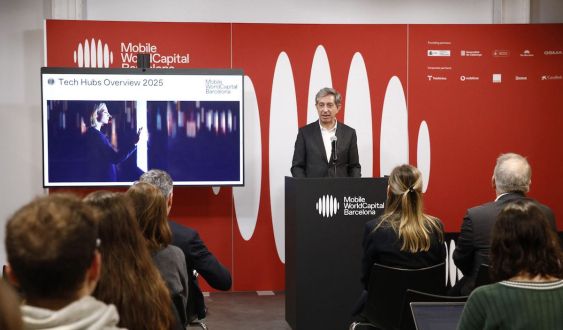
Barcelona consolidates itself as a reference territory for multinational companies to establish their technological development centers. Specifically, the city already concentrates a total of 160 international technology hubs, which currently generate more than 34,800 jobs. During 2024, 13 new centers were installed, representing a 9% growth compared to the previous year, according to a study by Mobile World Capital Barcelona (MWCapital), with the collaboration of the Barcelona City Council and Acció, the competitiveness agency of the Generalitat.
"The figures are surprising again," said the CEO of MWCapital, Francesc Fajula, who believes that "the consolidation of these centers demonstrates Catalonia's capacity to attract investment and generate highly qualified jobs." Among the 13 new hubs that were installed in the last year, which generated an economic impact of almost 25 million euros, product technology development centers stand out, such as Sony AI or DataXstream, industrial systems such as the multinational IFCO or even financial services such as Revolut or Stenn. The study has focused only on technological development centers, although taking into account the entire value chain and not just product development ---excluding centers dedicated to sales or after-sales---.
HP was the first company to establish a development center in all of Catalonia, specifically in Sant Cugat del Vallès, in 1985. However, it has been in recent years that the presence of these centers has experienced exponential growth, consolidating Barcelona and its metropolitan area as one of the favorite territories to locate a center of these characteristics, although it has other cities with which to compete for the capture of these investments such as Madrid, Lisbon, London or Paris. The forecast is that this growth will be maintained and strengthened in the coming years, and if technology centers already bill more than 2,800 million euros, with an average of 18 million per hub, the projection is that they will exceed 3,600 million euros in 2026, 26% more. In addition, according to Fajula, no closures have been detected, although there have been "some disappearances, but basically due to mergers."
These technology development centers currently employ more than 34,800 workers, and last year alone, jobs increased by more than 6,000, representing a 22% growth in just 12 months. This figure is expected to grow to more than 42,700 jobs by 2026, according to the third edition of the Tech Hubs Overview report. The average workforce of these centers is 235 workers, figures also higher than the previous year when employees numbered around 200. Among the most demanded profiles by these technology centers are software engineers, consultants, and cybersecurity analysts.
Within these hubs, those offering technological solutions predominate (20% of the total), although they are closely followed by video game creation, which accounts for 14% of the total. However, the sector that generates the most employment is industrial systems, with an average workforce of 475 workers per hub, as well as the health sector, with an average of 380 employees. The vast majority of centers develop some technology known as deep tech, as 70% of them offer some type of this technology, especially related to artificial intelligence, blockchain, or robotics.
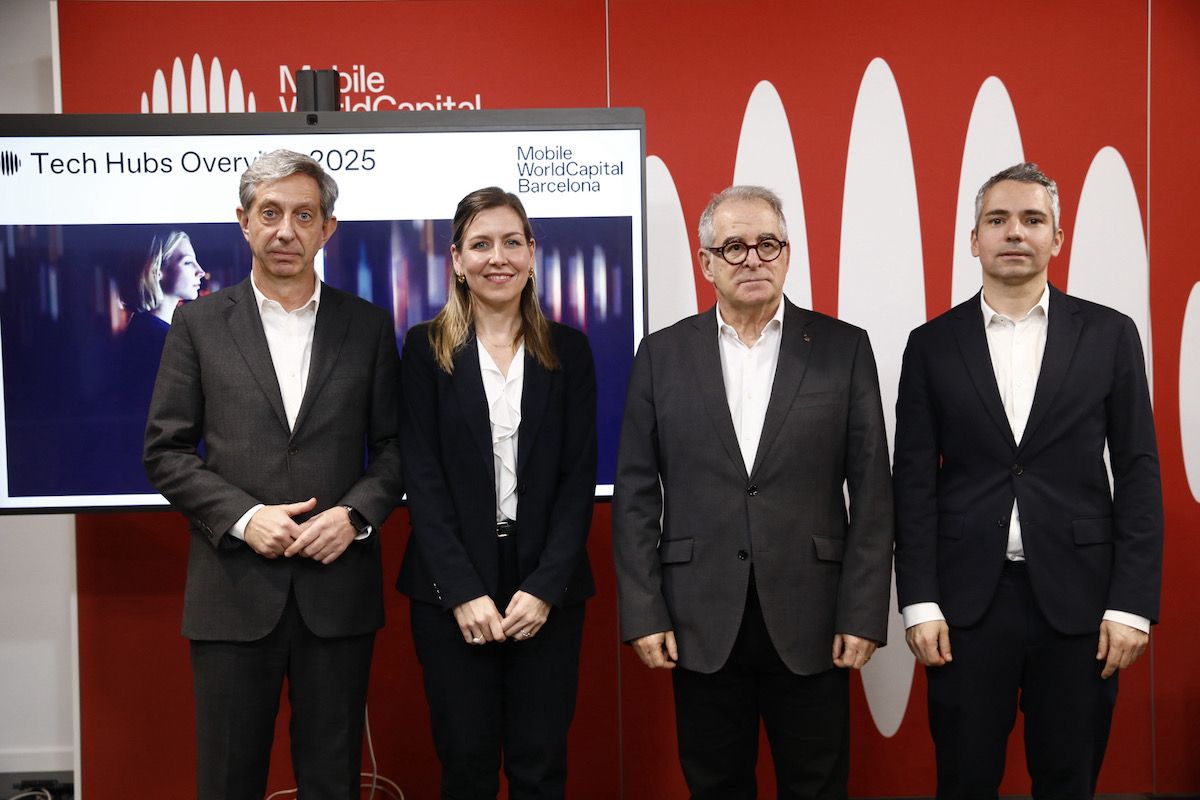
In addition, the report also highlights that the technology centers established in the Catalan territory are high-value centers for parent companies, as in 70% of them, decisions are made and executed on strategic aspects of the company. Likewise, these hubs become reference centers for the company to which they belong, with almost three out of four providing services beyond Europe.
The attraction of qualified talent, main attraction and future challenge
The qualified talent available in Catalonia is one of the main reasons that attract new hubs to settle in this area. Up to 39% of companies value this reason as the main one for choosing Barcelona and its area, which even surpasses the previous presence of the parent company in the territory, both due to the existing talent in Catalan cities and their capacity to attract new profiles to the city. On average, 56% of the staff of these hubs are of Spanish nationality, a figure that increases in management layers to 60%.
However, companies also point out that attracting and retaining international talent is one of the main challenges for the future. Specifically, they value that the cost of living and access to housing are factors that could affect the attraction of professionals. In addition, the staff of these centers are still far from achieving parity, as only 30% of workers are women, a figure practically equal to that of two years ago, when MWCapital prepared the first report. A sector even more masculinized if one observes senior executives, with only 26% women.
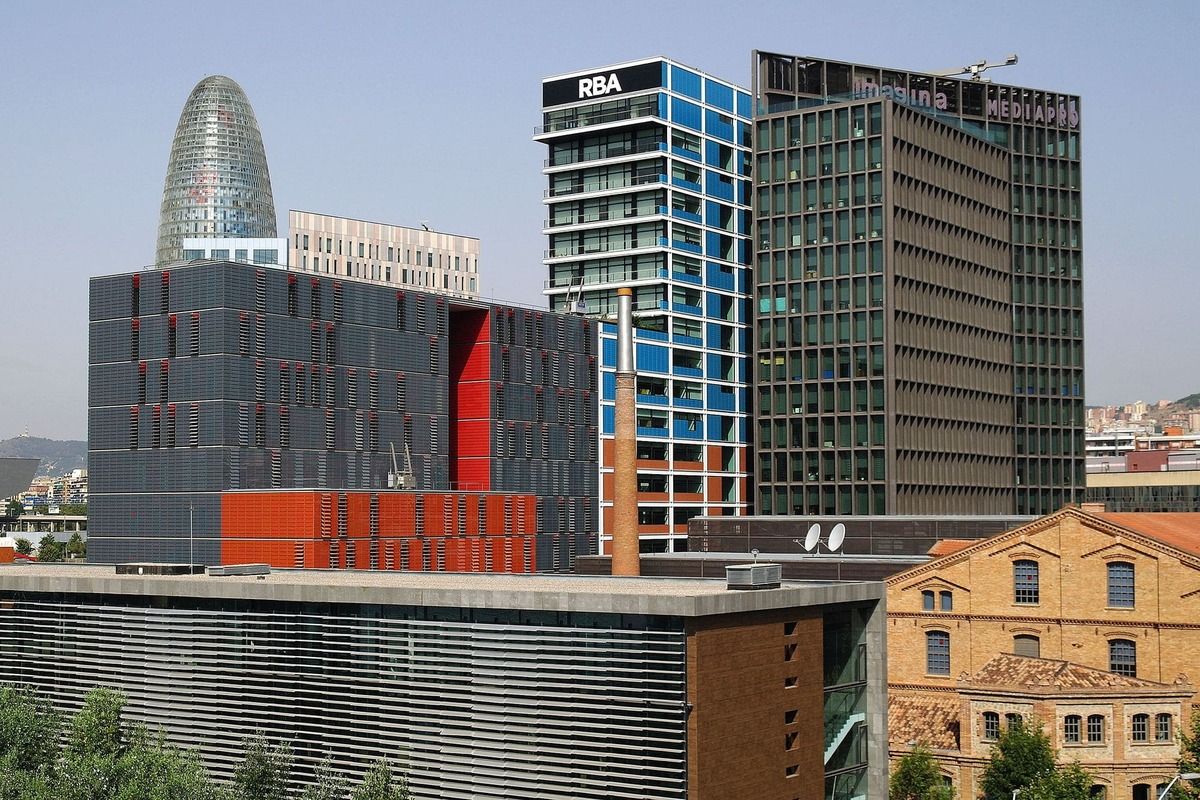
"Today, Barcelona's main engine is knowledge, linked to research, hubs or the health system," emphasizes Jordi Valls, the fourth deputy mayor for Economy of the Barcelona City Council. In fact, most of these hubs are concentrated in the Catalan capital, which accounts for 76% of the 160 centers distributed throughout Catalonia, with practically half of them concentrated in 22@ (46% of the total). In fact, of the 13 nine hubs created in 204, 11 of them have been installed in the Catalan capital. Other cities in the metropolitan area also stand out, concentrating 19% of the total, such as Sant Cugat del Vallès, Cornellà de Llobregat or L'Hospitalet de Llobregat.
Parent companies from European countries lead the investment in hubs in Barcelona, with 62% of the technological development centers. Even so, the United States continues to be the country that most bets on the creation of these centers in Catalan cities, with 24% of them, but investment from countries such as Germany (with 16%), France (12%), the United Kingdom ---which has doubled its investment from 6 to 13%--- or Switzerland (8%) is also growing significantly.
Add The New Barcelona Post as your preferred Google source for free
Stay informed with the latest news.
