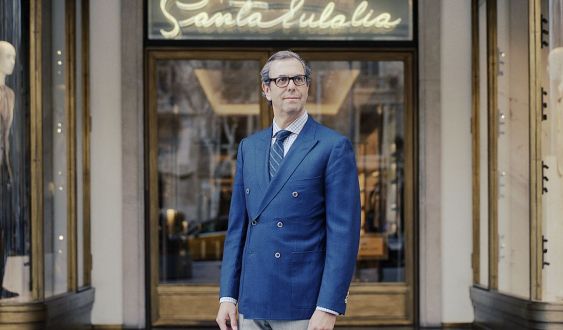
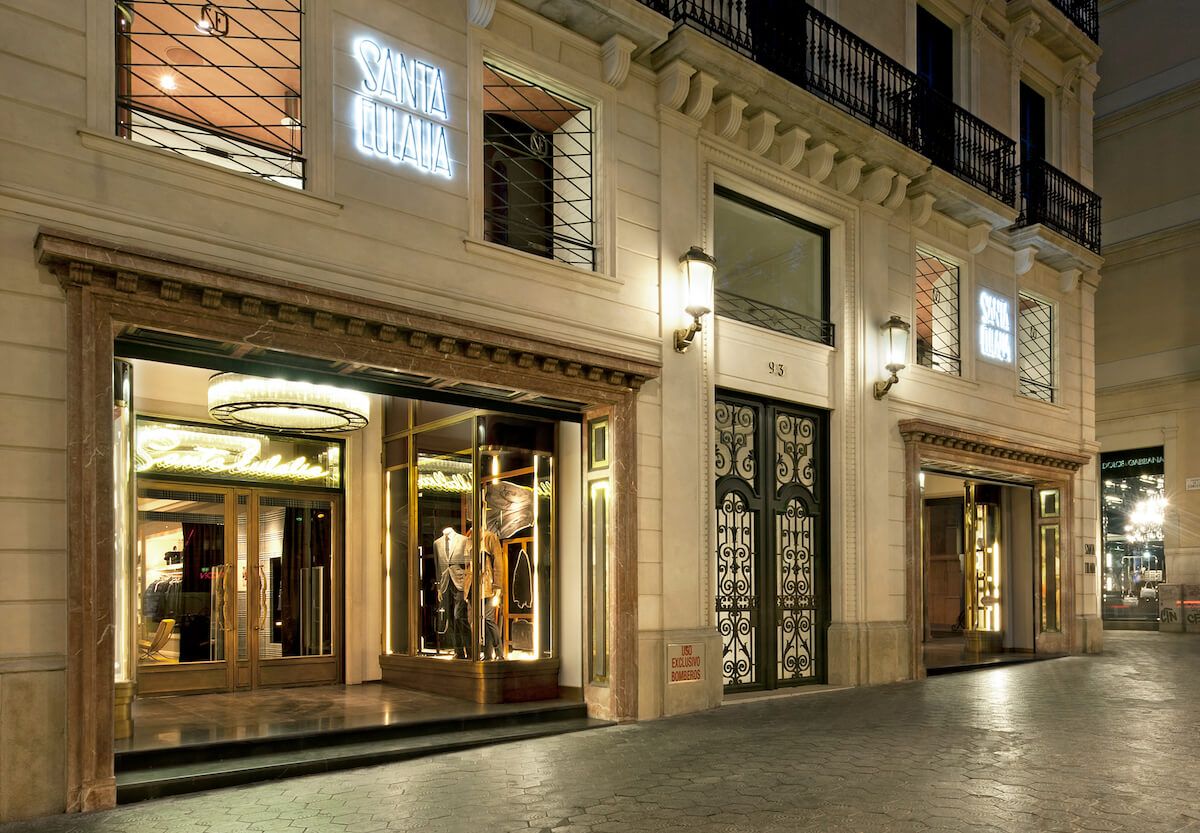
Luis Sans is part of the fourth generation at the helm of Santa Eulalia. Although the historic store was born on La Rambla, it has ended up becoming one of the most iconic on Paseo de Gràcia, its second location. A multi-brand establishment with fashion for men and women, as well as a small own collection, it was a pioneer in choosing a commercial brand as a name at a time when all businesses resorted to the surnames of the owners ---it was originally called Taberner Hermanos, after the first family that managed it---, or in being the first store in Barcelona where a haute couture fashion show was held. One of its current singularities is maintaining a workshop with a dozen tailors and officers, "the largest in Spain in bespoke tailoring and shirtmaking."
After weathering the storm, from Santa Eulalia it is already seen how Paseo de Gràcia is once again full of tourists, waiting for some key markets like the Asian one to fully return, and how the artery is preparing to celebrate its 200th anniversary, with La Mercè as the starting gun.
--- How has the pandemic shutdown been experienced in this area of the city?
--- Paseo de Gràcia has missed its customers. I have a photo from April 2020 that I took of the street with no one, not a single person on the sidewalk, not a car on the road. This had never happened. It has suffered and perhaps more than in neighborhood stores. And not only on Paseo de Gràcia but throughout the city center because we are not proximity commerce. We are centrality commerce, we attract demand from the rest of Barcelona, Catalonia, Spain, and the world, and the pandemic has hit us below the waterline. But, since most companies are large, they have held on because they have interests in different countries and, above all, financial lung. Therefore, they spend two years selling little, but they sell in other markets, online or less, and they hold on. Sales have suffered here, but there has not been a closure of stores, nor the commercial desertification that has happened in other places in Barcelona. Perhaps we have suffered more than in other areas, but it has been less noticeable. And, even so, stores continue to bet on Paseo de Gràcia.
--- And, in Santa Eulalia?
--- The pandemic has affected us forcefully, since we had the store closed for many months in 2020 and, later in 2021, we had many mobility restrictions. Added to this is the fact that people have been in their homes. A reason to buy clothes is because you travel, there are weddings and parties, or you go to work. Social contact is an incentive to dress well and make an effort. This has been coupled with the fact that we have many customers from the rest of Catalonia and Spain and international customers who could not come. Even so, tourists represented only a third of our sales before the pandemic and this season we have reached a little less than that figure. What we have noticed a lot is the recovery of local customers, who had not bought for two years and now want to change their wardrobe.
--- So, it hasn't gone so badly.
--- In recent months, the recovery has been vigorous, since our main customer is the local customer, unlike most brands on Paseo de Gràcia, which sell between 70% and 80% to visitors. Online sales continue to grow, but at a slower pace than during the pandemic.
"Perhaps we have suffered more than in other areas of the city but it has been less noticeable. And, even so, stores continue to bet on Paseo de Gràcia"--- How well have you done with online sales?
--- We have doubled sales since before the pandemic. But it was a small figure. In our case, the online channel represents 7% of turnover. However, we see a lot of influence of digital sales on physical sales. Many people consult online and go to the store to buy or call us to have it sent to them.
--- Will in-person presence eventually be replaced?
--- I don't see structural changes happening in this regard. It is true that online has accelerated during the pandemic and a large part of it will remain. But the basic need to dress and the excitement of doing so, that hasn't changed. The digital channel is useful, but there are many things that are better to see and touch. There are things that are not experienced online. When we return to full normality, we will return to normal sales.
--- Has the pandemic been a good time for renovation on Paseo de Gràcia?
--- There is always renovation. But, at some point, it came to a halt because it is very difficult to do when even the managers of the establishments cannot travel. Nobody opens a store without seeing a location. Many expansion projects stopped and, at the beginning of the pandemic, there was even a rotation slowdown. Now there has perhaps been a little more rotation, but as usually happens. There are always stores that come in and others that leave. But it is still a strong promenade, rents have not gone down and have not gone up either.
--- So, despite everything, Paseo de Gràcia is in good health.
--- Or in bad iron health. The pandemic years have been complicated. Although in recent months sales have normalized quite a bit, there are still brands that have not reached previous turnover levels. Even so, the street is still doing well because everyone understands that it is temporary. The blow has been hard, but that does not mean the health of the street is diminishing.
---How is the summer starting?
--- Tourism has responded: Barcelona is full again. The challenge now is that certain high-purchasing power visitors such as Russians and Asians are missing. North Americans, Europeans, and even South Americans have recovered, and some from the Middle East are starting to arrive. In terms of numbers of people, it may be less noticeable because Spain in summer relies heavily on tourism and is recovering very well.
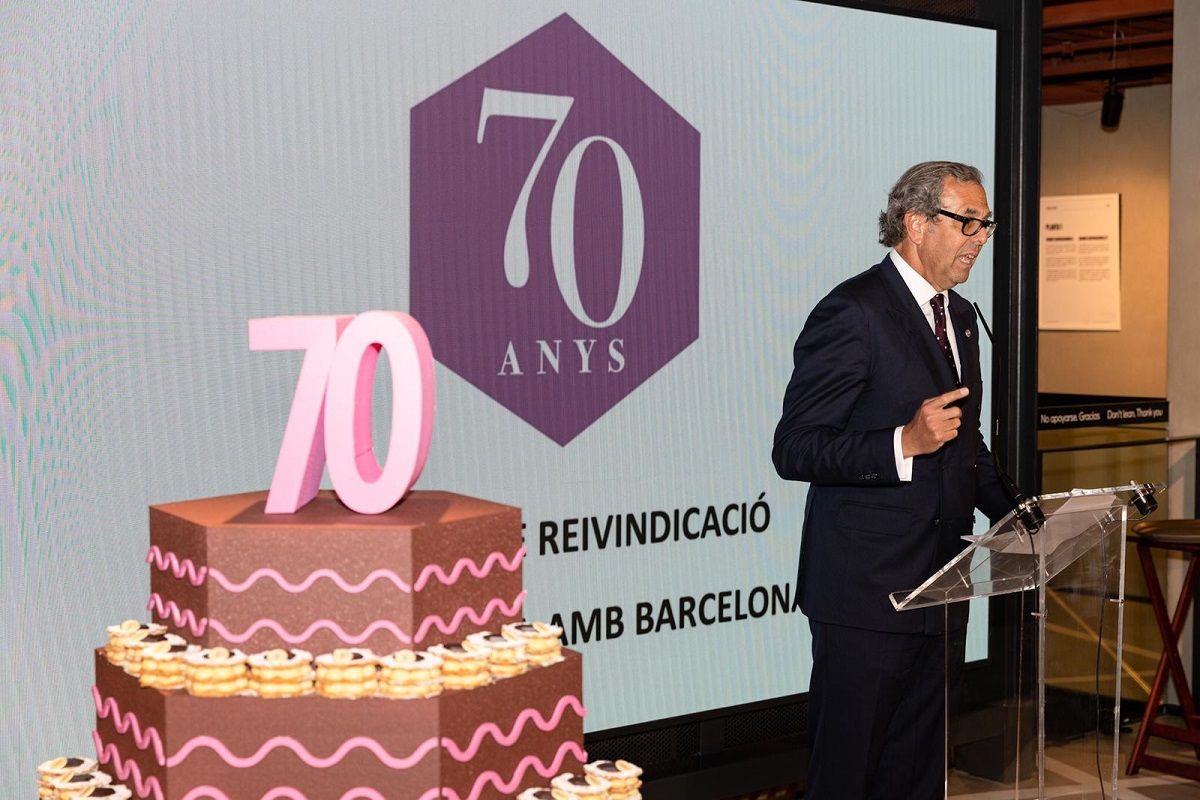
"Paseo de Gràcia is still doing well because everyone understands that it is temporary. The blow has been hard, but that does not mean the health of the street is diminishing"--- From the Associació del Passeig de Gràcia you have been demanding improvements for the artery for 70 years. Which ones are you asking for now?
--- The city is not doing well and wrong policies are being followed on many fronts. Perhaps the most serious is the lack of ambition to make Barcelona a great capital, and I don't mean in the political sense, but a city that attracts in the region and is relevant in the world. In the world there are two types of cities. Global cities, which count for everything, for the establishment of companies, universities, hospitals... And local cities. There are cities so big and global that they cannot question it, they would have to do very badly to stop being so, like Paris, London, New York, Beijing, Shanghai, Tokyo, Los Angeles and Miami. They are indestructible. Then, there are small cities like Tarragona, Girona or Valencia that can never be global cities because they do not have the critical mass to be so. And, then, there are many of us who are in between, who can fall to one side or the other. Barcelona is not destined to be a global city, but it can become one. It has the opportunity for it to be so, but, lately, it is giving up on issues such as the expansion of the airport and the 'no' to the Four Seasons hotel or to large international events. To so many and so many things that could make the city shine.
--- What should be done?
--- Barcelona has that capacity and is giving up. This is unforgivable. Is it irreversible? No. We need another municipal government to get its act together and we can regain rhythm. Opportunities have been lost, but new ones will continue to appear.
--- Recently, new opportunities have arrived in the city, such as the America's Cup. And others have been consolidated, such as the Mobile World Congress.
--- Having secured the America's Cup in 2024 and consolidating the Mobile World Congress are two excellent pieces of news for Barcelona, but we continue to deny the expansion of El Prat or the Primavera Sound was about to be lost due to the problems posed by the City Council. We continue to be an unfriendly city for international events to come to Barcelona. We make everything too difficult.
--- Is it noticed in any way directly on Paseo de Gràcia?
--- A city that aspires to be a capital needs mobility. Without it, there is no city. Mobility is air, rail, and much more needs to be invested in Rodalies, and, for those who cannot, the car. Destroying mobility and that hatred of cars that our city council has without providing alternatives is constricting Barcelona. It is a serious problem. I agree that cars must be replaced, but gradually, with consensus and by providing alternatives. If you don't let people come, they won't come. And they won't do it to shop, go to restaurants, to the lawyer, to the doctor… If you don't let everyone arrive, economic activity stops. And, another criticism, the deplorable state of the city. It is an abandoned, poorly managed city.
--- Does this neglect even extend to your avenue?
--- The promenade, specifically, we have it quite well. The cleanliness is good and there are no New Jerseys. We have very good and fluid communication with the district. Passeig de Gràcia is an island, but next to it there are a lot of streets that are neglected and dirty.
Add The New Barcelona Post as your preferred Google source for free
Stay informed with the latest news.
