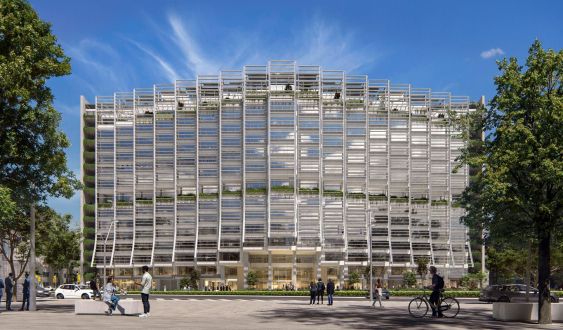
AstraZeneca reaffirms its strategic commitment to making Barcelona one of its largest centers of excellence and clinical innovation in Europe. The pharmaceutical multinational has decided to move the headquarters of the global research hub it established last year in the Catalan capital to the Estel Building ---the former headquarters of Telefónica---, which plans to hire 1,000 people by 2025, an initiative that will involve an accumulated investment of 800 million euros. In parallel, the British group has announced that the president of its Spanish subsidiary, Rick R. Suárez, will now also become the head of the Barcelona R&D center, incorporating the position of president of the AstraZeneca Global Hub Barcelona into his functions. He will replace Dr. Gonzalo de Miquel, who will take on new roles within the hub, assuming leadership of two new therapeutic areas.
AstraZeneca's goal is to move from its current headquarters on Diagonal to the Estel Building, currently undergoing remodeling, by early 2025. The multinational will thus become the first major tenant of this emblematic building on Avenida Roma once the ambitious renovation promoted by Freo and Bain Capital funds, with an investment of 80 million euros, is completed. The new office complex, which puts an end to a decade of abandonment and multiple failed real estate projects, will have an area of 51,000 square meters, becoming one of the most important in Barcelona. According to La Vanguardia, which reported the operation, AstraZeneca's hub will occupy two floors, that is, around 10,000 square meters, since each of them has up to 5,000 square meters. This area would mean doubling the current space. Sources from the pharmaceutical company have confirmed the move to the Estel Building, but have not specified the number of floors and the area expected to be leased.
Currently, AstraZeneca's research hub in Barcelona is located on Avenida Diagonal, in the building known as El Dau, which in the past had housed the Pedralbes Centre shopping mall. These are completely new facilities, as they were launched at the end of 2022. Despite having tripled its surface area since then ---it has gone from occupying one to three floors---, they have become too small to cope with the accelerated pace of new hires at the hub. Faced with the impossibility of continuing to occupy new floors in El Dau, AstraZeneca has opted to move to the Edificio Estel. According to the sources consulted, the multinational has considered various locations in the city in recent months, but, in the end, has opted to locate in the heart of the Eixample. Initially, its objective was to move the hub to a science park or to facilities that were close to one of the reference hospitals with which it works to carry out the dozens of clinical trials it already has underway in Barcelona.
This international innovation center aims to accelerate the market launch of new drugs linked to five major therapeutic areas: oncology; rare diseases; cardiovascular, renal and metabolism; respiratory and immunology; and vaccines and immunotherapies. "Through the AstraZeneca Global Hub in Barcelona, we want to maximize our contribution to patients and society, driving innovation in areas where there are significant unmet needs, such as cancer or rare diseases," explained Rick R. Suárez, who points out that "Spain is a strategic country for research worldwide and for AstraZeneca." According to the executive, the multinational has decided to "significantly intensify its commitment" to the country, which becomes "a priority within its global growth strategy." In fact, Spain is already the first European country in number of clinical trials for AstraZeneca and the second worldwide, only behind China.
Reference center in rare diseases and oncology
The origin of the R&D center in Barcelona dates back to March 2022, when the American pharmaceutical company Alexion Pharmaceuticals —which had been acquired by AstraZeneca in the summer of 2021— decided to locate a center of excellence in the Catalan capital to accelerate the development of new-generation drugs in the field of rare diseases. Alexion's hub was launched in October of that year, but in March 2023, Alexion's parent company, AstraZeneca, chose to redouble the group's presence in the city with the announcement that it would also install a new European R&D center in Barcelona that would cover all its main therapeutic areas, developing new therapies for cancer or respiratory diseases.
"AstraZeneca was interested in growing outside the United Kingdom and, after seeing the high speed of development of the Alexion hub, decided to also come to Barcelona because they saw that from here they could access the scientific profile and qualified management that their research lines require," explained Gonzalo De Miquel to The New Barcelona Post last July. At that time, the hub had already hired 250 people and occupied a single floor in El Dau, but today, just half a year later, this figure has already doubled: the center has more than 500 professionals from 33 nationalities; 60% are women. To cope with these new additions, the hub opened a second floor in September, adding an area of 1,800 m² to the research complex, and this very month of January, a third floor has been enabled, now having 5,400 m² distributed among the second, fourth, and sixth floors.

Throughout 2024, the objective of Alexion and AstraZeneca is to once again double the number of workers at the hub, reaching the 1,000 announced hires, which will coincide with the move to the Edificio Estel. "The AstraZeneca Global Hub Barcelona has positioned itself as an important generator of qualified employment in the region," highlights the British pharmaceutical company, which emphasizes that "Spain and Barcelona have consolidated themselves as neuralgic hubs in the field of innovation and life sciences." "Its biomedical ecosystem represents great opportunities for collaboration, both with the public and private sectors, to scale our commitment to the development of disruptive strategies, such as genomics or cell therapy, and to digital transformation and data science."
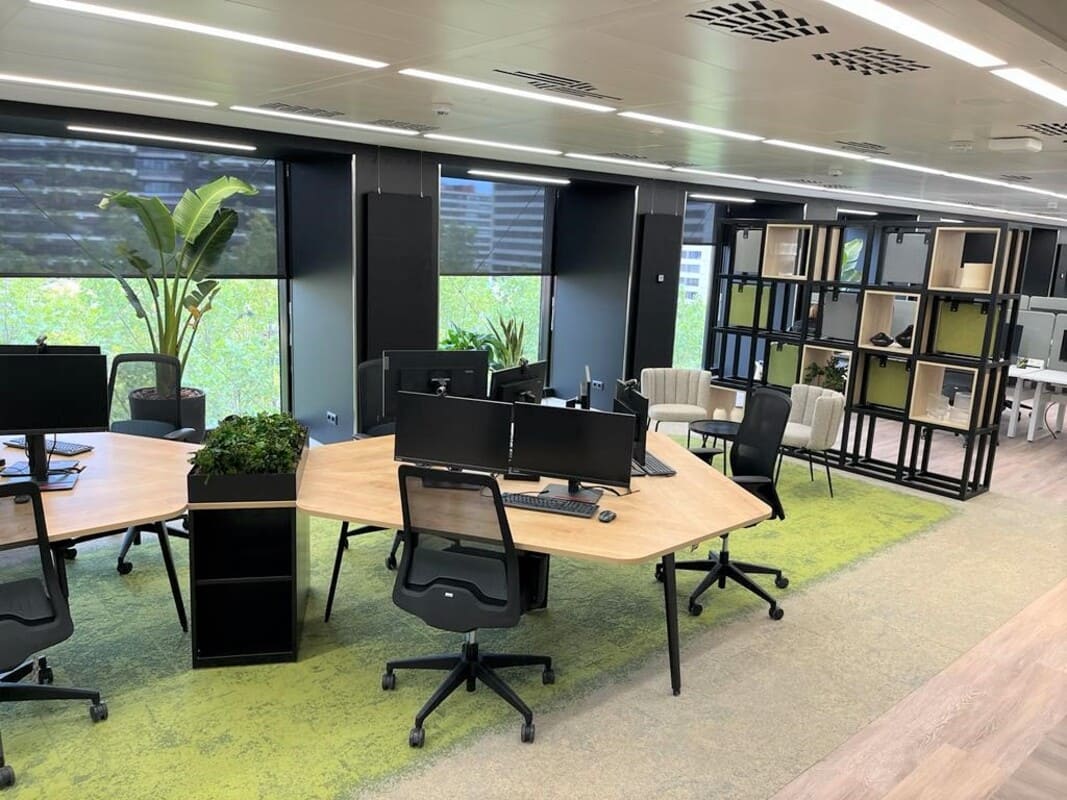
Currently, Alexion and AstraZeneca coordinate 130 clinical trials from Barcelona. In their modern offices on the Diagonal there are no test tubes or laboratories. It is a hub specialized in management, that is, it is a center dedicated to the launch, monitoring, and control of the clinical trials necessary for the development of the new drugs that the company is researching. Thus, before being able to launch a new medicine to the market, it must first pass the so-called phases 1, 2, and 3 of research and obtain the approval of the regulatory agencies. In this sense, the employees of the R&D center are in charge of monitoring this entire research phase and drafting the clinical protocols to demonstrate the efficacy of the drug. Likewise, they search for and coordinate the hospitals that, around the world, participate in the different clinical trials and carry out the monitoring of the patients who participate in each project, with an exhaustive process of data collection and monitoring of all clinical parameters. Pharmacovigilance and all interaction with regulatory agencies such as the EMA and the FDA are other major responsibilities of this type of hub, in a process that can take between three and four years for each line of research.
The rebirth of the Edificio Estel
Investment groups Freo and Bain acquired ownership of the former Telefónica headquarters ---then converted into a ghost building--- at the end of 2021. Their first decision was to abandon the idea of building luxury apartments and opted to transform the building into a modern office complex, taking advantage of the strong increase in demand for workspace located in the city center, one of the main trends in the post-pandemic real estate scenario. The Estel Building was built in 1975 by architect Francesc Mitjans, author of Camp Nou and Torre Banc Sabadell. The architectural remodeling project was commissioned to the Blanch + Conca Arquitectura (BCA) firm, which has conceived a property that aims to be certified with the highest score in terms of sustainability and well-being and will have "a multitude of terraces." Another of BCA's priorities has been to seek maximum integration and connection of the building with the neighborhood in which it is located.
The complex will be equipped with an auditorium and multiple rooms for meetings and events, in addition to other services such as a gym and entertainment and socialization areas. One of its main hallmarks will be the terraces and outdoor garden areas, with more than 8,000 square meters. On the ground floor there will also be commercial and restaurant premises open to the public. 35% of the building's energy consumption will be through sustainable sources through the installation of photovoltaic panels.
Add The New Barcelona Post as your preferred Google source for free
Stay informed with the latest news.
