Robots with designs ranging from robotic arms to anthropomorphic machines; 3D printing proposals that reproduce everything from prosthetics to car accessories, sensors of all kinds, conveyor belts, drones for inventory. These are some of the technological solutions with which 560 exhibiting companies fill the eighth edition of the Advanced Factories fair until Thursday. The event, which has scheduled conferences by 382 experts and showcases nearly 900 new products for the sector at Fira de Barcelona, includes a wide variety of tools aimed at the automation and robotization of industry, with diverse proposals but all crossed by an element that is making its way into all of them in a transversal and inevitable way: Artificial Intelligence.
Thus, many solutions aimed at industry, both from the field of robotics and from the automation and digitalization of processes, have been incorporating autonomous learning tools through AI. "This is the main novelty this year," proclaimed the general director of Advanced Factories, Albert Planas, in conversation with The New Barcelona Post. The fair, organized by Nebext, brings together companies and solutions linked to Industry 4.0, combining a great diversity of technologies: "It's the Mobile of industry."
And all these technologies intersect with Artificial Intelligence. "AI is generating a cognitive revolution, and allows us to do things that were previously impossible. It allows us to make decisions and elaborate hypotheses in a way that humans are not capable of developing," states Telecommunications engineer and Esade MBA executive director, Xavier Ferràs, who has starred in one of the more than 150 conferences that will be offered during Advanced Factories. In statements to The New Barcelona Post, Ferràs highlighted the importance of AI in a "moment when reindustrialization has accelerated." After a model of global supply chains that he has already described as old, he considers that a "new stage" is opening to boost local industry: "We are in a sweet spot for industry."
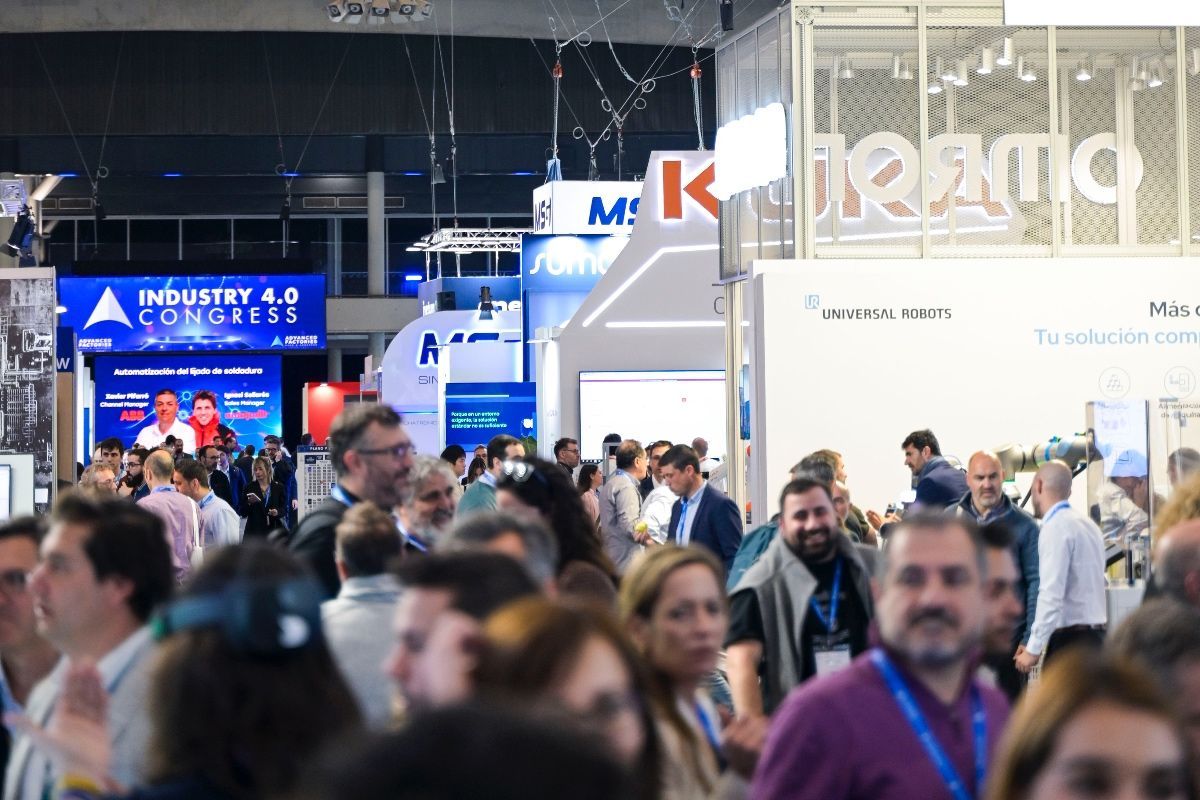
The fair, which was first held in 2017, has positioned itself as a leading event in industrial automation and robotics in Southern Europe.The proposals from the exhibiting companies are precisely in line with facilitating this reindustrialization, and addressing it from optimal conditions for competitiveness. The movement of the salon attendees —with 27,000 registered— is camouflaged among that of the robotic arms that swing non-stop in numerous stands, demonstrating the possibilities that this type of equipment offers to the industry.
Three robotic arms from the multinational ABB participate in this incessant and hypnotic sway. Two of them move freely alongside professionals visiting the exhibition: they are collaborative robots, which allow working alongside people without posing more risk than a human colleague would. The applications of these robots in industry are endless, ranging from logistical functions to laboratory tasks, as explained by the general director of ABB Robotics in Spain, Sergi Martín. The simplicity of the software with which the machine operates allows anyone to operate it with a little training. In fact, in the 50 years that ABB has accumulated in the field of robotics, simplicity has been one of the elements that has evolved the most, along with the size of the robots and the flexibility of the equipment.
This evolution and simplicity make it easier for the industry to introduce technologies like these to optimize their plants, which is precisely the objective of Advanced Factories. The exhibition, with the motto Integrating Automation Systems, also aims for the incorporation of these technologies to be done in an integrated way. And the Spanish sector is advancing in industry 4.0 in a process in which the exhibition has contributed, and in which there is still a way to go. As Martín highlights, Spain is in third position in the world ranking in robot density per worker in industry, with 130 of them per 10,000 workers; the leader, South Korea, is at 1,000 per 10,000, while Germany, the first at a European level, doubles the Spanish figure and places it at more than 300, as detailed by the ABB executive.
He explained it a few meters from a robotic arm, in this case, protected by glass walls to keep it separate from workers. It is isolated because working next to it can imply a risk due to the great speed with which it moves to perform its tasks, which can be linked to fields as diverse as the distribution of chocolates in their boxes and the placement of microchips in smartphones. And productivity is not at odds with safety.
Precisely to this binomial are dedicated companies like Euchner. Dedicated for 30 years to manufacturing electrical safety material, it allows guaranteeing worker safety by preventing access to the area designated for an industrial robot unless an intelligent safety knob is activated, as illustrated by one of the multinational's representatives. And in the same way that safety and productivity can go hand in hand, so can quality. In this sense, multiple companies have brought to the exhibition technological solutions and tools aimed at quality control.
The event has scheduled conferences by 382 experts and showcases nearly 900 novelties for the sectorOne of them is the Chinese Hikrobot, which applies artificial vision to quality control and also to logistics and tasks such as product classification. Through smart cameras, it can check characteristics and defects of items in production lines, with equipment that has recently been incorporating deep learning: "The camera learns what it has to look for with AI tools," according to a representative of the Asian company.
AI, computer vision, and sensors are also used by the robot-dog developed by the Catalan company Keybotic to perform security inspections in sectors such as the chemical industry. As emphasized by the CEO and co-founder of the startup, Irene Gómez, the robot is a pioneer in having four legs, with the aim that it can move through areas where a wheeled machine could not.
The robot-dog has carried out autonomous surveillance rounds in a simulated environment that replicates a chemical plant reproduced in Advanced Factories. The machine inspects with canine gestures surrounded by other replicas, made with another of the main technologies that the exhibition uses as a showcase: 3D printing. Among them are HP's proposals, ranging from prosthetics and helmets for cranial anomalies in babies to handbags, car accessories, and soles for Brooks Running shoes, which adapt to the user's foot strike. And the multinational has brought one of its major novelties to the exhibition: 3D metal printing. HP has been developing this technology for about two years, according to its senior business development manager Jacobo Sáenz. With applications mainly linked to the production of small and complex parts in large quantities, this metal printing allows generating pieces as varied as air distribution valves and the metal head of golf sticks.
The multinational is working to advance sustainability, in the same way that numerous companies participating in Advanced Factories are doing, such as Eurecat. The Catalan industrial technology provider has showcased technologies at the event to promote a more sustainable industry, such as innovations for saving water in industrial processes, tools for quality control through photonics and IoT, and the implementation of collaborative robotics with AI. Thus, according to Eurecat's Business Development Manager for Manufacturing Industries, Eva Fité, the technology center "brings strategic solutions to companies to boost Industry 4.0."
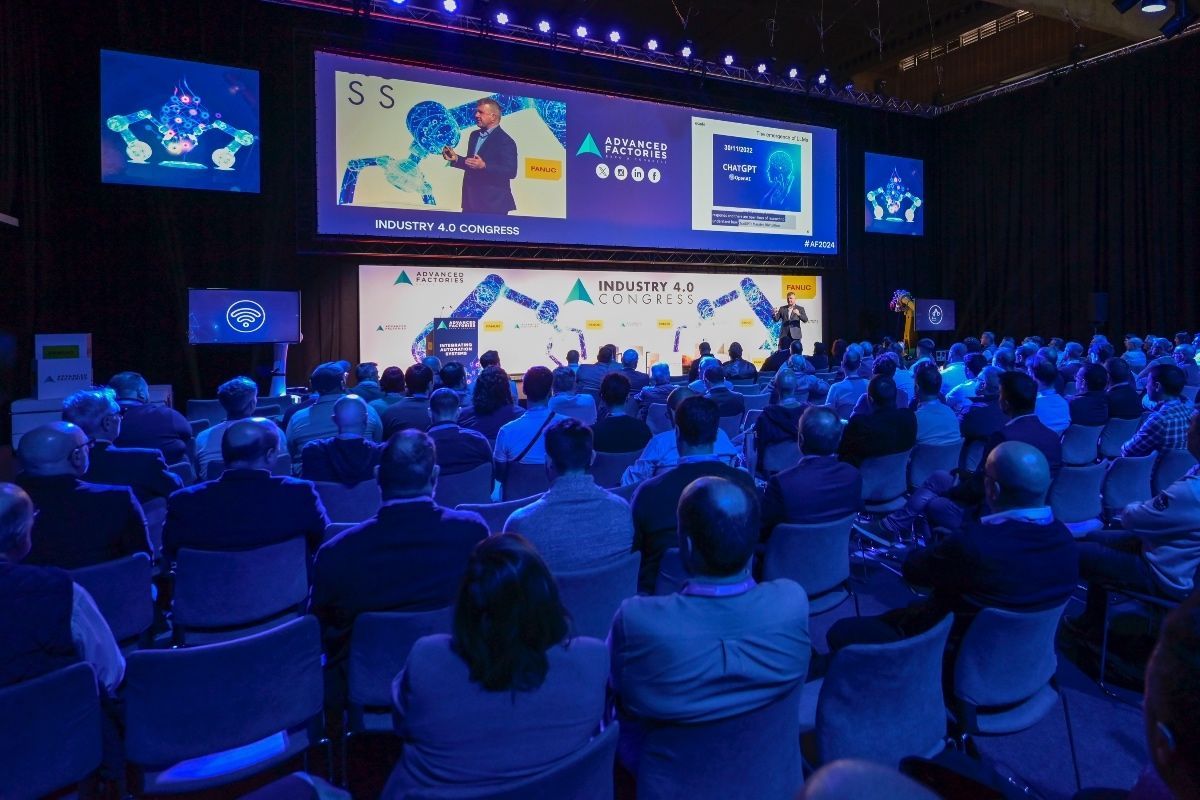
Precisely promoting this Industry 4.0 and the integration of the technologies that compose it is the goal of Advanced Factories. It pursues this objective positioned as a leading event in automation and robotics in Southern Europe, and from the diversity of both attendees and exhibiting companies. Evidence of this diversity is the human-shaped robot from United Robotics Group that walks around the hall, as well as the human in a robot suit doing so at the other end of the fair with RS Group, surrounded by innovations such as Safelog's pallet conveyors, DFactory's proposals and, unexpectedly, freshly prepared popcorn by Quero Automation. All in a hall whose soundtrack is the conferences where experts and company representatives share their vision and experiences, all with the aim of promoting the automation and robotization of industry to gain competitiveness.
Add The New Barcelona Post as your preferred Google source for free
Stay informed with the latest news.