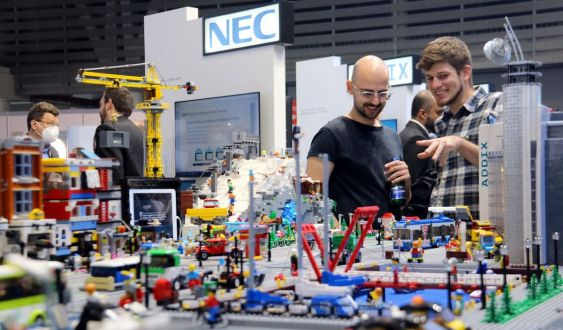
When talking about smart cities, reference is made to those cities that improve the lives of their citizens and make them more sustainable through the use of technology. Many times, urban innovations do not have to be drones or autonomous cars, as can be seen at the Gran Via venue of Fira de Barcelona, where the Smart City Expo World Congress, the leading international exhibition on smart cities, is being held from Tuesday to Thursday.
In this regard, the municipal holding company B:SM has presented a new parking model at the congress. The future also involves less urban space dedicated to private vehicles, which is why the municipal company is redesigning these spaces to accommodate new services, such as lockers for e-commerce packages and spaces for shared vehicles, explains Josep Maria Deloufeu, director of Urban Mobility Services at B:SM. The existing network of 45 car parks will be readapted to accommodate new tenants, with more open areas and a higher clearance, and those built from scratch will be conceived under these new parameters.
The first of these new B:SM car parks will be the one that will kick off the works of the Ciutadella del Coneixement, a scientific, cultural and urban initiative that aims to transform this area of Barcelona. After multiple delays, works on the car park and the future research complex will begin at the end of the year.
Technology can also be used to develop secure parking for bicycles, including charging for electric ones, as the Catalan company Vadecity has done. Incubated by Carnet, the mobility research hub promoted by Seat, Volkswagen and the Universitat Politècnica de Catalunya (UPC), the startup will export this model with a pilot in Madrid.
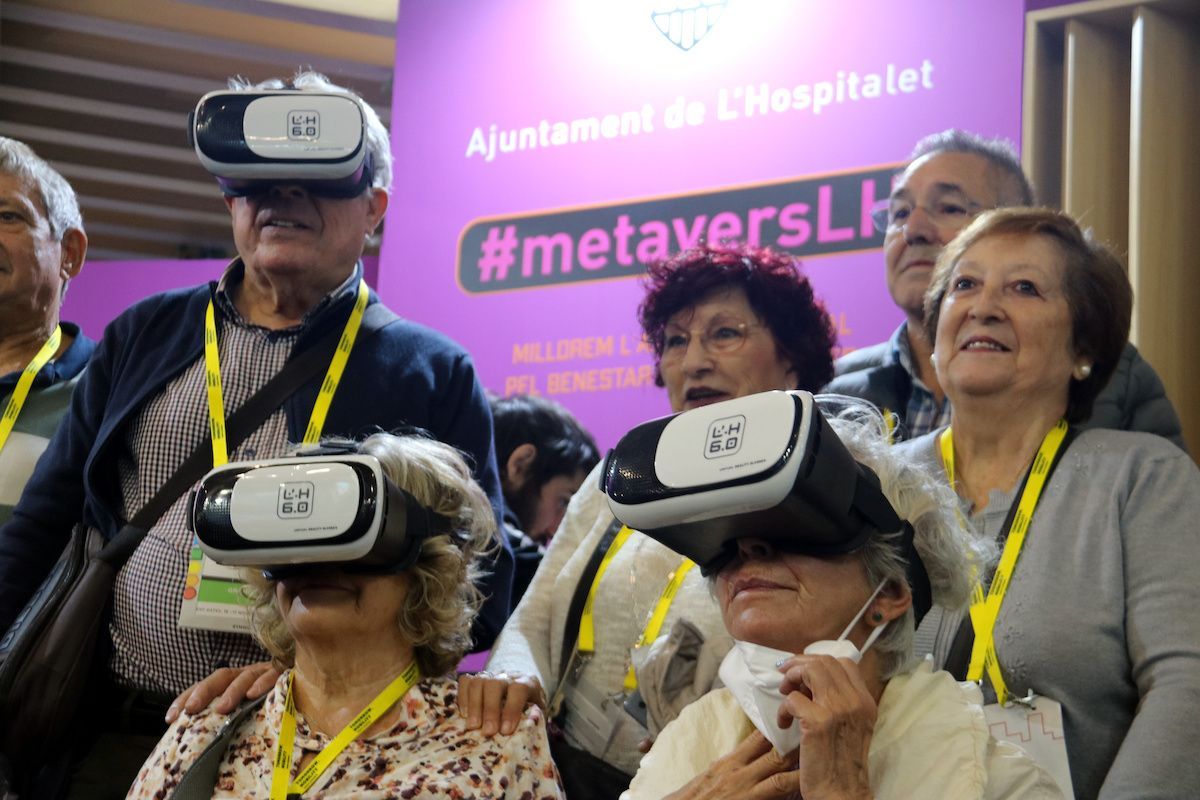
At the Smart City Expo, there are also smart benches and lampposts that provide basic services such as Wi-Fi and mobile phone charging, developed by the Portuguese company Omniflow, or a machine for conducting automatic surveys of citizens on the street, created by the Belgian Citizen Dialog, according to ACN. Urban innovation can even help older people become more familiar with technology, as in the case of the metaverse created in L'Hospitalet de Llobregat, recreating the Rambla Just Oliveras, an initiative promoted to reduce the digital divide affecting the second largest city in Catalonia.
Smart cities encompass everything from parking lots that, in addition to vehicle parking, include other mobility services, to smart benches and lampposts that allow mobile phone charging.In addition to the palpable—and affordable—proof of where cities are headed, there are those who focus on discussing trends, still far from having concrete commercial application. This is the case ofPuzzle X, a hall integrated into the Smart City Expo that focuses on analyzing what the materials of the future will be.
Despite having a strong congress character, filling the sessions to capacity, the second edition of the event has included some startups that are already working with what are known as frontier materials. One of them is Graphenicalab, a spin-off of the Catalan Institute of Nanoscience and Nanotechnology (ICN2). According to Laura Gracia, the company specializes in printing nanomaterials, which, in addition to using less quantity, allow new properties to be enhanced. In their case, they have used graphene to create a temperature sensor, making it react very quickly and occupy little space.
A growing sector and fair
According to data from Acció, some 470 companies work in this sector from Catalonia, 7.3% more compared to 2018, with a turnover of 10,400 million euros and a global workforce of more than 46,000 workers. Among them, there are those dedicated to the urban environment, mobility, the environment or security, with 26% classified as startups.
Some 470 companies work in this sector from Catalonia, 7.3% more compared to 2018This economic dynamism is benefited by the presence in Barcelona of the Smart City Expo. For three days, more than 20,000 attendees from all over the world have traveled to the Fira de Barcelona venue in Gran Via to learn about the main novelties of this sector, represented by 700 cities and 800 exhibitors distributed throughout two pavilions of the venue.
The attendance figures, close to those of 2019, translate into the typical pre-pandemic fair hustle and bustle, with accreditations once again present in the city and with congress attendees going from one place to another. The full stands and corridors that can be seen in the Gran Via de L'Hospitalet venue attest to the overcoming of the more limited edition in 2021, with 10,000 attendees still protected with masks, and the digital one from two years ago.
Seoul, best smart city
The capital of South Korea has been awarded this year's Smart City in the framework of the World Smart City Awards. In choosing Seoul as the winner, the platform developed by the city to guarantee the five basic digital rights ---communication, mobility, education, security, and use of technology---, adapting to socially vulnerable people, has been taken into account.
In addition, this year's edition has granted Kyiv special recognition for the use of digital services to save lives during the war with Russia. The city's mayor, Vitali Klitschko, participated in the Smart City Expo 2022. After his conference on the first day of the exhibition, he had to leave the city quickly, leaving interviews unfinished, when he was informed that his city was being bombed.
Add The New Barcelona Post as your preferred Google source for free
Stay informed with the latest news.
