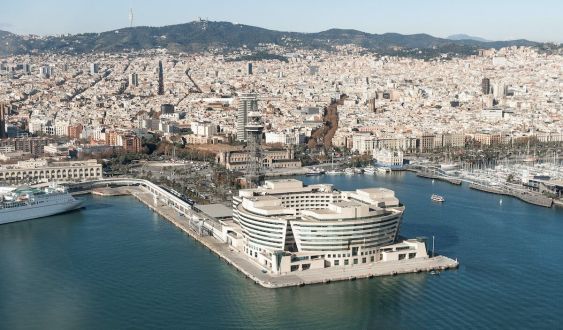
The World Trade Center (WTC) complex stands at one end of Port Vell like a concrete mass reminiscent of a large docked ship. From the outside, its structure can give passersby the feeling of being before an inaccessible fortress on the sea; from within, it is easy to forget that it is next to the water, as it is hidden by the complex's own buildings. And it is that the very structure of the WTC, built 25 years ago, hides the dock that houses it and the boats that surround it, something that is now intended to be remedied.
Designed by Pei Cobb Freed, the complex consists of four ten-story buildings distributed in such a way as to create a large central plaza that has just been renovated, as part of a ten-million-euro project that has also included improvements to the terraces and lobbies of the buildings, among other spaces. The renovation has coincided with the commemoration of the WTC's quarter-century, which now wants to usher in a new stage in which it wants to open cracks to let the sea into the complex. Although the project is not defined, it will presumably do so by widening the six corridors that now lead to the sea and are closed, and rethinking the accesses to the buildings, as detailed by the general director of the WTC, Carles Anglada, who has raised the possibility of eliminating structures, especially glass, that obstruct the view of the sea from the central plaza.
The reconnection of the WTC to the sea that surrounds it will be part of a future transformation of the complex, which will begin to be glimpsed with the opening of the docks that surround it as a promenade area, with the aim of transforming the Barcelona Pier into a civic space. "Thus, this complex will begin to look towards the sea, when now it is designed to look inwards," highlighted the president of the Port of Barcelona, Lluís Salvadó. The docks, now partly occupied by the New Zealand team of the America's Cup, are currently inaccessible to citizens, which contributes to projecting a somewhat hermetic character of the WTC and the Barcelona Pier.
The actions to open the docks surrounding the WTC to the public will take shape once the America's Cup ends and when the Barcelona Sud cruise terminal at Moll de Barcelona closes in 2026, the last piece to complete the transfer of cruises to docks further away from the city, which will involve a total investment of more than 270 million euros. With the 14,000 square meters of docks that will be opened to citizens, "Barcelona becomes a little bigger," Anglada proclaimed.
This opening to the city and the sea is part of the strategic plan of both Port Vell and the World Trade Center itself. 76% owned by the Port of Barcelona and 24% by the FCC company, the WTC has set these objectives coinciding with its 25 years of activity as a business center, where 3,500 people work in its 130,000 square meters, which have an office occupancy rate of 93%.
A "true" business hub
In addition to this objective of opening up to the sea and to citizens, the WTC's five-year strategic plan sets two main objectives for the company for five years: to turn it into a "true business hub" of reference, especially in the blue economy, where companies establish synergies and contacts among themselves, and to give it more weight within the port, "transcending the complex itself," according to the WTC's general director.
The first step in this direction will be taken in the Sant Bertran sheds, as the WTC will manage the future blue economy hub that will host the space, in which 50 million euros will be invested with the forecast that it will be fully operational in 2028.
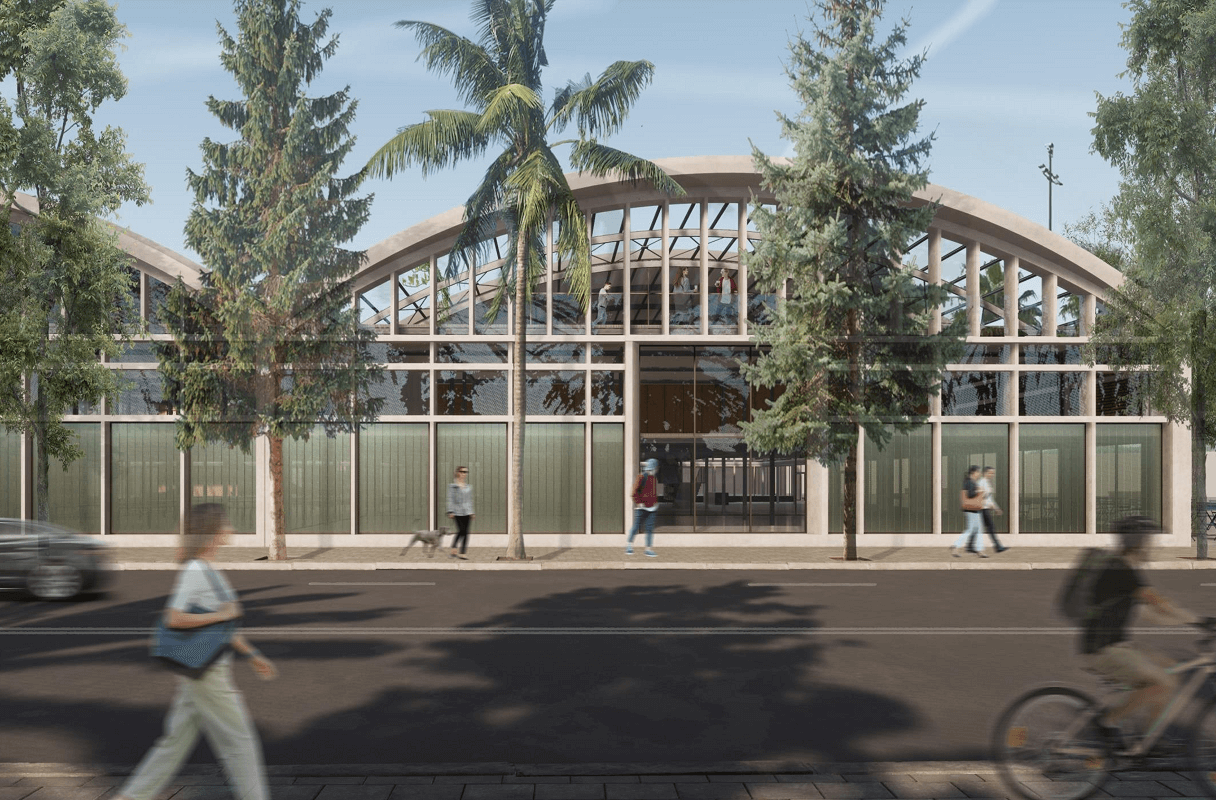
Assuming the management of the Blue Tech Port will be the first piece of the WTC's new phase, which will become an instrument of the Port for the management of real estate assets, including offices but also spaces such as parking lots. "We have identified a wide range of projects that could be under its management," Salvadó highlighted, explaining that each case will be analyzed to determine if they become dependent on the WTC. Thus, it will transform into a "service provider for the port authority," a new phase that the WTC is opening, with the agreement of the port and FCC, who unanimously approved the new strategic plan that sets the horizon and direction of the company, which for now does not specify investment or budget.
The Port Vell roadmap and the WTC roadmap will converge in a future where the complex aspires to become a place that attracts not only companies and their workers, but also citizens. And it aspires to do so with the sea as a stage, and not as something hidden backstage, as has happened these 25 years. Now, as Salvadó has proclaimed, "during the next 25 years we will turn the WTC into a much more powerful and relevant project for Barcelona".
Add The New Barcelona Post as your preferred Google source for free
Stay informed with the latest news.
