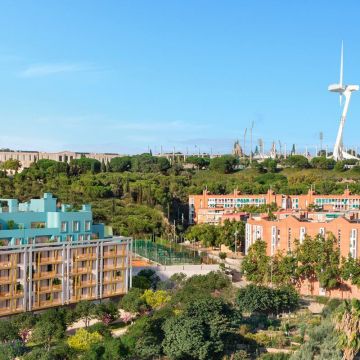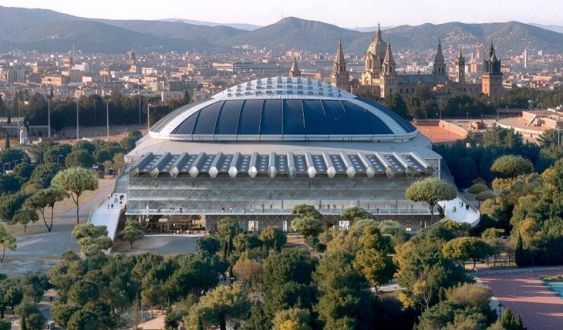
Bruce Springsteen, Bad Bunny, Coldplay, Rosalía or Karol G. The list of artists who have performed at Barcelona's Olympic Ring has not stopped growing in recent years, to the point of making the venue an essential stop for major international tours. In 2025 alone, its three facilities gathered more than 2.4 million spectators at 198 events.
However, not all tours need a large stadium or a pavilion like the Palau Sant Jordi. In fact, there are increasingly more artists and productions that have already outgrown small-format concert halls —from Sala Apolo or Razzmatazz to Paral·lel 62— and require intermediate-sized stages. It is these medium-format concerts, also essential for the consolidation of local musicians, that Barcelona wants to reinforce with the transformation of the Sant Jordi Club. A venue that, in the coming years, will triple its capacity to 9,000 spectators and become the new major reference hall for this type of show.
The project for the transformation of the hall, budgeted at 70 million euros, is the work of the Parisian studio Bruther and the Barcelona-based Jorge Vidal Studio, winners of the international competition called by Barcelona de Serveis Municipals (BSM). The proposal suggests the demolition of the current Sant Jordi Club, inaugurated in 2007, and the construction of a new 17,000 square meter building, with a rectangular floor plan, about 25 meters high and two underground floors. With this new building, the volume of the hall will practically double —it will go from 35 to 65 meters in length and from 14 to 27 meters in height—. But despite growing in dimensions and public capacity, the project has been designed to integrate naturally into the Olympic Ring complex and preserve the prominence of the Palau Sant Jordi, a work by Japanese architect Arata Isozaki built for the Barcelona 1992 Olympic Games.
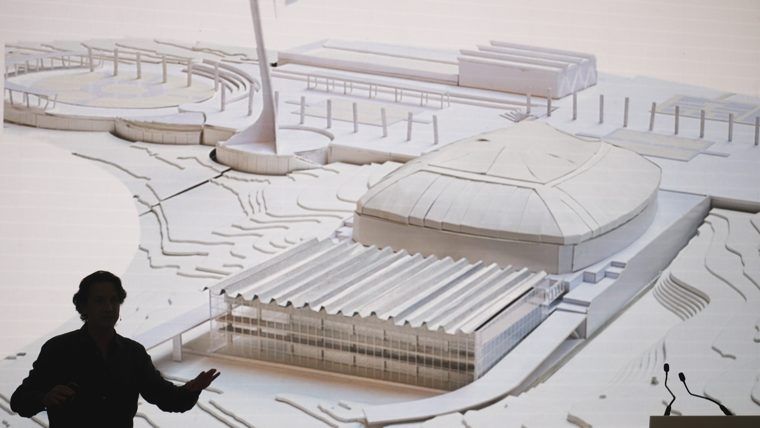
The main transformation, however, will come inside. The new Sant Jordi Club will have a maximum capacity of 9,000 spectators, triple that of the current one. Although this will be its maximum capacity, the hall has been designed so that it can adapt to the needs of each concert, with different configurations of stands and stages that will allow it to host both smaller format performances and large productions.
But versatility will not be the only differential feature of the new equipment. The project also focuses on the acoustic quality of the hall, which will incorporate absorbent materials on the walls, seats with acoustic treatment, and a studied sound insulation system. This solution will allow the activity of the Sant Jordi Club to be compatible with that of the Palau Sant Jordi, so that both facilities can operate simultaneously without interfering with each other. In addition, the project includes new sound, lighting, video, and live broadcast systems, with the aim that the hall can be prepared for the demands of current musical productions.
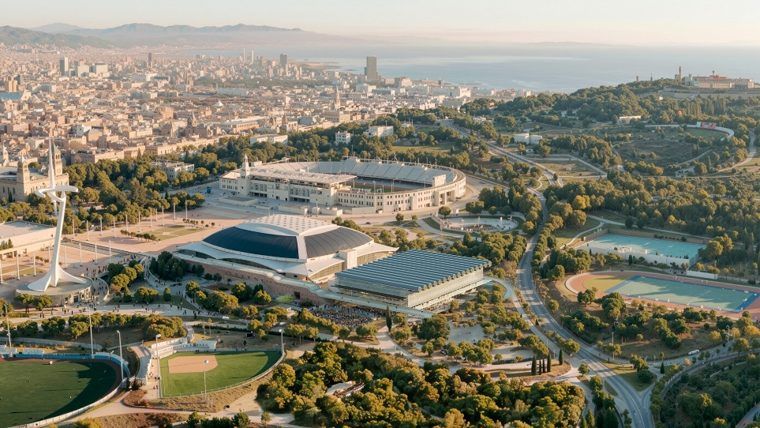
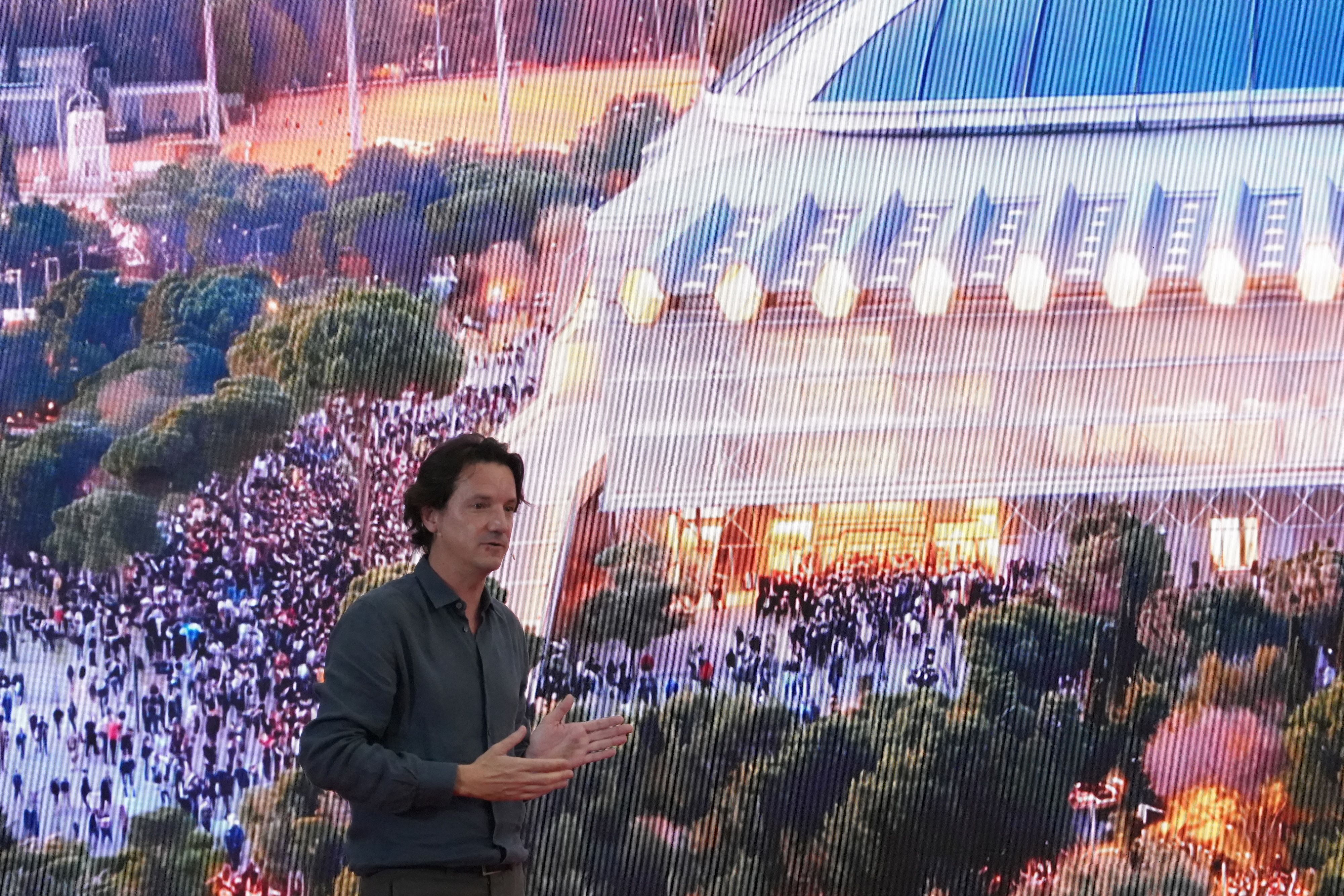
Outside the building, the renovation will also transform the exterior spaces. The proposal foresees three squares with differentiated functions. The main one, located on the west facade, will act as a large exterior lobby connected to the Olympic Esplanade and will concentrate public access, as well as catering and merchandising services. The second square, on the other hand, will facilitate the agile exit of attendees once the concert is over; while the third will be reserved for logistical, technical, and operational uses.
However, the new Sant Jordi Club will still take a few years to become a reality. Until then, the current venue will continue to program concerts until the spring of 2027, with already confirmed performances such as those of La Fúmiga (October 16 and 17), Barry B (January 8, 2027) or Walls (April 24, 2027), which will be some of the last before the start of the works. The forecast is that the works will begin in July 2027 and will last until 2029, when the new facility would come into operation if the planned deadlines are met. During the construction period, Barcelona must try to find an alternative space to continue holding these medium-format concerts that until now were hosted by the Sant Jordi Club.
One more piece of the transformation of Montjuïc
But the renovation of the Sant Jordi Club is not an isolated action. It is part of the great renovation that Montjuïc will experience during the coming years due to the centenary of the 1929 International Exhibition, an anniversary that will serve to update some of the main most emblematic spaces of the mountain. The project aims to redefine Montjuïc from top to bottom, from its accesses and the surrounding neighborhoods to the large cultural and sports facilities.
Add The New Barcelona Post as your preferred Google source for free
Stay informed with the latest news.