"The concept of sustainability was similar to Masdar's. But, ultimately, The Line was not built. We were facing a constant contradiction. On the one hand, we wanted a planet clean of emissions, but at the same time, we pursued increasing consumption growth. The alternative was the rural, extensive, low-density city with greater contact with nature. But then we ran into the inconvenience of an urban structure that required more transport, more travel, more emissions, more energy, more pipes, more services."
Utopian Barcelona is the result of conversations held with 5 municipal architects. Each of the conversations has revolved around a specific theme, although the result, a consequence of an integral vision of the city, incorporates transversal ideas. The idea for this series of 5 articles about a utopian Barcelona was born to give wings to these architects who maintain close contact with the city, some for many years and, moreover, daily. The creative scope of municipal architects is often limited by budget allocations, by execution deadlines, by the policies of the government in power… So, without entering into partisanship, they have ventured into the exercise of speculating about a Barcelona that will never exist, but that we can imagine.
The articles have a futuristic slant. However, not all of them delve into science fiction. The readings invite imagined locations and corners. To invented forms of the city. To projections of a Barcelonian society far removed from the current one and, above all, they seek to give the reader a good time. With the exception of the text in italics, which is a transcription of part of the conversation or a research process, the rest is the fruit of imagination.
*Guest architect: Pep Baró Puigvert, municipal architect of the Barcelona City Council.
With Pep, we sat on a wooden bench built from a fallen pine tree in the Collserola forest. The bench is located on the Vallvidrera ridge, so on one side, you see Barcelona, and on the other, Montserrat. On the backrest of the bench, we included this quote that is now hard to read. Time has been hiding it. Pep comments. The quote says: the Collserola forests have absorbed 260,000 tons of carbon dioxide. At the time, this meant they absorbed the carbon dioxide equivalent to one hundred thousand conventional vehicles. See how relevant the Collserola forests were.
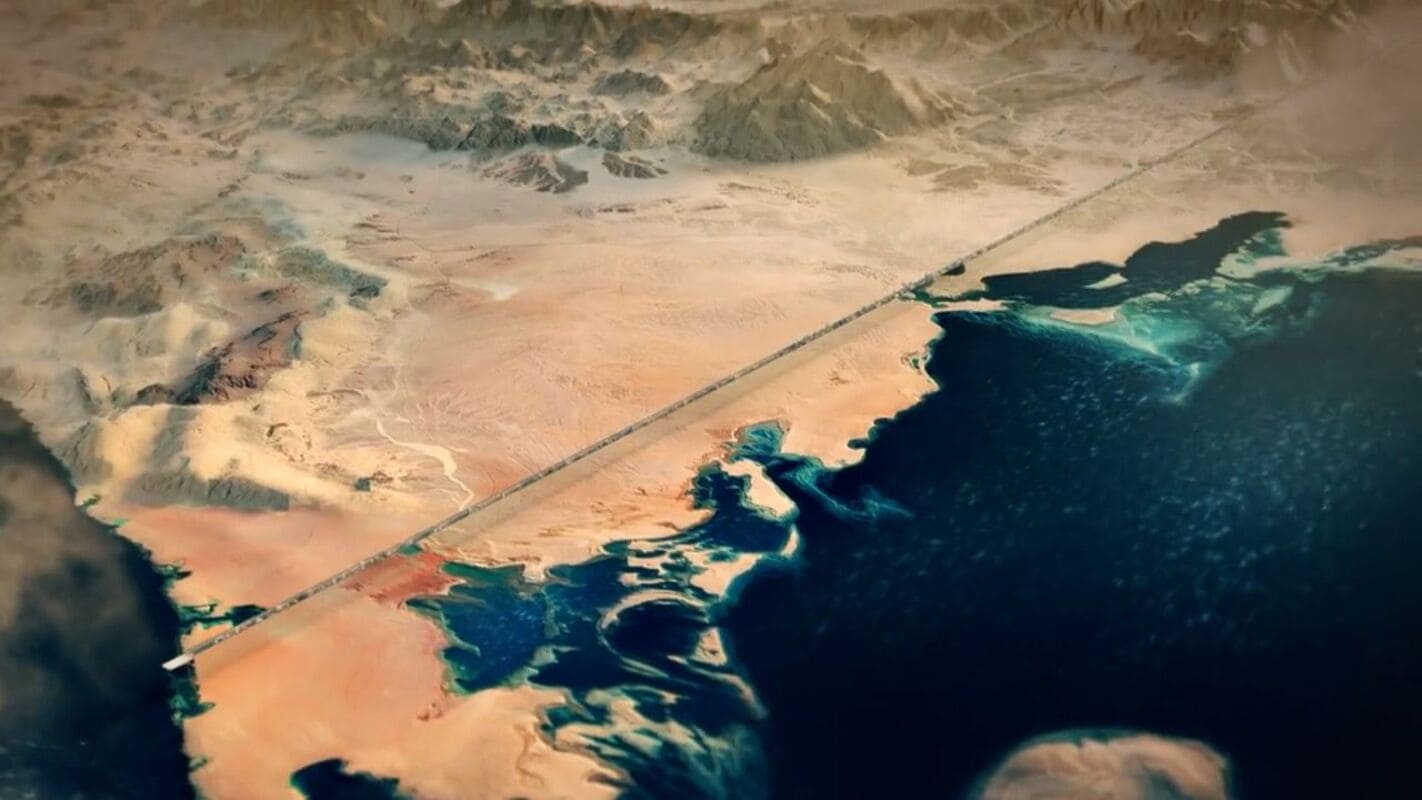
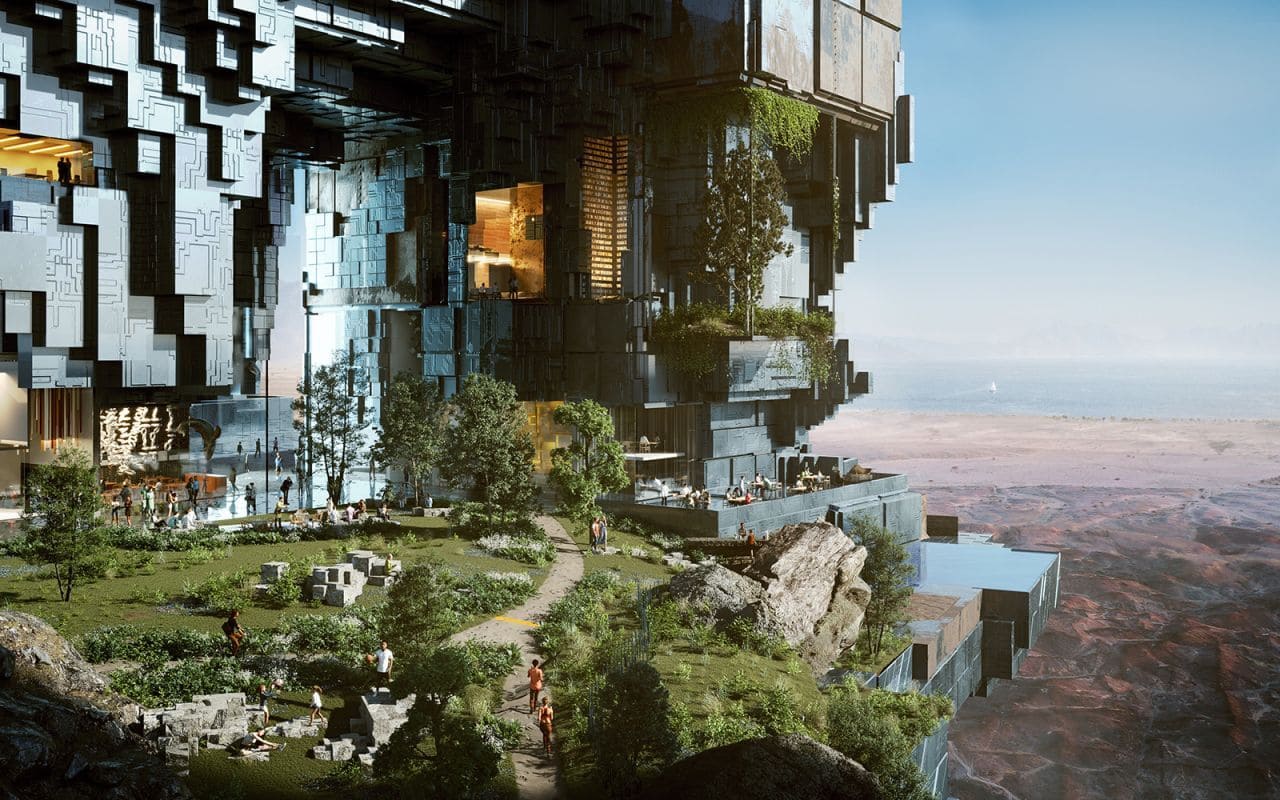
The benches were built at a time when the debate about the progress and growth of cities was alive. Relatively recently, Masdar City, the city designed by Norman Foster, had been built in Abu Dhabi, representing an adaptation of contemporary environmental sustainability patterns in a city located in the desert. It was supposed to be a model based on alternatives to oil, waste-free, carbon footprint-free, and energetically self-sufficient. However, at present, the city imports energy because it is not capable of generating the necessary energy by itself, as planned. Nor do the growth forecasts seem to match the established plan: the main real estate agency has reduced its workforce by up to 20%. Another of the cities projected at that time was The Line, also in the desert, in this case in Saudi Arabia. A project one hundred and seventy kilometers long and two hundred wide where life took place between two mirrored walls. The concept of sustainability was similar to that of Masdar. Finally, The Line was not built.
During those years, the debate was in constant contradiction. On the one hand, we wanted a planet free of emissions, but at the same time, we sought to increase consumption growth. The alternative was the rural, extensive, low-density city with greater contact with nature. But then we ran into the inconvenience of an urban structure that required more transport, more travel, more emissions, more energy, more pipes, more services. This was the case of Brøndby Garden City, a city designed and built in Denmark that had to go through several restructuring processes to achieve the projected sustainability levels.
Meanwhile, Barcelona opted for a mixed model inspired by the Les Planes district, an urban space surrounded by forest that, at the time, was only fifteen minutes from the center by public transport. Today's Barcelona offers both sides: the business city, with interspersed islands of rural city, and a forest urban environment where networks and treatment plants have been replaced by particular biological stations, naturalized ponds, flood lagoons, and biocomposters. In this way, each building manages its own waste. It is the contemporary adaptation of what old houses used to be, where in the corral there was a duck or a pig that ate the waste; in the end, we have returned to the origin, only now we call it circular economy. But it is not something new. It was already invented. Like, for example, interior current towers, Canadian tunnels, trombe walls, solar chimneys, water walls, wind catchers... which allow the home to be air-conditioned both in summer and winter and, therefore, significantly reduce the energy consumption of heating and air conditioning. Or the Barcelona of green rooftops, buildings with interactive holograms, green facades and bioreactive skins and with photovoltaic devices that generate energy…
When we have been talking for a while, Pep takes a thermal bottle from his backpack, some tea bags, and two metal cups. The late April afternoon is cold. The tea helps us regain a comfortable temperature. That Barcelona is the result of a change in mentality. He continued. That rhythm in which everything was possible, in which we could encompass everything, was not viable. For example: traveling by train between two cities that used to be an hour apart and now three, cannot be considered an involution, because now it is a usable time resulting from having adapted to natural circumstances and not adapting nature to our circumstances. We have stopped living in a hurry. Now on trains, they are economic services, you can work comfortably or have a pleasant time. It has been as simple as converting rows of seats into open spaces, distributing seats in comfortable armchairs. Incorporating open areas, spaces for conversation, exchange, reading, and increasing frequencies and the number of cars per convoy.
As the conversation progresses, we realize we are inside the utopia. The book Pep is reading, for example, he borrowed on one of these trains during his last trip to the village. The clothes we are both wearing are second-hand and rented, a concept that was born in Berlin, at the Pool house. We ended up remembering what Paseo de Gracia and Portal del Ángel, Barcelona's two quintessential shopping avenues, used to be like, and how the fashion brands of the moment like Gucci or Zara or Chanel had to close down or adapt: some are now coffee shops, co-working spaces or local restaurants, like when the bourgeoisie coming up from Ciutat Vella would stop at the portals to have a glass of chocolate or milk supplied by the cows that lived in the stables behind. We have returned to where we came from. The world has returned to its origin. Even Singapore, the symbol city of sustainability at the time, has had to return to square one.
*As an epilogue to the series of 5 articles on utopian Barcelona:
Rutger Bregman, in Utopia for Realists (Salamandra), begins with a historical lesson: he quotes Hobbes, who stated that man's life was solitary, poor, nasty, brutish, and short. And then he compares it with the evolution of the last two hundred years of humanity, where billions of people live well-fed, healthy, clean, and safe. We are intelligent, rich, and, sometimes, even good-looking. But this has not always been the case: in 1820, 94% of the world's population lived in extreme poverty, a percentage that had been reduced to 44% in 1981 and is currently below 10%. Oscar Wilde, anticipating the concept of universal basic income, wrote that the ultimate and sole purpose of justice must be the construction of society on a model where poverty is impossible. The question is whether, today, merely by decreasing the poverty rate, we would immediately increase the happiness rate.
Chapter 1. The mobility of the future. Guest architect Joan Sansa.
Chapter 2. The landscape and the ecological footprint. Guest architect Sara Udina.
Chapter 3. Turning heritage into part of life. Guest architect: Armand Fernández Prat.
Chapter 4. Opening the city to the art of contemplation. Guest architect: Xavier Soler.
Add The New Barcelona Post as your preferred Google source for free
Stay informed with the latest news.