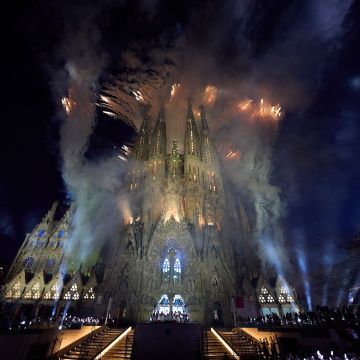
For a few hours, Barcelona seemed condensed into a single image: that of Pope Leo XIV before the Sagrada Familia, surrounded by fireworks, fanalets, and a drone choreography that projected Gaudí's legacy onto the city's sky. The image went around the world: it was shared and commented on all social networks and reproduced by the main international media. The symbolic power of the image awakened a feeling of Barcelona pride that, for some, even recalled the impulse and the international projection that the Catalan capital experienced after the 1992 Olympic Games.
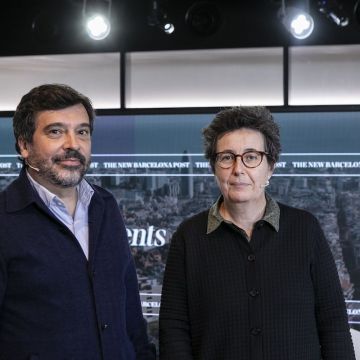
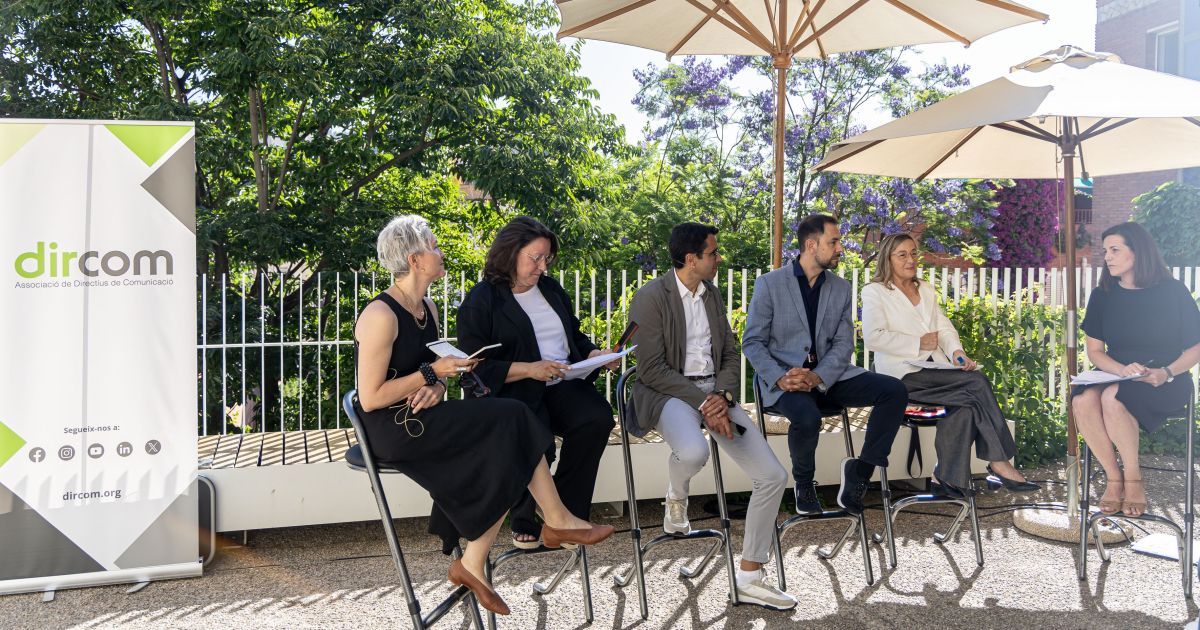
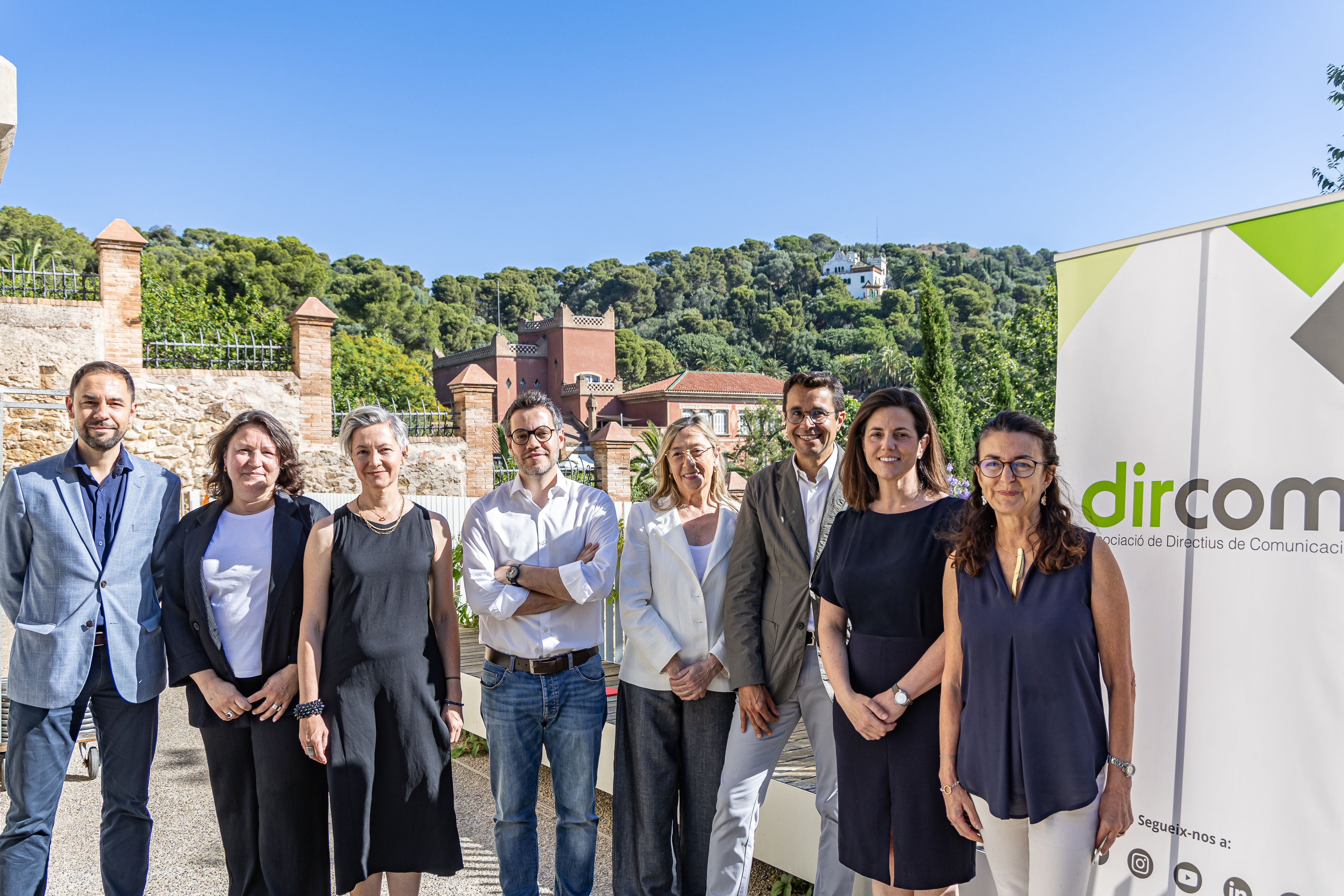
But, beyond the visual power of the snapshot, the image raises a deeper question: can a single photograph explain an entire city? And, above all, what remains when the euphoria of the moment fades? This has precisely been one of the questions that has focused the conference Spaces that communicate: architecture, narrative and reputation of Barcelona, organized by Dircom Catalunya with the collaboration of The New Barcelona Post, Barcelona de Serveis Municipals and Park Güell.
A conference during which the communication managers of some of the city's most emblematic institutions —from the Sagrada Familia to La Pedrera— have agreed on the same idea: architecture has become one of Barcelona's main assets for international projection, but the challenge is that these architectural and tourist icons are not just a postcard, but a gateway to explain the entire city. A reflection that gains even more strength this 2026, when Barcelona places architecture at the center of its narrative as World Capital of Architecture.
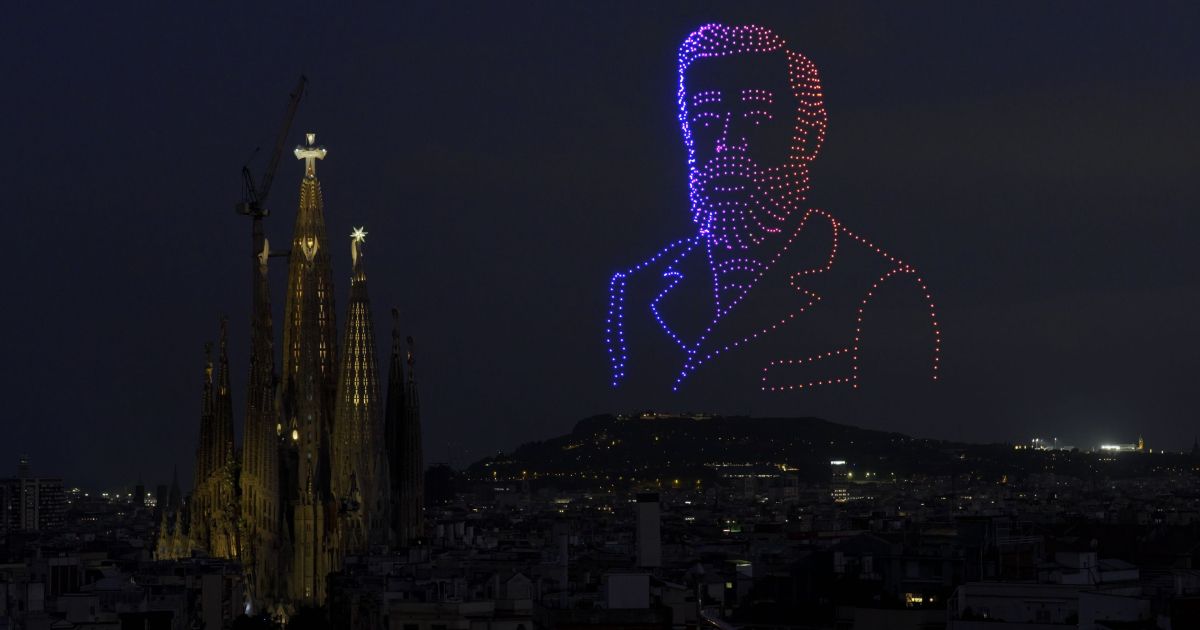
"The photograph of the drone show transmits beauty," said Xavier Purcallà, Director of Communication, Brand and Institutional Relations of the Sagrada Familia Basilica. But, according to him, this image is only a first layer of a much broader story. "The photograph has traveled the world, but we cannot stick with a beautiful image: we have to be able to explain that there is much more. Explain, for example, why Gaudí designed a four-armed tower that embraces the city or why it measures 172.5 meters —without exceeding the height of Montjuïc—," he added.
Behind the new tower of Jesus, Purcallà recalled, there is not only a spectacular image, but a whole universe of symbolism, spirituality, and architectural decisions. "It's not just a pretty photo for no reason." Along the same lines, Esther Grávalos, Director of Communication and Public Affairs at Barcelona Global, believes that events such as the Pope's visit or the World Capital of Architecture are opportunities to "show not only emblematic and beautiful buildings, but also to explain to the world—and to the people of Barcelona themselves—what model of city we are building."
When architecture stops being just architecture
For decades, Barcelona has used architecture as one of its main calling cards to the world. But this projection is not just a matter of image: it has also become part of the narrative that the city builds about itself. As Paula Zapata, a member of the board of directors of Dircom Catalunya and moderator of the session, remarked, Barcelona is experiencing "a great moment of international projection," and this success is explained, in part, through architecture, which has become "an essential reputational asset."
Furthermore, "in a context where cities compete to attract talent, investments, or research centers, Barcelona has a hardly replicable advantage: an architecture and an urban narrative that can not only be admired, but also lived and touched," Grávalos remarked.
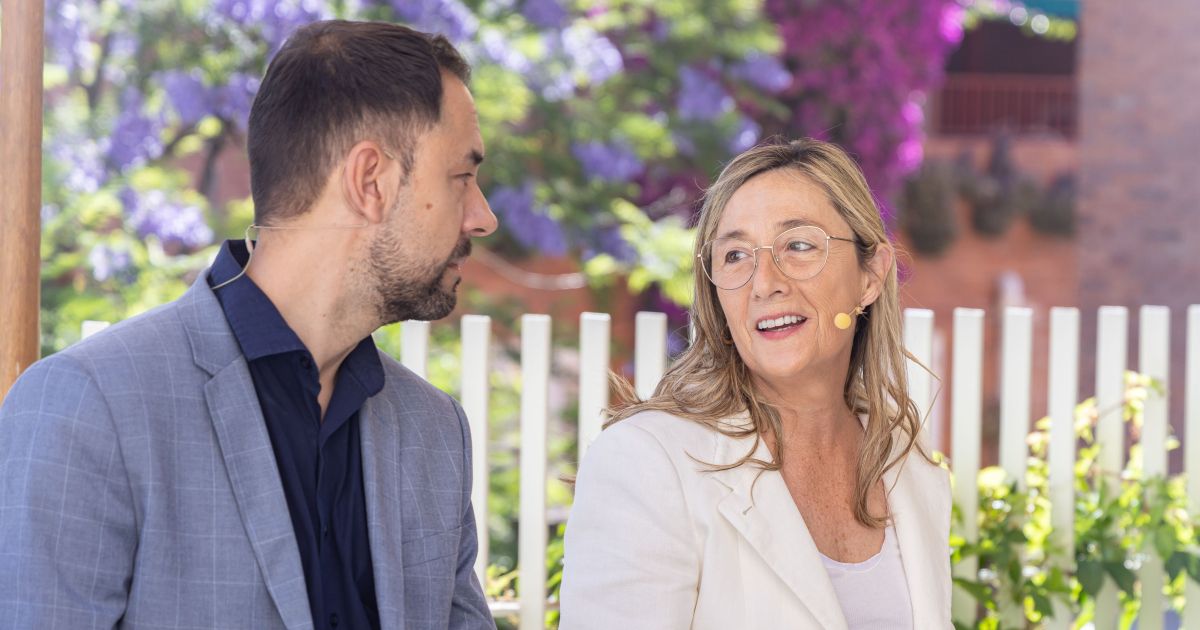
But this architecture not only projects the city outwards. It also builds an inward gaze and reinforces the feeling of belonging. Ana María Alvarez, architect, communication director of 48h Open House Barcelona and collaborator of The New Barcelona Post, recalled that architecture is not just the great urban icons, but also the everyday spaces that are part of people's lives. "From the moment we open our eyes until we go to sleep, everything is designed from an architectural point of view."
When citizens recognize these spaces, understand their value, and feel them as their own, she added, that is when "architecture becomes identity." In fact, part of the strength of these spaces is precisely their ability to evoke emotion, a dimension that was also reflected in the event at the Sagrada Familia.
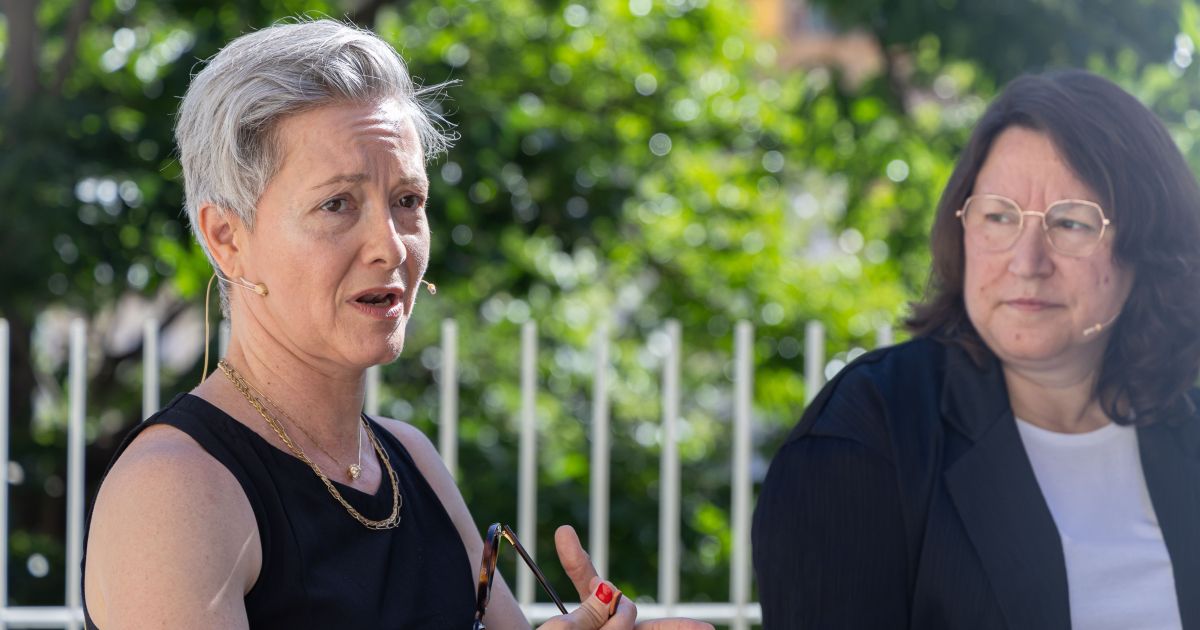
However, despite architecture's potential to project the city —outward and inward—, Barcelona cannot be reduced to a single photograph or a single moment. Ana María Álvarez recalled that for many years the city "has been explained through Gaudí, design, or the Olympic transformation." But these images, she warned, are only a part of Barcelona's complexity. "The city is much more than that: it also has to be explained as a living and innovative city."
From postcard to narrative
The Catalan capital, therefore, even if projected through viral photographs, cannot be reduced to a single image or a few buildings. Architectural icons, Álvarez added, "can be the gateway to the city, but they must serve to tell a much broader story."
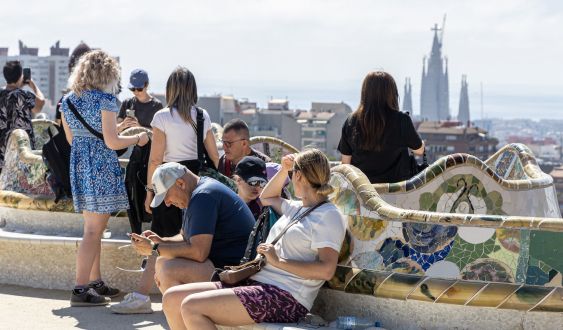
Park Güell, a space that attendees visited after the round table, illustrates this idea well. Millions of people visit the dragon, the central square, or the famous wavy benches every year. But behind the photographs there is a much richer history. Perhaps some Barcelonans know about the real estate failure that gave rise to the park. Eusebi Güell had envisioned a development for wealthy families on the outskirts of Barcelona, with about sixty plots surrounded by nature. The project, however, did not prosper. The high price, the lack of good connections, and the attraction that the Eixample exerted on the wealthy classes acted as impediments.
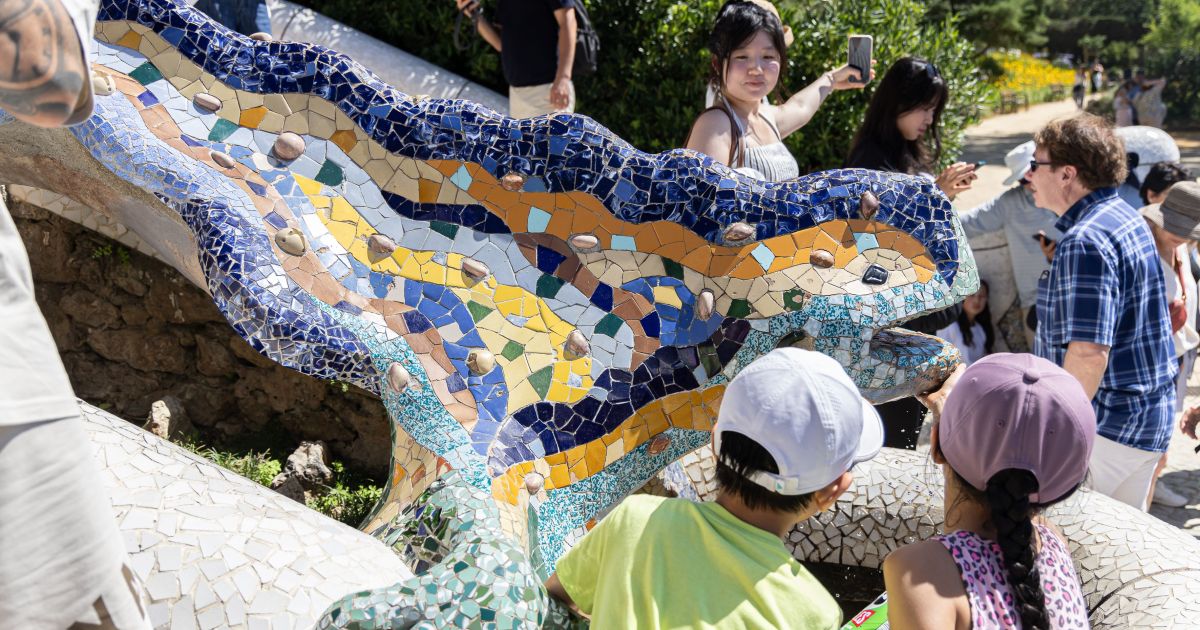
But there are many other lesser-known layers. The water drainage system integrated into the entire structure, the ergonomically designed benches so that people could converse looking each other in the eye, or the trencadís of the benches as an innovative way of reusing materials, where some of the materials that belonged to the façade of Casa Batlló can even be found. Elements that often go unnoticed behind the tourist postcard.
Purcallà has reflected this complexity in a metaphor: an onion with various layers. "The Sagrada Familia is like an onion, with different layers." It is art and it is architecture, but it is also a religious temple, social work and even innovation and technology —since the most advanced techniques are being used to build it—. "The complexity of the city, like that of the Sagrada Familia, is to explain all these layers."
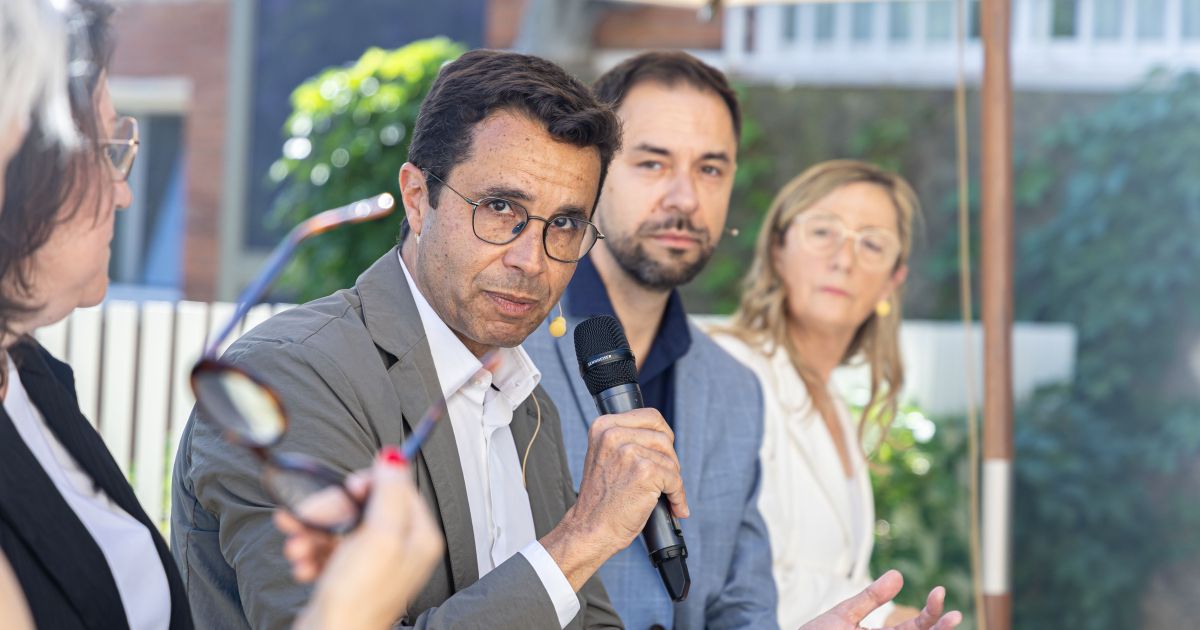
The challenge is shared by many institutions. Ana Lorente, communication director of the Fundació Catalunya-La Pedrera, explained that La Pedrera is much more than an emblematic Gaudí building. "The challenge is to move beyond the singular building and explain the rest." That is, to explain that behind the queues of tourists there is a foundation that reinvests the profits from ticket sales in social, educational, or environmental projects. "We should be able to make citizens understand that a visit to La Pedrera has a positive impact on the city and the territory."

A reflection also shared by Albert Ortas, corporate director of Communication and Institutional Relations at BSM, who recalled the diversity of services managed by the municipal company. From the Olympic Ring to Tibidabo, including charging points and the Estación del Norte. Very different realities that also form part of Barcelona's urban narrative.
The challenge: to explain themselves better to Barcelonans
But, beyond explaining itself to the outside world, the city still has another pending challenge: to better explain itself. "The people of the city must understand what these buildings represent and why it is important to have them," Lorente defended. And this implies explaining, for example, that the long queues of tourists in front of La Pedrera have a positive impact on the city and the territory, that managing tourism also means seeking a balance between access to monuments and neighborhood life. The case of Park Güell exemplifies this: the site has gone from receiving 10 million annual visitors to 4.5 million with the aim of preserving coexistence with residents.
But if these institutions already have difficulties reaching the general public —Purcallà recalled that a part of Barcelona residents has never entered the Sagrada Familia—, the challenge is even greater with younger generations. The solution, according to the speakers, involves mastering new channels and formats, and knowing how to connect in new spaces like TikTok.
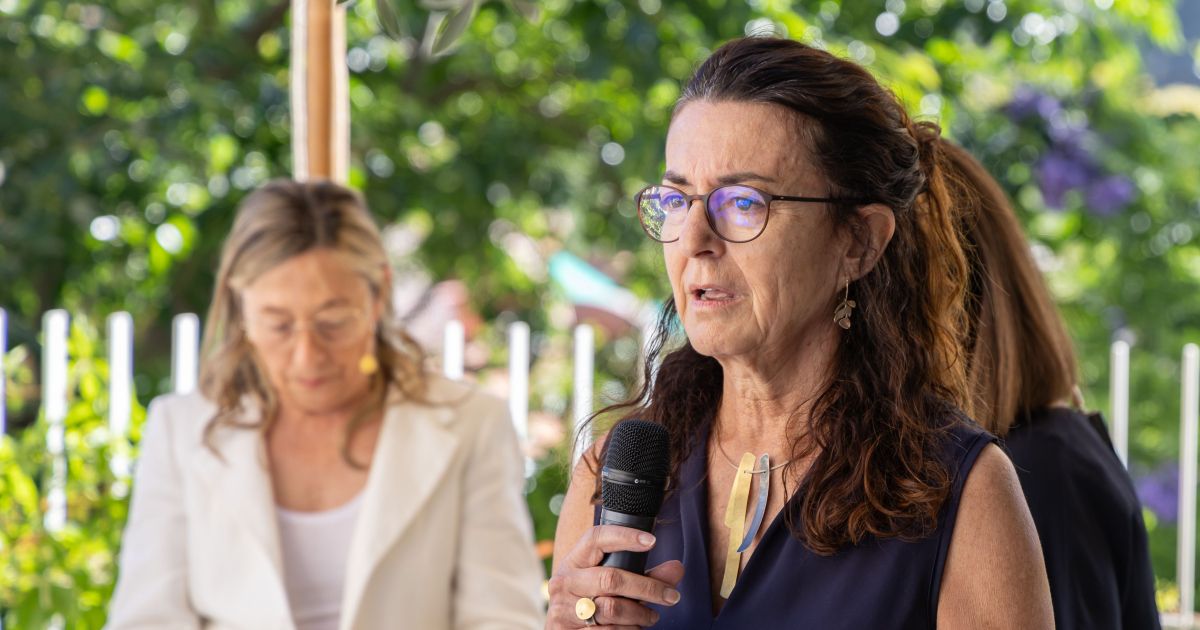
Throughout the session, however, one idea was repeated: the essential role of communication directors in facing these opportunities and challenges. The director of Park Güell, Carme Lanuza, recalled a phrase by Gaudí to summarize this responsibility: "Beauty is the splendor of truth". For her, communicating implies rigor, authenticity, and the ability to generate trust.
For Ortas, furthermore, communication must also go beyond information: "We have to be builders of pride". In a context where critical views of the city often predominate, she believes that institutions have the responsibility to highlight Barcelona's assets: from the Sagrada Familia to the Olympic Ring, which allows hosting top-level events.
All these perspectives, challenges, and opportunities are hidden behind the photograph that has captivated the world. Because behind the Pope's postcard there is a city that seeks a balance between international projection and local pride. And an architecture that, more than decorating Barcelona, has become one of its most powerful ways of explaining itself.
Add The New Barcelona Post as your preferred Google source for free
Stay informed with the latest news.