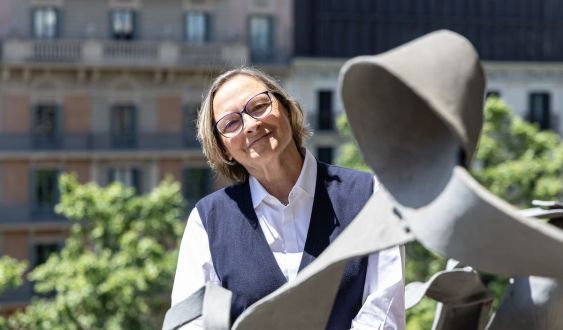
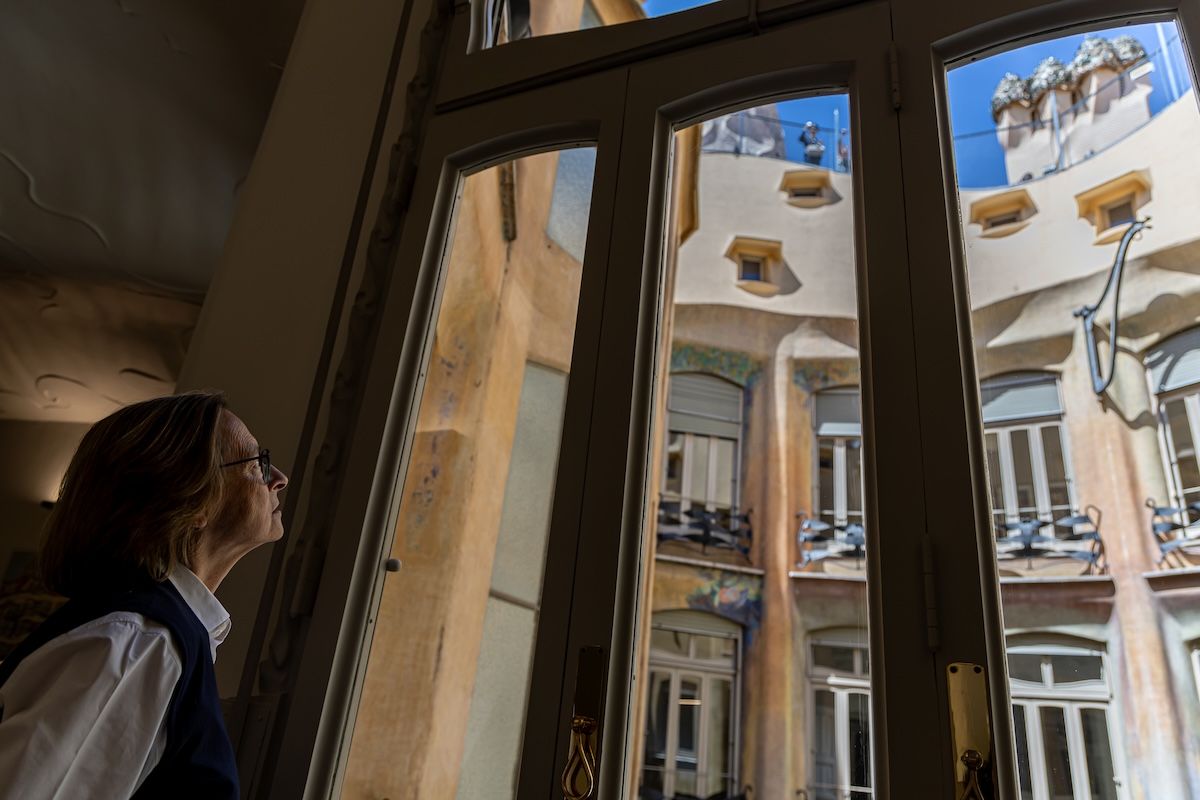
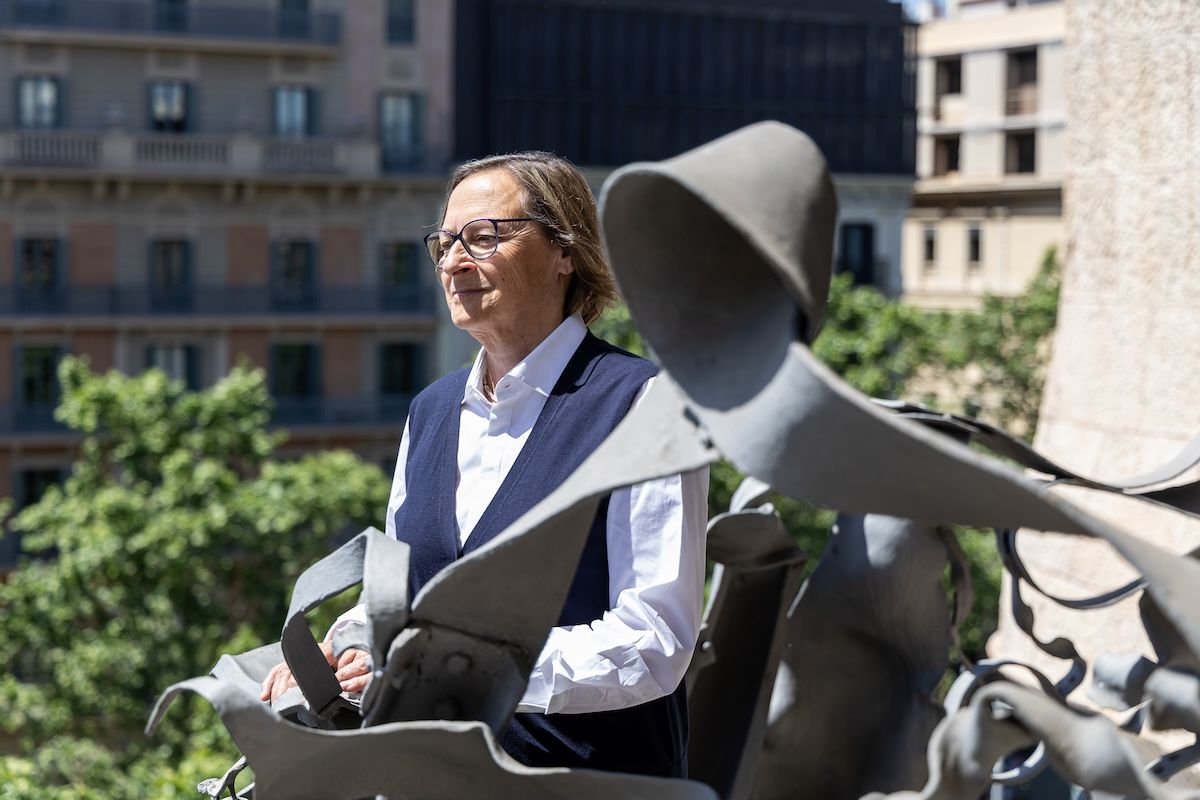
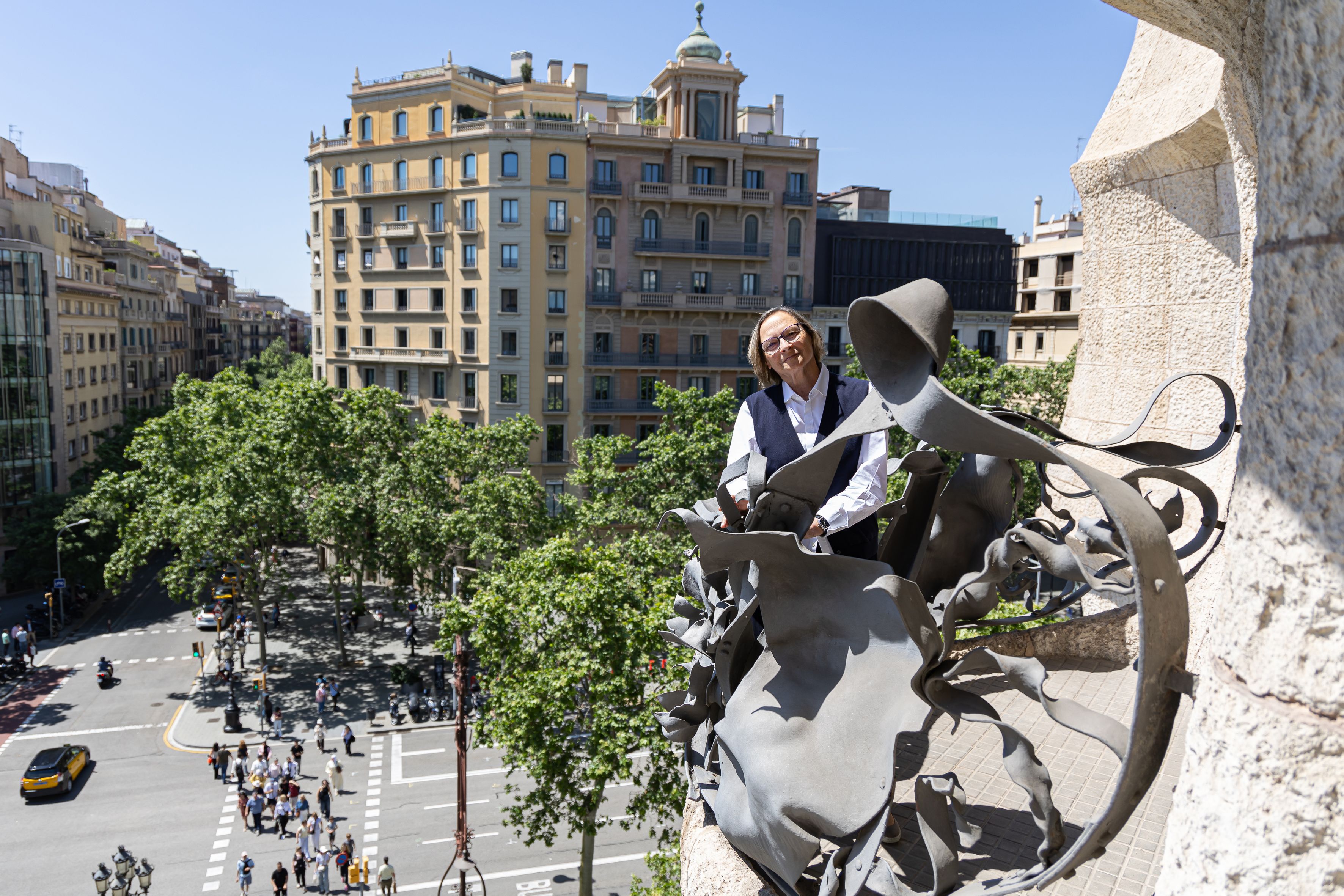
From the rooftop of La Pedrera – Casa Milà, twenty-nine chimneys —designed by Antoni Gaudí as smoke outlets for the central heating, now disused— observe the city. Sculpted in stone, they seem to watch over Barcelona's urban fabric with an elevated, almost panoramic gaze. That same elevated gaze moves a few floors down, to the office from which Marta Lacambra (Tangier, 1957) directs the Fundació Catalunya La Pedrera.
In this space, under the watchful eye of a sculpture that reproduces one of these chimneys, Lacambra's perspective is no longer just urban, but expands to encompass all of Catalonia. A perspective that responds to the dimension of the Foundation, which is not limited to managing this modernist building, but deploys a network of facilities spread throughout the territory —such as Món Sant Benet or the Congost de Mont-rebei—. The Foundation, heir to the former social work of Caixa Catalunya, Tarragona and Manresa and constituted as a private entity in 2013, reinvests the income generated by the management of these spaces, with La Pedrera as the main source, in social, educational, environmental and cultural projects deployed throughout the territory.
Thus, almost imperceptibly, the chimneys on the rooftop, and La Pedrera as a whole, form part of a mechanism that extends to social action throughout the Catalan territory. At the same time, however, the chimneys are also witnesses to the passage of time: from the Barcelona of the 20th century, which was just beginning to glimpse the potential of tourism as a lever for progress, to a city that today exceeds 16 million annual visitors. And, in addition, they have also witnessed the transformation of the building: from the Pedrera conceived by Gaudí in 1906 as a residential building with rental apartments —a function it still retains— to one of the main epicenters of cultural tourism in Barcelona and, at the same time, the headquarters of a foundation that uses modernist heritage as a tool for social return.
— What does it really mean to manage La Pedrera? What is behind this iconic building?
— When we receive visitors and present La Pedrera, we always insist on a very simple idea: "Welcome to La Pedrera, welcome to the headquarters of the Fundació Catalunya La Pedrera". It is not a redundancy, but a way of explaining that buildings, by themselves, do nothing: it is people who give them meaning. La Pedrera, therefore, is not just a visitable heritage, but a piece of a system that transforms visits —to this building and to the rest of the facilities— into resources for social, educational, cultural and environmental projects.
Without these visits, it would not be possible to preserve a World Heritage building that requires constant interventions. The facade, for example, is self-supporting —that is, it stands on its own— and is subjected to conditions that Gaudí could not foresee, such as pollution or intense rain. But, at the same time, La Pedrera makes the entire Foundation's model sustainable. It would be very unintelligent not to take care of the goose that lays the golden eggs: the visits, which are our main source of income and what allows us to invest in all the other projects that respond to the foundational mission, from active aging programs to educational initiatives. Thus, Gaudí's heritage has become a tool for social return.
— But the Foundation goes beyond La Pedrera and Barcelona, and also manages facilities spread throughout the territory. How does this structure work?
— We work with two inseparable realities. On the one hand, there is the more visible and urban dimension, which is La Pedrera and the international flow of visitors in the center of Barcelona. On the other hand, there is a less visible but equally essential dimension, which is that of the territory, with facilities spread throughout Catalonia. Món Sant Benet, MónNatura Delta, the Congost de Mont-rebei or MónNatura Pirineus are not peripheral projects, but structural ones.
These spaces, like La Pedrera, are part of the system that generates the resources that then allow the social part of the Foundation to be sustained. But at the same time they have a life of their own: they have diverse audiences and a direct relationship with the territory where they are located. That is why we do not speak of a network parallel to Barcelona, but of an interconnected structure, where each facility makes sense by itself and, at the same time, contributes to the whole.
"La Pedrera is not only visitable heritage, but a piece of a system that transforms visits into social action"
— Tourism usually concentrates mainly in Barcelona. Does the Foundation's model serve to balance it and generate impact in the territory?
— Precisely, our foundation is defined by being an entity for the redistribution of wealth. We have the will to generate income, but not to accumulate it. Each year a budget of income and expenses is prepared, and all income is fully allocated to the projects that are part of our foundational mission. The budget is a closed gear between resource generation —the facilities— and expenditure, which translates into social projects linked to our mission: dignified aging, research, labor inclusion or sustainability.
— Is this a unique model or could it be replicated in other monuments or cultural institutions?
— Each institution has its context, its history, and its limitations. But it is true that the idea that heritage can have an active function within society, beyond its conservation, is a reflection that can be useful in many contexts. And it is evident that there are similar examples, such as that of the Sagrada Familia, which for years has allocated part of its income to social purposes and which probably, when the works are finished, will have an even clearer margin to deploy this type of action. The particularity of the Fundació Catalunya La Pedrera, however, is that it was born this way: it was created with the idea of being self-sufficient, private, and independent, and this fact forces us to build a system in which the generation of resources is not an end, but a means.
— Can the private sector assume part of the social action that traditionally corresponds to the administration?
— We are clear that we cannot replace public missions. In areas such as education, health, or environmental conservation, the main responsibility lies with the administration. But from the Foundation, we complement that system where we detect unmet needs or future trends, working on major axes such as dignified aging, education and scientific research, labor inclusion, and environmental sustainability.
— With all these elements, explaining La Pedrera in its entirety must be a complex task.
— It is. La Pedrera is often not associated with the Fundació or with this whole set of projects. In fact, it is still surprising to discover that behind memory reinforcement centers for people with Alzheimer's —programs that are even prescribed by health centers as a therapeutic complement— is the Fundació and, ultimately, La Pedrera. But not only that: we also develop job placement projects like MANS, educational initiatives like the Oms i de Prat school in Manresa, and programs linked to research and food like those of the Fundació Alícia.
The model may seem complex, but it is not a catch-all: all expenses respond to the foundational mission and are financed with the income generated by the set of facilities, especially La Pedrera.
"We do not want to increase visitors, but to guarantee the quality of the experience and the preservation of La Pedrera"
— Would it be possible to maintain the social activity of the Fundació without the income generated by La Pedrera? That is: does the Fundació depend on tourism?
— Tourism is its main source of income, but it is a very planned and delimited source of entry. Approximately one million people visit La Pedrera each year, and this volume is defined to guarantee the conservation of the building and the quality of the visit. The Covid pandemic showed us very clearly to what extent the tourism model could be vulnerable, but it also led us to reinforce our infrastructure and diversify our sources of income.
— One million visitors. Is this the capacity limit?
— The maximum is around one million two hundred thousand annual visitors. But the goal is not to grow to reach it, but to stabilize the flow and manage it well. That is, we do not want to increase visitors, but to guarantee the quality of the experience and the preservation of La Pedrera, as well as the rest of the Fundació's facilities.
— La Pedrera mainly receives international visitors, while the rest of the facilities, distributed throughout the territory, mostly have local audiences. Does this difference in profiles somehow condition the visiting experience?
— It mainly conditions the way it is explained, but not the content or the quality of the visit. At La Pedrera, we work with audio guides in fourteen languages and teams prepared for a very diverse international audience. In other facilities, such as Món Sant Benet, fewer languages are sufficient. However, we have learned that the quality of the visit does not depend on the origin of the public, but on how the experience is built. The challenge is not to simplify or reduce content, but to offer a complete and accessible view at the same time, adapted to each context without losing depth.
— And how does La Pedrera relate to the city and to the people of Barcelona? Is it a space felt as their own?
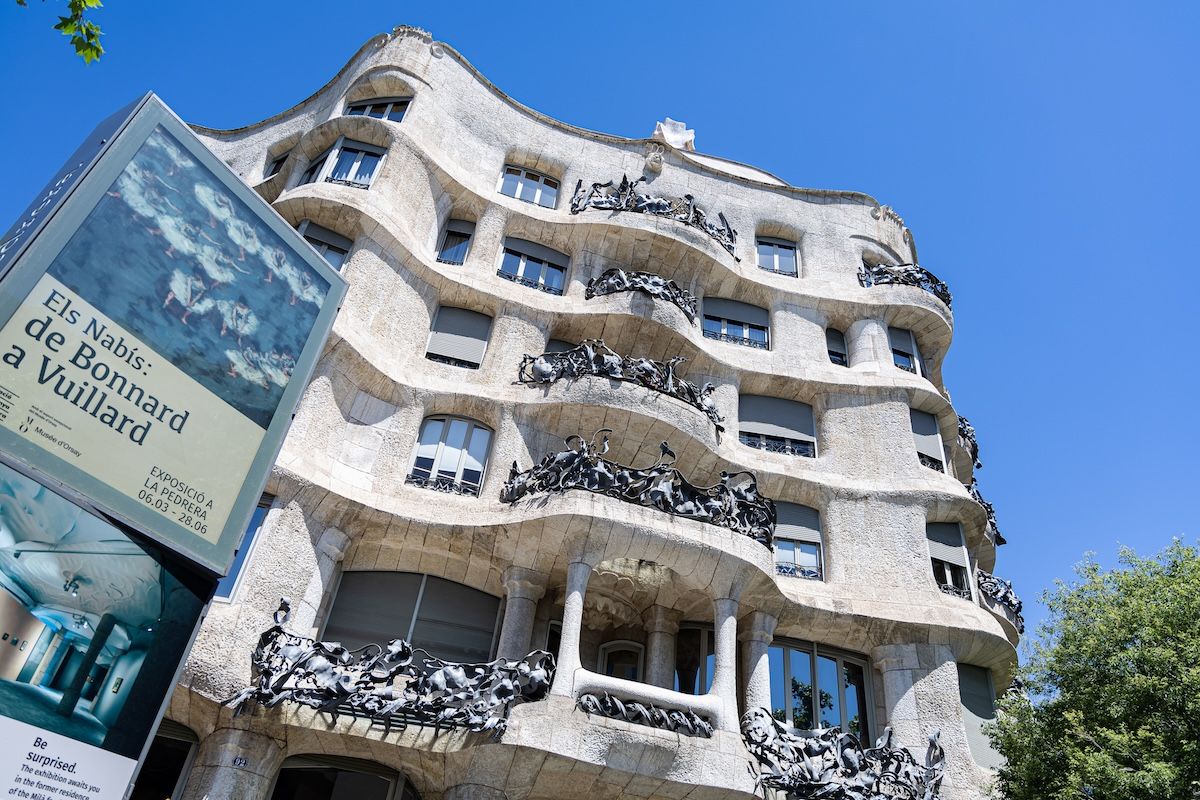
— The relationship with the people of Barcelona is especially intense through the exhibition program and cultural activities. These exhibitions always consider the local public, with the aim of offering quality content that is often not easily accessible in other contexts, such as in the latest exhibition Les Nabis: from Bonnard to Vuillard, which brings together works that would be difficult to see in Barcelona. This makes many people from the city return regularly and trust the space: they know that what is programmed at La Pedrera is rigorous and of a high standard.
It is true that 90% of the building's visitors are international, but there is also intense work with schools and educational programs. This generates a direct and continuous link with the local public, beyond tourism.
"Barcelona's international image is very marked by some very iconic elements, and Gaudí is one of the main ones"
— Gaudí has become one of the main symbols of Barcelona's international image. Is La Pedrera, therefore, part of the city's identity?
— Yes, it is part of it, but it does not define it by itself. La Pedrera is a very visible piece of a much broader identity, in which culture, gastronomy, music, cutting-edge research infrastructures, the university system, or healthcare also play an important role... elements that configure a complex and living identity. And then there is the territory, which is often forgotten when speaking only from the city. Our work, in the end, is that: to try to ensure that this complexity is not lost, but can be explained and experienced coherently.
— Is the vision visitors have of Barcelona too narrow?
— The international image of Barcelona is heavily marked by some very iconic elements, and Gaudí is one of the main ones. In some markets, especially Asian ones, he has almost become a global icon. This means that his work is concentrated in a few very well-known spaces —Casa Batlló, La Pedrera, the Sagrada Familia or Park Güell—, and this concentration can end up offering a partial view of the whole.
Catalan modernism, on the other hand, is much broader and more diverse, with many other works and spaces that often fall outside this more tourist-oriented narrative. For this reason, we try to work in a network with other cultural institutions in the city and the country —such as the Liceu, the Palau de la Música or the Fundació Miró— to broaden this perspective and better reflect the real richness of the heritage.
"We must build a tourism model that truly reaches the entire territory"
— A mission that, in the case of the Foundation, you extend to all of Catalonia.
— The debate about tourism is often framed in a reductionist way, as if it were a single and homogeneous phenomenon. And it is not. Tourism generates tensions, especially in a city like Barcelona, but at the same time it is one of the main sources that allows us to sustain heritage and an important part of cultural activity. In our case, it also allows us to finance the Foundation's social projects.
Furthermore, the tourism model is often still thought of from Barcelona, and this centralized view makes it difficult to build a model that truly encompasses the entire territory. But for this dispersion to be possible, a key issue must be addressed: transport and infrastructure. Without good connectivity, it is very difficult for facilities spread throughout the territory to unleash their full potential.
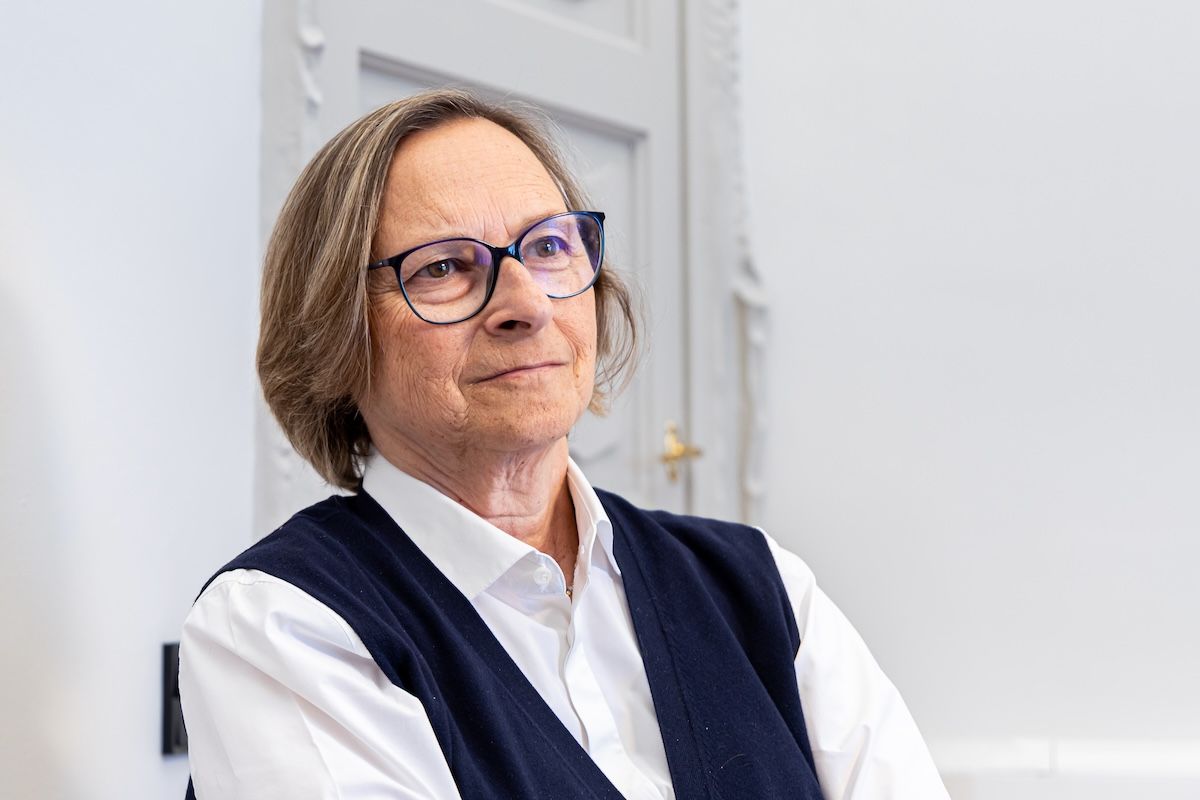
— This tourist concentration, in fact, generates debate in the city. How do you experience it?
— We are not oblivious to this debate, obviously. The city experiences a real tension around tourism, which is also reflected in the narrative and international perception of Barcelona, with concepts such as "turismophobia" that have taken root and affect that perception. However, from the Foundation we do not intervene in the political or urban management debate: our role is different. Tourism policies, regulation or planning correspond to the administrations.
Our responsibility is to preserve heritage, educate, and return value to society. On a daily basis, this translates into opening the doors every day and ensuring that the visitor experience is respectful, careful, and consistent with the building. It is our way of contributing to the city: through daily practice, respect, and care.
"Tourism is still thought of from Barcelona, and this centralized view makes it difficult to build a model that truly encompasses the entire territory"
— With all these elements on the table, how do you face the future? What are the Foundation's objectives?
— Right now we are working on the 2027-2030 strategic plan, with the aim of consolidating and expanding our impact in various areas. One of the most important is the Alzheimer's program, with the goal of reaching 5,000 participants. We also want to strengthen the role of exhibitions at La Pedrera as a reference space for the local public, because it is one of the main ways of connecting with the city. And, at the same time, there are projects in the territory, such as the transformation of Planes de Son into an eco-lodge to boost the Pyrenees, or the recovery of visitor flows in Món Sant Benet, which have decreased after the pandemic.
— And if the Foundation had to make a wish for the future?
— More than a wish, there is a clear aspiration: that the model be understood in its entirety. Not just La Pedrera as an icon, nor the Foundation as a separate social project, but as a whole. That it be seen that there is a coherent structure, with various facilities and lines of action, but with the same logic: to use heritage and culture to generate social return. And that this characteristic can be understood not only from Barcelona, but from the entire territory.
— And if you look further, any wish for Barcelona's tourism model?
— Perhaps a dream would be to recover a certain idea of urban quality, of "good taste" understood also in an aesthetic sense, but not only, but as a city balance: in the way spaces, establishments are configured and also in the need to reduce overcrowding. There is also another wish, more structural, which is that value be better distributed throughout the territory. That not everything is always concentrated in the same points, but that there is a more balanced circulation of people, resources and perspectives.
Add The New Barcelona Post as your preferred Google source for free
Stay informed with the latest news.