
The Barcelona Science Park (PCB) is experiencing a sweet moment. On its 25th anniversary, it has become one of the key infrastructures for the Catalan life sciences ecosystem, after an initial period where it wasn't clear what its purpose should be, considering it was the first of its kind built in Spain and everything was yet to be developed, including the sector itself, as its director, Maria Terrades, recalls in an interview with The New Barcelona Post. In between, there was a long construction of the complex, which began in 1998 and lasted until 2011, leaving different areas of the seven buildings that comprise it unfinished; to which was added a debt that reached 113 million euros and a crisis that did not help either to repay it or to find tenants.
In recent years, the park has seen how the demand for spaces has grown, which allowed it to achieve its first positive financial year in 2017, with a result of 340,000 euros. Maintaining activity during the pandemic, even seeing how the sector attracted the interest not only of society but also of investors who had never before paid attention to it, activity has accelerated to reach a profit of 2.4 million euros in 2022. The good economic evolution has allowed it to amortize its historical debt, now at 75 million euros, equally distributed between the Ministry of Science and the Generalitat. Furthermore, it has recently been able to refinance it.
Financial stability is accompanied by the absolute full occupancy achieved this 2023, two years ahead of schedule. With a total area of 100,000 square meters, the PCB has 60,000 m² of usable space, allocating 33,000 m² to the companies it hosts, distributed in 22,000 m² for laboratories and 11,000 m² for offices. The remaining 27,000 m² are dedicated to spaces shared by the different tenants.
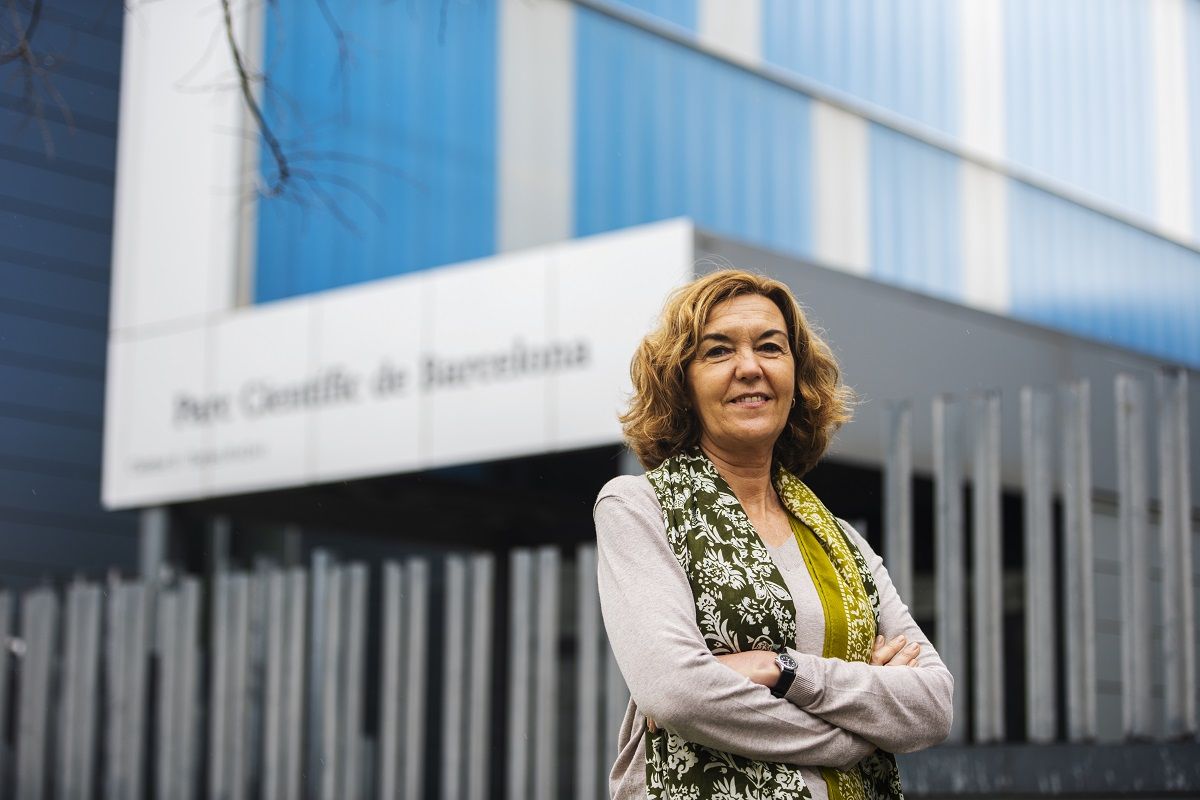
"We expected to finish filling the spaces in 2025, but we have done it in 2023. We have everything contracted. We don't have a single free centimeter of laboratories left. We are finishing some works for companies to move in this summer, but the space is already allocated. We are no longer receiving anyone looking for laboratories; now we are focused on providing solutions for installed entities that need space to grow," explains Terrades.
The Barcelona Science Park had been detecting for some time that the 33,000 square meters available for clients were becoming insufficient, so it began to talk with the administrations and the University of Barcelona (UB), its owner, about the need to expand. "Barcelona is consolidating itself as the health hub of Southern Europe and we cannot lose opportunities. It is not just a problem for the park, but it is a responsibility of the administrations that we do not let companies that want to settle or grow here escape, and that they cannot do so because there is not enough space," she explains.
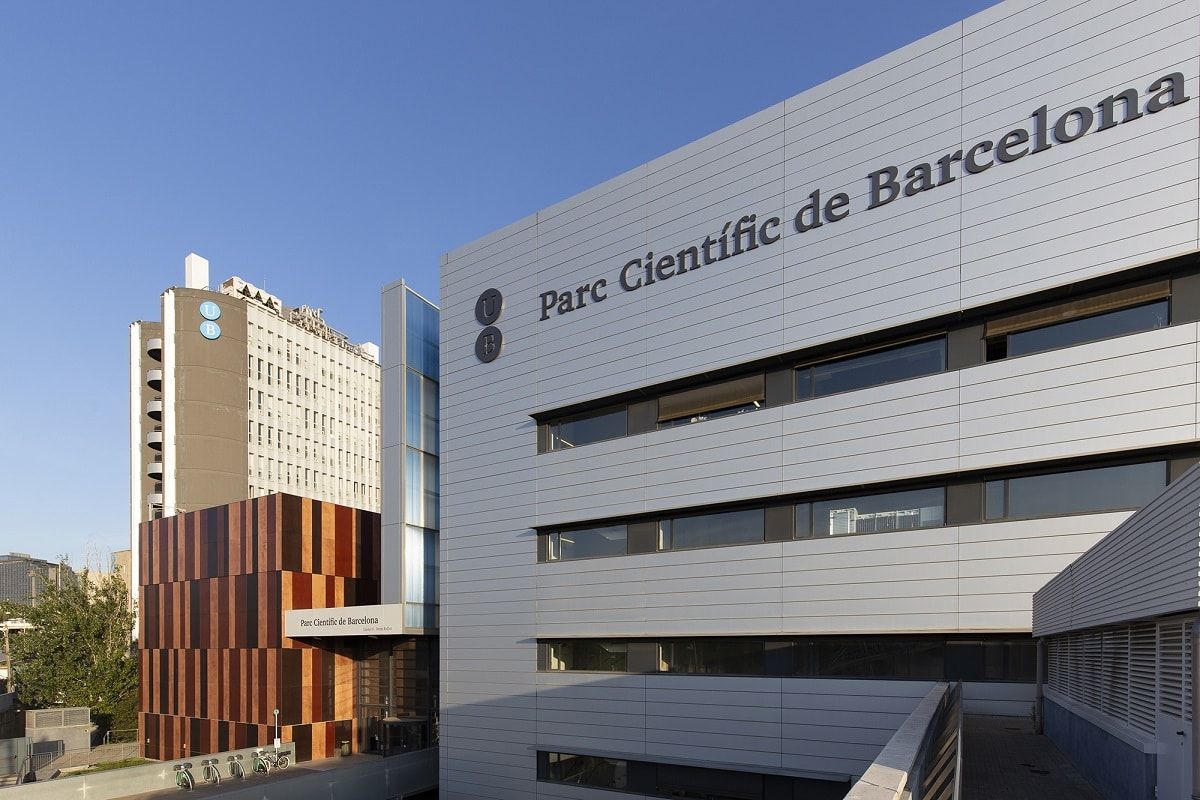
Maria Terrades: "Barcelona is consolidating itself as the health hub of Southern Europe and we cannot lose opportunities"First, the PCB has a piece pending development in the more than 100,000 square meters it occupies on the Diagonal campus. Known as the Cub building, it was originally conceived as an auditorium for 400 people, but it was never built and remained empty inside, like a hollow box, without windows or anything, only with the floor.With the growing demand from companies, and considering that the park already has three auditoriums, the Cub building will finally be allocated to offices, constructing three floors and adding 1,900 square meters to the scientific park's offering.It has not been possible to allocate it to laboratories due to its characteristics, but it will serve for some companies that now occupy spaces with offices that can be converted into laboratories to move to the new building.
The Barcelona Science Park has a piece pending development in the more than 100,000 square meters it occupies on the Diagonal campus, an empty building that was going to be an auditorium but will be used for offices, adding almost 2,000 more square meters.The park's management is now deciding how they are going to do it. About to finish the urban planning procedures, the first part of the works is expected to be carried out this summer, breaking ground in August, with the aim of not disturbing resident entities during the academic year.Once done, the PCB will have to define how the investment to adapt this building will be assumed, which they estimate to be six million euros.They are considering looking for a real estate partner or a financial partner, these being the ones who will execute the works and then recover the investment with the rents. The financial partner formula has already been used in the Clúster II building, where one invested one million euros to refurbish 800 square meters, and the Barcelona City Council collaborated in the transformation of spacesto host a startups accelerator.
Likewise, some companies that have set up in Cluster II have also been responsible for adapting the spaces, such as Quiagen, Infinitec, DeepUll or Algaktiv, another formula contemplated for the Cub building. In this case, the PCB will prioritize finding a single company that would want to keep the three floors ---in the case of a real estate or financial partner, it is contemplated to allocate one floor per client---. However, the goal is to have found the financing and launched the tender this year, with the forecast of having the space ready in 2026.
The Barcelona Science Park is looking for a client or a real estate or financial partner to undertake the six-million investment that will allow the last empty space it has to be enabled.In parallel, the Generalitat, the Barcelona City Council and the UB have reachedto an agreementto expand the scientific complex, right in front of the current PCB facilities, with an eye onthe future arrival of Hospital Clínicto consolidate a Diagonal campus dedicated to health. To provide more space for the park, the current headquarters of the Escola de Noves Tecnologies Interactives (ENTI) will be demolished, leaving a plot where a 10,000 square meter building will be constructed."It will be absolutely integrated and we will not have to replicate infrastructures that we already have," Terrades maintains. In the new block, research groups from the field of health sciences of the UB and the Institute of Bioengineering of Catalonia (IBEC), currently installed in the science park and which is experiencing strong growth, especially after its allianceto host a Fraunhofer Institute branch, the largest organization in Europe dedicated to applied research.
The three institutions signed a non-binding protocol in March, awaiting the materialization of an agreement when the new municipal government is formed. What has already been determined is that the Catalan Land Institute (Incasòl) will be the promoter and investor of the project, in charge of constructing the building and recovering the investment with the tenants' rents, in line with the formula sought for the Cub building. "What will not be done is to repeat past mistakes that burdened the park with a lot of debt," remarks the director of the PCB. The forecast is that the new building will be operational in 2028.
Add The New Barcelona Post as your preferred Google source for free
Stay informed with the latest news.
