Casilda-Ghisla Guerrero-Burgos y Fernández de Córdoba is 44 years old and firmly manages several companies from Andalusia. She is Casilda by maternal line and Ghisla in homage to the wife of Folc I, lord of Cardona in the 10th century. She was born in Córdoba in 1982, the same year that Spain organized the twelfth World Cup (the twenty-third has just concluded these days), and that coincidence allows us a small detour, a red thread, before arriving at the hotel on Passeig de Colom, 12, which this chapter is about: the twenty-second of Hotels with History, the series that we publish every two weeks in The New Barcelona Post and to which today, more than ever, the surname Hotel Stories suits it well.
The summer Barcelona was a double host
That 1982 World Cup had Barcelona as a double host. The Camp Nou hosted the opening ceremony and the first match of the tournament: an Argentina-Belgium, with Plácido Domingo singing before more than 100,000 people, and also one of the two semifinals, which Italy won against Poland. The other venue was the Sarrià stadium, Espanyol's home ground that no longer exists today, where one of the most memorable matches in World Cup history was played: the Italy-Brazil match that ended 3-2 and consecrated Paolo Rossi, by popular acclaim, as the best player on the planet.
So much for the historical-football chronicle of 1982, the summer Casilda was born, who since 1998 is the twenty-first Duchess of Cardona, a title she inherited from her mother.
A lineage, a dukedom and a request for permission
The Duchy of Cardona is one of the oldest noble titles in Spain. It was created in 1491 by Ferdinand II of Aragon for Juan Ramón Folch de Cardona, and has passed from hand to hand for more than five centuries, linked to some of the most powerful lineages of the Catalan-Aragonese crown. The Cardonas, the Montcadas, the Queralts: all had residence in a small palace that the family maintained in Barcelona, in what is now Passeig de Colom. In the hotel lobby hangs a tapestry depicting the meeting between Philip IV of Spain and Louis XIV of France in 1660, which was attended by the Duke of Cardona of the time. A lineage of that weight even remains in tapestries.
Casilda Guerrero-Burgos, disconnected from Catalonia for years and a regular resident in Córdoba, is the last link in that chain. In the early 2000s, she was invited to Barcelona and asked to give her name to a hotel. Almost logically, upon seeing the project, she said yes.
The building that changed its face
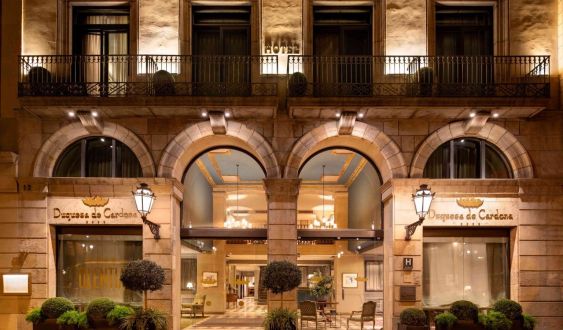
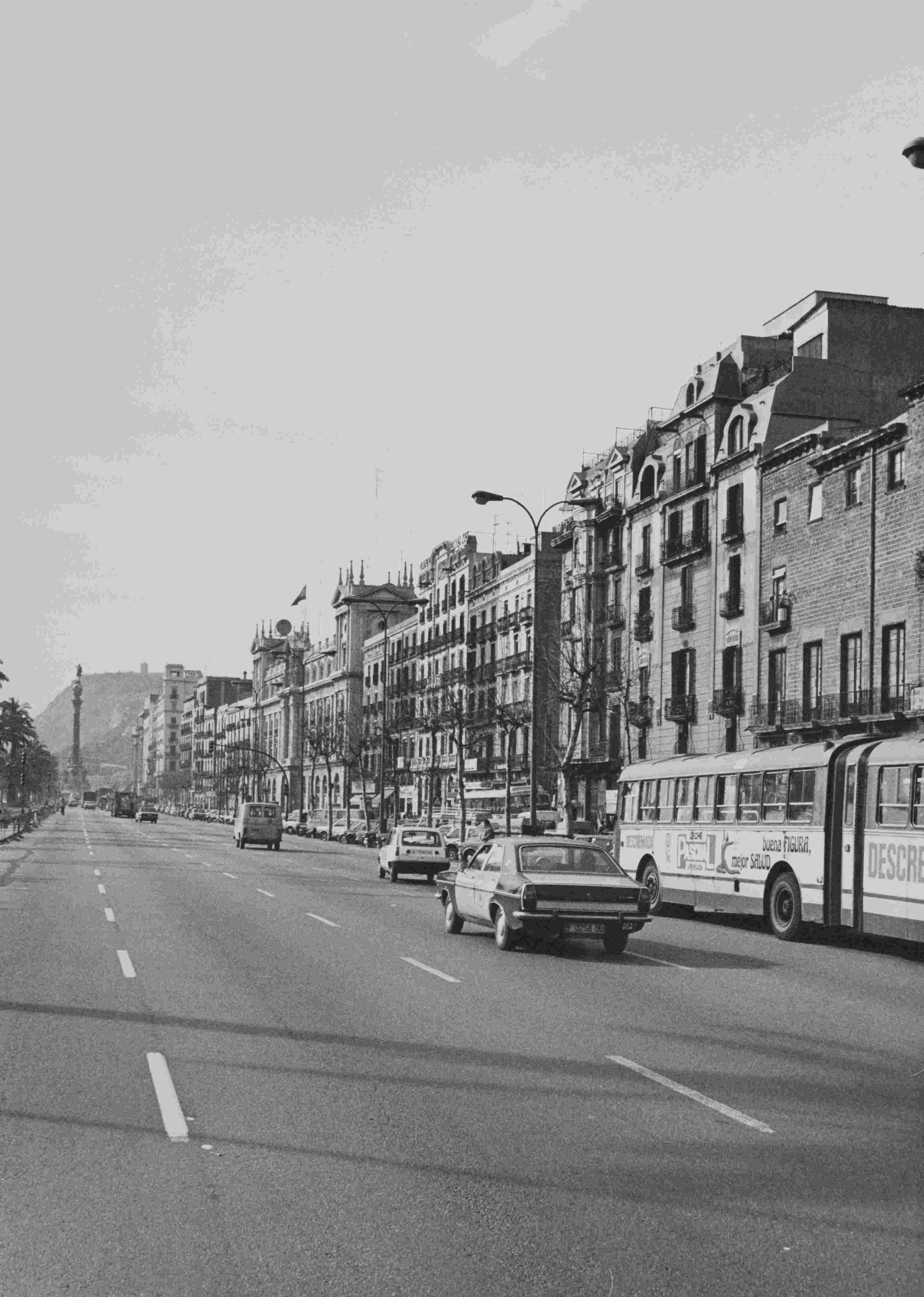
The history of the plot at number 12 Passeig de Colom goes much further back than the hotel. In the 16th century, the palace that stood there was, as we have mentioned, the Barcelona residence of the Dukes of Cardona: a refuge for nobles and, it is said, occasionally also for kings. The current structure was restored in 1850 to house the Barcelona bourgeoisie of the time, although for decades it had a notable architectural peculiarity: its main facade did not face the sea, but the interior of the city, because the wall separated it from the port. It was in the 1880s, with the demolition of that wall and the creation of Passeig de Colom for the Universal Exhibition, when the building turned its gaze: what was the rear facade became the main entrance.
The hotel: 64 rooms, a rooftop, and the city's first sun
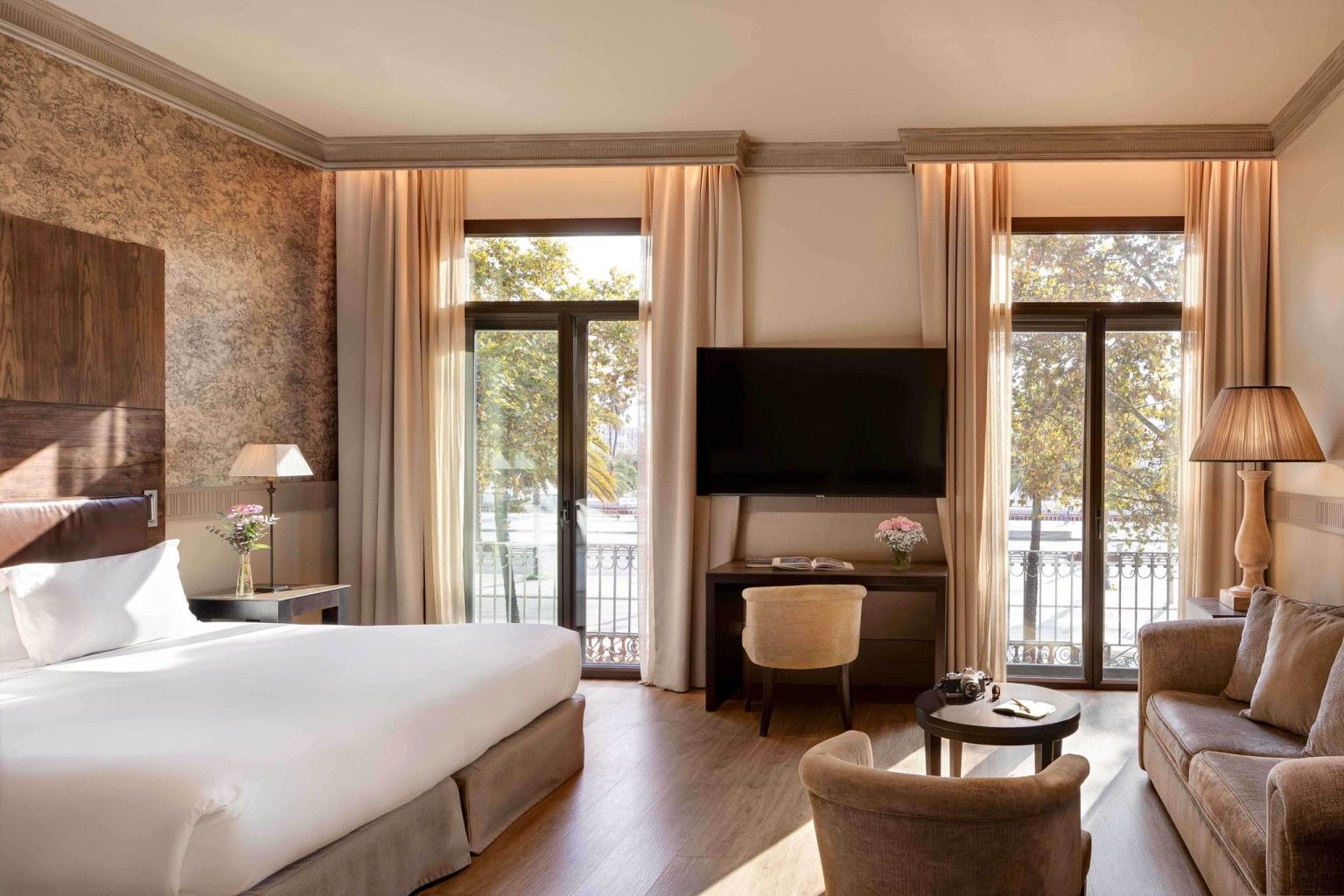
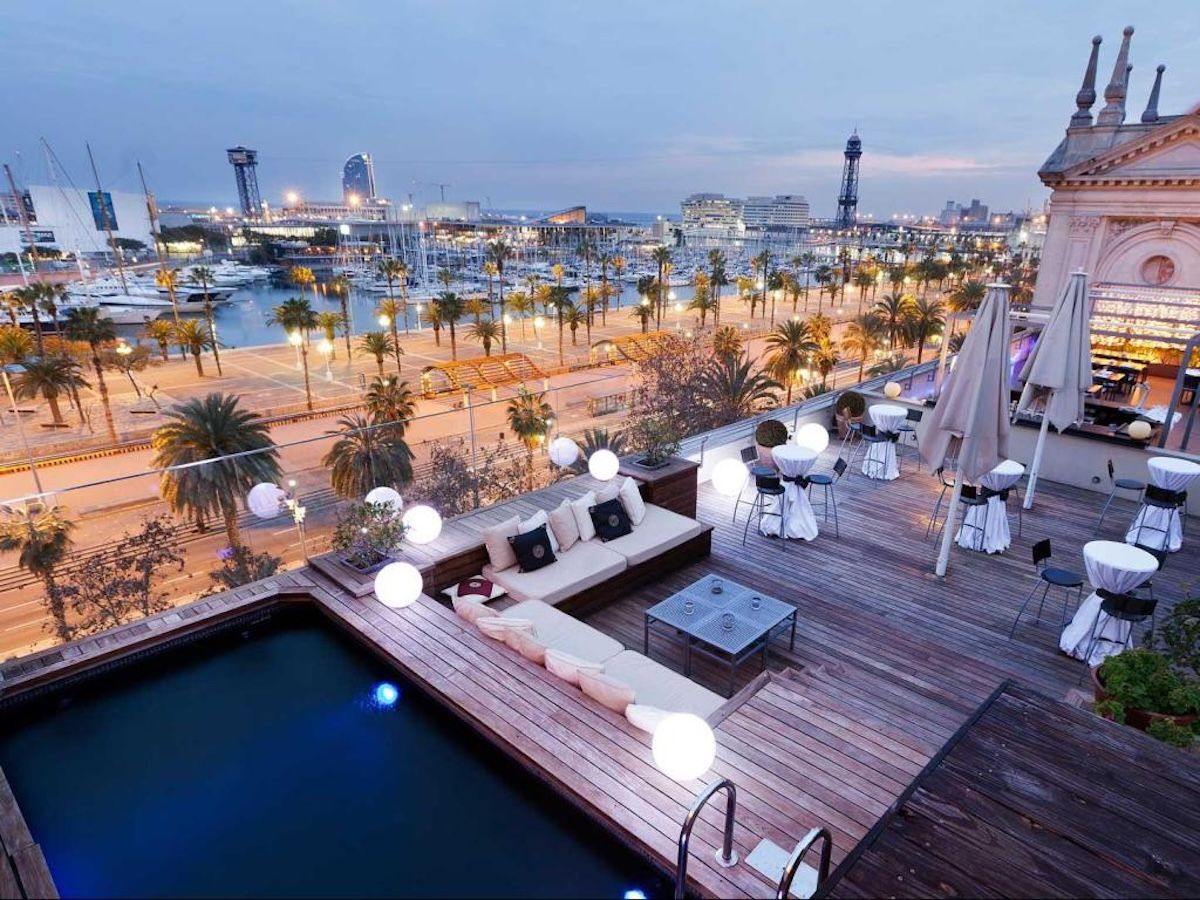
Eduard Torres opened the Hotel Duquesa de Cardona in 2003, after a renovation that transformed that palace into a four-star boutique hotel with 64 rooms, many with direct views of Port Vell. It has a Mediterranean cuisine restaurant, Olentia, and a rooftop that is a regular venue for jazz nights, DJ sessions, and a seasonal pool offering one of the most privileged panoramic views of the city: the masts of the Real Club Náutico and the Club Marítim in the foreground, in addition to the northern entrance and Marina Port Vell in the background.
In the mornings, it's time for sun, because the facade of the Duquesa de Cardona faces east, so when the sun rises over the Mediterranean, the light hits this building head-on before almost any other hotel in the city. Almost, because the same thing happens to its neighbor The Serras, protagonist of the fifth chapter of this series. It's a detail that doesn't appear on websites, guides, or brochures, although anyone staying in a room with port views discovers it first thing in the morning without anyone having to tell them.
The Duquessa Group: Barcelona… and Cardona
The success of the Duquesa de Cardona gave Torres the impetus to build a hotel group with an unusual narrative coherence in the sector: the Grup Duquessa. All its establishments are rehabilitated historic buildings, all have a previous history, and two of them have a direct link to Cardona, in Bages.
The first to arrive after the Duquesa was the Duquesa Suites de Barcelona, a few steps from the previous one: an 18th-century stately building on the corner of Passeig de Colom with the old Antonio López square, classified as a monument hotel for its heritage value and with views of the Correos building, the Llotja and the old (and beautiful) headquarters of Trasmediterránea.
The third explains a lot about Torres. In 2006, he transformed the old school of the Carmelite Vedrunas nuns in Cardona, where his ancestors had studied, into a small nineteen-room boutique hotel. He named it Hotel Bremon, in honor of the Viscount of Cardona who in the 11th century ordered the construction of the Collegiate Church of Sant Vicenç, one of the jewels of Catalan Romanesque art. From its terrace, you can see the castle and the salt mountain.
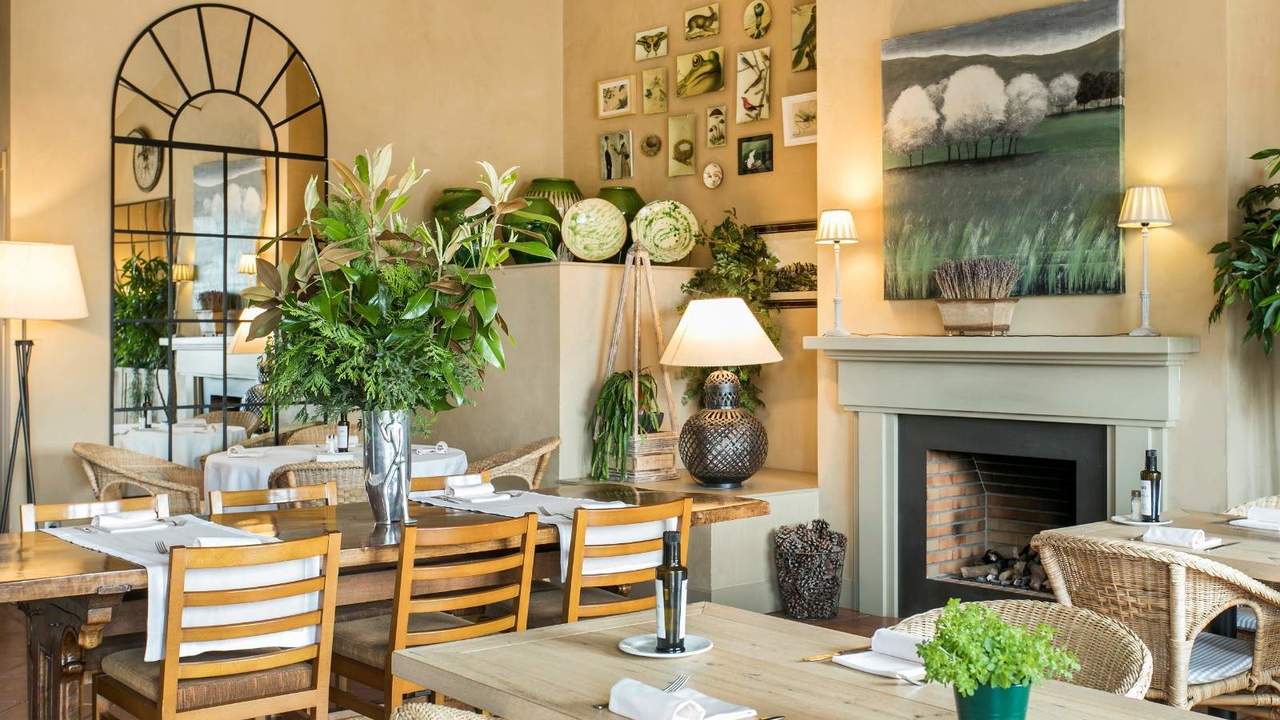
The group also owns El Vilar de la Duquessa, a rural space in the upper part of the medieval town that in 2024 received a visit from Casilda herself, in a tourism promotion event for the area; a few days ago, Santiago Auseron, the legendary voice of Radio Futura, performed there. And it has set foot in Pals, although that already exceeds the story we are telling here. A hotel in Barcelona named after the duchy, a hotel in Cardona named after the viscount who founded it: the coherence is the same.
Cardona, 4,500 inhabitants and a visit from 007
Cardona, in the Bages region, is 85 kilometers from Barcelona. It has about 4,500 inhabitants, an imposing 9th-century castle that has been a museum-parador since 1976, and a salt mountain whose mines (active since Roman times) closed in 1990. It also has a documented birth date: April 23, 986, when Count Borrell II granted it its second charter of population. In other words, it is a municipality with more history per square meter than some entire countries.
And in that municipality of 4,500 inhabitants, Daniel Craig filmed. Not in a James Bond movie, because in the 25 official installments of the saga, agent 007 has filmed specific scenes in different parts of Spain, but never in Catalonia, but in something that, for practical purposes, was quite similar. In May 2018, Craig walked the streets of Cardona and inside the Parador to shoot a Heineken 0.0 beer commercial promoting No Time to Die, the twenty-fifth installment of the saga. The spot premiered in January 2020 in more than 75 countries and was also filmed in Cala Jovera and Tamarit Castle, in Tarragona.
In it, Craig plays himself; technically he is not Bond, although the game of confusion begins from the first shot: the character chases a taxi through the streets of Cardona to retrieve a forgotten passport, and the neighbors who watch him cannot quite decide if he is the secret agent or not. The slogan finishes it off: Once you're James Bond, you'll always be James Bond.
So, yes: Daniel Craig has filmed in Catalonia. In Cardona, to be precise.
The same Cardona that gives its name to the hotel on Passeig de Colom that stars in the twenty-second chapter of Hotels with History in The New Barcelona Post. The same whose dukes came to govern, at their best, up to thirty Catalan villas. The same whose twenty-first duchess was born the year of the Naranjito World Cup, inherited the title at sixteen and in 2003 gave her name to a small palace that, every morning, is one of the first to see the sun rise over the Mediterranean from the port of Barcelona.
Add The New Barcelona Post as your preferred Google source for free
Stay informed with the latest news.