On July 14, 1959, a very young presenter named José Luis Barcelona stood before a camera installed in the garden of an old mansion in Montjuïc and opened the broadcast with a phrase that would become a legend of Catalan television: "Good afternoon… from the Balcony of the Mediterranean."
No one on set imagined that building, with thirty years of history already behind it, would end up being, decades later, one of Barcelona's most unique luxury hotels. Nor did they imagine that, before becoming one, it would have to survive almost two decades of failed projects, families of European bankers, and even a proposed headquarters for the Euroarmy on paper.
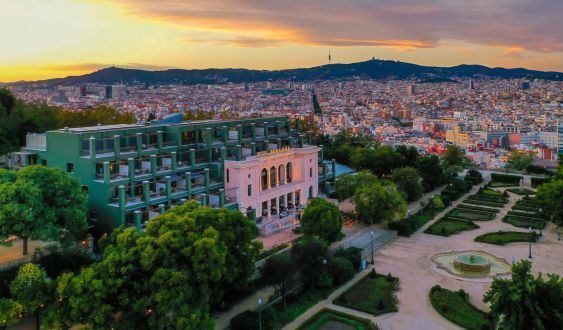
The current Hotel Miramar, on the slope of Montjuïc overlooking the port and the Mediterranean, is the protagonist of the 20th chapter of Hotels with History and Hotel Stories, the series we publish every 15 days in The New Barcelona Post. And it is, probably, one of those that accumulates the most different lives in the entire series.
A restaurant for the International Exhibition
It all began in 1914, when it was decided that the Barcelona International Exhibition would be held in Montjuïc, then a practically undeveloped mountain. Between 1917 and 1919, the French landscape architect Jean-Claude Nicolas Forestier (the same one who years later would design the gardens of the Gran Hotel La Florida, in Tibidabo) designed the landscaping of the area, a work that would earn him the Grand Prize at the 1929 Exhibition itself.
In that context, the architect Ramon Raventós i Farrarons, then head of the Cultural Buildings Service of the City Council and also author of the Venetian Towers in Plaza España, the Teatre Grec, and the Poble Espanyol, erected a noucentista-style mansion-restaurant with an outdoor terrace, lanterns, and a privileged view over the port. The place was inaugurated by King Alfonso XIII himself. Enrico Cacciami, a member of a highly prestigious lineage of Italian restaurateurs, was appointed to lead the kitchens.
For years, the Miramar was an emblematic venue for weddings and grand banquets of the Barcelona bourgeoisie, until the Civil War broke out in 1936. The building was left empty of content and clients. It closed and was boarded up.
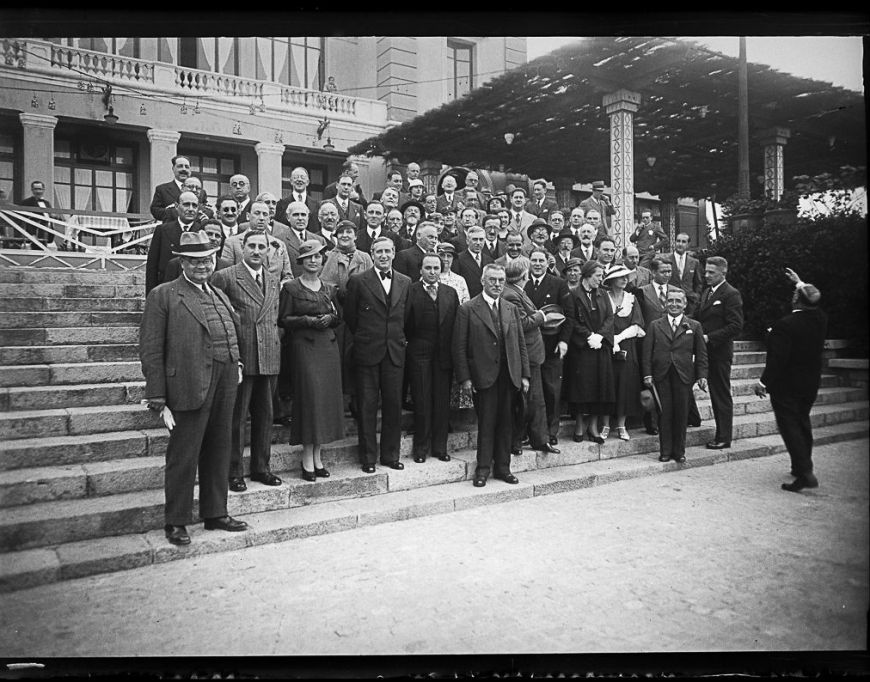
Here is a first curious fact that probably many do not know: already during José María de Porcioles' first years as mayor, that is, in the late 50s, it was considered to convert Miramar into a hotel, as a company formed by an airline together with an American hotel chain had shown interest in setting foot in Barcelona. The plan did not materialize. And as the palace continued to lose momentum, a very different new use was sought for it.
The Balcony of the Mediterranean. 24 years of television
When Televisión Española began broadcasting from Madrid in 1956, the two daily hours of test programming barely reached beyond the capital of the State. The regime then designed a plan of territorial centers connected by a network of repeaters, and Barcelona, strategic, needed a building for TVE. Given the availability of the place, it was decided to install the new studios in old Miramar.
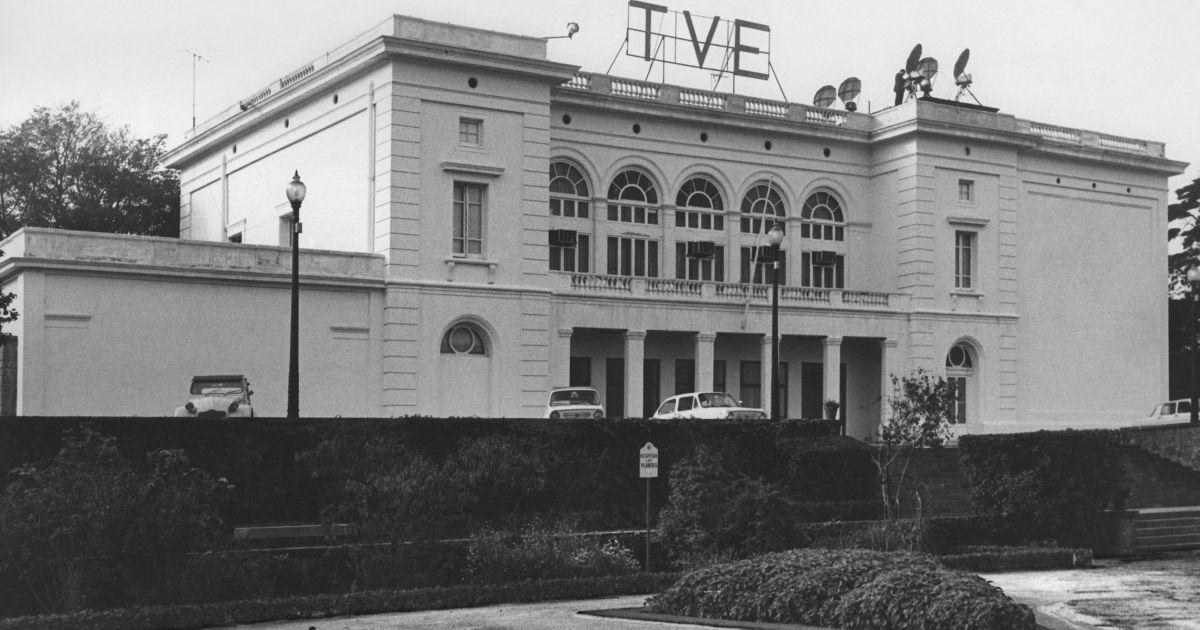
The first television signal arrived in Barcelona on February 15, 1959, in tests, with a Real Madrid-Barça match, although the official inauguration of the brand new studios and technical services was reserved for a symbolic date of the regime: July 14. That day the program Balcón del Mediterráneo was born, presented by the aforementioned José Luis Barcelona, a first variety show produced entirely from Barcelona and broadcast throughout Spain.
During the following 24 years, Miramar became the audiovisual heart of Catalonia and one of the great internal rivals of the Madrid studios on Paseo de la Habana and Prado del Rey. Programs that marked an era were broadcast and recorded in its sets, such as Reina por un día, Amigos del martes, Club Miramar or Carrusel, and professionals such as Mónica Randall or Federico Gallo worked there. For years, it was also TVE's only link with the Eurovision network, so everything that arrived from Europe to state television necessarily passed through Montjuïc.
The studios were located in a charming and privileged place, although a growing television needed more resources and square meters. On June 23, 1983, TVE's new headquarters in Sant Cugat del Vallès was inaugurated, and four days later, on June 27, the farewell special was broadcast: Adéu Miramar, Bon dia Sant Cugat.
A long void: from the RACC to the Euroarmy
In the second half of the 80s, a little-known, and perhaps surprising, part of the history of the current Hotel Miramar arrived. After TVE left, the palace was empty again, and for almost two decades its plot became a coveted place for which the most disparate plans were proposed. According to documented information, among the alternatives that were considered were converting it into the headquarters of the RACC, into facilities for the new Universitat Ramon Llull, into a barracks for the southern command of the Euroarmy or, even, into a Grand Casino for gambling to be in the city. None came to fruition.
The most impactful move that came closest to becoming a reality arrived with the years of preparation for the 1992 Olympic Games. The then mayor Pasqual Maragall, aware that the city needed to take advantage of the momentum, convinced the Thyssen and Rothschild families to invest in a luxury hotel in the building. The project was commissioned to none other than Ricardo Bofill. However, the plan was not approved by the Generalitat and was definitively shelved. Meanwhile, a short walk away, the Olympic diving pool was built, and the old palace was left out of the great transformative narrative that the city was experiencing, although, already almost in ruins, it was disguised on the outside to offer a dignified image to the many visitors who went up to Montjuïc.
The rescue, the City Council and Tusquets
The definitive rescue of a place that seemed to have bad luck arrived in 2001. That year, the American hotel businessman David Stein won the tender called by the Barcelona City Council to recover the palace and convert it into a five-star hotel. It was the same Stein who, in parallel, was rehabilitating the Gran Hotel La Florida del Tibidabo. Incidentally, both buildings were originally designed by the same Ramon Raventós.
Everything seemed, at last, on track, although that path was anything but simple. The land is municipal property and was granted in concession for 50 years; in addition, the City Council kept 10% of the managing company, which generated the predictable political controversy: some groups considered that the Consistory should not have participation in a private hotel business, others criticized the debts that the process was generating. To be able to carry out the project, it was even necessary to modify the urban planning licenses and increase the permitted buildability, with the consequent disputes in the political arena.
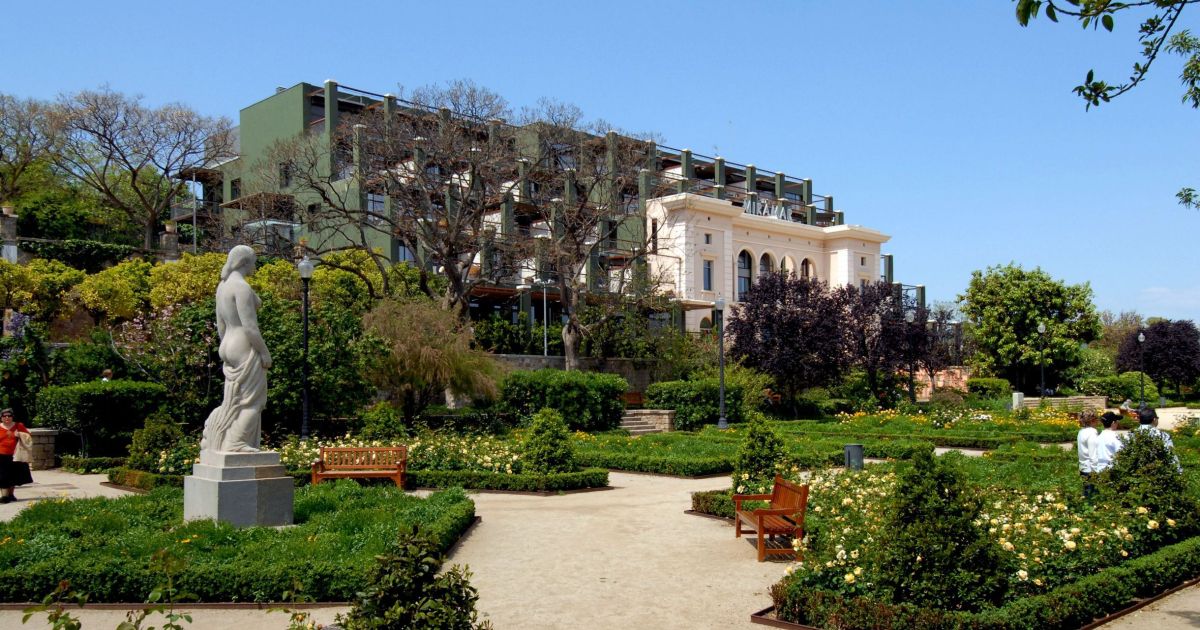
Finally, between 2001 and 2006, architect Óscar Tusquets signed the remodeling. His intervention aimed to be an exercise in respect: instead of competing with the historic facade, Tusquets staggered the new body of the building backward, forming terraces in front of the rooms, and painted it a green that tried to camouflage itself with the trees of the forest climbing up Montjuïc. All visual attention is left to the old Raventós palace. The hotel finally opened its doors in May 2007.
Among the details that survive today from that renovation, there is one particularly beautiful: the lamp hanging from the main staircase, a work by Hungarian sculptor Ben Jakober, recreates the polyfunicular model that Antoni Gaudí used to study the structure of the crypt of Colònia Güell. A modernist nod within a noucentista building that was, for a quarter of a century, synonymous with black and white television transitioning to color.
Bad luck continues: the 2009 embargo
The hotel's management then passed into the hands of Joan Gaspart, through his Husa brand. However, even with the hotel already reopened, the story did not completely calm down: in 2009, with the building already owned by the American fund Apollo, the German bank Aareal Bank finalized the procedures to embargo both the Miramar and La Florida for non-payment of loans worth 70 million euros, although both establishments continued to operate normally during the process. It was only the first of several turbulent financial episodes that would accompany the hotel for years, with periods without a managing chain in between.
The present: Atom Hoteles and a necessary major renovation
Lebanese businessman Boutros El Khoury, its penultimate owner, transferred it in January 2024 to the REIT Atom Hoteles, in a joint operation with the Gran Hotel La Florida (now Mett Barcelona), for 50 million euros, after a long dispute between both parties.
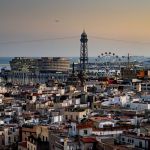
Atom has already invested 20 million in a first phase of reform, with the idea of converting the Miramar into a reference urban resort that dialogues with its surroundings in Montjuïc: cultural synergies with the Miró Foundation, with the port cable car, with the mountain one, and will maintain a program of contemporary art and spaces that, according to reports, will also disseminate the building's own history.
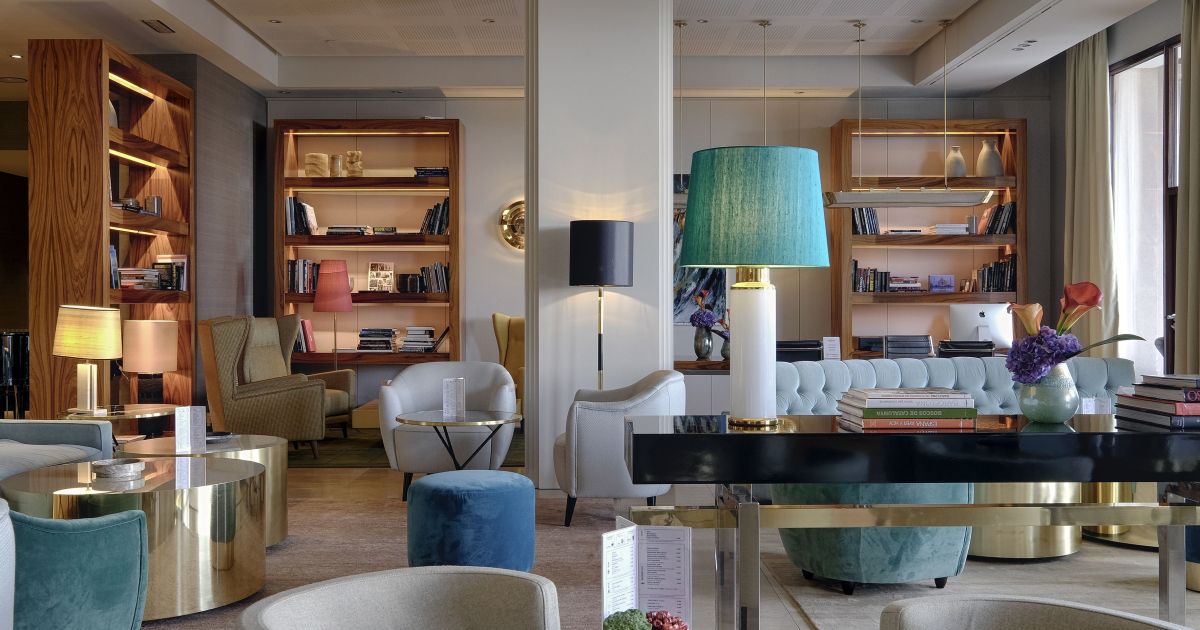
The property is associated with the American group Preferred Hotels & Resorts. The hotel has 75 rooms and suites, a garden as pleasant as it is discreet, and a spa and gastronomic offer befitting its history and luxury.
Few buildings in Barcelona can boast such a complete narrative arc: gastronomic temple of an International Exhibition, set for Francoist television and the early democratic times, plot disputed by bankers, military, and casinos in the midst of the Olympic boom, and finally a luxury resort reinvented twice in twenty years. The Miramar has not only seen Barcelona change from its "balcony over the Mediterranean": it has changed, itself, as many times as the city at its feet.
Add The New Barcelona Post as your preferred Google source for free
Stay informed with the latest news.