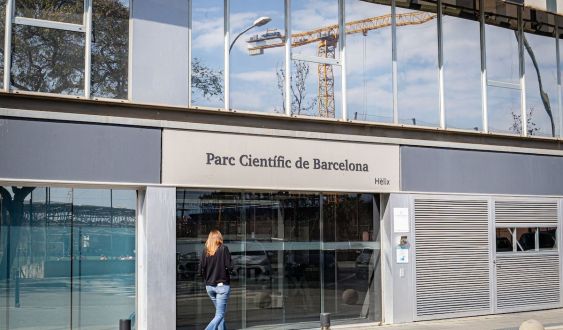
The companies located in the Barcelona Science Park (PCB) registered in 2024 the second-best figure for investment raised in their entire history. With a total of 124 million euros, the facilities concentrated 36% of the investment raised by health startups throughout Catalonia last year. Thus, with this figure, it surpasses the investment of 85.4 million euros from its previous fiscal year, but does not reach its historical record of 142 million euros raised in 2022.
The majority source of investment has once again been private financing, with 97.5 million euros. However, public capital, coming from national and international aid, has gained presence in boosting these companies, increasing its contribution by 53.6% compared to 2023, contributing 27.2 million. Currently, the PCB facilities, which have no free space, concentrate in its 100,000 square meters a total of 86 companies, including spinoffs, startups and scaleups, and more than 3,600 employees innovating in the health sector.
Among these companies, Inbrain Neuroelectrics has stood out for the second consecutive year, raising a record figure of 78.2 million euros, obtained from the 50 million dollar (46 million euro) round led by the Belgian venture capital fund Imec.xpand, to which are added 32 million obtained through private strategic partners. This financing will allow the startup specialized in the use of graphene to treat neurological diseases, such as Parkinson's and epilepsy, to advance in its clinical trials.
Nuage Therapeutics, a spinoff of the Institute for Research in Biomedicine (IRB) and the Catalan Institution for Research and Advanced Studies (ICREA), closed the second highest financing round in the PCB ecosystem in 2024, with 5 million euros to boost the development of cancer drugs. Likewise, the blue economy startup B'ZEOS, focused on the development of sustainable packaging solutions from seaweed, also raised 5 million euros.
In addition, during 2024, startups such as Zymvol Biomodeling, Hemostatics, Fecundis, Nanobots Therapeutics, or DAN*NA, among others, also obtained financing. Most of the PCB companies develop medical technologies, a group of companies that captured most of the financing with 85.5 million euros, with a strong presence of firms focused on areas such as the central nervous system, oncology, and immunology.
"2024 has been a year of consolidation and stability for our ecosystem," said PCB director Maria Terrades, who added that these investment figures position the facilities as an "important engine of biomedical innovation in Catalonia," acting as a center of attraction for researchers and companies. With agents like the PCB, the biomedical sector has experienced strong growth in recent years, gaining the confidence of both private investors and public subsidies, despite the increasingly unstable geopolitical context. In fact, investment raised by health startups grew by 55% last year, according to the latest Biocat report.
With almost 350 million euros raised across Catalonia, the biotechnology sector soared again, after a 2023 in which the figure had fallen to 220 million. The PCB concentrated more than a third of that investment, a fact that, according to Terrades, demonstrates "the success of a public-private collaboration model that we advocate and that, year after year, proves its capacity to generate impact."
A PCB in transformation
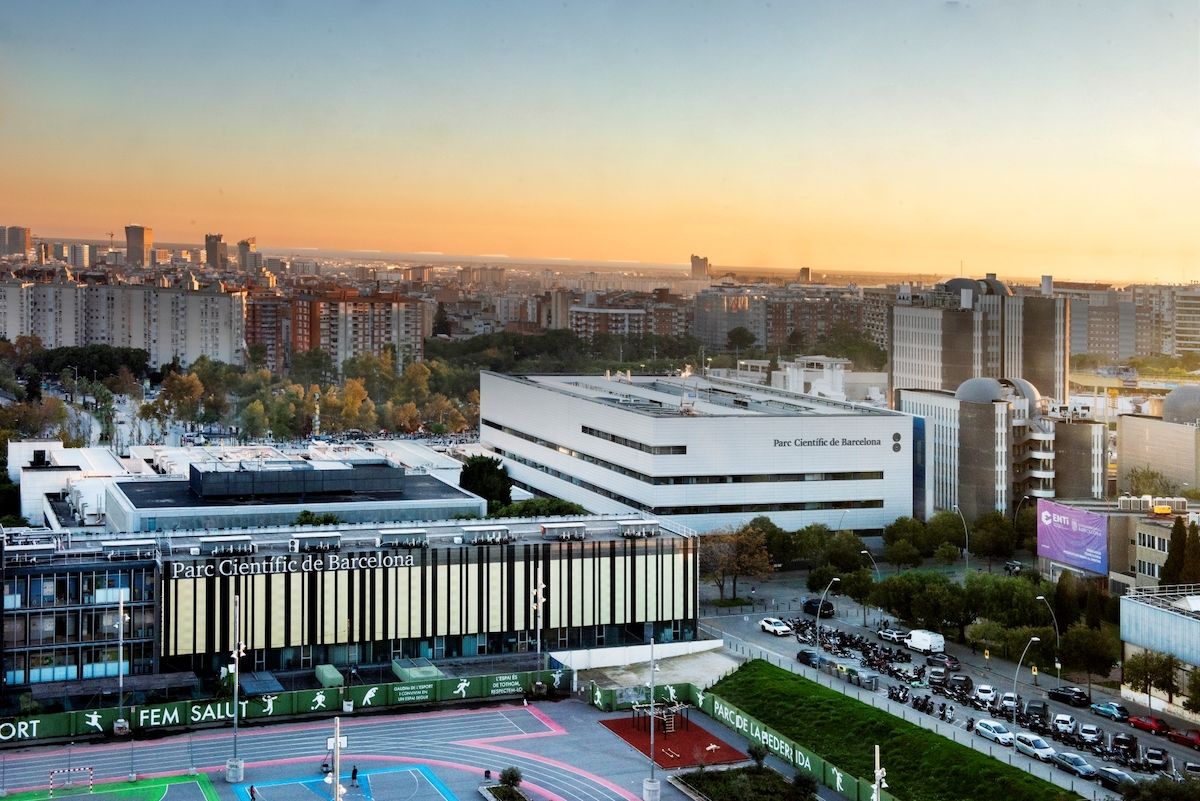
The Parc Científic de Barcelona was inaugurated by the Universitat de Barcelona in 1997 as the first science park in all of Spain. The subsequent economic crisis meant that the facilities took time to be occupied, but since 2023 the PCB does not have a single free centimeter, with an area of 22,109 square meters of fully occupied laboratories. An occupancy that does not allow companies already installed in the PCB to expand or add spaces, nor does it allow them to start new accelerators, after the success of its last three, nor to host new companies.
According to PCB's calculations, the facilities were expected to be full by 2025 but they were two years earlier. For now, the only way they have to gain space is to give an exit to companies like Qiagen, which started with the name STAT-Dx with only two researchers and which was acquired by the German multinational, which will move to the old Braun factory in Esplugues de Llobregat to continue growing. But to be able to continue hosting companies and researchers, and supporting innovation, the PCB also faces an ambitious expansion project. An expansion that is beginning to get on track, with the intention of launching in 2028 the CUB building, which will have 2,700 square meters distributed among four floors destined for dry laboratories and offices. To make this possible, the winning proposal of the ideas competition has already been chosen, with the aim of tendering its works in 2026 and starting them the following year so that the first researchers can enter at the beginning of 2028.
In parallel, the headquarters of the Escola de Noves Tecnologies Interactives (ENTI) will also be demolished, a space in which a mathematics building managed by the UB and a new building of 10,000 square meters will coexist to house research groups such as the Institut de Bioenginyeria de Catalunya (Ibec), currently installed in the PCB, or the Fraunhofer Institute. With a planned investment of 60 million euros, the ideas competition has already been published to choose the winning proposal for this new space, with the aim of it becoming operational by 2029.
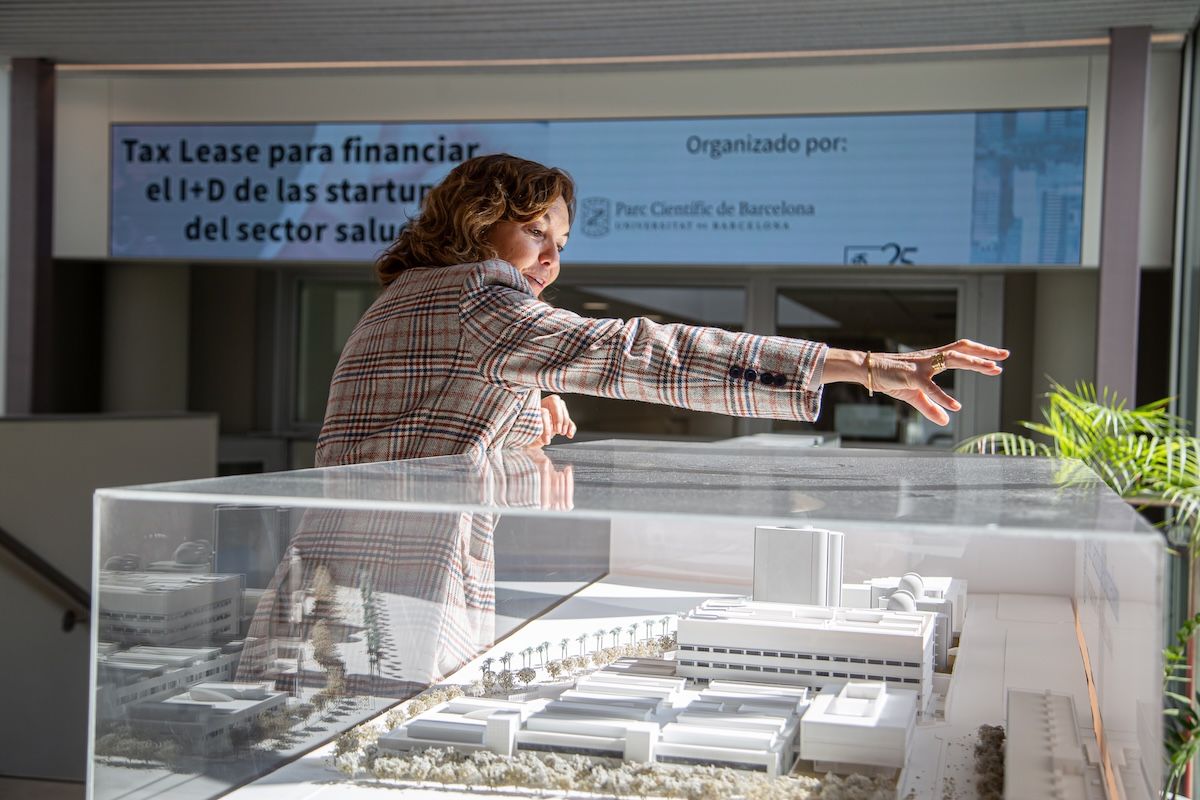
The expansion of the PCB coincides with the transformation that this area of Diagonal is experiencing, which will form what is known as the Diagonal-Health axis. In this area, a European reference biomedical hub is being built with agents such as the PCB or the Hospital Sant Joan de Déu, both in the process of adding spaces to continue growing, and the arrival of the future campus of the Hospital Clínic, which, according to initial forecasts, could become operational in 2035. "It will be a hub for training, research, knowledge transfer and projects that can be applied in society and transform Barcelona and its citizens," emphasized the vice-rector of research of the UB, Jordi García.
Add The New Barcelona Post as your preferred Google source for free
Stay informed with the latest news.
