The Catalan entrepreneurial ecosystem continues to grow, and not only because it adds new startups and more revenue, but because emerging companies are increasingly robust, with more employees and sales. In this upward progression, startups have reached a new high in Catalonia: in 2024 they have reached 2,285 companies, 9% more than the previous year.
As a whole, startups generated a turnover of 2.33 billion euros last year, 10% more than the previous year. And not only does turnover grow, but also the volume of companies, since 46% of startups begin to bill more than half a million euros, almost double the 29% that did so five years ago.
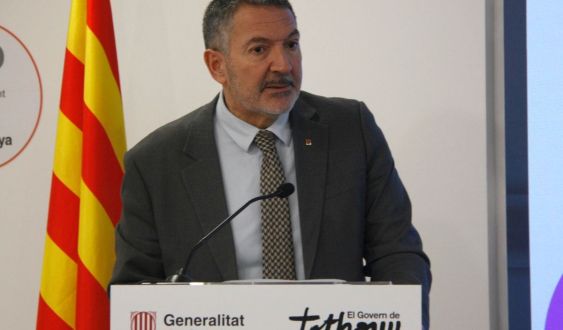
With these data, the Catalan entrepreneurial landscape generates 0.8% of Catalonia's GDP, but its importance transcends economic figures: it represents a driver for innovation and knowledge transfer, and acts as a magnet for foreign investment and talent, as defended by the Minister of Business and Labor, Miquel Sàmper.
The startup ecosystem "is starting to pick up cruising speed"Its importance also lies in the jobs it generates: in 2024 it employed 22,840 people, also 10% more than the previous year. In addition, thestartupsthat have more than 10 workers, which have gone from 25% in 2021 to 42% in 2024.
The profile of these workers has also evolved, and has gained internationality. Now, both employees and founders of startups who choose Catalonia are of foreign origin in 20% of cases, a figure that also reflects "the maturity of the sector," highlighted the Secretary of Business and Competitiveness, Jaume Baró, in the presentation of Acció's annual report on the startup field.
This maturity is appreciated in another of the traits that is beginning to characterize founders: 60% of them have previous experience in the sector, a fact that is "very healthy" for the ecosystem, by having professionals who have already undertaken before and who know how to navigate the startup universe. This figure, which has grown 15 points in five years, places Barcelona as the second city in the EU with the highest number of founders with previous experience in creating emerging companies. In addition, the Catalan capital is also the second European city with the most founders from local universities, with nearly 1,900 and only behind Paris.
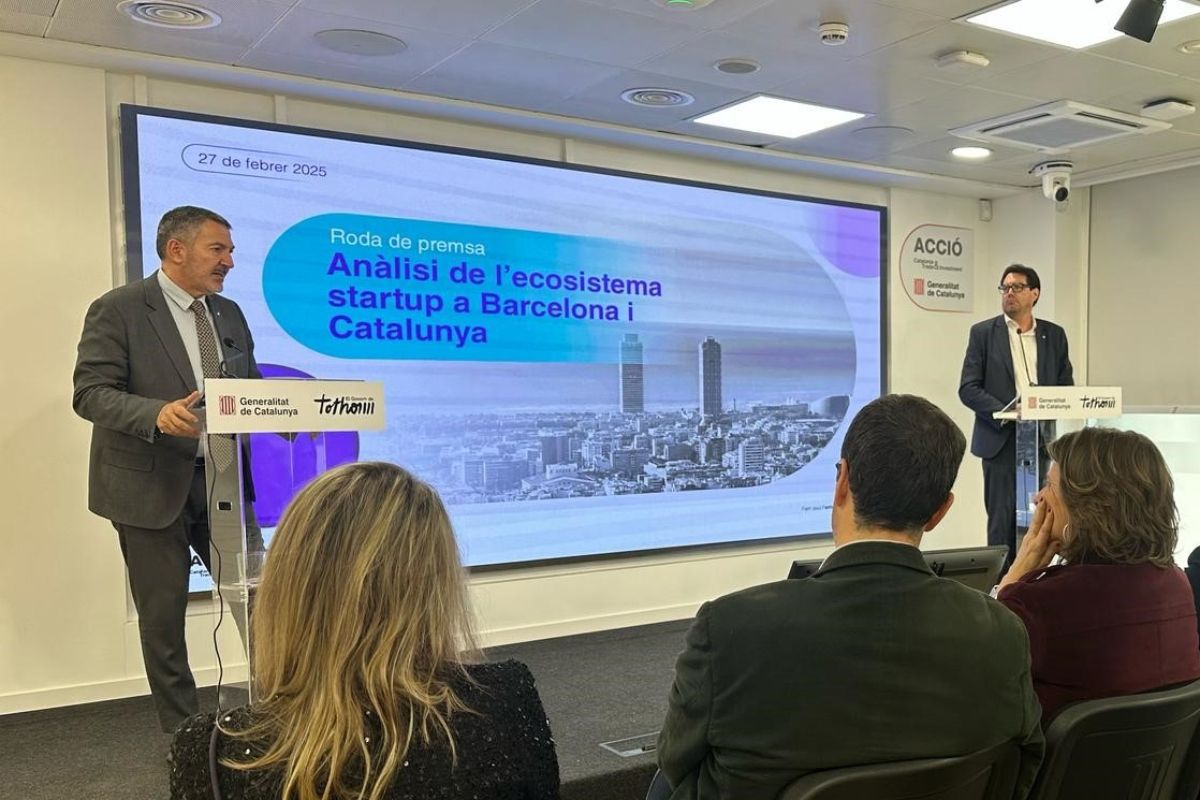
With increases of around 10% in both the number of startups and their turnover and employees, the ecosystem has room to accelerate its growth, and now "is starting to pick up cruising speed," according to Baró. The CEO of Acció also maintained that the conditions have been generated to create "a virtuous circle" that will give more speed to the articulation of the system. All this, with a background objective: to reach 3,000 startups by 2030.
More than 1,150 million in funding rounds
Last year was marked by large investment rounds, such as Sequra's more than 410 million euros and Travelperk's 95 million, which in January closed a new round, of 190 million more. These large operations are added to the 215 rounds that injected resources into Catalan startups last year, which globally raised 1,152 million euros, with 5.3 million euros per round.
This total figure represents a 65% increase compared to the previous year, boosted by these mega-rounds, as no rounds of this magnitude were closed in 2023. In the comparison of the five-year period 2020-2024 with the previous one, the effect of these large rounds is diluted, and allows us to confirm the growing trend in investment: between 2020 and 2024, 6.1 billion euros were raised, 127% more than between 2015 and 2019.
Large startups have also influenced the distribution of 2024's turnover. The leading sector continues to be healthtech, with 12% of the total turnover, and the traveltech sector climbed to second position with 10%, driven by companies that are registering great growth, such as Travelperk again and also Exoticca. They are followed by fintech and startups linked to ecommerce, which each generate 9.5% of the total turnover.
Of the total number of startups, 407 are scaleups, those that have already consolidated and are growing at an accelerated and sustained pace, with a turnover of around one million euros. Despite representing 17% of the total number of startups, scaleups account for 44% of global turnover. The Acció report also pays special attention to deep tech companies, a segment that the Government wants to promote and wants to represent 25% of startups by 2030. They now represent 16%, with 340 companies, with 8% of turnover and 13% of workers. For their part, spin-offs are 12% of emerging companies, with a turnover of 7% and 10% of employment.
Regardless of the origin and segment to which startups are dedicated, they all share their technological aspect as a characteristic. Among the different main technologies on which they base their activity, 29% rely on artificial intelligence and Big Data. At a considerable distance are sensors and IoT, on the one hand, and cloud and edge computing, on the other, both with 7%.
These companies have another factor in common: 90% of them invest in R&D and, in fact, more than half invest 25% in research. In addition, a large part of them look towards the international arena: 61% are exporters, with the United Kingdom, France, Germany and Italy as main markets, which account for 40% of the total.
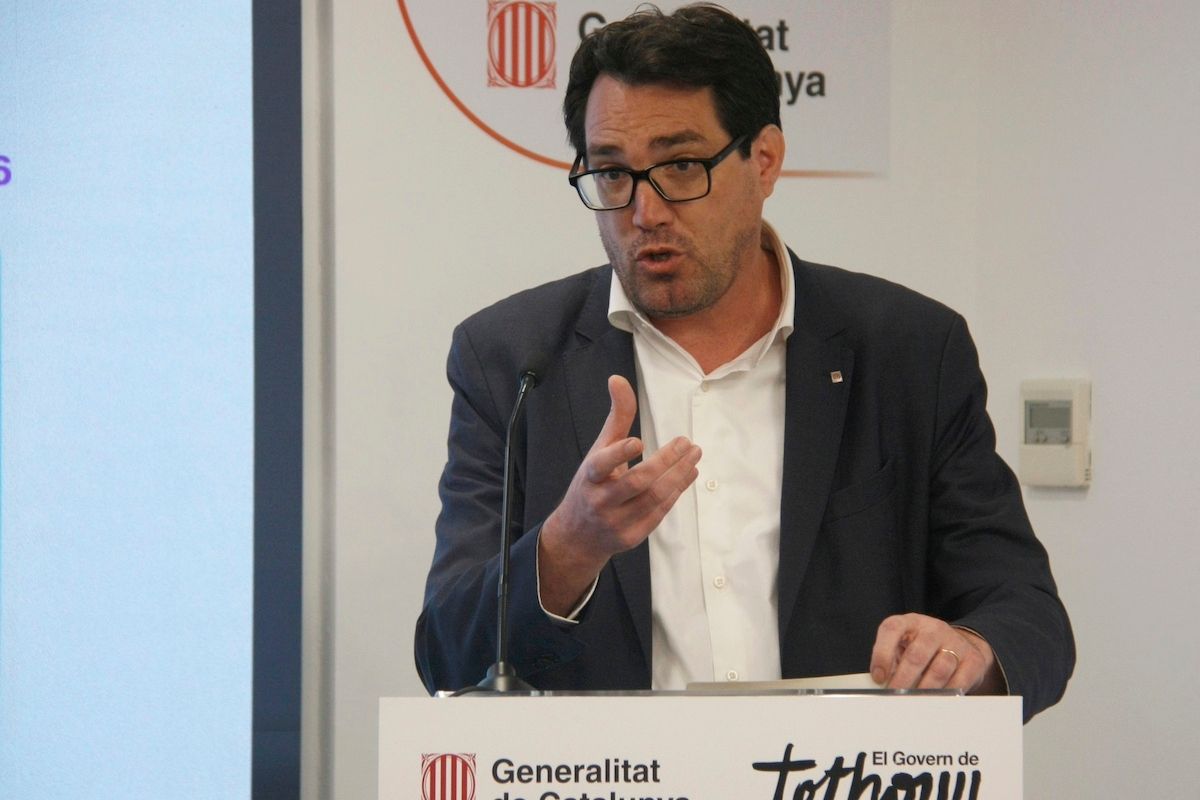
In this context, Barcelona continues to consolidate itself as the fifth startup ecosystem in Europe, behind Paris, Berlin, Stockholm, and Amsterdam, and is the only one in the top 5 that is not a state capital, as Baró highlighted. For this ecosystem to extend throughout Catalonia, the Government sets as a priority to promote economic deconcentration, as currently 80% of startups operate from Barcelona and its metropolitan area, as Sàmper detailed: "We want it to reach as much territory as possible."
Add The New Barcelona Post as your preferred Google source for free
Stay informed with the latest news.
