As of today, Barcelona has a new public transport system. It does not circulate through the city streets, nor does it run on rails or use traction cables. The big news is that the service is aquatic and moves within the port. This is the Nautical Bus, which was presented to the public on Wednesday and, starting this Thursday, begins its regular services between two docks: Drassanes, at the foot of the monument to Christopher Columbus, and Llevant, docking between the MB92 shipyard and the Barcelona Nautical Capital Foundation.
Connecting different points of the port with a regular service has been a recurring project. The nautical bus, conceived with different names and philosophies, has been in the plans of the port authority over the last decades with different stages and routes that never materialized.
Some very distant antecedents of something similar would be at the origin of the Las Golondrinas service, today 100% dedicated to tourist rides for locals and visitors. In its early days, the vaporcitos connected the Portal de la Pau with the Sant Sebastià baths, sailing practically in a straight line from Columbus to the beach.
In a second phase, closer in time, although we would still be talking about the last century, Las Golondrinas reached the end of the breakwater, where there used to be a lighthouse that was replaced by the Porta Coeli, a restaurant and terrace that are part of a way of understanding leisure and the city's relationship with the sea of a now-disappeared Barcelona.
Times change
That port was very different from the current one. With very few exceptions, it was not as open to the city, and a Moll de Espanya completely surrounded by recreational boats, leisure space, and walking areas, was unthinkable back then. The 1992 Games consolidated the first opening thanks to the Moll de la Fusta, and Port Vell managed to become a center of attraction.
Like any ambitious project, that of a Port Vell opening up to the city has gone through different phases of brilliance. The celebration of an event of the magnitude of the America's Cup has served as an argument to accelerate some dormant projects or those with much more distant execution dates. We have frequently discussed these in The New Barcelona Post: the northern entrance area, the new breakwater promenades, the conversion of the Maremagnum, or the recovery of the sheds, among others.
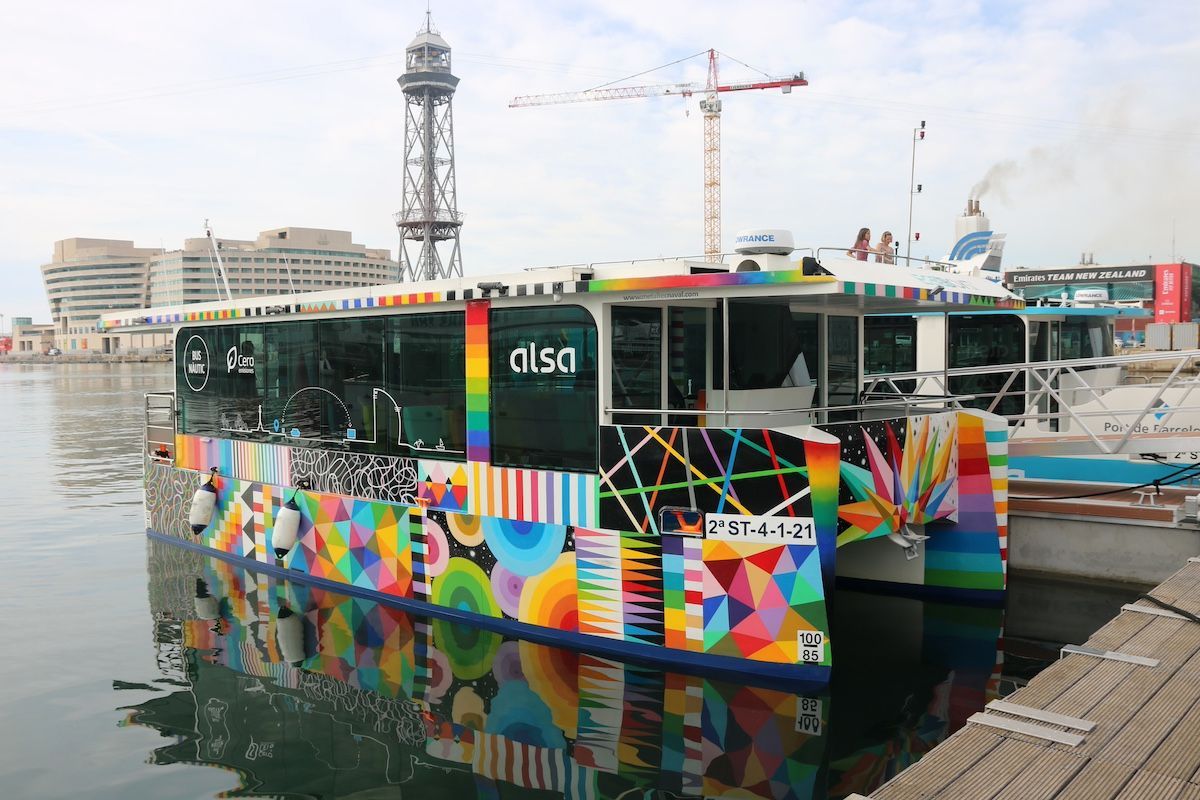
The bus that sails
One of the many projects for which the historic regatta has served to get the port to work has been the nautical bus, for which a tender was called and three candidates submitted bids, as Francisco Iglesias, CEO of Alsa, the winning company, recalled on Wednesday. He acknowledged before the mayor of Barcelona and the president of the port that its two competitors were very good "although we presented the best technical and economic offer", added the executive of the centenary mobility company of Asturian origin.
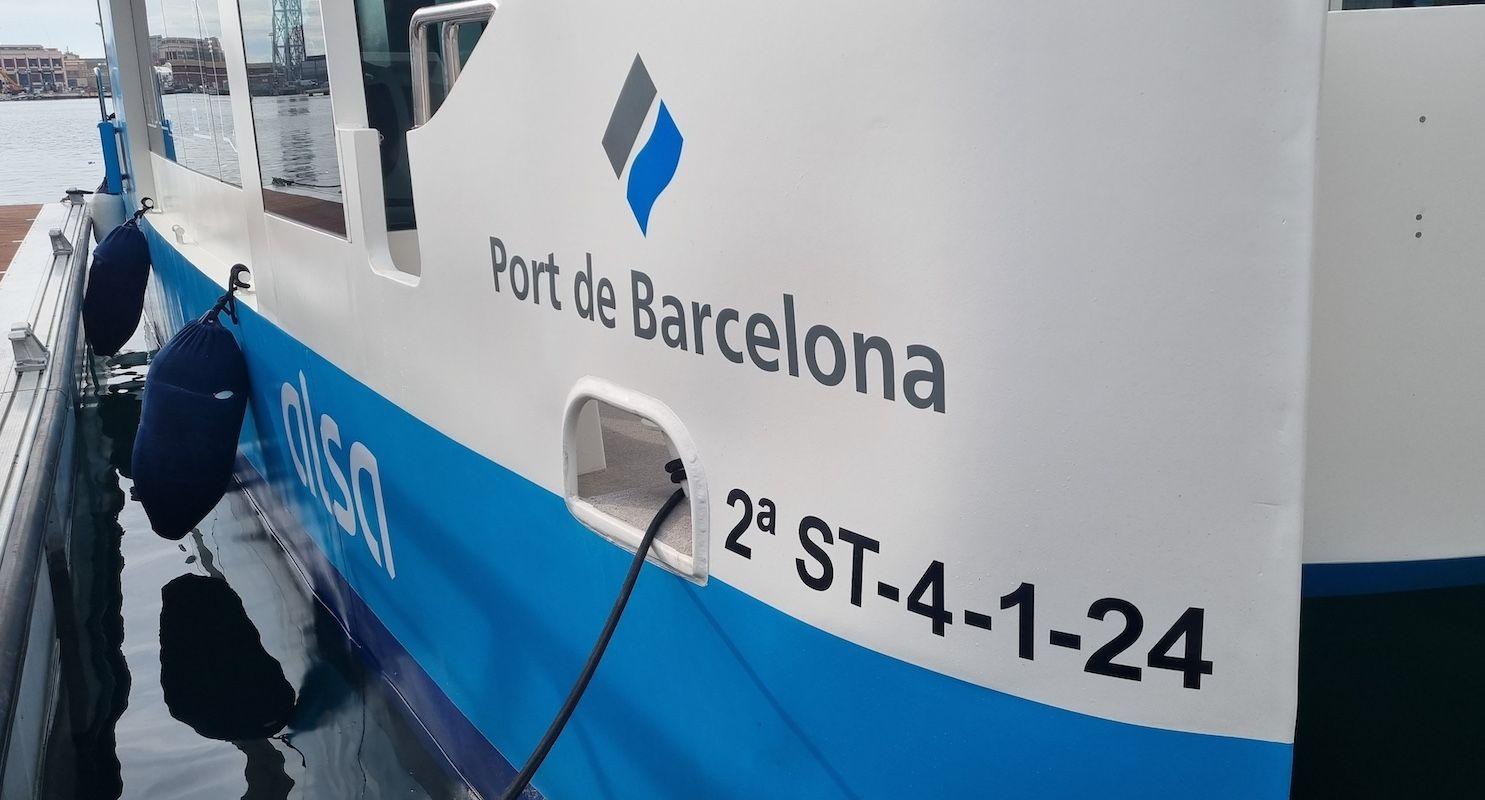
Alsa is starting this service in Barcelona with two zero-emission catamarans, as they are 100% electric and run on solar energy and electrical connection. The solar panels installed on the decks of both boats generate 40% of their consumption. The boats are called Ecocat Dos and Ecocat Tres. And despite their name, they are not twin vessels. One is 11.90 meters long and has capacity for 56 passengers on a single deck, while the other is 14.70 meters long and can accommodate 84 passengers on two decks, with the upper one open-air.
Both catamarans were built by Metaltec Naval, a Cantabrian shipyard next to Santander airport, hence their naval registration is that of that city. Both sail at a cruising speed of five knots, about 9.20 kilometers per hour, and have an autonomy of eight hours of uninterrupted service, connecting the two ends of the line in 10 minutes, passing next to the base of the Emirates New Zealand team, the World Trade Center (WTC) and the Marina Barcelona 92 shipyards.
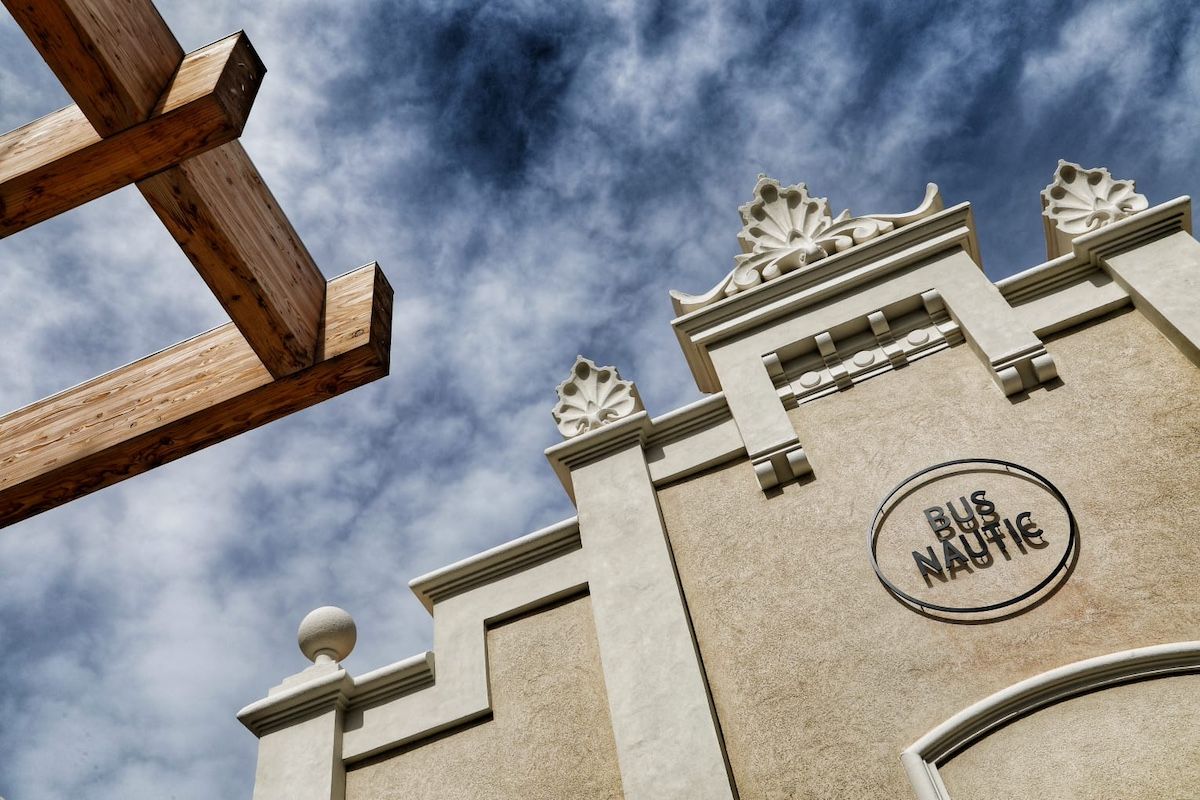
Classic maritime station
While at Portal de la Pau the service has a ticket office next to the America's Cup merchandise store, the nautical bus has its own terminal on the Llevant dock. One of the old recovered sheds has been used to convert it into a small passenger station with ticket and catering services. The building, which on one side faces the boarding pier, on the other is directly opposite the end of the Joan de Borbó promenade, where the accesses to the W hotel, Marina Vela, the base of Luna Rossa Prada, the Italian team participating in the America's Cup, and the Barcelona Nautic Center, a large boat repair center, which together with MB92 accumulates hundreds of workers in the area. From the service operator and the port, all these people who travel to the area for work reasons are also seen as potential clients of the service.
It is expected that all workers who travel to the Llevant dock will be clients of the new serviceThe president of the port, Lluis Salvadó, recalled yesterday that "the Port Vell receives more than 25 million visits annually and only in the Bocana Nord area, where there are companies such as Marina Barcelona'92, the W hotel, Desigual, the Norrsken foundation or Marina Vela, among others, 3,400 people go to work daily. For this reason, this new means of transport will respond to the mobility needs of citizens and tourists and will favor the growth of cultural, sports and leisure activities related to the sea."
For his part, the CEO of Alsa, Francisco Iglesias, pointed out that "the start of operations of the Nautical Bus in the Port of Barcelona is a great satisfaction for his company, as the project brings together and joins three strategic lines in which the company has been working intensely: sustainability, with a 100% zero-emission service, which also helps reduce congestion; multimodality, in this case operating a maritime transport service; and finally, tourist mobility, in which we want to continue growing with new projects."
Tickets for less than two euros
The service starting today will be active 12 hours a day with departure frequencies of between 15 and 30 minutes. The single ticket will cost €1.9 with the possibility of buying a round-trip ticket. For more frequent passengers, there will be 10-trip passes and also for two and 30 days, in addition to different discounts for children, young people, and seniors.
Add The New Barcelona Post as your preferred Google source for free
Stay informed with the latest news.