Long-distance races are not won in the first meters, but they can be lost even before starting. And not only on the track: also in training, in the ability to analyze one's own weaknesses and, above all, in the discipline to correct them.
In this logic, Barcelona takes a prominent role this week as a space for European political and economic training. The Annual Meeting of the Cercle d'Economia turns the city into a meeting point where it is debated how Europe should prepare to face its own long-distance race: maintaining its relevance in an increasingly changing and competitive world.
And this idea —the need to rethink how Europe trains— has permeated the entire second day of the economic meeting. The session has revolved around the big question that articulates the Annual Meeting —Europe's strategic autonomy: myth or reality?—, but based on concrete debates that have sought to translate big questions into tangible decisions.
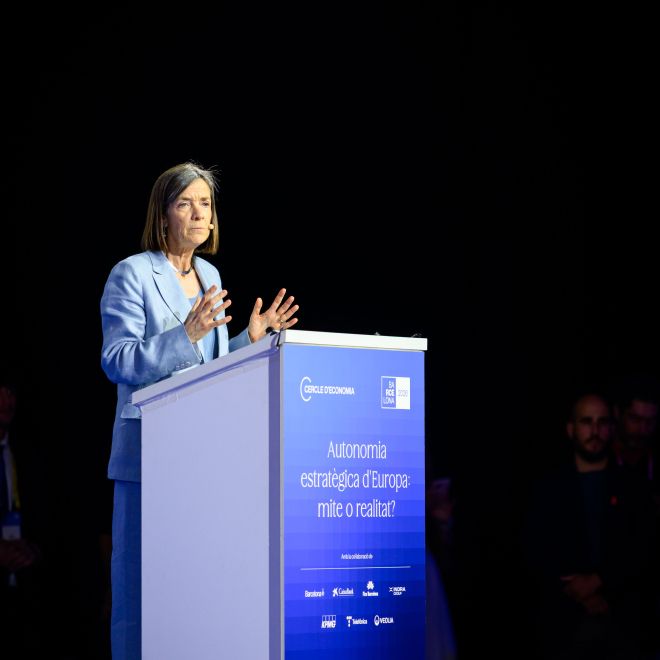
On this day, the debate on the new autonomous financing model and the priorities to boost industrial transformation and competitiveness in Catalonia, with productivity as a key lever, stood out especially. Two apparently local debates, but which, in reality, point to the same need: moving from diagnosis to the ability to execute reforms.
An over-diagnosed athlete and a race against time
Beyond the specific scope, these debates point to the same underlying vision: Europe is over-diagnosed and, in contrast, has difficulties in improving its global results. Like an athlete who obsessively reviews their marks and previous races, but who doesn't quite change their training. The recipe seems clear —as the latest reports, such as the Letta on the single market, the Draghi on competitiveness, or the Niinistö on defense, show—, but the problem is not so much knowing what needs to be done but how to execute it.
This difficulty in taking action occurs in an increasingly demanding context, which raises the pressure on each decision and reduces the margin of error. Europe faces a real race against time: in less than two decades it has chained a financial crisis, a pandemic, armed conflicts inside and outside its borders, a new wave of trade protectionism and a technological revolution that threatens to profoundly transform various economic sectors. While the United States and China accelerate, Europe is still discussing how it should run.
Barcelona, ground zero of the race
In a race of this magnitude, the limits of individual action become evident. No Member State, on its own, has sufficient capacity to face challenges of this scale in areas such as technology, energy, defense or finance. Only coordinated action among the 27 countries can allow Europe not to lose position on the global stage.
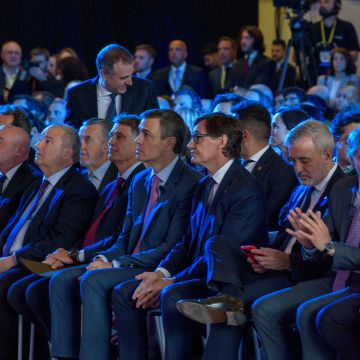
But this coordination is not improvised: it needs spaces where it can be thought, contrasted and begin to be built. And it is precisely at this point that Barcelona takes center stage. With the Annual Meeting of the Cercle d'Economia, the city is consolidated these days as one of these meeting points, a space for political and economic training where diagnoses are shared and responses with a European vocation are outlined. A function that the meeting has been consolidating throughout its more than forty years: the ability to convert apparently territorial debates into discussions with state and European scope.
This ability to influence the political and economic agenda has once again been demonstrated on the second day of the 41st Annual Meeting. If the Cercle had scheduled a round table on the autonomous financing model for this second day, the central government ended up anticipating the debate with a strategic decision: the Ministry of Finance sent a letter to the autonomous communities this Monday to resume conversations about a financing system that is more than a decade late. Formally, the current model should have been revised in 2014, but the process has not yet achieved the necessary agreements.
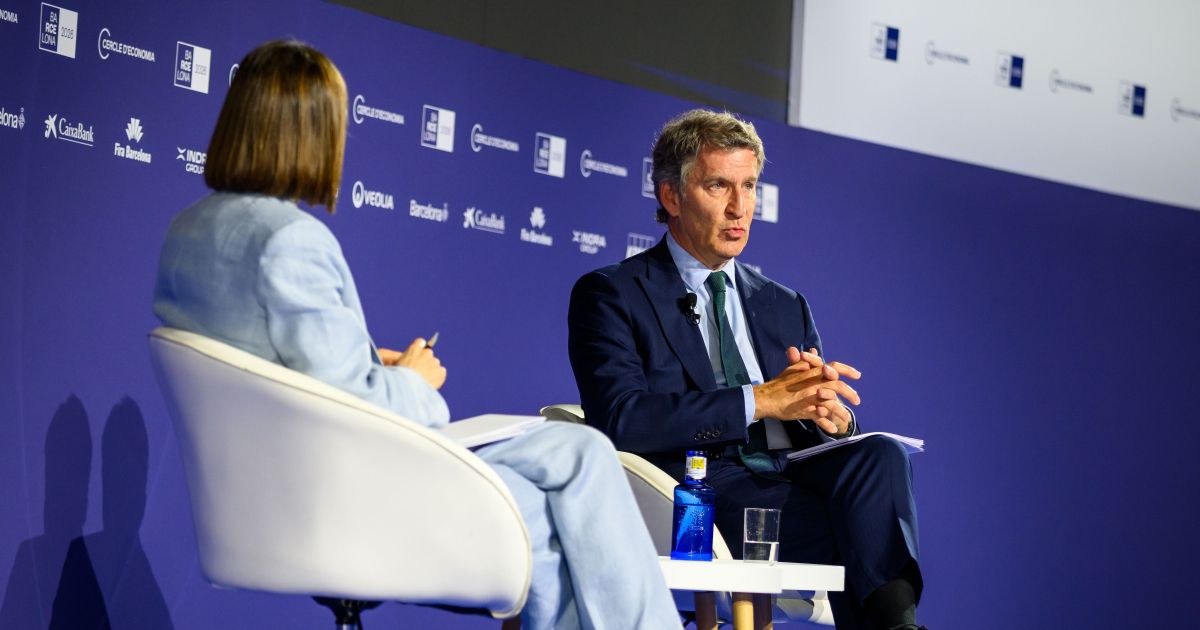
More than a temporal coincidence, the sequence illustrates the capacity of debates generated in Barcelona to influence the Spanish political agenda, or, as the president of the PP, Alberto Núñez Feijóo, illustrated during his intervention at the Meeting, the capacity of the Cercle to "bring together the right people at the most uncomfortable moments."
Three endurance runners
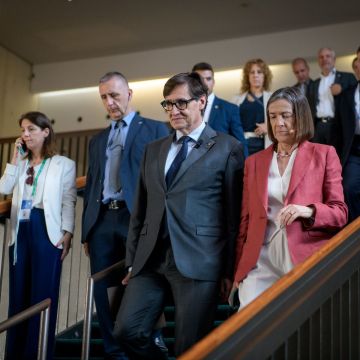
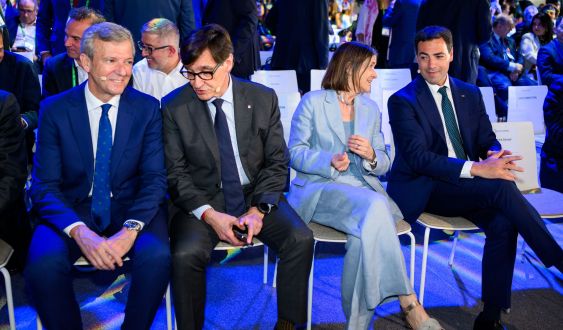
Despite seeming distant, this debate is still a way of bringing the core issue of the Meeting —Europe's strategic autonomy— to the territorial level. In this context, the question becomes inevitable: what autonomy should the autonomous communities have? The challenge is not minor, nor are the protagonists of the debate: Salvador Illa, president of the Generalitat of Catalonia; Imanol Pradales, lehendakari; and Alfonso Rueda, president of the Xunta de Galicia. Three leaders from different historical nationalities who, despite diverging in political positions, share a minor but illustrative detail: their love for sports.
Illa and Rueda, regular runners; Pradales, more linked to rowing. A shared hobby that, beyond the anecdote, has served Pau Guardans, vice-president of the Cercle d'Economia and moderator of the panel, to define them as leaders with "capacity for suffering and recovery" and, therefore, candidates to be good coaches for this Europe that must accelerate in its race. In practice, however, sport has turned out to be one of the only points of connection between three positions that have shown that agreement on the future financing model remains far off.
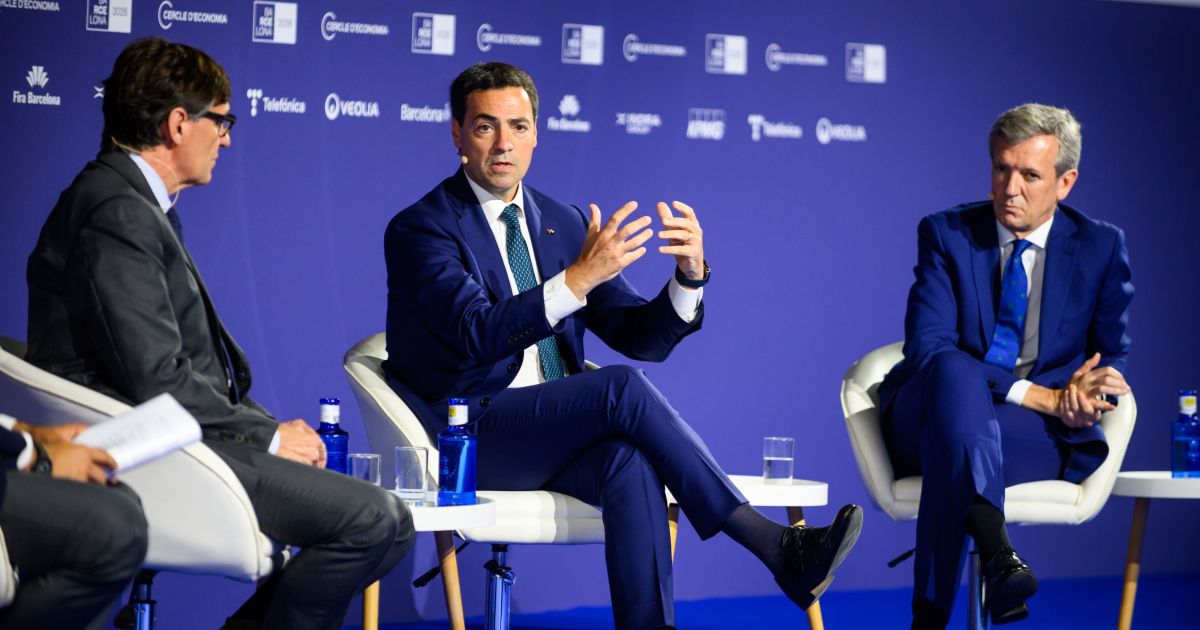
During the round table, Illa defended that the Govern's proposal for the new financing model would significantly reduce the differences between better and worse financed communities. As he explained, the current system presents gaps of about 1,500 euros per adjusted inhabitant annually between the best-financed community —Cantabria— and the worst —Murcia—. The new model, he added, would allow mobilizing up to 20,000 million additional euros to reinforce autonomous financing and reduce this gap by approximately one third.
"We want neither advantages nor privileges, but neither do we want to be left behind," he affirmed. And he strongly defended that Catalunya "will not ask permission to make proposals or to lead the financing reform." Rueda responded with a frontal rejection of this approach, which he considers the result of "bilateralities" between the State and some communities. "What belongs to everyone must be decided among everyone," he defended, warning of the risk of a "divide and conquer" dynamic in the financing debate.
For his part, the lehendakari defended the Basque economic agreement against recurrent criticisms of the model. "Talking about a lack of solidarity with the rest of the communities does not fit with reality," Pradales warned, recalling that Euskadi, regardless of how its collection evolves, has to satisfy a fixed quota to the State. "We cannot resort to deficit or indebtedness in the same way as other territories," he remarked.
The agreement, therefore, seems far off. But there is a coincidence among the three presidents that is not minor: all three have claimed the positive balance of the autonomous model built over the last decades, because they consider that it has allowed for improved management of public services and strengthened the response capacity of administrations.
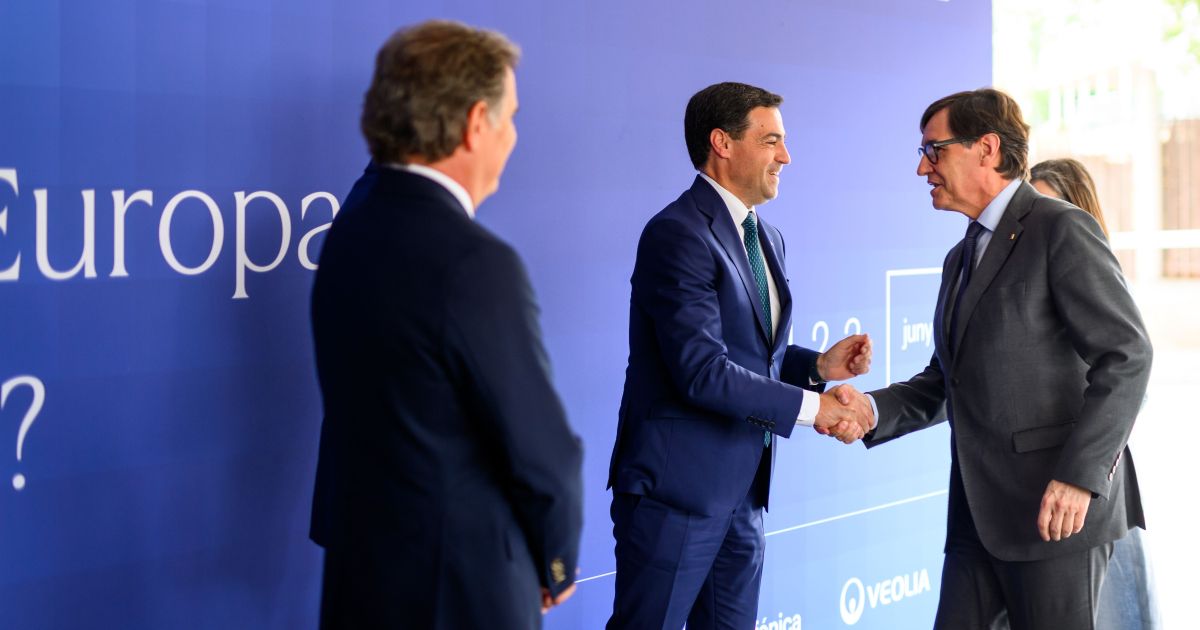
Outside the round table, Teresa García-Milà extended the call for consensus to the leader of the Popular Party, Alberto Núñez Feijóo, to whom she demanded active involvement in the reform of the financing model, warning that the PP has "a responsibility and an opportunity to contribute to consolidating the relationship with Catalunya based on respect, cooperation, and territorial diversity." Feijóo, for his part, despite agreeing on the need to address a reform of the autonomous financing system, asked for "calm" and "time to sit down and talk with the autonomous communities."
The indicators of European victory
"The European project is not built only from Brussels, but from each Member State," Teresa García-Milà recalled in her speech. For this reason, the Cercle proposes combining debates on a closer scale —such as autonomous financing— with a broader view towards Europe as a whole.
On this second day, this desire to broaden the perspective has become even more visible, with several debates focused directly on the great challenges of the European project, from the technological revolution to energy security. But the turning point of the day came when the discussion shifted from diagnosis to evaluation: from ideas to indicators, from challenges to measurable five-year objectives.
As if Europe were a large organization that had to define its KPIs —key performance indicators— for five years, or as if it were an athlete setting the mark they want to reach to consider themselves victorious. In this exercise, the round table on industrial competitiveness between Jordi Hereu, Minister of Industry and Tourism, Juanjo Cano, president of KPMG Spain, and Daniel Tugues, director of Veolia Spain, helped to outline these objectives: more community budget to finance Europe's transformation, more administrative simplification, and fewer decisions blocked by the unanimity rule —which requires all member states to agree for a decision to go forward—.
Add The New Barcelona Post as your preferred Google source for free
Stay informed with the latest news.