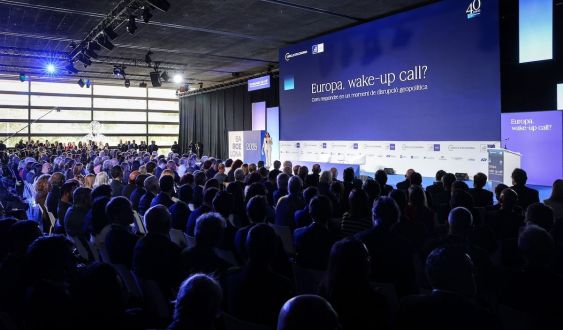
"Europe needs to change". With this forceful warning, the Cercle d'Economia has initiated the Opinion Note that will set the intellectual and political pace for its 41st annual meeting, to be held from June 1 to 3, repeating the venue at the Palau de Congressos de Catalunya. It does so at a time when Europe faces a profound mutation: the United States is no longer a predictable ally, China and India are reconfiguring global economic balances, and technology has become a new geopolitical battlefield in which the continent comfortably continues to play the role of consumer. With the recent echo of the Fènix Report and the debate on the structural weaknesses of the Catalan economy, the Cercle now raises its gaze towards the European future with a central idea: strategic autonomy "is not a myth, but neither is it a reality" and, in this process, Spain and Catalonia cannot remain as mere spectators.
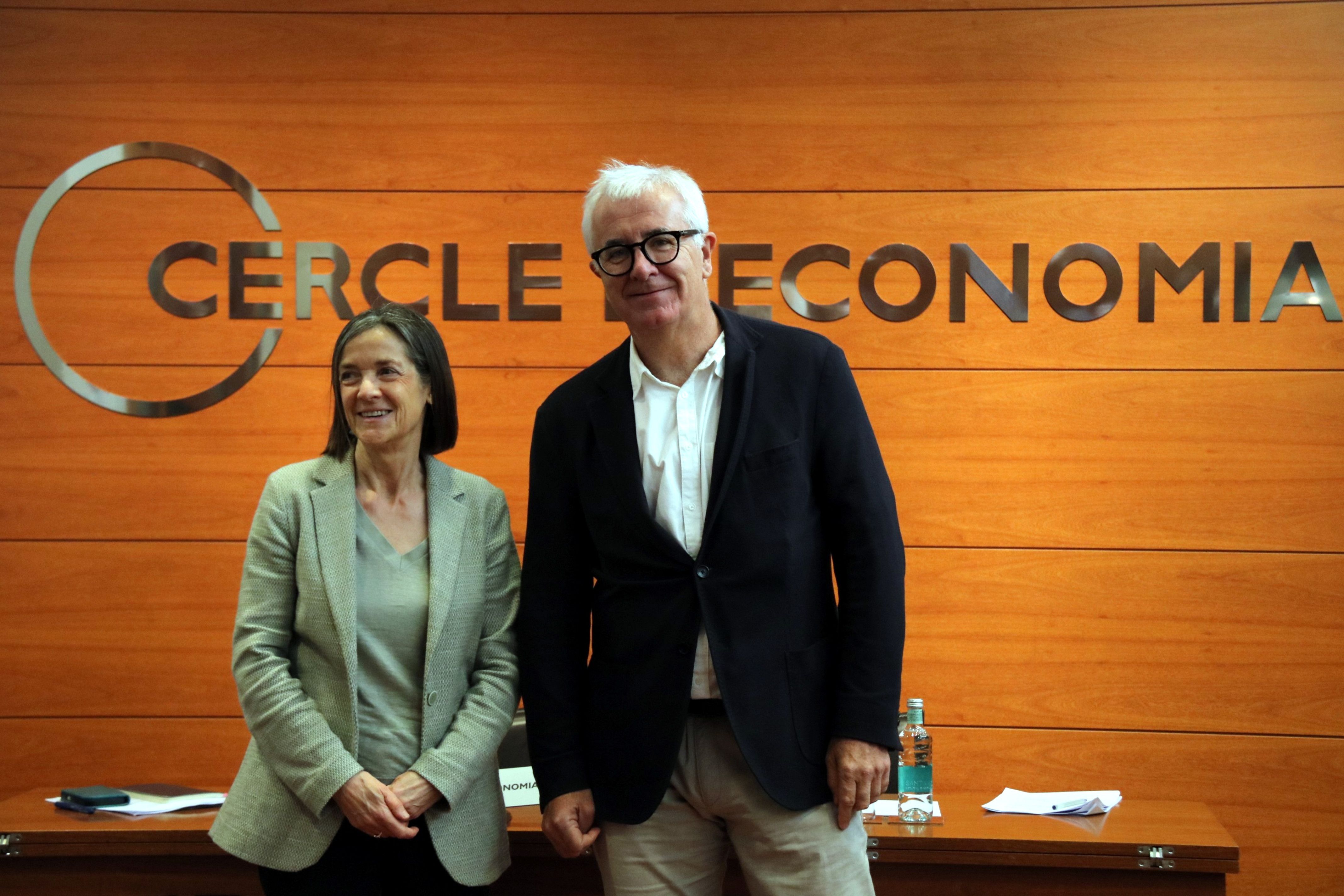
The note, presented this Tuesday by the president of the Cercle, Teresa Garcia-Milà, and the general secretary, Miquel Nadal, argues that Europe faces a double challenge that forces "rethinking everything": geopolitical reconfiguration and the technological revolution. "This change requires both an internal and an external transformation," summarized Garcia-Milà.
Internal, because Europe needs to finally complete the single market and create large European champions capable of competing with the United States and China. External, because the continent will have to redefine its alliances and its role in the world. "Europe must see how it can strengthen its position and live in this new world," said the president.
Therefore, the great commitment articulated in the note is the construction of a European strategic autonomy that is not limited only to defense, but also encompasses energy, technology, finance, and health. The main obstacle? The fracture between pro-Europeans and Eurosceptics and the rule of unanimity in areas such as foreign policy or taxation, which continue to limit the capacity for community action. However, in the face of this blockage, the Cercle points to coalitions of states—without requiring unanimity—willing to move faster, as already happened with the euro, the Schengen area, or the Mercosur agreement.
A window of opportunity?
Far from limiting itself to a defensive view, the Cercle argues that this process also opens a window of opportunity for Spain and Catalonia. "We tend to see it as a threat," Nadal lamented, to argue that both Catalonia and Spain have relevant assets to become important pieces of the new European industrial architecture. And among these assets, the entity highlights the potential of renewable energies, gas infrastructure, the deployment of fiber optics and 5G, as well as the existence of digital hubs such as Barcelona and Madrid and sectors with great strengths, such as biotechnology and health sciences, or defense.
Nadal: "What we don't achieve through productivity we compensate with lower costs"
However, despite the strengths or potential, the Cercle avoids any triumphalism. In fact, in the Note, the entity reminds that Spain continues to drag structural problems of productivity, low investment in R&D and a reduced business size. "What we don't achieve through productivity we compensate with lower costs," Nadal warned.
In parallel, the note incorporates two issues that, although they will not be the main focus of any specific table at the Meeting, will run through much of the debate: immigration and housing. For the Cercle, the Spanish growth model of recent decades —based on population and employment growth, but with stagnant wages and low productivity— needs a deep correction. And this involves orienting migration policy towards "more orderly and qualified" immigration, aligned with a productive model of higher added value.
Regarding housing, the document warns that the lack of affordable supply has already become a factor of social exclusion that directly affects the middle class and jeopardizes the ability to attract talent. To escape this blockage, the Cercle advocates for public-private collaboration formulas and for expanding the supply of developable land with legal certainty to incentivize investment.
Add The New Barcelona Post as your preferred Google source for free
Stay informed with the latest news.