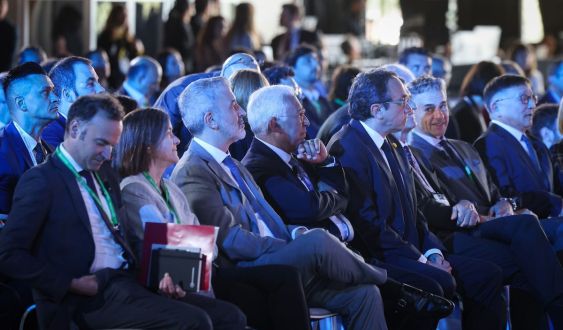
Can Europe decide for itself in a world that has become more uncertain, more fragmented, and more competitive? The answer, far from being obvious, will be debated for three days by major representatives of our business community from June 1 to 3 in Barcelona on the occasion of the 41st Annual Meeting of the Cercle d'Economia, which this year repeats its venue at the Palau de Congressos de Catalunya under the motto Europe's strategic autonomy: myth or reality?.
This year, the Cercle proposes to frame the debate through three perspectives—Catalonia, Spain, and Europe—and four specific questions, which will serve as a common thread: Can Europe have technological sovereignty? Can it decarbonize without losing competitiveness? Who will finance its transformation? And in which sectors can it aspire to lead? More than a conceptual framework, these are questions that expose the operational dilemmas of the European project.
"We are over-diagnosed, and what we want is to bring these diagnoses, to bring these reports down to Spanish and Catalan reality," summarized this Tuesday the general director of the Cercle, Miquel Nadal, at the presentation of the Meeting. The objective is explicit: to move from theoretical consensus—including that of the Draghi report—to concrete decisions in areas such as technology, energy, or financing.
The current context is not favorable: "There is still too much uncertainty, and uncertainty is not a good friend for companies," pointed out the president of the Cercle, Teresa Garcia-Milà. Europe, she says, has learned to live with it (with uncertainty), but not yet to govern it.
And who will move from diagnosis to execution? Local and international headliners, from the world of governance, politics, and business. Among them, the usual suspects of the institutional circuit, such as the President of the Government,Pedro Sánchez, the opposition leader,Alberto Núñez Feijóo, or the President of the Generalitat,Salvador Illa; and also a business representation that wants to go beyond the predictable names. Nor will there be a lack, as usual,Felipe VIfor the delivery of the Cercle d'Economia European Construction Award, which this year will be received by the journalistMartin Wolf for his trajectory "in defense of a united, open and democratic Europe."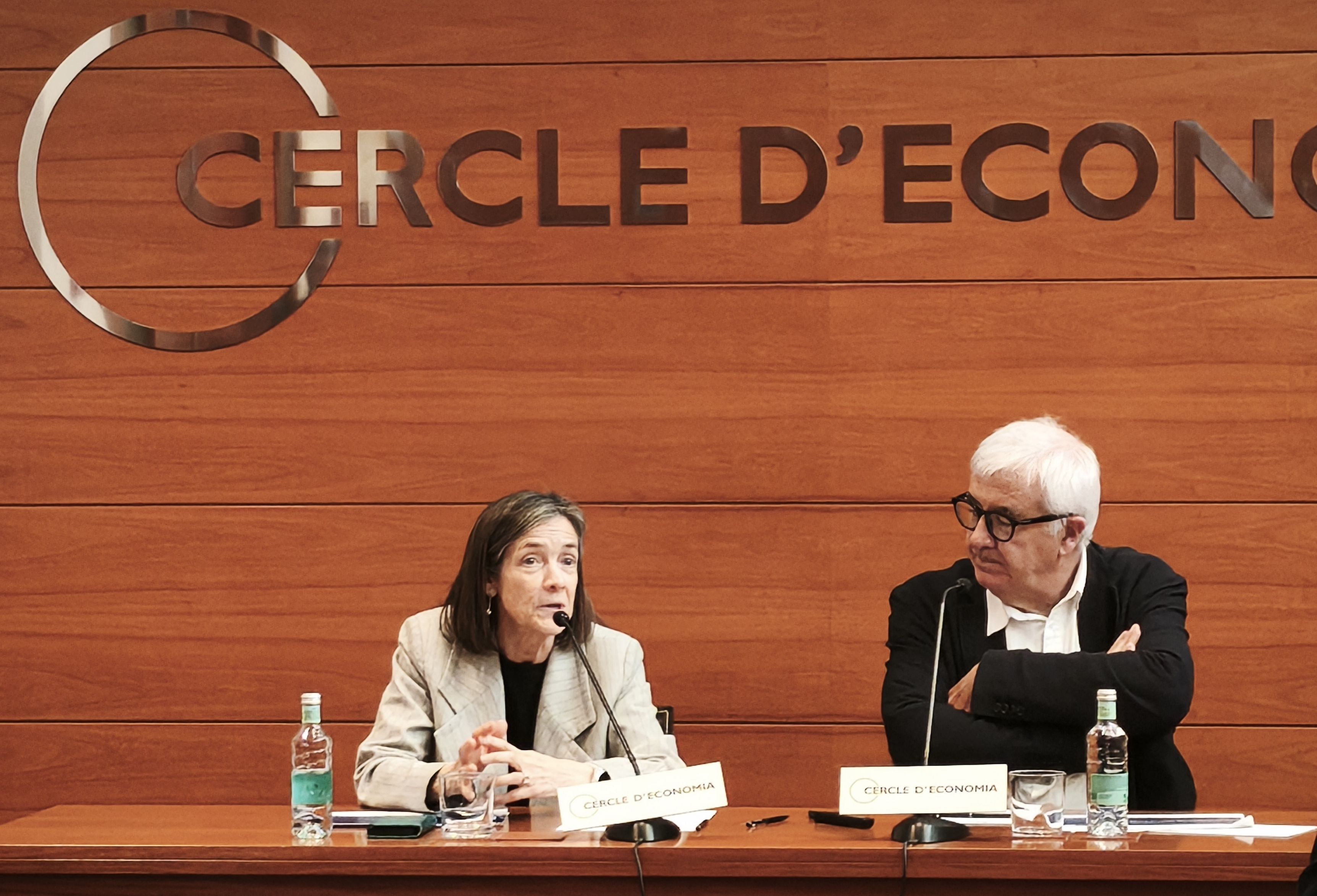
The lineup for the 41st edition of the RCE combines large corporations with new actors operating in key areas for European strategic autonomy. Executives such as Juvencio Maeztu (IKEA), Tomás Muniesa (CaixaBank), Marc Murtra (Telefónica) and Antoni Brufau (Repsol) will participate, along with less media-savvy but central profiles in the new technological cycle, such as Audrey Herblin-Stoop (Mistral AI), Antoine Bordes (Helsing) and Luis Sentis (Apptronik). "We will bring together well-known faces and others who are not so well-known, but all representative of companies that play a fundamental role in Europe's strategic autonomy," Nadal summarized.
"In the background, one idea will run through the entire edition: Europe excels in diagnosis, but fails in execution"
The meeting will also reinforce its geopolitical dimension. Beyond the internal European debate, the Cercle wants to understand how the world is seen from outside. "Having visions from other regions is essential," Nadal defended. For this reason, there will be voices from China, India and the United States, in an attempt to read the changes in the global order not only from Brussels, but also from Washington, Beijing or New Delhi.
At the same time, the meeting will once again bring to the table one of the great recurring challenges of the European project: its ability to reach agreement. In a context of political fragmentation, the Cercle raises whether it is possible to find shared spaces between right and left on issues such as defense, industrial policy or migration management. In addition, the Cercle will maintain its recent commitment to alternative formats and, in the program, will also include participatory formats, with sessions in which attendees will guide the debate, and specific discussions on business challenges such as absenteeism or generational succession in family businesses.
In the background, one idea will run through the entire edition: Europe excels in diagnosis, but fails in execution. It researches like no one else, but scales worse than its competitors. And surely this year's meeting will not resolve this paradox, but it does aspire to make it more tangible — and, above all, more actionable. To move from myth to reality.
Add The New Barcelona Post as your preferred Google source for free
Stay informed with the latest news.