Every crack has a story. Geopolitical ones too. It explains where we come from and hints at where we are going.
Before becoming a fracture, they usually appear disguised as specific episodes. A financial crisis. A pandemic. A war in Europe. A conflict in the Middle East. Tariffs. A president with strident policies. A technology that changes everything. For years we observe them separately, as if they were exceptions. Until a moment comes when they stop being independent events and become part of the same picture.
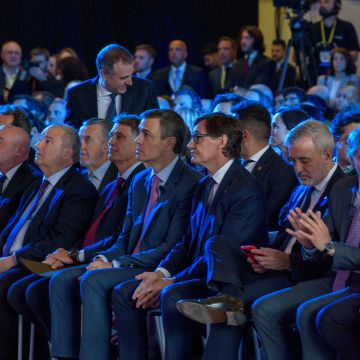
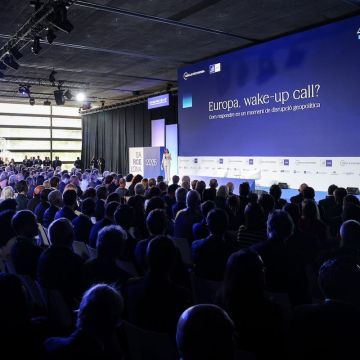
And this Monday, at the 41st Meeting of the Cercle d'Economia, the feeling was precisely this: that the crack in the world order is already visible enough for no one to continue talking about isolated incidents. The international order that Europe had taken for granted is being redefined before its eyes and the question is no longer how to avoid change, but what role each one wants to play. Europe, Spain and Catalonia.
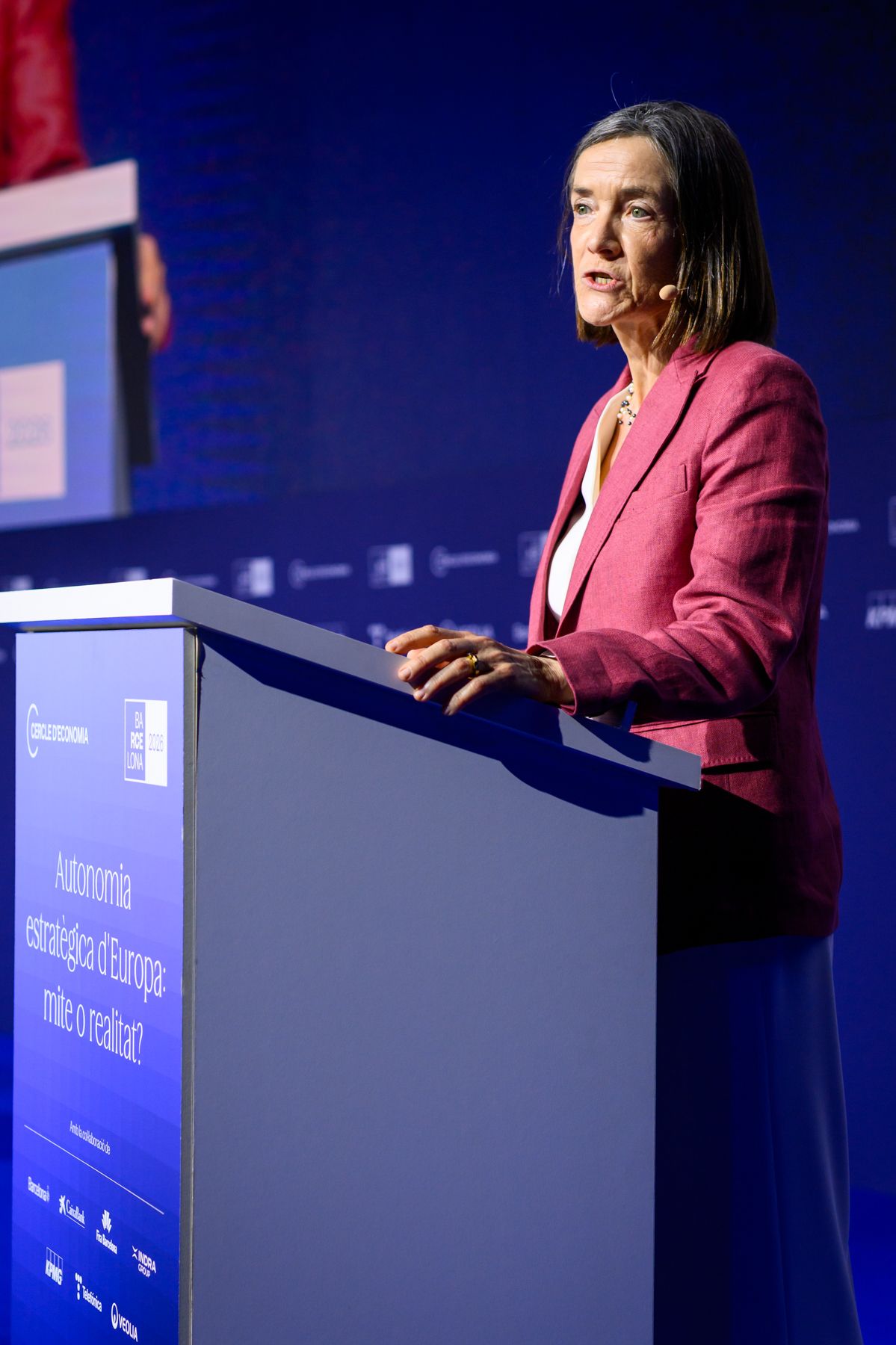
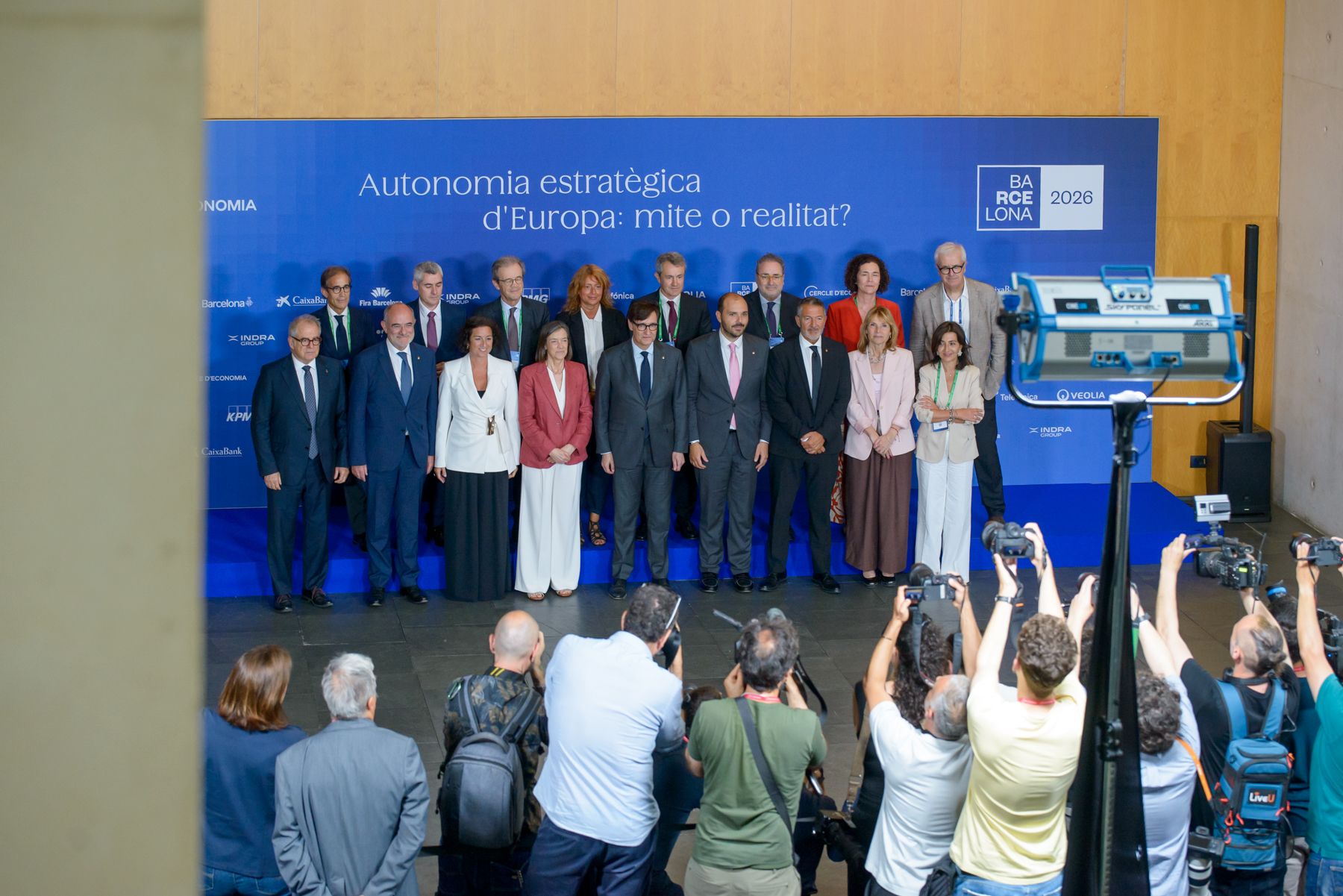
"We no longer ask ourselves if we should act, but how we should act and if we will be able to do so," summarized Teresa Garcia-Milà, president of the Cercle, at the inauguration of a meeting that, without celebrating any round anniversary, has registered a record attendance —some 400 attendees— and that has started with a shared idea: to understand how Europe can stop being a spectator of global changes to become an actor. To stop navel-gazing, to stop diagnosing, and to move to action, to transformation plans.
And to do so, the kick-off of the meeting condensed in a few hours an unexpected absence —that of Mayor Jaume Collboni, who excused his presence for personal reasons—, an announcement of millionaire investments, a warning about housing policies, a call to strengthen the defense industry, a reflection on the transformation that Europe needs both internally and before the world and, in the background, a familiar melody that resists abandoning the Catalan economic debate: productivity.
The announcement: 3.3 billion in public-private investment to accelerate strategic infrastructures
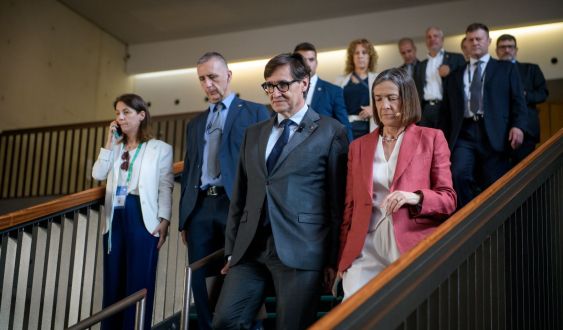
Salvador Illa has taken advantage of his intervention —the first of the Cercle's kick-off day— to announce an action plan: the president of the Generalitat has announced the mobilization of 3.300 million euros in public-private investment aimed at accelerating strategic infrastructures in Catalonia.
As he explained, the Government plans to immediately tender a first package of projects valued at 1.800 million euros and is working on a second phase of 1.500 million more. Among the planned actions are the stations of the central section of the L9, the deployment of the 2+1 road program, the partial duplication of the Berga-Bagà section, the improvement of the C-55, the second phase of the Tarragona tram to Reus, and the Lleida-Quatre Pilans railway terminal.
Illa: "It is no longer about asking what Europe can do for Catalonia, but what Catalonia can do for Europe"
"We must think big, with ambition and drive," Illa defended, arguing that public-private collaboration will allow infrastructures to be executed in six years that, under ordinary conditions, would require between two and three decades.
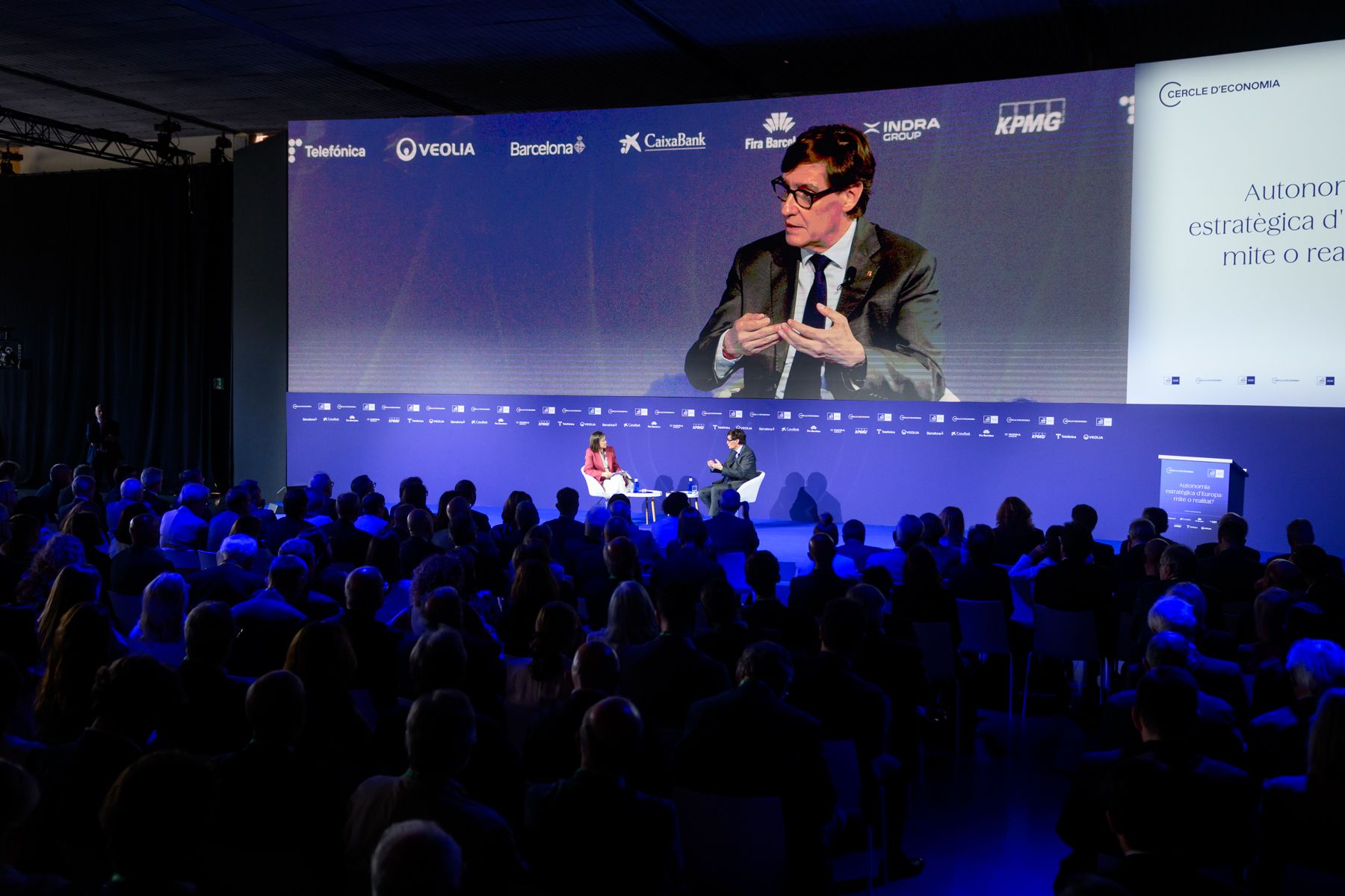
The president also vindicated the Catalonia Leads Plan and the will to strengthen the productivity and competitiveness of the Catalan economy. "It is no longer about asking what Europe can do for Catalonia, but what Catalonia can do for Europe," he affirmed, defending that the country must play an active role in the new stage opening up on the continent.
Illa, who also observes the internal rift in his party, took advantage of his intervention to close ranks with the socialist governments, defending that "nothing and no one" will "deviate" them from their "purpose" and "duty." And, in fact, in his speech he questioned that there are "so many coincidences in certain agendas" as a result of the investigations into the PSOE. Faced with the "coincidences," he assured that the socialists will continue "governing with rigor, with responsibility and with truth above all else."
With a word of caution: housing
If Illa has found complicity in infrastructure, in housing he has encountered one of the few explicit discrepancies of the day. Garcia-Milà wanted to make it clear that the Cercle shares the diagnosis on the seriousness of the housing crisis, but not some of the recipes promoted by the Govern. "We need to expand the offer," she insisted, before warning that measures such as rent price control, even if well-intentioned, can end up producing the opposite effect to what is desired.
"Price caps are not a good measure," the president of the Cercle stated "frankly," criticizing that rent regulation limits the available supply, generates legal insecurity, and transfers a responsibility that belongs to the public administration to property owners. "The administration must protect vulnerable families, but it cannot transfer this responsibility to property owners," she defended.
Illa's response, which was quite evasive, focused on the people affected by the housing crisis to justify the measures adopted. "We needed short-term measures," he argued, without directly refuting the criticism about the effects of the caps.
With pending tasks: strengthening defense
In a meeting dedicated to European strategic autonomy, Garcia-Milà took advantage of her inaugural speech to call for a more determined commitment to the defense industry in Catalonia. The president of the Cercle recalled that the country has more than a hundred companies linked to the aerospace and defense sectors, pointing out that the current weight of this activity is still too small given the existing technological base. "This is an anomaly that we now have the opportunity to correct," she stated.
And the reflection, in fact, was later continued in the first round table of the day. The Minister of Foreign Affairs, José Manuel Albares, and his Polish counterpart, Radosław Sikorski, agreed on the need to strengthen European capacity in security and defense in an increasingly demanding international context.
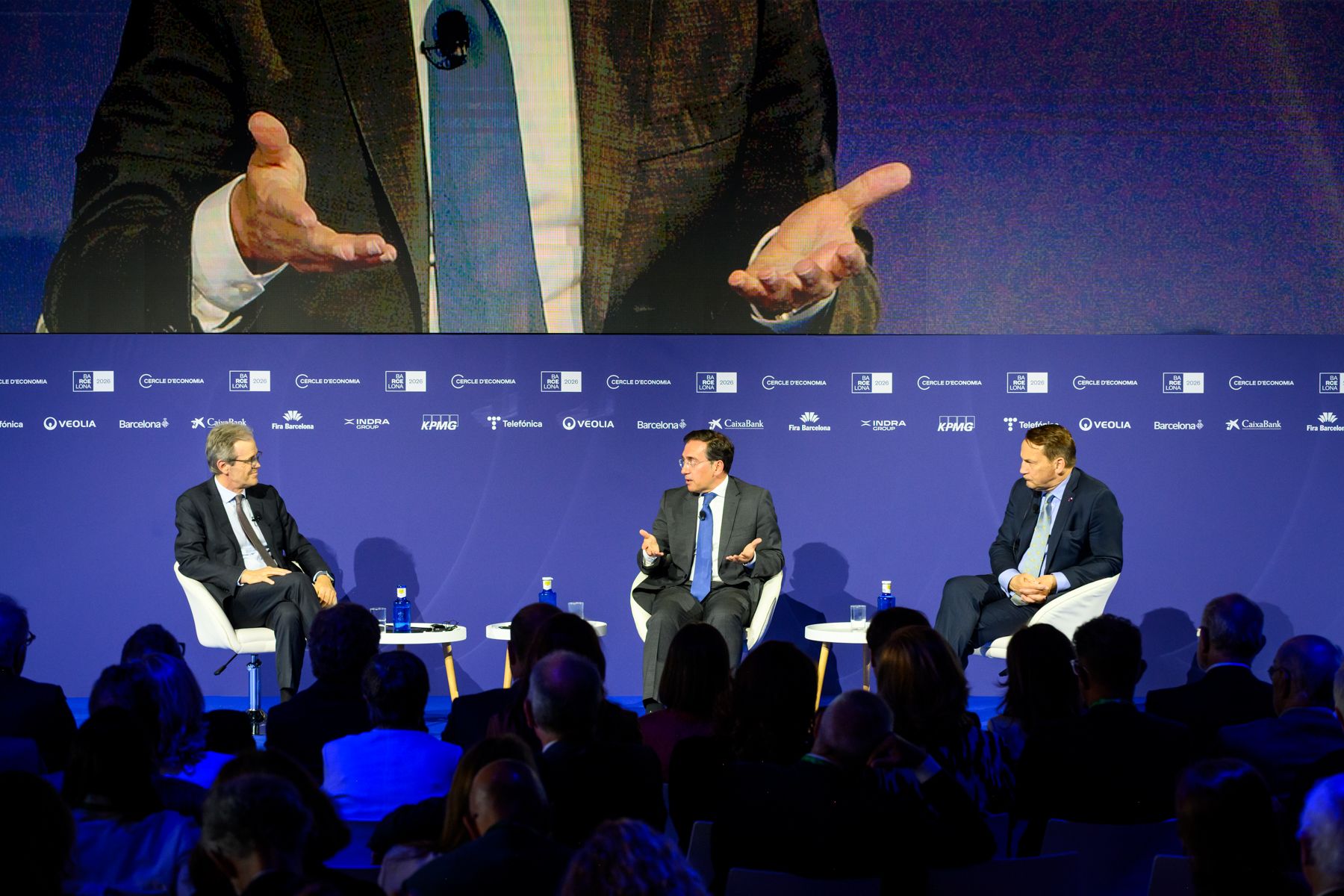
Both have advocated for greater integration of the European military industry, the promotion of large shared industrial programs, and closer coordination among member states to preserve the continent's deterrence capability.
According to the Spanish Foreign Minister, European programs and consortia like Airbus should be promoted to strengthen the military industry in the Old Continent and also "a European army that does not replace national armies" but can act when "the scale of the threat is European or forces need to be projected abroad." For Sikorski, it is necessary to improve the interoperability of the European defense industry and develop European manufacturing.
With Europe facing the mirror
But strategic autonomy does not depend solely on industrial or military capacity. It also forces Europe to review its own functioning. Sikorski, in fact, has questioned the limits of the current decision-making system in the EU and has warned that the unanimity rule often hinders the European Union's response capacity. The Polish minister has even argued that unanimity is not "the only expression of democracy" and has cast doubt on some of the current balances among member states.
Albares, for his part, has placed the debate in the realm of values. The minister has proposed that the European Union incorporate not only entry requirements, but also permanence requirements to guarantee respect for the democratic principles that underpin the community project.
And the background soundtrack: productivity
But behind all conversations about strategic autonomy, reindustrialization, or competitiveness there is the same question —how to generate more value in a world that has become more fragmented and more uncertain— and a soundtrack that keeps playing meeting after meeting, report after report, and that has to do with productivity.
"Without a leap in productivity, neither salaries will improve nor will we be able to maintain the welfare state we want," Garcia-Milà warned. Innovation, financing, public policies, business size, or talent are some of the pieces of an equation that has accompanied the Catalan economic debate for years.
Perhaps that is why the debate keeps coming back. Because even though the diagnosis is increasingly shared, the answers remain open. In Catalonia. And also in Europe: Europe's strategic autonomy, myth or reality?
Add The New Barcelona Post as your preferred Google source for free
Stay informed with the latest news.