
There is life beyond the city of Barcelona, although it is always the one that grabs the headlines. The metropolitan area as a whole concentrates 55% of Catalan GDP, which is almost 150,000 million euros, according to a study prepared for the first time by the Barcelona Chamber of Commerce and the Barcelona Metropolitan Area (AMB). "This means that, of every euro generated in the country, more than half is produced here. The development of this metropolis has an impact on the entire territory," says the president of the Barcelona Chamber, Josep Santacreu.
At the business fabric level, Barcelonès, Baix Llobregat and Vallès Occidental host 45% of the total in Catalonia, with more than 110,200 companies. However, 80% are in Barcelona (67%) and the cities that surround it, which follow the Catalan capital at a great distance: L'Hospitalet de Llobregat (5%), Badalona (4.5%), Cornellà de Llobregat (2%) and Sant Cugat del Vallès (3%). In the same vein, the three counties concentrate 83% of the foreign subsidiaries located in Catalonia, but 61% remain in Barcelonès.
The three counties employ 1.8 million workers, a figure that represents 52% of Catalan employees. The vast majority are in the services sector and only 9% in industry. "The only option to reindustrialize the country is within the metropolitan area. If we want to compete, we have to do it with a metropolitan mindset," defends the Deputy Mayor for Economy of Barcelona and Vice President of the Social and Economic Development Area of the AMB, Jordi Valls. According to the report, the most dynamic areas for developing new industry are Besòs, the Llobregat Delta, the Llobregat Axis and the B-30 corridor. "Besòs is the great opportunity we have within the metropolitan area," Valls emphasizes.
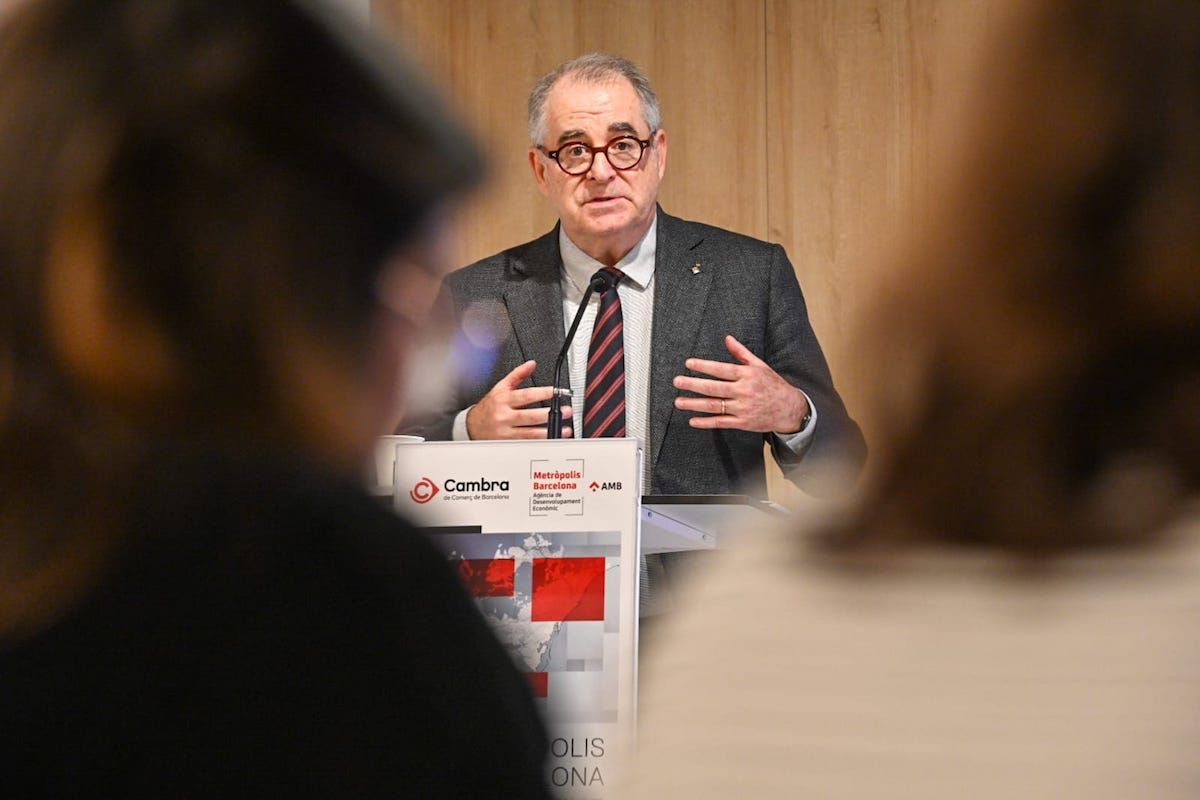
For the councilor, it is also necessary to take advantage of the strength of the different hot spots of research and innovation that are distributed throughout the metropolitan area. From the Barcelona Science Park (PCB) and the Barcelona Supercomputing Center (BSC) in Barcelona, an area where the Hospital Clínic is also expected to be installed, and the future expanded Gran Via exhibition center, the Bellvitge Hospital and the Catalan Institute of Oncology (ICO) in L'Hospitalet de Llobregat, to the Alba Synchrotron in Cerdanyola del Vallès or the Institute of Photonic Sciences (ICFO) in Castelldefels. "We are the most important scientific capital in Spain and Southern Europe. We occupy the fourth position in the publication of papers in all of Europe, but in transfer we are in the eleventh position," says Valls.
With an area of more than 600 square kilometers and a population of 3.3 million inhabitants, the Barcelona metropolitan area has a GDP per capita of almost 39,000 euros, which places it above Catalonia as a whole and the rest of Spain, as well as in a similar position to European capitals such as Berlin, Milan, Innsbruck and Antwerp. Despite this indicator, the municipalities of the AMB have a risk of poverty rate of more than 21%, above the results obtained in Spain as a whole and in the European Union. "Those who can help us solve the risk of poverty are success in the field of startups and quality visitors. It is a blessing to have such successful sectors," says Santacreu.
Add The New Barcelona Post as your preferred Google source for free
Stay informed with the latest news.
