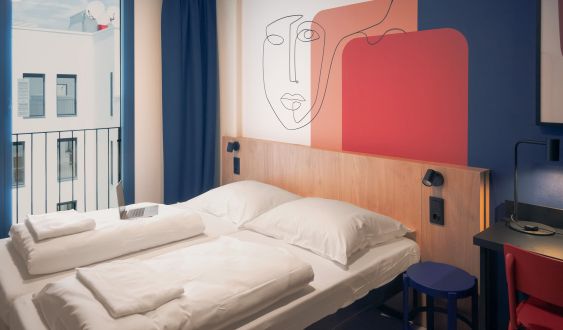
Barcelona continues to be a city that attracts. Talent, investment and new companies, but also millions of visitors each year and the projects that are born to serve them. This capacity for attraction is also reflected in the hotel sector, which continues to add new international operators. The latest to join this constantly transforming map is Meininger Hotels, a German chain with a presence in the main European capitals that has chosen the city to land in Spain.
The arrival of Meininger also explains two of the transformations that Barcelona is currently experiencing. The first, that of a hotel sector that continues to add new international operators and attract foreign investment. The second, that of the Fira Gran Via environment, an area that is undergoing a profound transformation and that is preparing to gain even more weight with the future entry into operation of Hall Zero, which will expand the capacity of the exhibition center.
Meininger, however, does not arrive in Barcelona with a conventional hotel. The company inaugurates this Thursday, June 25, a "hybrid hotel", a model that combines elements typical of traditional hotels with a more flexible philosophy and usual hostel services. Private rooms —from individual spaces to double, triple or quadruple formats— coexist with shared areas, communal kitchens and spaces designed to encourage interaction between travelers. This is a formula typical of Meininger, which the chain has replicated in all the cities where it is present and which differentiates it from other economic accommodation operators already present in Barcelona.
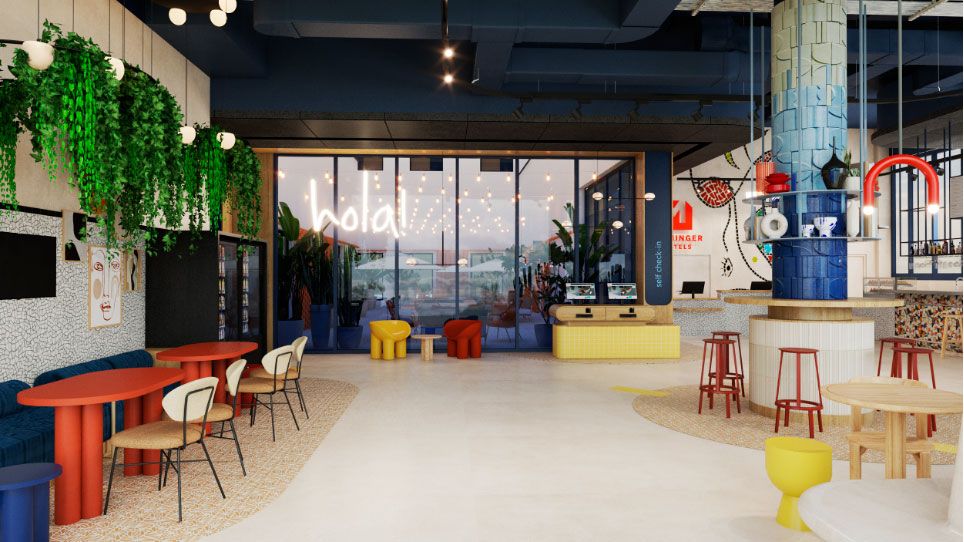
A flexible formula that allows accommodating very diverse profiles: from families and school groups to what will be one of its main clients in Barcelona, congress attendees. This is a visitor profile that no longer only lands in the Catalan capital on specific occasions, but has a presence throughout the year thanks to an intense trade fair calendar, with international congresses and events that keep the city active. Thus, despite the fact that leisure continues to be the main motivation for visitors arriving in Barcelona (up to 60.5%), 20.3% already do so for professional reasons, according to the Barcelona Tourism Observatory. A demand that is expected to gain even more weight with the expansion of Fira Gran Via and the future commissioning of Hall Zero.
Meininger arrives in Barcelona precisely with an establishment also designed to meet the needs of this type of traveler. The new hotel has 162 rooms and more than 500 beds, occupying a rehabilitated former office building opposite the main access to the exhibition center.
From a Berlin hostel to 37 European hotels
Its arrival in Barcelona is the result of a journey that began more than two decades ago in Berlin. The origins of Meininger Hotels date back to 1999, when three partners opened a small hostel on Meininger Straße, a street in the German capital that would end up giving its name to the chain. Initially oriented towards school groups and youth travel, the project grew rapidly thanks to a formula that combined affordable prices with hotel-like services. A formula that the company has maintained and developed over the years, reaching 37 establishments —with the incorporation of the one in Barcelona— spread across 26 European cities, with more than 20,000 beds and a turnover exceeding 200 million euros annually.
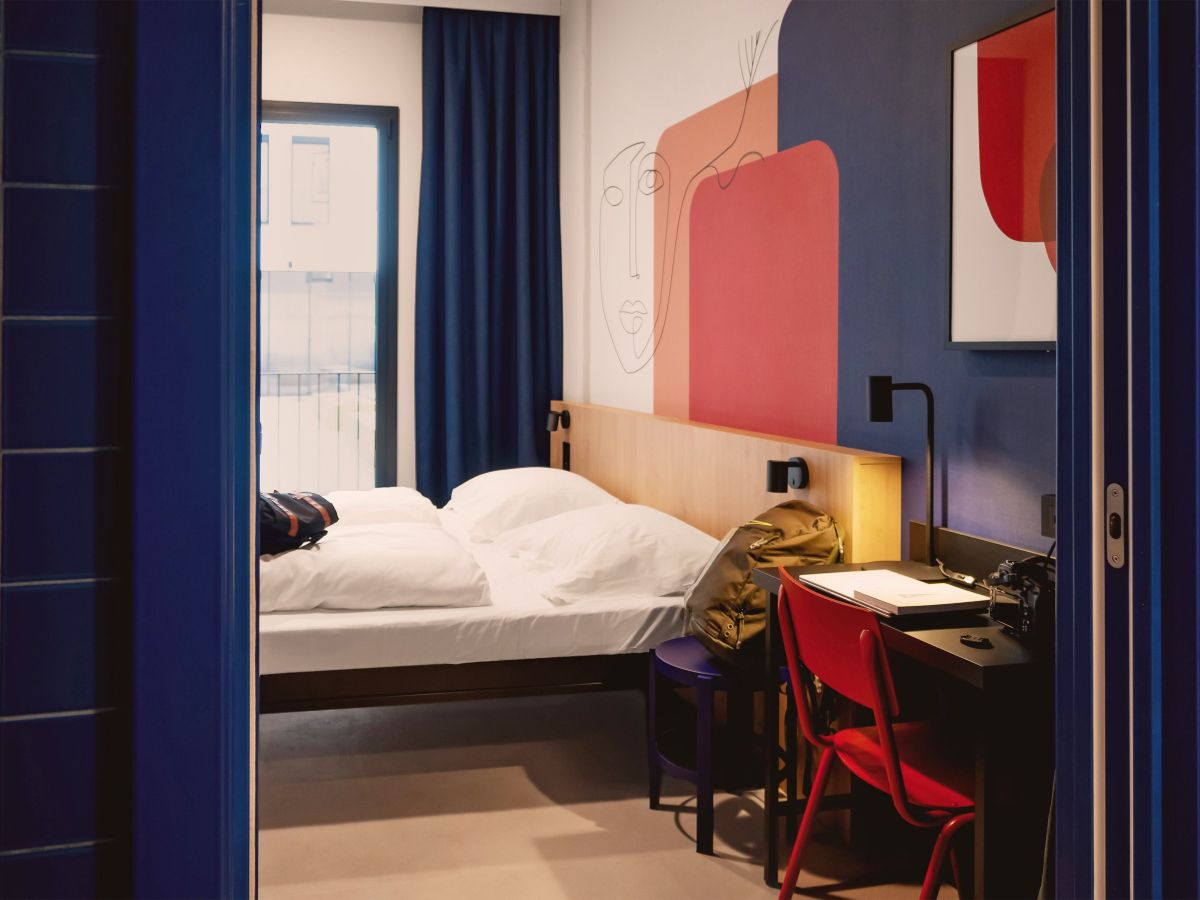
The opening in Barcelona represents the chain's first inauguration after a three-year hiatus, since the last projects opened in Venice, Krakow, and Cologne in 2023. The Catalan capital also marks the beginning of a new expansion phase for Meininger on the Iberian Peninsula, with a future opening in Madrid, next to El Retiro Park, scheduled for 2027. "Barcelona is the ideal starting point to introduce our hybrid concept to the Spanish market," highlighted the company's CEO, Ajit Menon. Meanwhile, the chain continues to expand its European presence with new projects in cities such as Edinburgh and Tel-Aviv.
A commitment to conference Barcelona
The location of the new hotel is not accidental: opposite Fira Gran Via, Meininger is situated at one of the main gateways for business tourism in Barcelona. The city has already consolidated a top-tier trade fair calendar for years, with events such as the Mobile World Congress or Integrated Systems Europe. But beyond the large exhibitions, Barcelona also maintains constant conference activity: last year alone, the city hosted 142 international conferences and more than 125,000 delegates. Meininger's model precisely fits this visitor profile: functional rooms designed for short stays; but without giving up leisure tourists due to its connection to the city center.

Its arrival also coincides with a moment of transformation in this environment: Fira Gran Via is expanding its facilities with the future Hall Zero, a 60,000 square meter infrastructure that is expected to become operational in mid-2027.
Barcelona continues to attract hotel investment
The arrival of Meininger is not an isolated operation. Despite urban planning limitations that condition new openings in some areas of the city, the Catalan capital continues to attract the interest of hotel chains and investors. During the first months of 2025, the province of Barcelona ranked second in Spain —only behind the Canary Islands— in terms of hotel investment volume, with more than 478 million euros until September.
This movement has translated into different recent operations. The METT Barcelona, the former Gran Hotel La Florida, reopened after a 15 million euro renovation driven by Sunset Hospitality Group, while the Gallery Hotel has started a new phase after coming under the ownership of the Barcelona chain Catalonia Hotels. Now, Hidden Hotels is preparing its landing on Passeig de Gràcia with a new five-star establishment. But the transformation is not limited to the city center: in the metropolitan area, Hines has opened Aparto Diagonal Suites, a flexible accommodation complex with 526 rooms in Esplugues de Llobregat, where the future Hospital Clínic will be located.

And beyond the luxury segment, Barcelona is also seeing new, more affordable accommodation formats arrive, such as easyHotel, which has opened its second establishment in the city, in another transforming area: the surroundings of the new Sagrera station. The arrival of Meininger thus joins an increasingly diverse hotel landscape, with new openings, renovations, and operations underway. A movement that explains a Barcelona in constant transformation and that will probably still add new chapters: and this will surely not be the last hotel to open in the city and pass through the El Radar section.
Add The New Barcelona Post as your preferred Google source for free
Stay informed with the latest news.