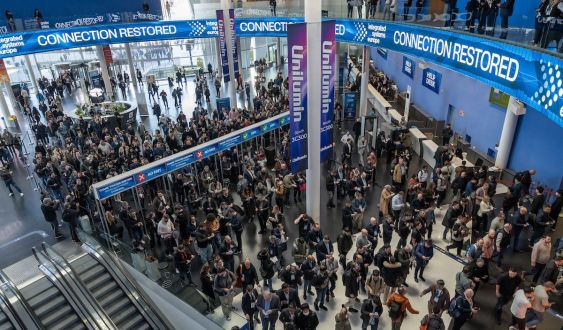
The Integrated Systems Europe (ISE) is making a strong impression. After the giant leap in the previous edition, when it surpassed all records with almost 74,000 attendees, the audiovisual fair consolidates the trend this year, occupying almost the entire Gran Via exhibition center from this Tuesday until Friday. With 20% more exhibition space, it extends across eight pavilions and only half of pavilion 1 remains to be filled, a space where the only event that surpasses it in the city, the Mobile World Congress (MWC), sets up weeks before its celebration to start preparations for large stands.
Like the MWC, the ISE takes advantage of every available square meter, maximizing them, as can be seen in the fact that in this edition they have placed services such as cloakrooms in the outdoor areas between pavilions. In case there are any doubts, the director of ISE, Mike Blackman, focused on the expansion of Fira at the inaugural press conference, just as a few days ago the most visible face of Mobile, John Hoffman, also did.
To expand, the return of Chinese companies, main suppliers of European and American exhibitors, after the pandemic hiatus has been key. In 2024, they already returned, but this year their presence has been more noticeable, with Chinese being heard in the corridors of the L'Hospitalet de Llobregat exhibition center, full of Chinese New Year greetings and pandas. Some Chinese companies, most from Shenzhen, have visited ISE in Barcelona for the first time, where it moved when Amsterdam became too small, while others had never come and are making their debut now, such as Simplefly. Like it or not, one of the questions they ask locals is whether they will be robbed in Barcelona.
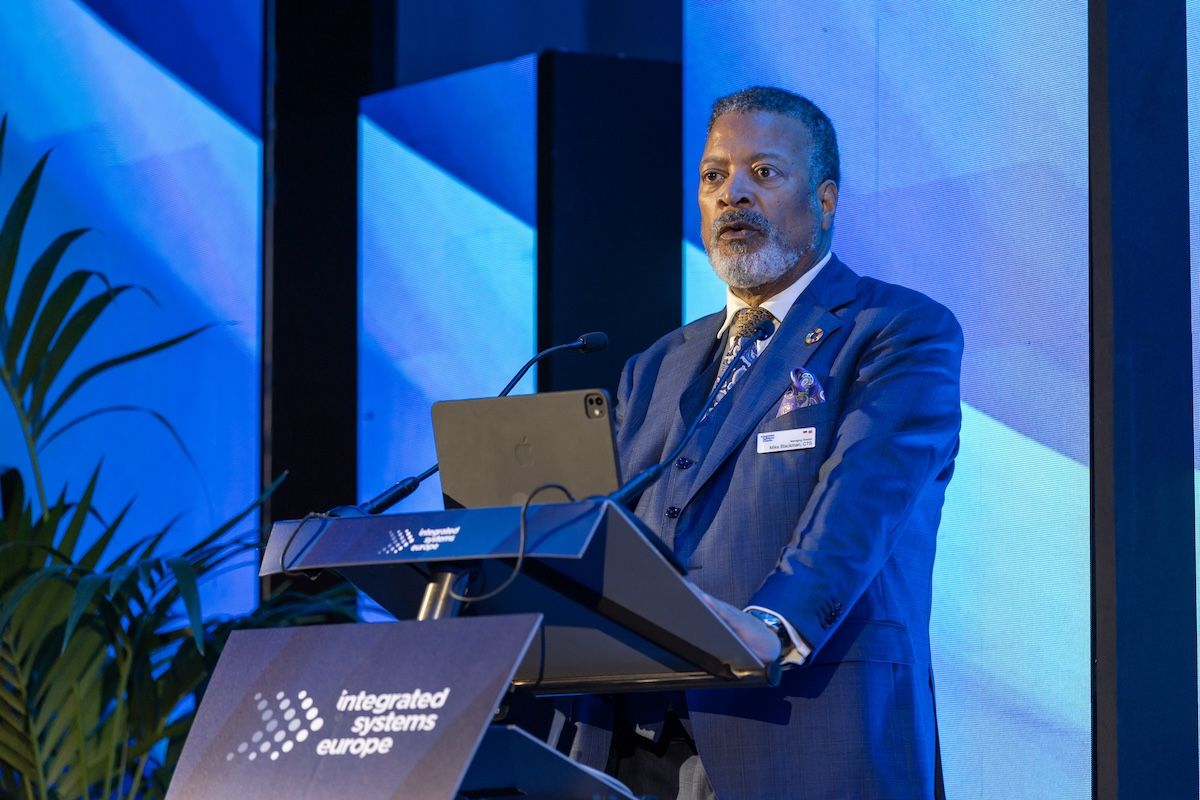
China's participation is growing, but also that of Latin America, with a forum of talks organized by ISE that focuses on this region, the Middle East and India, establishing itself as the audiovisual fair located in neutral territory, unlike others held in the United States and China. "More and more people are coming and it is becoming more known," says Anna Nadal from See Sound, a company from Sant Feliu de Llobregat dedicated to distributing sound and lighting equipment, such as those used by Mago Pop for his show at the Teatro Victòria. "ISE is the best place. Everyone comes here," add those from Fohn, a German company responsible for the sound system of the European Parliament.
At ISE there are screens, many screens. Beyond those with high resolution, there are those that move, those that can be stepped on, or those that are integrated into nursery tables for playing. But there are also speakers and microphones, even spotlights, with some pavilions looking more like a discotheque than a fair. And there is no shortage of curious innovations, such as LED advertising for food delivery backpacks. Among the more than 1,600 participating exhibitors, there is a varied representation of what the audiovisual world represents, also approaching new trends such as immersive content, drones, or e-sports, with a special space for fifes to distract themselves with a match between Espanyol and Girona.
Digital art, an opportunity for local industry
Samsung, LG Electronics, Blackmagic Design, Epson, Lang, Harman International, Panasonic, Shure, Microsoft, and Biamp Systems are the main exhibitors at an ISE that this 2025 has for the first time reserved a space for startups. In the corridor between pavilions four, five, six, and seven, about sixty emerging companies have set up small stands to present their products, with the German Schulze Brakel showing the microphone foam it has made for televisions such as TVE or the BBC.
Very close by are the stands of Acció and the Barcelona City Council, with local startups registering a record participation this year, with a total of 85 companies. "This is a gift for Catalan companies," defends the president of the Audiovisual Cluster of Catalonia, Miquel Rutllant, who sees ISE as a great showcase to attract investments. He says this with an eye on the future audiovisual hub of the Tres Xemeneies de Sant Adrià de Besòs, where the aim is to promote the landing of companies in the sector to economically develop the area.
The City Council will launch a facility for creative industries in Palo AltoWhile the future of this large project is still unclear, the Barcelona City Council announced this Tuesday at the fair the launch in May of a facility for creative industries in Palo Alto. Driven by Lavinia, Magma Cultura, and Artsmediatech, it will serve for the creation of digital content, offering services such as an augmented reality laboratory and an incubation program. "It will be one of the first tangible legacies of ISE in the city," defends Mayor Jaume Collboni.
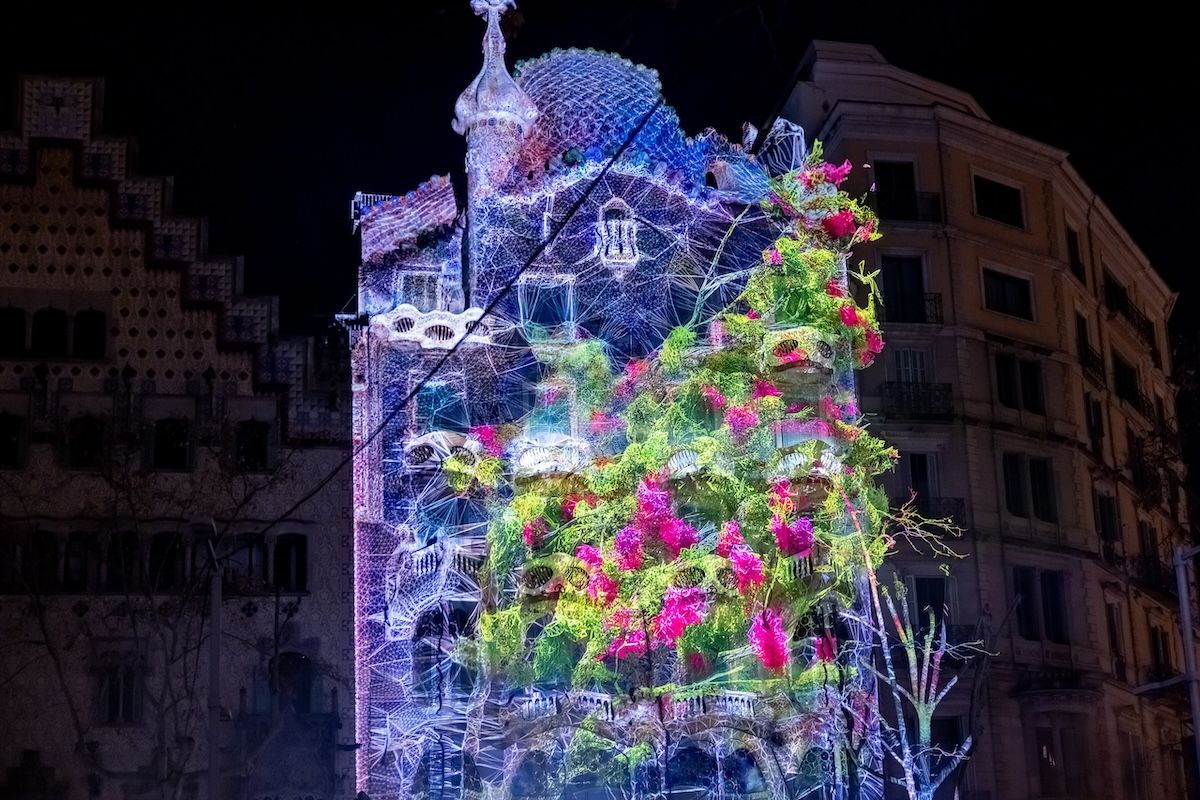
Precisely, it is in artistic creation where Rutllant sees the main window of opportunity for the local industry. "What is seen on screens catches our attention. Before it was landscapes and now it is works by digital artists," she points out. Taking a walk around the hall, it is clearly visible. First, because one of the featured speakers is visual artist Quayola, also in charge this edition of the traditional mapping that the ISE organizes every year at Casa Batlló to explain its industry to the public. In addition, each day of the show ends with a projection at the entrance of Fira Gran Via.
But it is also detected in the exhibitors, with slogans like "It's not just functional, it's art" or with a work by artist Refik Anadol at the stand of the Chinese Absen. More classical art also sneaks in, as in the exhibitor of the Dutch Phillips, with a program that allows attendees to become Vermeer's Girl with a Pearl Earring with just a selfie.
It is not surprising that the city council has given special prominence to the local artist collective Domestic Data Streamers at its stand, with an installation that reflects on the use of algorithms for facial recognition or in the control of pedestrian flows. In fact, it reminds of many of the proposals seen at Sónar+D, the professional event of the music festival where connections between art and technology are explored. Beyond the typical fair accreditations hanging around the neck, there have been attendees who were, precisely, carrying the latest Sónar backpack.
"Barcelona is very powerful in digital art," says Ignasi Montfort of Domestic Data Streamers. In this field of creativity, there are Catalan companies such as Sínoca, specialized in videomappings or immersive experiences, or Flock Drone Art Studio, responsible for the drone shows of La Mercè. The latter found its drone supplier at last year's ISE, the Mexican WG Drones, who has just opened a factory in Girona after its agreement with Flock Drone Art Studio. This adds to the dozen multinationals that have opened headquarters in Barcelona since the arrival of the audiovisual fair.
Add The New Barcelona Post as your preferred Google source for free
Stay informed with the latest news.