This August 12, the alignment of the two celestial bodies that give us day and night made us feel a great desire to look up at the sky to contemplate the natural spectacle. Only music can amplify the emotion caused by the image of such a unique eclipse. The vibrations, the sound, the melody of a musical piece have the ability to transform a mood, to increase a sensation, to bring joy to fruition, to infuse emotion. Like a massage to the cells, the sonic impact of each note is an internal stimulant that activates numerous connections in the brain. Automatically, without moving, the musical composition made of low and high frequencies establishes mental perspectives of distance and proximity that, with closed eyes, lead us to travel, to feel, to escape. And with the best images of the eclipse, accompanied by music, we will continue traveling and getting emotional.
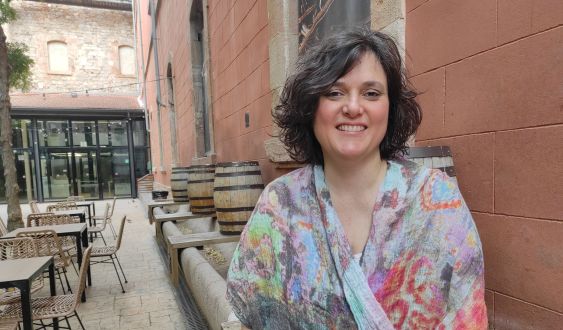
The journeys that music provides are therapeutic. Emma Plana knows them well. She was still in her mother's womb when she was already experiencing them, because, during pregnancy, her mother studied music. In the cradle, then, Emma already had a pillow of musical sensitivity. Musical learning in childhood and adolescence led her to discover a methodology that, through movement and rhythm, transmits musical knowledge. The father of this way of teaching music was the Swiss composer and pedagogue Émile Jaques-Dalcroze who, with his method, established a school and, at the Geneva institute that bears his name, Emma studied. She dedicated five years to learning from music what we do not perceive directly through musical notes, but thanks to the effect that these notes that come out of the staff cause in us. In this way, the body is involved in musical learning, enabling students to experience and express their rhythmic sensations.
This is how music is associated with certain colors, precise shapes, and movements that, logical or not so much, musical sound inspires. In 1996, a stage performance showing the link between music and movement earned Emma recognition for the Best Creation of Jaques-Dalcroze Rhythmic License by the Jaques-Dalcroze Institute of Geneva.
In the French language that served as Emma's social connection during those years in Geneva, playing an instrument, jouer le piano, hits the mark in what best summarizes her experience of music. Music is the bond, the game that unites the performer to the instrument, and vice versa, but also the game established between music and those who listen to it. "Music makes me feel the connection with myself, with my unconscious self and with the conscious self. I enjoy music because it allows me to listen to myself, to listen to my deepest self, to think, to reflect, to experience presence and liberation." Above all —she says— "if I am the one making the music, playing the piano or singing, composing or improvising, I feel this great connection very much. I experience a state of active presence that makes me feel alive, serene. And, every time it happens, I reconnect, remember, meditate, think."
And, in the hands of a music therapist like Emma Plana, music is also a helping tool, a key to opening hidden or blocked paths within children and adults. "This is another facet of music, when I put it at the service of others and the needs that different situations require."
Music therapy is, in the universe of catharsis tools, that fine rain that falls discreetly, but has a very valuable effect on the earth where it soaks in. Emma coordinates the working group that deals with this at the Col·legi Oficial de Psicologia de Catalunya (COPC). Their objective is to promote music therapy, to build a network between music therapy professionals and psychologists, fostering joint work. Researching and sharing experiences that link psychology and music therapy is another goal to be able to replicate the benefit of music that dissolves rigidity, undoes silence, incomprehension, or the flight from emotions.
Having learned to analyze in such detail how music behaves under our skin and its benefit in a person's daily life, Emma chose to study Psychology to be able to apply it, and today she is a clinical psychologist. Combining psychology, music therapy, and music education, with special attention to educational contexts, creativity, neuroscience, high intellectual abilities, and the musical methodologies of Jaques-Dalcroze Eurhythmics has made her an active agent of this fine rain of an art, such as music in this case, which becomes therapeutic. A fine rain that instills mental health.
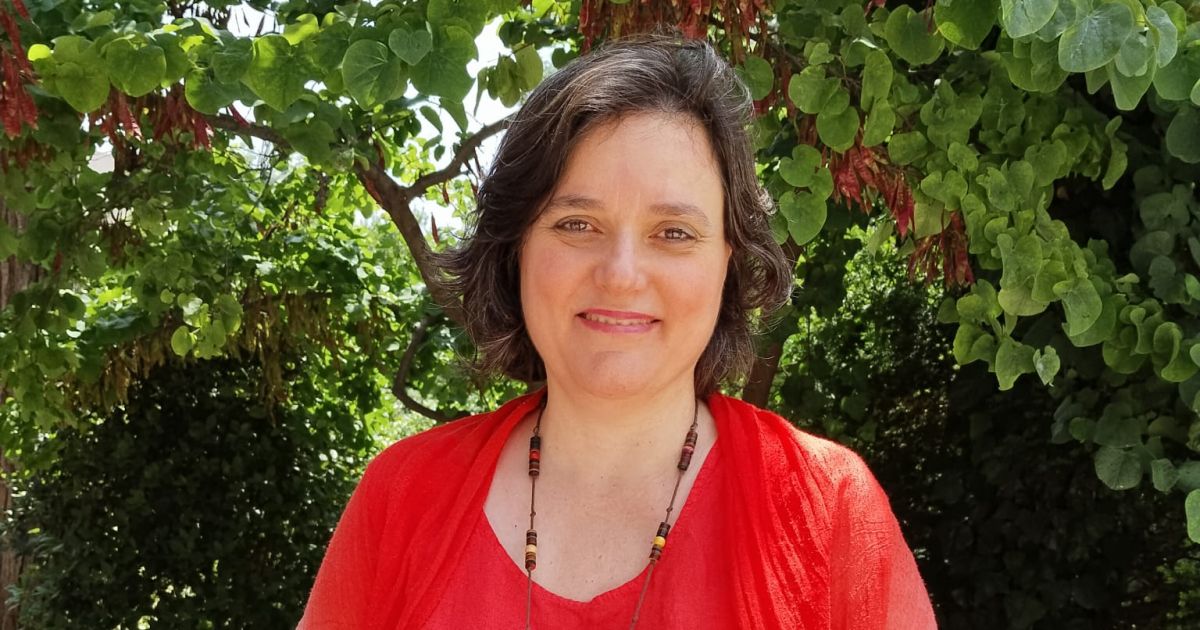
Emma is a lecturer in the Master's in Neuroscience of Music at the University of Lleida, created and directed by Jordi À. Jauset. He is the author of Sonidos para tú bienestar and Neuromúsica. Cerebro, ciencia y arte, books from Plataforma Editorial that discover the transformative power of music and its influence on our health and well-being.
Understanding and accompaniment
“With music therapy, we can evaluate and detect emotional states that, sometimes, cannot be captured even with words or attitudes, but which music helps us to rule out or uncover,” says Emma. And she explains that “music, for some people, can be a source of comfort, for others, of expression, connection, festivity, grouping... the meaning of music is created to suit the listener. Whether we are professional musicians or simply amateurs or fans, music has an intrinsic power that influences our emotions, and our thoughts and behaviors.” The difference, in the case of music therapy —she adds— lies in “the ability of the music therapist to manage the emotion that emanates from the music so that it is beneficial, positively impacting the person's health.”

Betting on such a groundbreaking and innovative branch of therapy, in a context like ours, in which music and art are still practically only experienced as entertainment and leisure, contextualizes a different way of seeing the world. And Emma was only twenty years old when she decided to leave our country to discover it. This makes her think that her daring connects with that of her mother, also when she was twenty years old, already a nurse, to settle in Madrid to pursue the specialty of midwife. And she was one of the three midwives who, together with a doctor, introduced women's care in Sabadell, as a municipal service. It was in 1978 when they took care of childbirth preparation, childbirth, postpartum, and family planning as a contribution that goes beyond healthcare, which are women's rights.
Today Emma and, like her, professionals who work with music therapy as a tool, also go beyond the experience of listening and musical production as an emotional alarm clock. They use music to delve into self-investigation and blockages that prevent deep introspection. Interpreting everything that music stirs is the task of music therapy that characterizes this professional's private practice. The holistic approach that encompasses music, education, and movement, all classical art, is explained in the book Blocs, of which Emma is the author and editor.
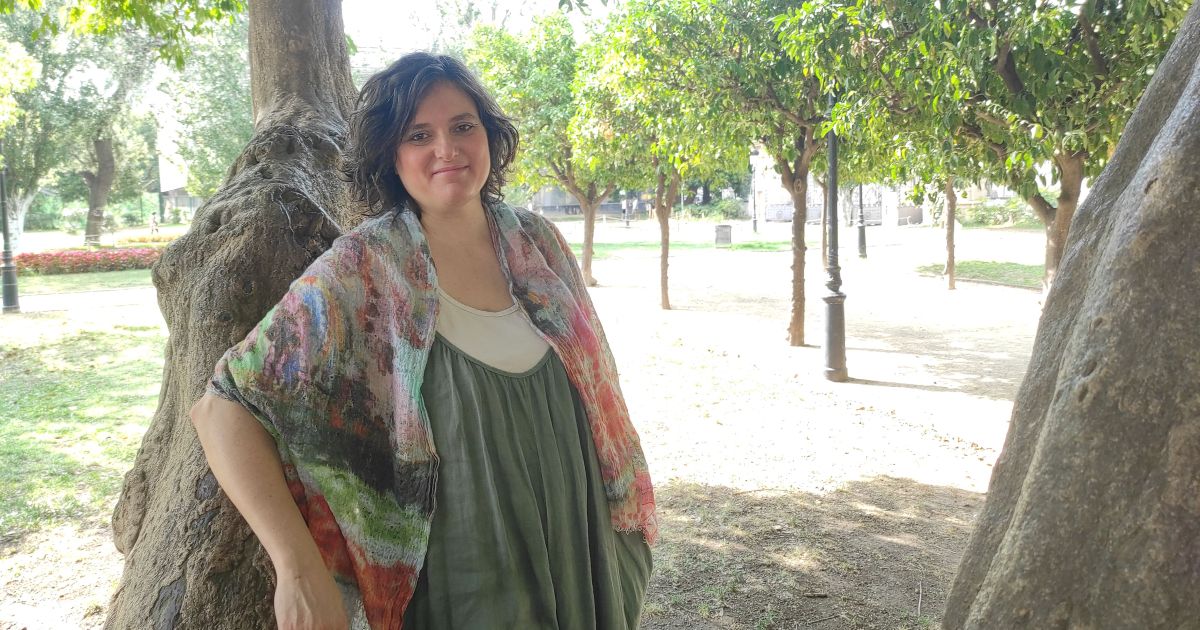
She has also worked as an educational counselor in public high schools and currently does so by accompanying men and women with intellectual disabilities who, at the Aspanias foundation, have found support for their autonomy. With residential homes and services for families, this solidarity entity has been supporting these people with whom she therapeutically interacts for sixty years. “I really like empowering them. For me, inclusion is this, it means respecting their dynamics, with humanity. Without it, we cannot do psychology.”
The results of Professor Dalcroze's rhythmics and psychological intervention from music therapy do not yet accumulate the scientific evidence that other therapies, such as cognitive-behavioral therapy, already have, because the qualitative factor is more difficult to investigate in the laboratory. Even more so, with the psychobiosocial approach that Emma chooses, a prism that considers health an interaction between psychological, biological, and social factors. It is an essential perspective for music therapy in the context of neurodiversity, because it recognizes that brain differences have a biological component that, with individual experiences and the social environment, have a profound impact on well-being. It is the strength of the invisible power capable of making positive changes, as a therapeutic treatment and as prevention.
Add The New Barcelona Post as your preferred Google source for free
Stay informed with the latest news.