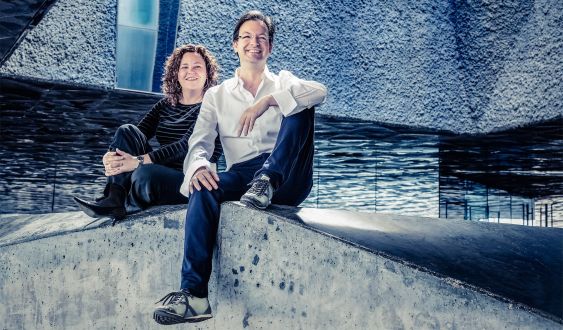
A book, a song, a melody, can resurrect creators, messages from someone who is no longer here. And in Mireia and Joan Miquel's hands, this always happens, in unison. Twenty fingers moving up and down the small levels that separate, in each key, sound from silence. This is how the show of Nexus Piano Duo emerges, the name that unites, fuses, compacts, and presents a pair of pianists playing four-hands. They delight the audience, a public that becomes more loyal the more they know them, hear them play, and enjoy, individually as well, precisely thanks to the discography they produce.
The four albums they have already released are cruises, transatlantic voyages of emotions. They make stops in different eras through the musical writing of various authors. They are the loudspeaker for the work of composers who, otherwise, would only be ephemeral compositions, like all those pieces composed for piano that can only be heard in a concert or in private auditions. Joan Miquel and Mireia wanted their albums to be the connection of authors more or less known to the general public, but available in physical format, to accompany evenings at home, relaxed Sunday mornings, or work moments. The sound of the piano can be that sonic massage for our neurons, at any time of the day and life. And, in this case, they are the heartbeat of emotions inspired by other moments in history.
The pauses, the notes, sustained, brief, long, fast, and slower, make the path of music in the hands of this couple who make the keys walk at the same time. In 2000, each left Barcelona to learn piano with a renowned professor, an eminence who had both of them as students, without them knowing each other. Until, one day, they crossed paths leaving class.
In fact, it had been that same professor, Leonid Sintsev, who had taught at ESMUC, in Barcelona, who spurred, separately, both Mireia and Joan Miquel, to go perfect the art of playing the piano in Russia. Both followed the professor's advice. And that year, at the beginning of the 21st century, one leaving and the other entering private piano lessons with Leonid Sintsev, a professor at the Saint Petersburg conservatory, the spark of a story that would intertwine their personal and professional paths emerged.
In the Saint Petersburg conservatory -a city bombed these days-, the restrooms were communal, but in each room each student had a piano. In one of these, Mireia and Joan Miquel played together for the first time, four-handed. It was a Mozart sonata. They took advantage of the center's card to go, every day, to a concert, an opera or a ballet. They remember that time as an extraordinary era.
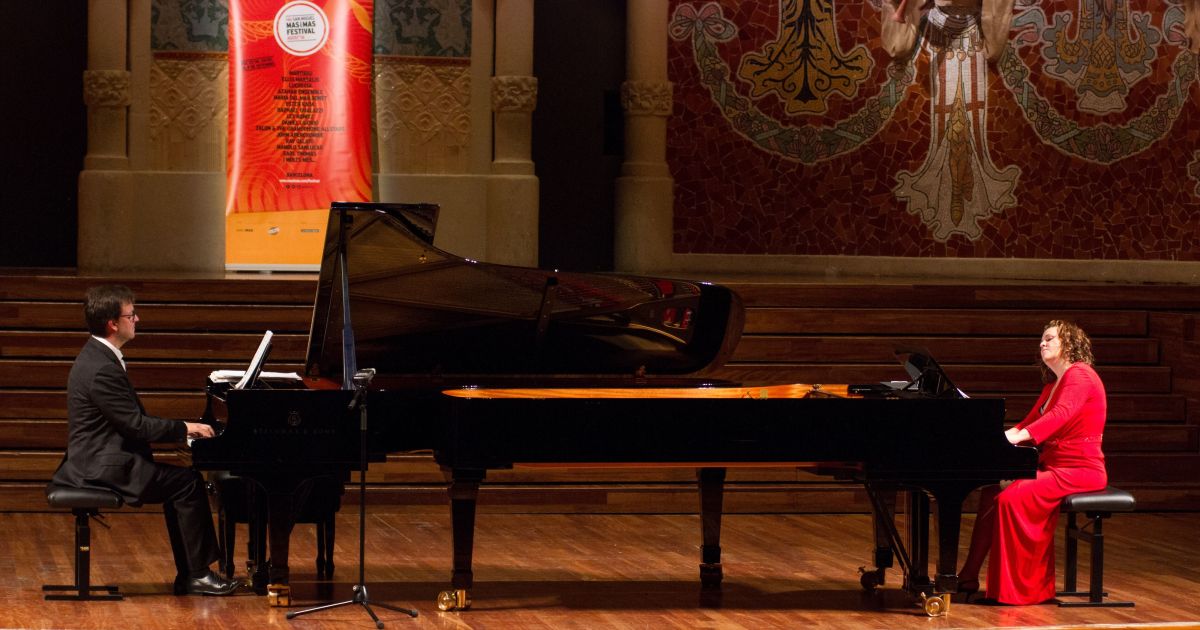
The present one, they will also remember with great pleasure. They have already made four albums and have never stopped performing concerts everywhere: in the agenda they update on their website, they announce where their coordinated four hands land: in Valls, in Vilafranca, in Barcelona, wherever. Next November they will present their latest album, Emotio, at the Schola Cantorum in Paris, a music school with one hundred and thirty years of history.
Emotio is for them an album as special as or more special than the previous ones, because they recorded it in the Petit Palau, with Andrea de Leonardis, a sound engineer specialized in the recording, editing and post-production of classical, instrumental and choral music. This work by Mireia and Joan Miquel leads to rediscovering Catalan music for four-hand piano. As they explain in their presentation, "it is a sound journey through the four-hand piano, an intimate and at the same time expansive genre that invites to share the experience of music in its most human essence: dialogue and complicity."
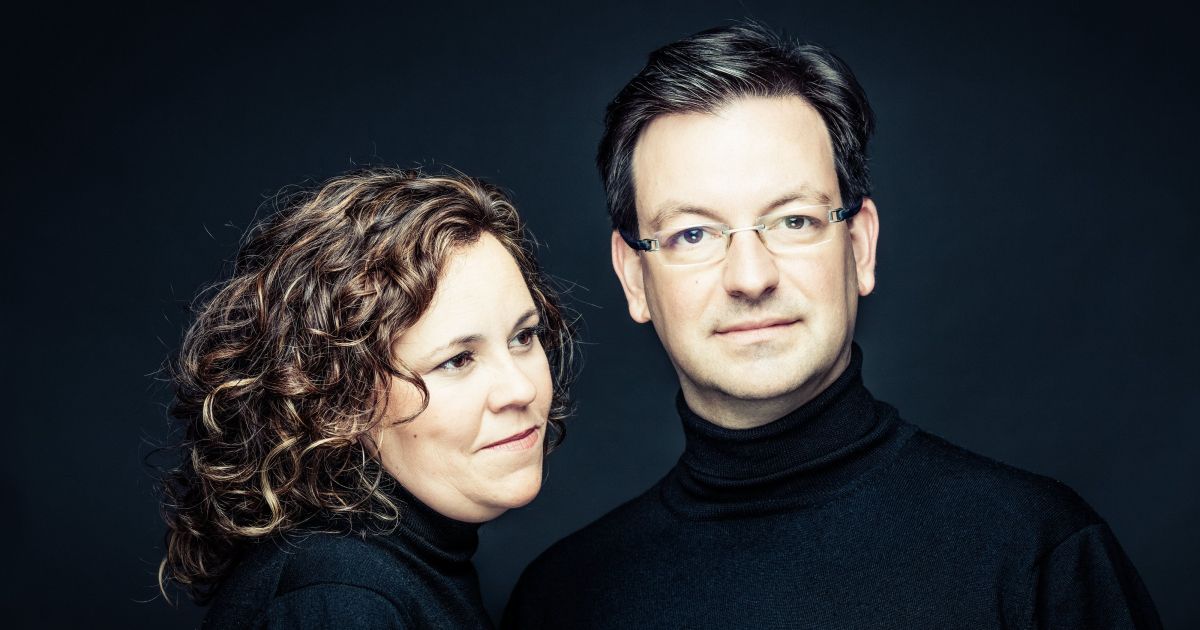
Of that they are experts. Their rapport in interpreting each score jointly is their school of dialogue and complicity. Also of many hours of study and rehearsal, which, however, is always accompanied by that illusion that everything created transpires. With the language of music and this emotion, the harmony of this couple has naturally been woven; they are parents of a boy and a girl, now teenagers who, just by ear, with all the piano they have heard at home since they were born, and the guidance of their parents -who are piano teachers-, learned to play. "One of them does want to dedicate himself to music, but with the electric guitar, which he already plays." They also say that their children are their biggest critics, because of this well-trained ear, "they know that there you haven't played the note they hear every day," comments Mireia.
Music at home and in the classroom
As they get older, they become more aware of the value of so much musical richness at home. "Sometimes fans stop us on the street, and tell us: you are famous." They know that their audience is very specific, "older people more than young people, ladies who go to classical concerts." But, from time to time, they are surprised: "One day we were in Barcelona in a cafeteria and a boy came up to us and said: you are Nexus piano, right? I love how you do it, I come to your concerts. And we also explain it to our children. Being recognized on the street is very nice," says Joan Miquel. In reality, he adds, "what you like is that it reaches everyone who might be interested. We already know that we work for a small audience, because we play classical music, but that it can reach so many makes us proud."
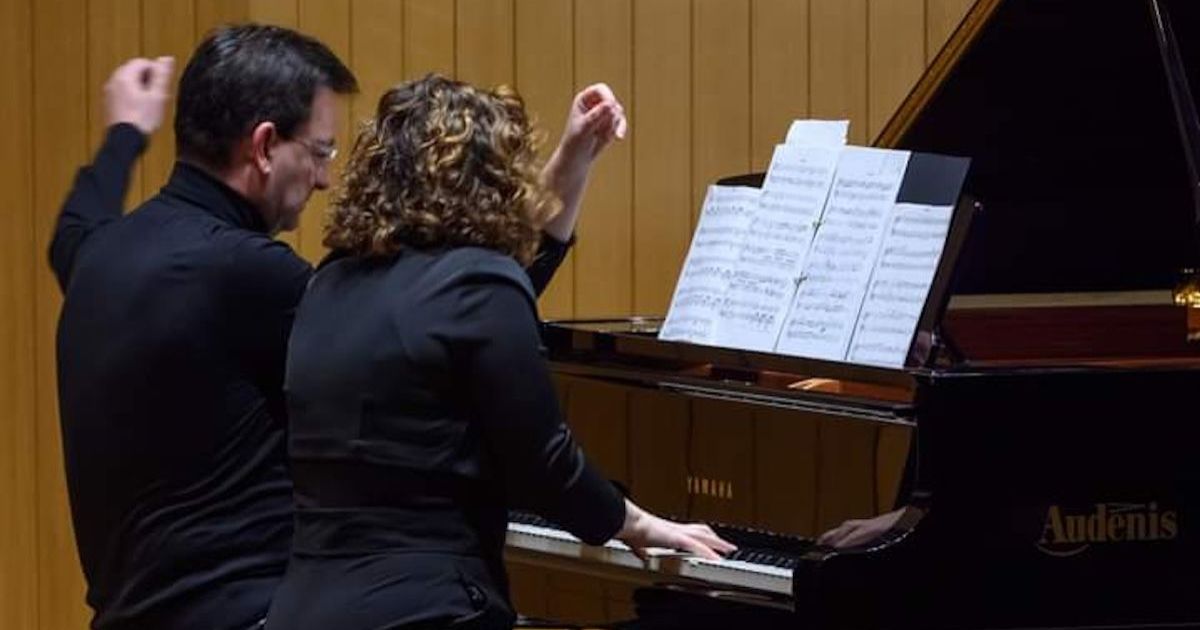
They also celebrate the successes of some of their students. "It is very satisfying to see that some of them have ended up succeeding and we have left them very well placed," they say. As musicians and piano teachers, they know that music teaches effort, to structure the mind, discipline, and create.
Regarding composer preferences, they explain that they like everything, but that they have specialized in authors from the 20th and 21st centuries, such as Stravinsky, Ravel, Shostakovich, Gershwin, and current Catalan musicians like Josep Soler.
Catalan are also the seven composers of the works on their latest album, Emotio: Moisès Bertran, Narcís Bonet, Francesc Civil, Robert Gerhard, Marc Migó, Josep Soler, and Mariona Vila. "We believe it is our responsibility to value the silenced music of composers from here so that, at times, it can come to light. Because it always seems that what comes from outside is better, and no, we must polish and rediscover Catalan works." And they point out that making an album is also the will to build musical memory, recording scores that were once played in homes and with friends, to create a sound book.
They explain that they have always had composer friends, "that is something natural for performers. Composers need performers. That's why they send us a lot of the music they make, although we don't always have enough time, but they always let us know what they have composed and beautiful relationships and interactions are established with them." Thus, they make albums with works by Catalan composers, although in concerts, the great ear-catching names like Mozart, Bach, Schumann, and Ravel also sound.
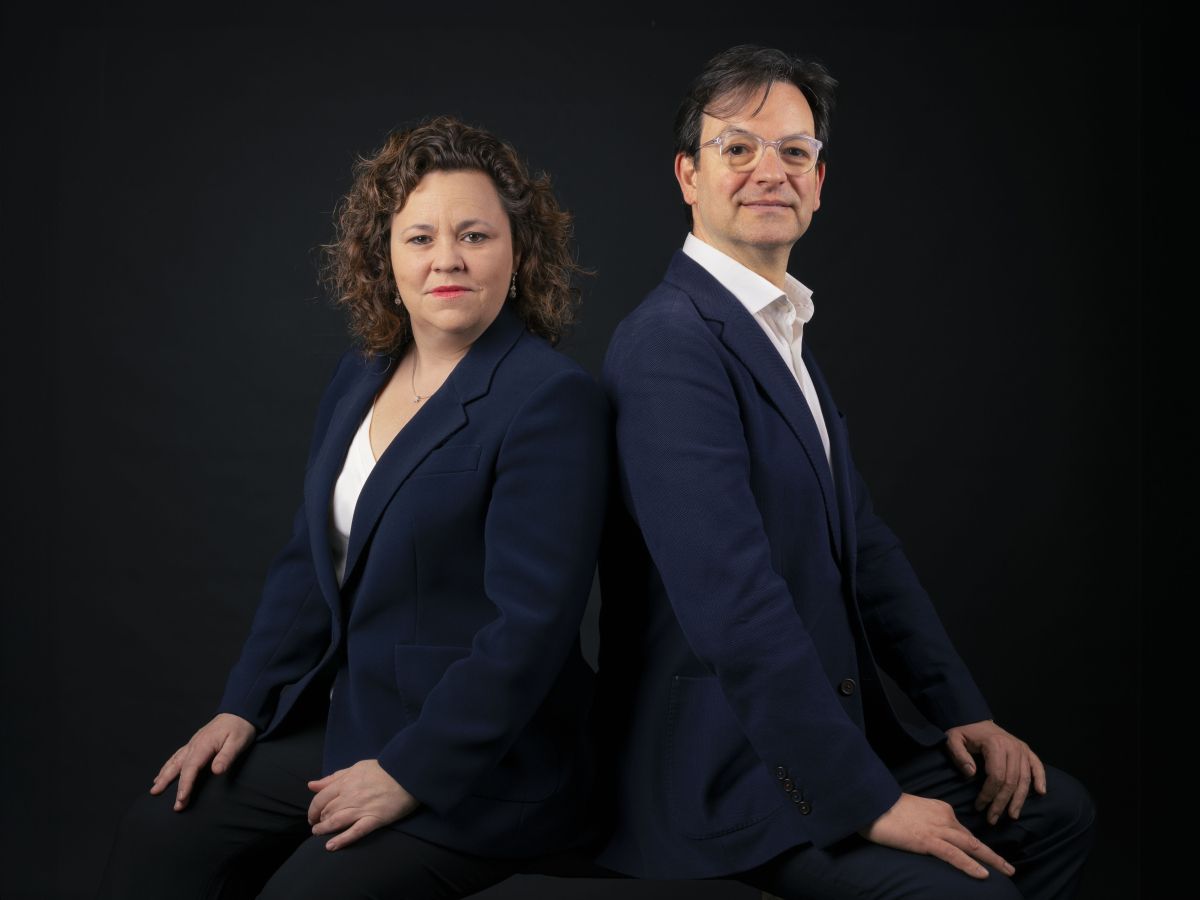
For two years now, in addition to sharing personal life, study and piano rehearsal time, and concerts, Mireia and Joan Miquel also work at the same conservatory, the Badalona Music Conservatory, as classical piano teachers. They say that "the demand for studying piano has not decreased, it has even increased." But now, they recognize that young people have many entertainment and training options and that, "one thing is the students who want to play piano and, another, the people who go to a concert. On this, there is still a lot of work to be done. "Students love music, those who come to the conservatory want to play the piano, but for there to be an education at home that they go to a concert, that's another thing. In our time, with only two channels on TV, and no mobile, it was another story." And, furthermore, they recognize that "going to concerts, with 21% VAT, is expensive. But our job is to create a taste for those who start young so that later, in the future, they become music consumers, who go to concerts."
Without ignoring this poignant situation of the high price of culture in our country, for them it is a privilege to be able to dedicate themselves to it. "Waking up every day and being able to study, think about music and make music is a joy. Dedicating ourselves to this is magnificent, they give us the opportunity to play, they let us express ourselves, our profession is very beautiful. We would choose it again."
With this life where one and the other practically become each other's shadow, to understand each other -they say- "we don't need words." And in concerts, the solitude of the pianist in front of thousands of people, in some cases, they don't experience it. It's all about sitting down and continuing to do... as if at home.
Add The New Barcelona Post as your preferred Google source for free
Stay informed with the latest news.