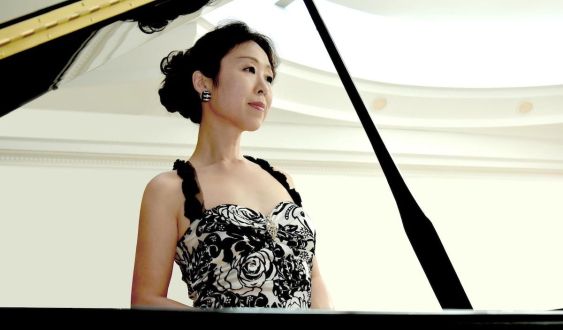
It was 1996 when Yoko Suzuki came to Barcelona for the first time. She arrived to discover the city as a tourist. She remembers very well that, at that time, "the Sagrada Familia only had the Nativity facade and all the rest was under construction." She bought a poster of this work by Gaudí and when she got home, in Japan, she hung it on a wall. That image accompanied her daily life, more than ten thousand kilometers from Barcelona and thirteen hours away by plane, without ever imagining that one day she would be organist of the Sagrada Familia.
Five years later, in 2001, Yoko Suzuki returned to Barcelona to learn Spanish and classical music with Alicia de Larrocha as her teacher. The Catalan pianist and composer, with great international projection, was considered one of the best piano interpreters. Already in the cradle, Larrocha received the best vibrations from a mother and an aunt who had learned to play the piano with maestro Enric Granados. Gold Medal of the City of Barcelona and of the Generalitat de Catalunya, Larrocha was, also for Yoko, a myth.
She discovered her one day in a library at Musashino music university in Tokyo. "I heard a piano recording performed by Alicia de Larrocha, which I fell in love with. From that moment on, I started to learn Spanish music in Japan. Almost no one there knew or performed it, but I located a pianist who knew Spanish music to teach me. And with her, I started to learn to interpret Larrocha."
It was that teacher in Japan who encouraged her to come to Barcelona to learn to play with Alicia de Larrocha. Why not? Sometimes, the most desired goals are not so far away. "For me, that was a dream, but I did it, I came and I managed to be her student," explains Yoko. Once settled in Barcelona, she entered the Academia Marshall, also known as the Granados-Marshall Musical Association. It is the piano school that the famous composer and pianist from Lleida, Enric Granados, founded in Barcelona in 1901, and which Frank Marshall later continued to run.
The beginnings with the piano
Yoko was born in Tokyo. Her mother played the piano from a very young age and her father was a pastor of the United Church of Christ. "Every Sunday there was worship and people sang," she recalls. "My parents told me that I would approach the piano and play with the keys, and at three years old they already got me a piano teacher, although my mother also taught me to play."The family lived in a house next to the church where there was a piano and an organ. "I had always heard the sound of both instruments. We lived in a village and there were few people who could accompany the service with the piano or the organ. And, even though I was still very young, I started doing it, both with the piano and with the organ, and they also got me an organ teacher," she explains.
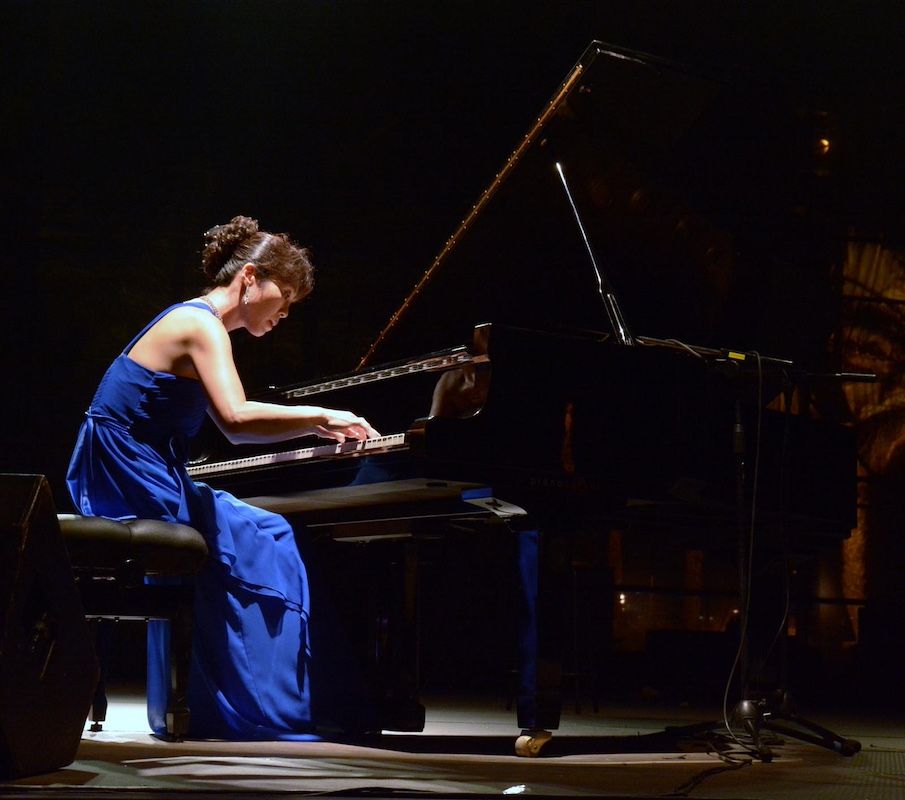
She took piano lessons from the age of three and organ lessons from the age of six, in Tohoku, the town in northeastern Japan where she lived with her family. When she was nine years old, they moved to live near Tokyo, where she continued taking classes with another piano teacher and began studying solfège, harmony, and composition with other teachers. At eighteen, she entered the Musashino music university, in whose library she first heard Alicia de Larrocha. The celebrated Catalan pianist gave master classes at the Marshall academy in Barcelona. "To be able to attend Larrocha's classes, I first had to pass an exam," she recalls. And she passed it. Therefore, that very special day arrived when she received her first class from Alicia de Larrocha, the first of many lessons by her side.
"In classes with her, I not only learned music, we talked about life, about our daily lives. It wasn't all about the piano. We ate and drank together and chatted." And she remembers some of these lessons from the experienced pianist. "She told me that being a concert pianist was wonderful, but very enslaving. You need hours and hours of practice from a very young age." Because ---she adds, recalling the words of her keyboard teacher--- "the piano is an orchestra in a single instrument and, therefore, in a composition, the interpreter has to know how to play all the instruments and your head is the conductor. That is why each finger of your hands takes charge of different sounds. Each note of a work has to be memorized, because we play without sheet music."
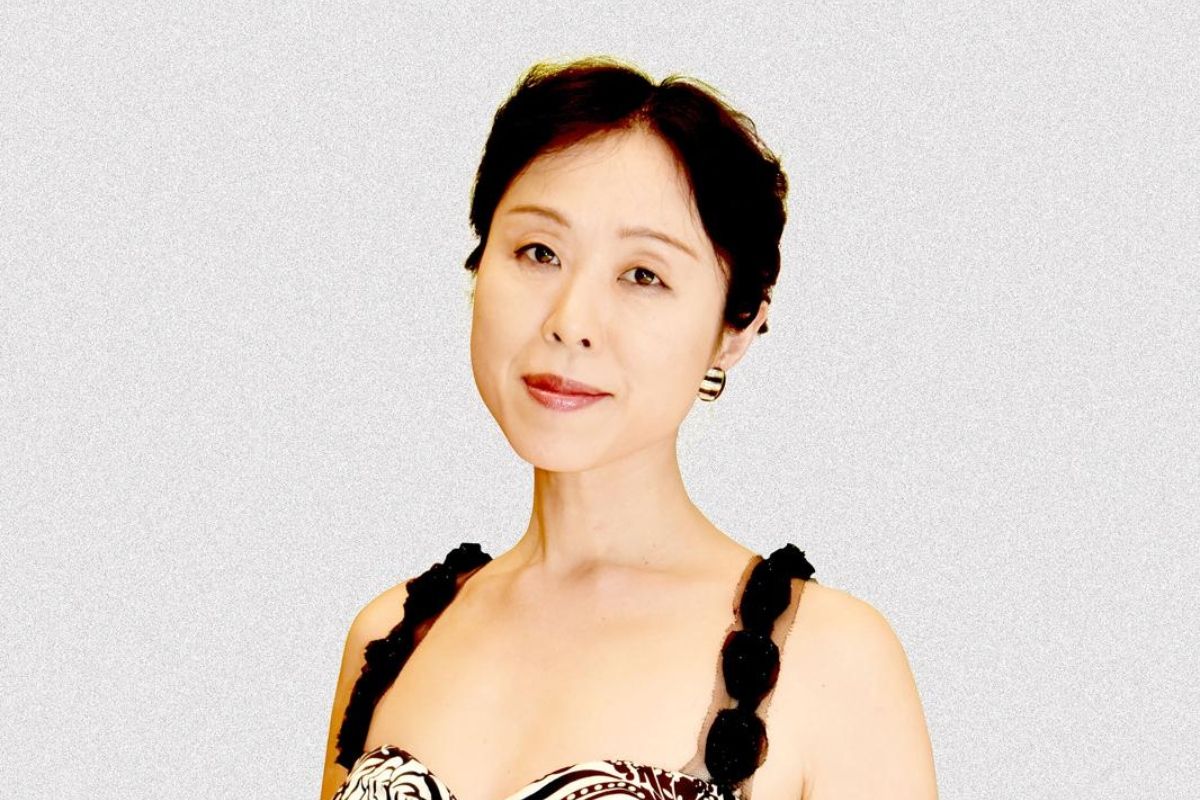
In three years, she completed her master's degree in Spanish music and today performs concerts all over the world. For thirteen years, Yoko Suzuki has accompanied some of the Eucharists held in the crypt of the Sagrada Familia with organ music. "It is an honor and I am very grateful to be able to offer my music in the crypt of the Sagrada Familia where Antonio Gaudí is buried," she expresses. And in this very special space, the Japanese pianist has also offered several concerts, and has played pieces that she herself has composed dedicated to Gaudí.
On the occasion of the ninetieth anniversary of his death, Suzuki dedicated a piece to Antoni Gaudí which she titled Fuente de Luz (Fountain of Light), a tribute to the architect that she composed expressly and premiered on June 10 ---the day of Gaudí's death--- in the crypt of the Sagrada Familia. "I played it again this year for the centenary of his death, and now I have a new work that I will premiere in Reus, his hometown."
She came to Barcelona to learn music, but here she recognizes that she was strongly impacted by Gaudí's works and felt that "I wanted to be in this city where there are many of his constructions." What inspires her most about Gaudí "is that his works are so linked and inspired by nature." Furthermore ---she adds---, "Gaudí was a humble person, and this idea helps me to compose thinking of him."
Composing has helped her understand the composers she interprets. "When I rehearse a work, I try to put myself in the place of the person who composed it. I want to guess what made them compose that melody, what were the thoughts of the person who did it and what they wanted to convey. On the day of the concert, I try to convey this message with my music. There are many works about which we have no information, so I imagine and invent a story, a message that I transmit to the spectator." Sometimes, however, she also admits that, while playing, "I think about other things and I am forced to concentrate."
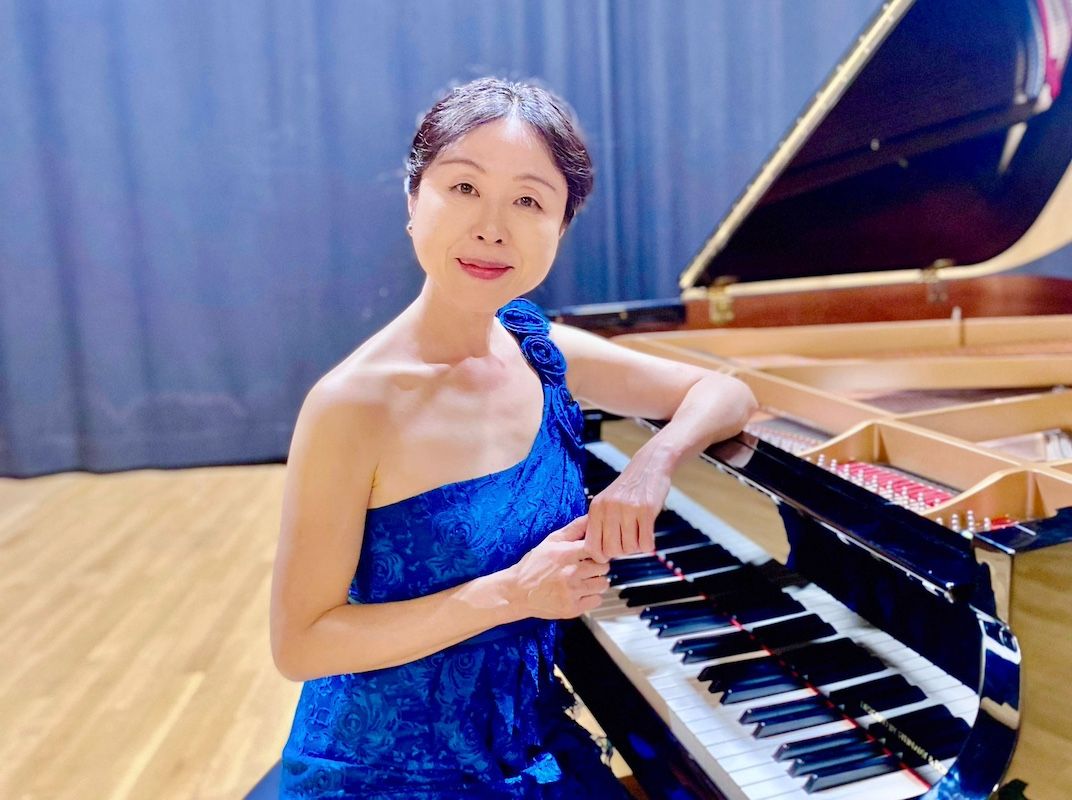
Those first months in Barcelona are long gone. "I was very excited to be here, but at the same time I was worried about starting to live in a new place so far from Japan. I didn't speak Spanish or Catalan and, without smartphones, I had to carry my dictionary and map with me always. But people were always very kind to me." Among those people were the three teachers, Alicia de Larrocha, Carmen Bravo (widow of Frederic Mompou) and Carlota Garriga, who ---she explains--- "taught me their music with great patience, and I will always be very grateful to them."
She had played every Sunday in the crypt, but now she shares Sunday masses with another organist. And sometimes she also plays at masses celebrated during the week. This Friday, April 10, she will perform the tribute concert to Gaudí at the Círcol de Reus, where she will premiere the composition Pedra Eterna composed for the architect. Amics de Gaudí de Reus await this performance with great enthusiasm. The pianist also has concerts scheduled for April 28 in Calella, May 14 in Barcelona, and May 15 in Sant Salvador, Tarragona, in addition to performances in other countries.
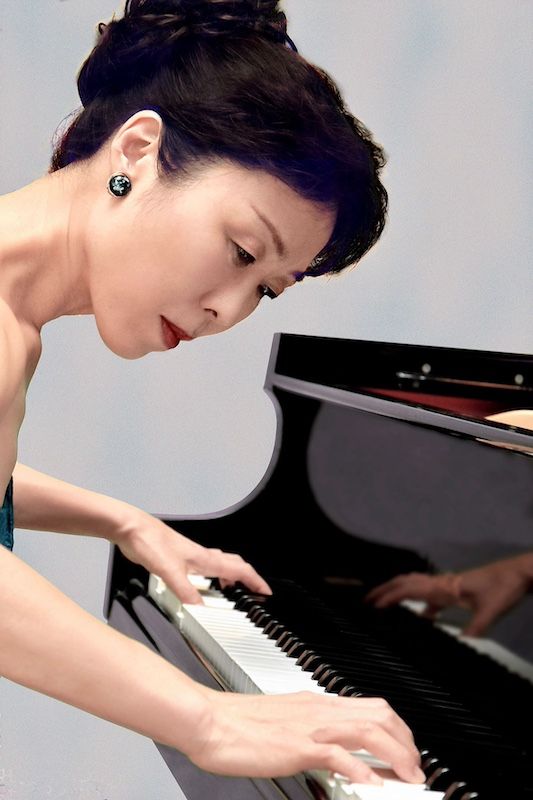
Yoko Suzuki eagerly awaits the big celebration of the anniversary of Gaudí's death, with the presence of Pope Leo XIV. "In 2010, when Pope Benedict XVI came, I already attended the celebration in the Basilica. His blessing was impressive. All of this is very emotional and will be moving."
Since 2010, the pianist has lived very close to the temple. For eight years she lived almost directly in front, and enjoyed contemplating how it changed from home. "Then they were building the Passion facade and the Mary tower. I really liked seeing how it grew." And, she adds, "I also really liked seeing the green gardens and how the colors of the vegetation changed with each season. Now that the Jesus tower is finished, the Sagrada Familia is impressive," she concludes.
Add The New Barcelona Post as your preferred Google source for free
Stay informed with the latest news.
