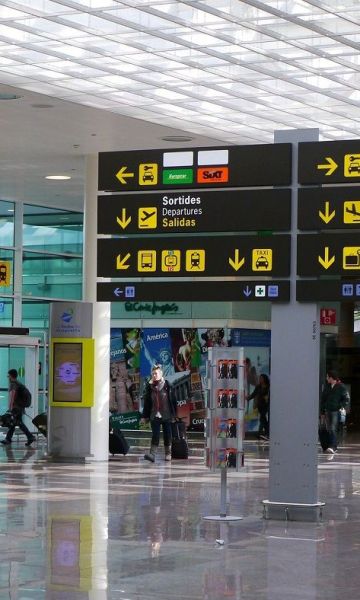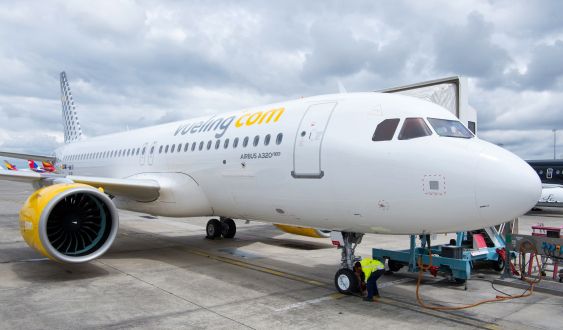
Even though it may seem that flying to Madrid from Barcelona is not an attractive option in mid-summer, all Iberia and Air Europa flights on this route are full these days. In fact, the load factors of both airlines are so high that Vueling has chosen to cover the connection between the two cities again, a route it had abandoned years ago and to which it returns for the second time so far in 2026.
The IAG group airline based in Viladecans will resume the connection on October 5, with tickets already on sale until March 29, 2027. For much of October, it will offer ten weekly frequencies with two daily flights from Monday to Thursday, one on Fridays and another on Sundays, and from October 31, it will expand to eleven weekly frequencies, incorporating Saturdays and maintaining the double daily flight during the week designed to allow for round trips on the same day.
This is not the first time Vueling has resorted to this move this year. It already operated the route temporarily between February 9 and 22, in the midst of the high-speed rail crisis, with a similar offer that was then extended: first until the end of March, coinciding with the Goya Awards, the Mobile World Congress and the Alimentaria fair, before disappearing again from its regular schedule. The difference this time is the intention of permanence: almost six months of continuous operation, not two weeks of trial that were extended on the fly.

The train, without its historical advantage
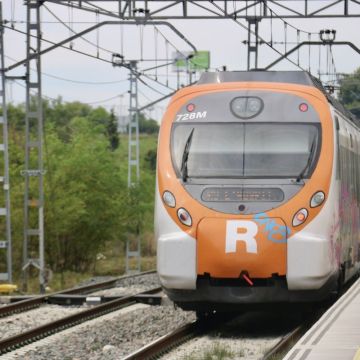
To understand why Vueling is once again betting on Spain's most profitable corridor, it is worth looking at what has happened on the tracks. The railway accident in Adamuz (Córdoba) last January triggered a crisis that has left its mark on the entire high-speed network and also on the Madrid-Barcelona axis: Renfe, Iryo and Ouigo agreed with Adif to maintain, at least until December 13, 2026, a speed reduction that adds about 25 minutes on average to the journey.
According to what transpired in the spring, the railway sector already takes for granted that these limitations could be extended even beyond this year due to modernization works on the line: more than thirty speed restrictions are counted, spread over more than 200 kilometers of track in each direction.
The loss of time is not a minor detail on a route where a large part of the traffic is business-related and where the historical advantage of the train was always to arrive at the center of both cities in just over two and a half hours. This margin has been reduced just as prices have gone the opposite way. According to the latest data from the CNMC, in the last quarter of 2025, the average fares on the Madrid-Barcelona corridor rose by 36% on average (with peaks of up to 52%, according to other estimates). Iryo tickets became 69% more expensive and Ouigo tickets, 41%.
The result is that the number of high-speed train passengers in this quarter fell by 13% year-on-year, to 3.3 million, while the offer of seats barely decreased by 4.4%. An imbalance between supply and demand that, according to sector analysts, marks a change of cycle after years of growth brought by the liberalization of Adif's tracks, now shared by Renfe, Iryo, and Ouigo.
The plane gains ground for the first time in years
This imbalance is what has pushed airlines to make a move. In February, with the railway crisis at its most acute, round-trip plane tickets on the same day became between 30% and 40% more expensive, with fares on certain dates exceeding 400 euros, placing the Barcelona-Madrid air shuttle at the level of other expensive business corridors in Europe, such as Paris-Frankfurt.
Iberia, which dominates air traffic between both cities, even limited the price of its basic fare to 99 euros to contain the pressure on business travelers who needed to travel and return the same day. Today, during the week, the air map of the corridor is divided between two companies. Iberia maintains its historic Air Shuttle, a service it launched in 1974, with up to 14 or 15 daily frequencies per direction on weekdays and up to 9 on weekends, which is equivalent to about 86 weekly frequencies per direction: the level the airline already had before the pandemic.

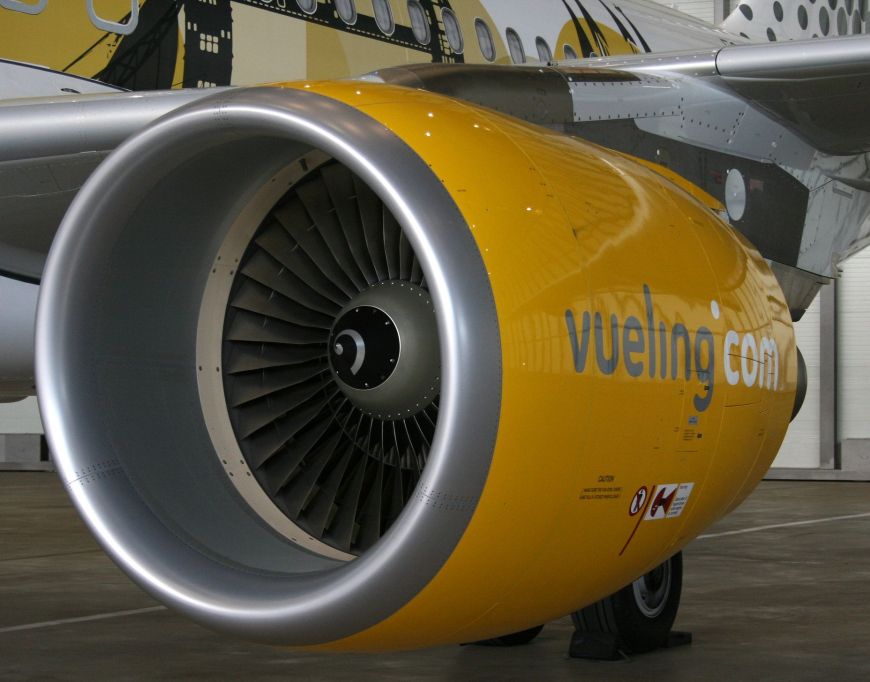
Air Europa operates an average of around three daily flights in each direction, albeit with larger capacity aircraft, and dedicates a good part of its Barcelona-Madrid connections to feeding its long-haul hub in Barajas towards America, although it also attracts a notable volume of point-to-point passengers. Now Vueling joins again, with its eleven weekly frequencies since the end of October, bringing the low-cost variable that had been absent from the corridor for a long time.
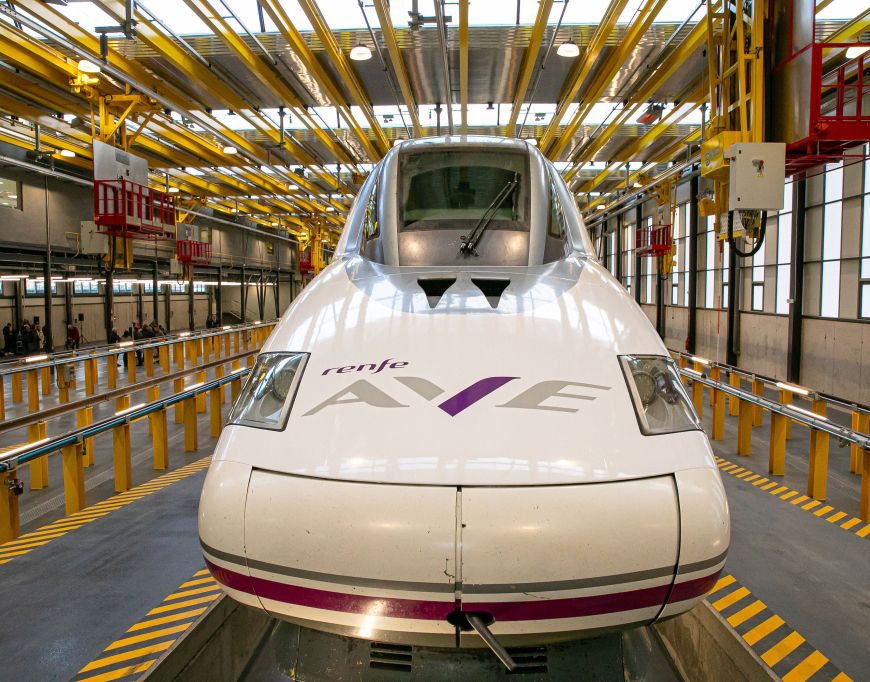
In parallel, the landscape on the tracks has also become more competitive than ever: between Renfe (with its AVE brand), Iryo and Ouigo, around 36-40 daily combined services are counted between Madrid and Barcelona, about 30 more than in 2019, thanks to the liberalization of the corridor. Renfe retains the majority of the share, followed by Iryo and Ouigo, the latter with five direct daily trains in each direction. It is, on paper, more offer than ever.
The problem is that a good part of this offer has ceased to be so attractive for the traveler who needs to go and return on the same day: neither the price nor the journey time now play in favor of the train with the forcefulness of the last fifteen years, when going from Sants to Atocha, or vice versa, was the undisputed option for most travelers.
A corridor that looks to the sky again
This is the paradox that explains Vueling's move: the opening of the railway corridor to competition is resulting, almost involuntarily, in a breath of fresh air for the airline sector. With the three train operators simultaneously raising prices after Adamuz's credibility blow, and with Adif's works limiting speed well into winter, the plane recovers an argument that seemed buried since the arrival of the AVE in 2008: hourly reliability for those who need to be at a meeting in Madrid at ten in the morning and back in Barcelona for dinner at home.
None of this guarantees that the situation will remain: Adif has already announced actions to modernize the line soon, and the railway operators themselves insist that the restrictions are temporary, linked to the works. But as long as Spain's star high-speed corridor continues to be penalized, Vueling's return, with almost six months of programming ahead, suggests that airlines believe the window of opportunity will last longer than Renfe, Iryo and Ouigo would like to admit
Add The New Barcelona Post as your preferred Google source for free
Stay informed with the latest news.