
It has not been easy, but the tram connection along Diagonal is starting to become a reality. After decades of discussions and disagreements, this Sunday users were able to board the first convoys that circulated between Plaça de les Glòries and Passeig de Sant Joan, the first phase of the connection of Trambesòs and Trambaix. This materializes the development of a key infrastructure for Barcelona's mobility, both within the city and beyond its borders, which will allow the connection of nine metropolitan cities once completed, from Sant Feliu de Llobregat to Sant Adrià de Besòs.
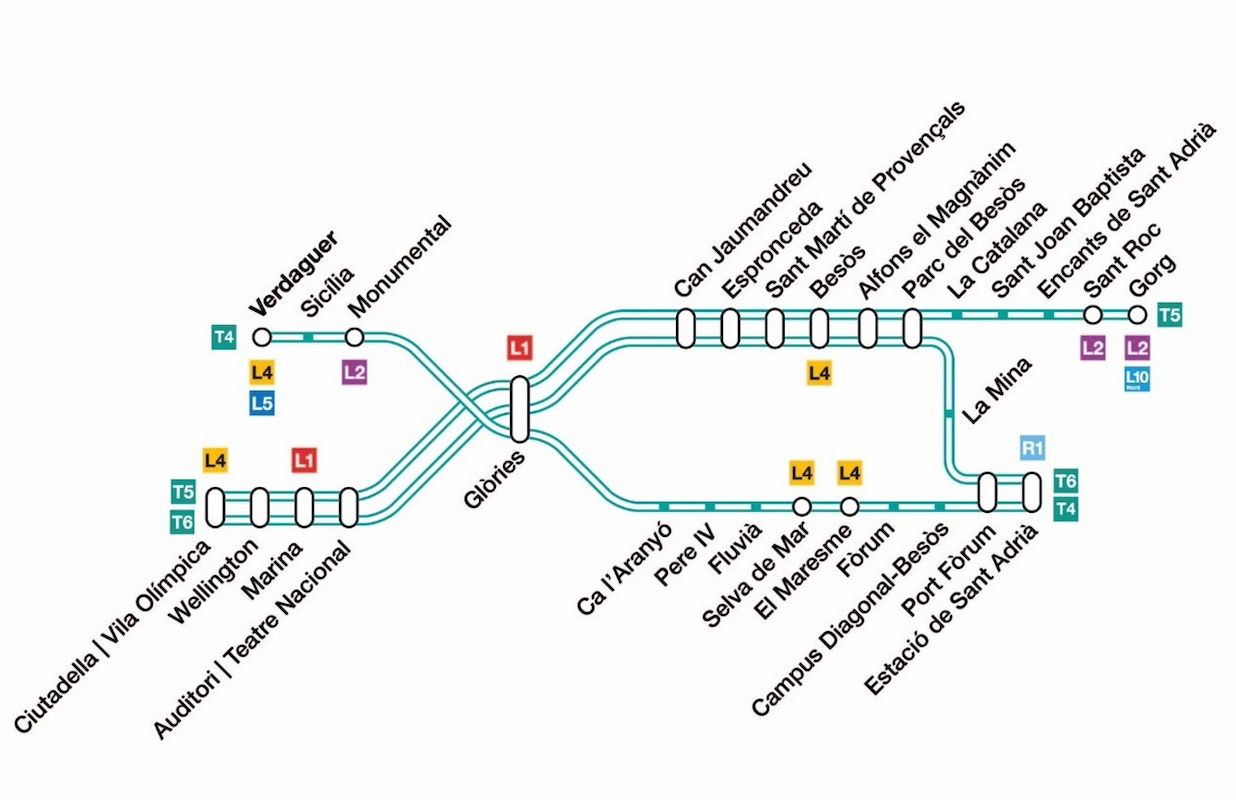
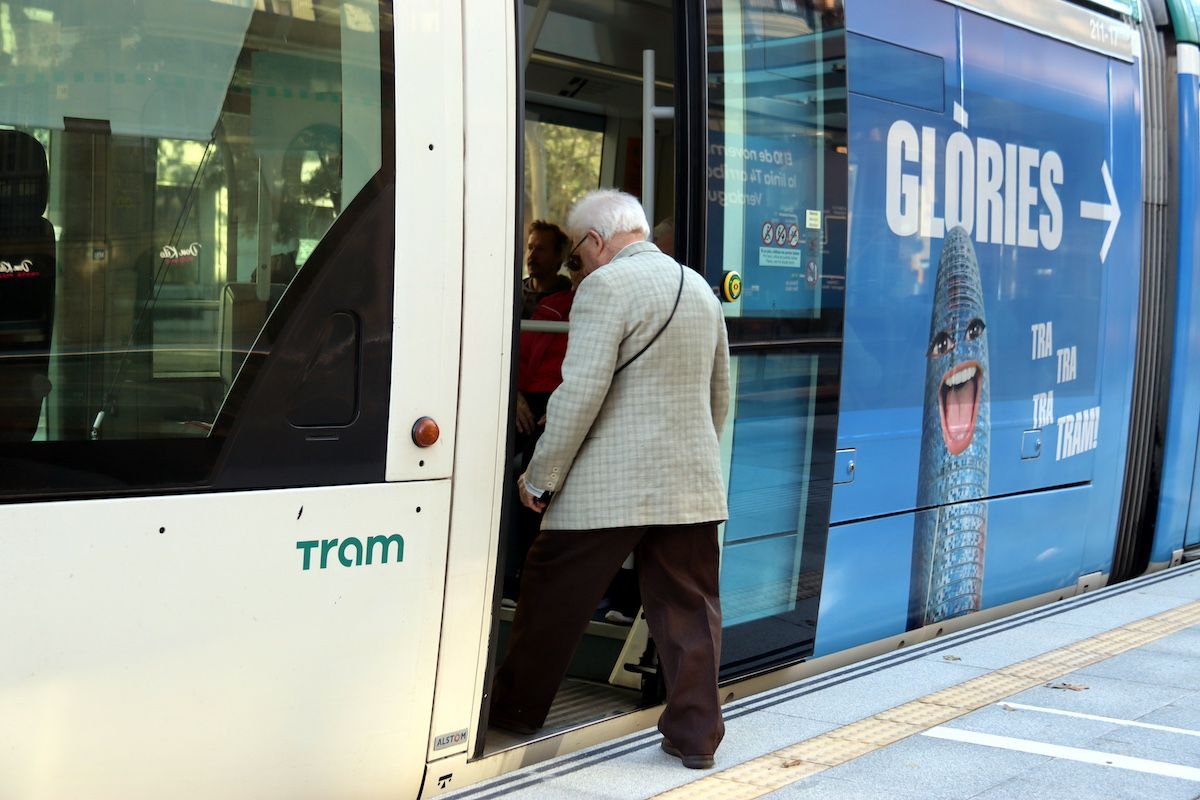
After more than two years of works and several months of testing, the tram started its service on the new section at five in the morning, one day later than planned due to the strike called by the company's workers. With intermediate stops at Monumental and Sicília, the journey to Verdaguer takes seven minutes, to the surprise of some of the users who boarded this Sunday. Being able to reach the Glòries shopping center more easily was one of the advantages that the first travelers were quick to point out. It was noteworthy to realize that the convoys circulate without a catenary, powered by an underground rail in the ground, a pioneering system throughout Spain.
With this journey alone, of about two kilometers, it is estimated that 24,000 users will be transported every day and 2,000 cars will stop circulating along Diagonal. Transfers can be made with metro lines L1, L2, L4, and L5, as well as with 14 bus lines that circulate along the avenue, both urban and interurban. To meet the new demand, Tram has acquired three new convoys, currently under manufacturing, which will mean reaching a fleet of 21 trams by the first quarter of 2025.
All this, with a new urbanization for this area of Diagonal, which has widened its sidewalks and gained more than 17,000 square meters of promenade, very visible in sections such as those between Passeig de Sant Joan and Sicília street, and those of Sardenya and Marina. With cars circulating on the sides, in two lanes per direction, the bike lane has been reinforced, making it pass through the middle of the road and adding 5,000 square meters. More greenery has also been incorporated and almost 300 new trees have been planted, preserving centenary plane trees.
Not only have stops been added, but the operation of the Besòs side network has also changed. The T4 will be the one that will cover the new route, with the aim of someday reaching Francesc Macià square. Coming from Sant Adrià station, it runs along the lower section of Diagonal, between the Fòrum and Glòries square, now extending to Verdaguer and no longer going to Ciutadella park and Vila Olímpica. On the other hand, lines T5 and T6 will be the ones that will cover the route that goes towards the beach. Coming from Badalona and Sant Adrià de Besòs, they circulate along Gran Via to Glòries square. With this change, students from Pompeu Fabra University (UPF), regular users of the tram to go from the Ciutadella campus to the Poblenou campus, will have to walk a little further.
The connection with Francesc Macià: an investment of 284 million
Once this first chapter of the works has been completed, which has involved an investment of 115 million euros, the final phase of the project remains to be tackled, the route that goes from Paseo de Sant Joan to Francesc Macià. After a first hint, which put the pending budget at more than 200 million euros, the investment has been adjusted and specified at 284 million euros. A figure that is pending approval of the city council's accounts, but also those of the Generalitat, taking into account that the tram infrastructure is managed by the Metropolitan Transport Authority (ATM), with the Catalan administration being the one with the most weight (51%). Once the calendar is decided, it is estimated that the work to provide tracks and urbanize the route will last more than three years.
The pending section to Francesc Macià will be like the one between Glòries and Paseo de Sant Joan: the tram will circulate in the center of Diagonal and cars on the sidesAccording to Barcelona City Council's plans, the pending section will follow the same format as the one implemented between Glòries and Paseo de Sant Joan, with the tram running through the center of Diagonal, where the bike lanes will also be located. On the sides, private vehicles will remain. The estimated budget will be 53 million euros for the reurbanization of the avenue, to which 61 million euros allocated to the collector that will be installed on Diagonal will have to be added, placing the global contribution of the consistory at 114 million euros. For its part, the ATM estimates that the project will cost 170 million euros, divided between 90 million euros for the installation of the infrastructure ---fully contributed by the Generalitat--- and 80 million euros for the new convoys ---at the expense of the ATM---.
Once the union of Trambesòs and Trambaix is completed, it is estimated that the daily users of the network will double, reaching 220,000 passengers and taking 12,000 cars off the street every day. Thus, each year, the number of users moved will go from 31 million to 62 million. Between Paseo de Sant Joan and Francesc Macià, the stops of Diagonal/Cinc d'Oros, Balmes, and Casanova will be added.
Add The New Barcelona Post as your preferred Google source for free
Stay informed with the latest news.
