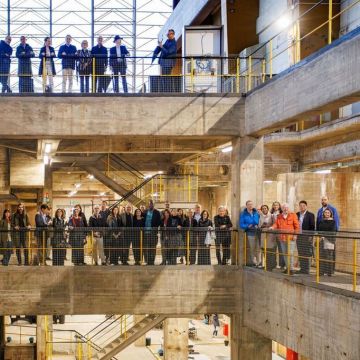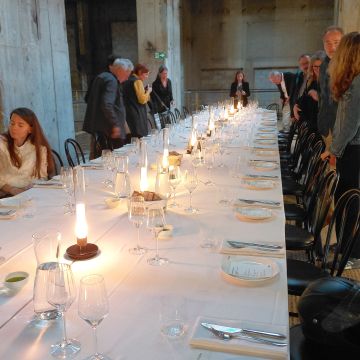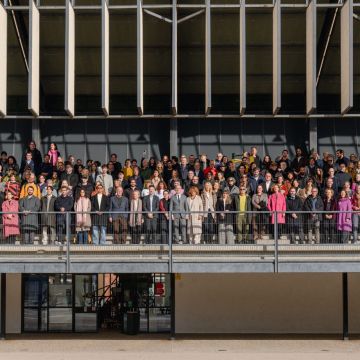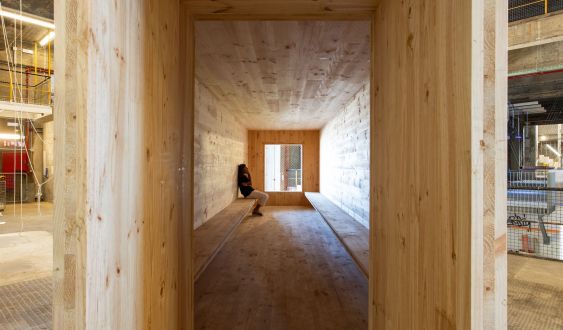
A structure of light and plants to immerse oneself in the debate about the Ebro Delta through its sediments; a city that decides to live at night to escape the heat; the determination that older people can dance techno as a symbol of accessibility; references to the military presence in Gaza. All of it, through architecture. And all of it, within the large labyrinthine complex of the Tres Xemeneies de Sant Adrià, like a constellation of ideas orbiting around the same premise: architecture is not just about walls and plans, but is part of the answer to the great challenges of the present.
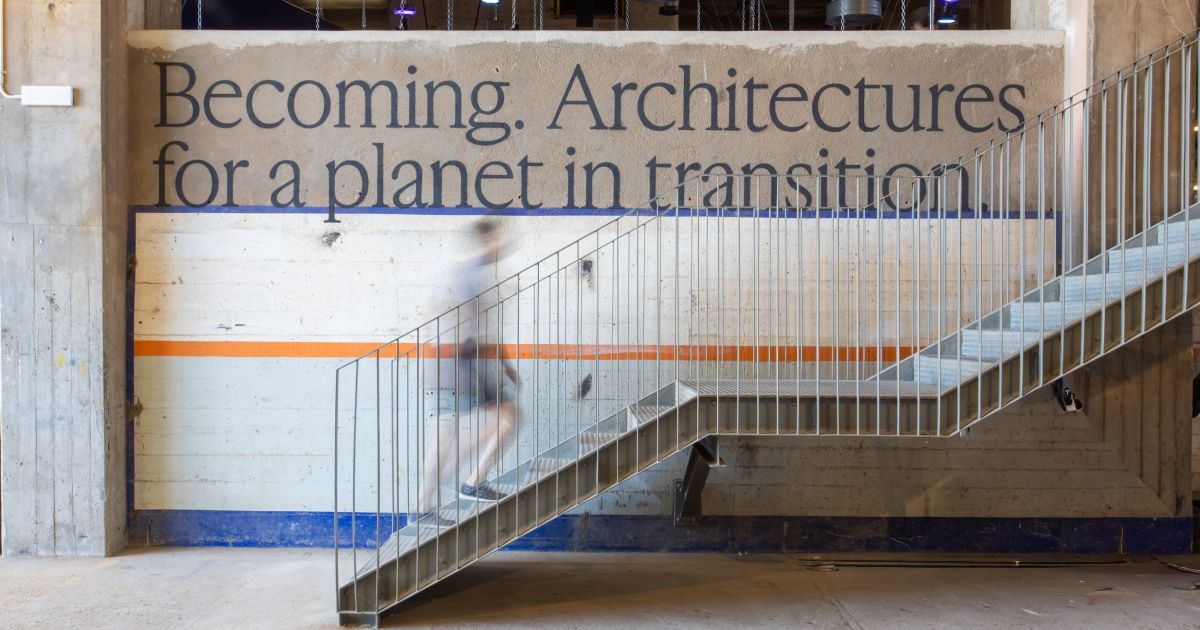
It is reflected in the very motto of the World Congress of Architecture, which has extended to the old turbine hall and the exterior of the chimneys: Becoming. Architectures for a Planet in Transition. As happens in the labyrinth of the venue, the path to address these challenges is not unique, but the gaze is directed towards the same objective, that of contributing to responding to current challenges. The congress has broken them down into six axes, ranging from the interrelation of architecture with nature, the interdependencies between territories, environmental awareness, materials, circularity, and new ways of projecting cities.
From each of these axes, two proposals have emerged that now invite reflection from the Tres Xemeneies. The fact of converting the old thermal power plant into an exhibition space —as was already tried with Documenta—, is in itself a declaration of intent and proof of how architecture proposes to move towards more human spaces: "Being here is like a manifesto, to show that we are here to make architecture more human," highlights the dean of the College of Architects of Catalonia (COAC), Sandra Bestraten. Thus, the entire challenge facing the congress and the human perspective with which it assumes it is summarized, as a symbol, in the industrial complex. It does so with 12 proposals that will serve as a common thread to energize the debate during the congress of the International Union of Architects (UIA). Although the exhibition is a central piece of the congress, it will extend beyond: once the international event ends, the exhibition will remain open to the public throughout the month of July.
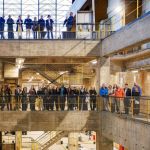
With the 12 proposals, the exhibition will invite visitors—whether congress members or neighbors—to ask themselves questions, as a condensed summary of questions that mark the present and future of society, and of architecture. The building, with its different levels, stairs, and intertwining and interrupting corridors, invites one to jump from one idea to another, to generate a debate that during the congress will be enriched with Open forum sessions, designed as a space for collective debate.
In this space, architecture in a broad sense has naturally been key, as it has been designed taking into account the environment and climatic conditions—near the sea and with the heat of a suffocating late June. The stands, with capacity for 1,500 people, have been strategically placed to be in the shade of the three imposing chimneys when the debates begin. They will be in the afternoon, after the more congress-focused day at the CCIB, a few minutes away by tram. A little further on, the Disseny Hub turns Glòries into the third venue of the congress, where projects conceived by the 54 member countries of the UIA will be exhibited, open to the public.
And the congress, unlike the first edition hosted by Barcelona 30 years ago, has been conceived as an event open to the public. In the midst of the World Capital of Architecture and the Gaudí Year, the city has become the first to repeat as host of the congress, which aims to bring together not only professionals from the sector: "We want the debates to reach the citizens," according to Bestraten.
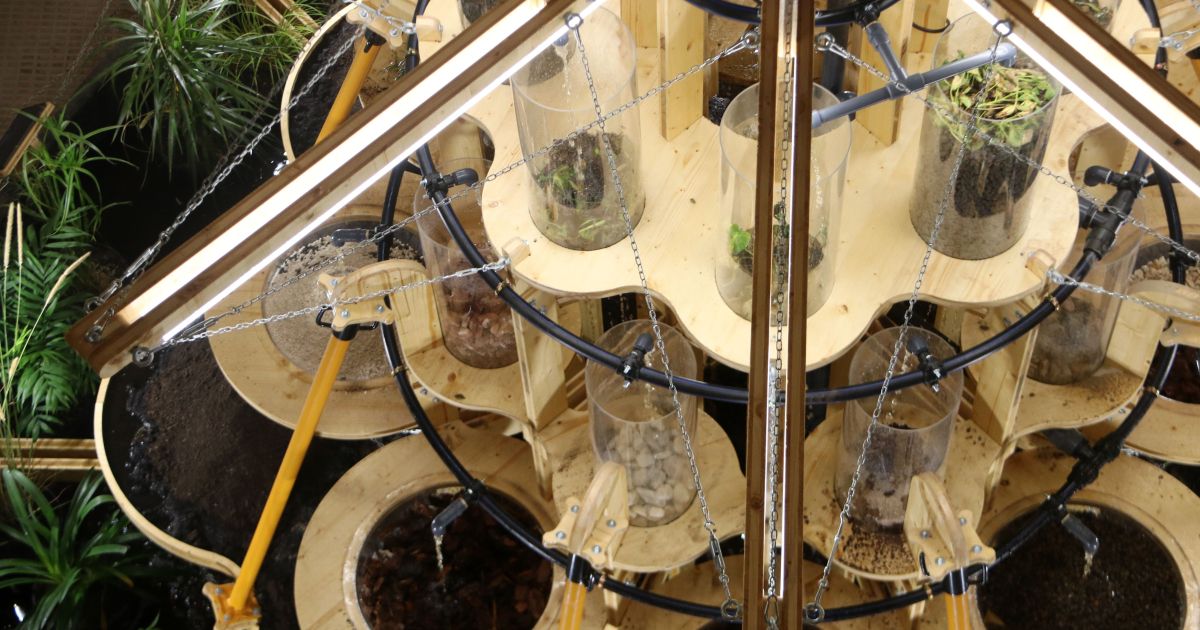
The exhibition at the Tres Xemeneies will allow this debate to go beyond the congress. The event, chaired by Marta Vall-llossera and curated by architects Pau Bajet, Mariona Benedito, Maria Giramé, Tomeu Ramis, Pau Sarquella, and Carmen Torres, has been built through research developed over a year by international teams, who have met in various workshops on the second floor of the industrial complex, converted into an architecture laboratory.
From this laboratory have emerged the interventions now on display in the complex, which draw a heterogeneous map of concerns that aim to encompass current challenges. From the protection of coasts against rising sea levels to research on water scarcity, and including aging, they do so by posing questions such as what a city like Tokyo needs to do to adapt to rising temperatures, looking at how other cities more accustomed to heat, such as Cairo and Rio de Janeiro, have become more nocturnal to avoid high temperatures.
And the research starts from questions as peculiar as considering how older people can dance techno. Not as a game or an anecdote, but by studying how those who danced techno in their youth now move and tire differently, but may want to continue dancing without finding the space to do so. With rest areas and different temperatures, the proposal puts architecture at the service of accessibility in a broad sense, and opens up new questions: if even techno can be accessible, what cannot be?
Thus, the Tres Xemeneies become a generator of questions, as a symbol and a metaphor for the moment architecture is experiencing. From an industrial site that adopts new, more social uses, the exhibition places architecture among the agents that can provide answers to these big questions, now from the Barcelona coastline.
Add The New Barcelona Post as your preferred Google source for free
Stay informed with the latest news.