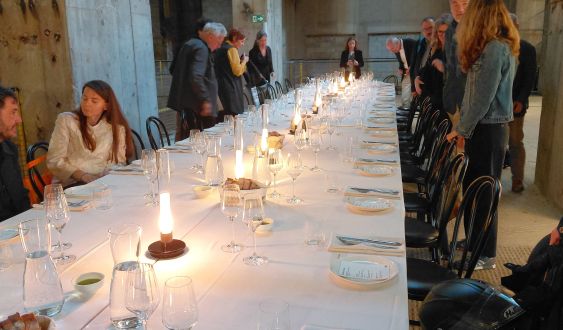
Throughout my more than 40-year career in journalism, I have had the opportunity to eat and dine in very curious places in Barcelona, but I would never have imagined doing so where I did last Tuesday, at least in its current state. And it is that I had the occasion to share tablecloths and dishes at a dinner convened inside the old thermal power plant of the Tres Xemeneies, in Sant Adrià, the place chosen to become the ground zero of audiovisual in Catalonia and a future highly strategic point of the metropolitan region.
The privileged attendees came to this old infrastructure convened by Turisme de Barcelona, which has organized these days a press trip with international journalists to learn about some of the urban planning projects that are being cooked up in Barcelona and its metropolitan area, within the framework of the Capital of Architecture. Thus, the guests have been able to learn in detail the House of Architecture, inside the Eixample block where the Gustavo Gili publishing house was located. It was the first contact with a Barcelona represented by the new, magnificent and spectacular model of the city.
It has also been possible to visit the Disseny Hub in Plaça de les Glòries, as well as the new park that the inhospitable scaléxtric that for years was the center that Ildefons Cerdà conceived for his new Barcelona of the Eixample has become. Likewise, international journalists were able to make another exceptional visit to the old hospital for clerics of Sant Saver, in the Gothic Quarter, which houses the important Casacuberta-Marsans art collection, an unparalleled space with restricted access that combines art with an extraordinary architectural rehabilitation by the architectural firm formed by Jordi Garcés, Daria de Seta and Anna Bonet.
In the three days that the press trip has lasted, from last Tuesday to today, there has also been time to visit the Palau Victòria Eugènia de Montjuïc, where the MNAC will be expanded, the Fira de Barcelona and its expansion plans and another dinner in another exceptional place, the Mies van der Rohe pavilion, which was one of the architectural jewels of the 1929 International Exhibition, demolished after the event and rebuilt in the 1980s. The program ends today with a visit to the new Teatre Principal, the Rambla reform project, which is beginning to be a reality with the progress of the works, the Palau Güell and Nou Barris.
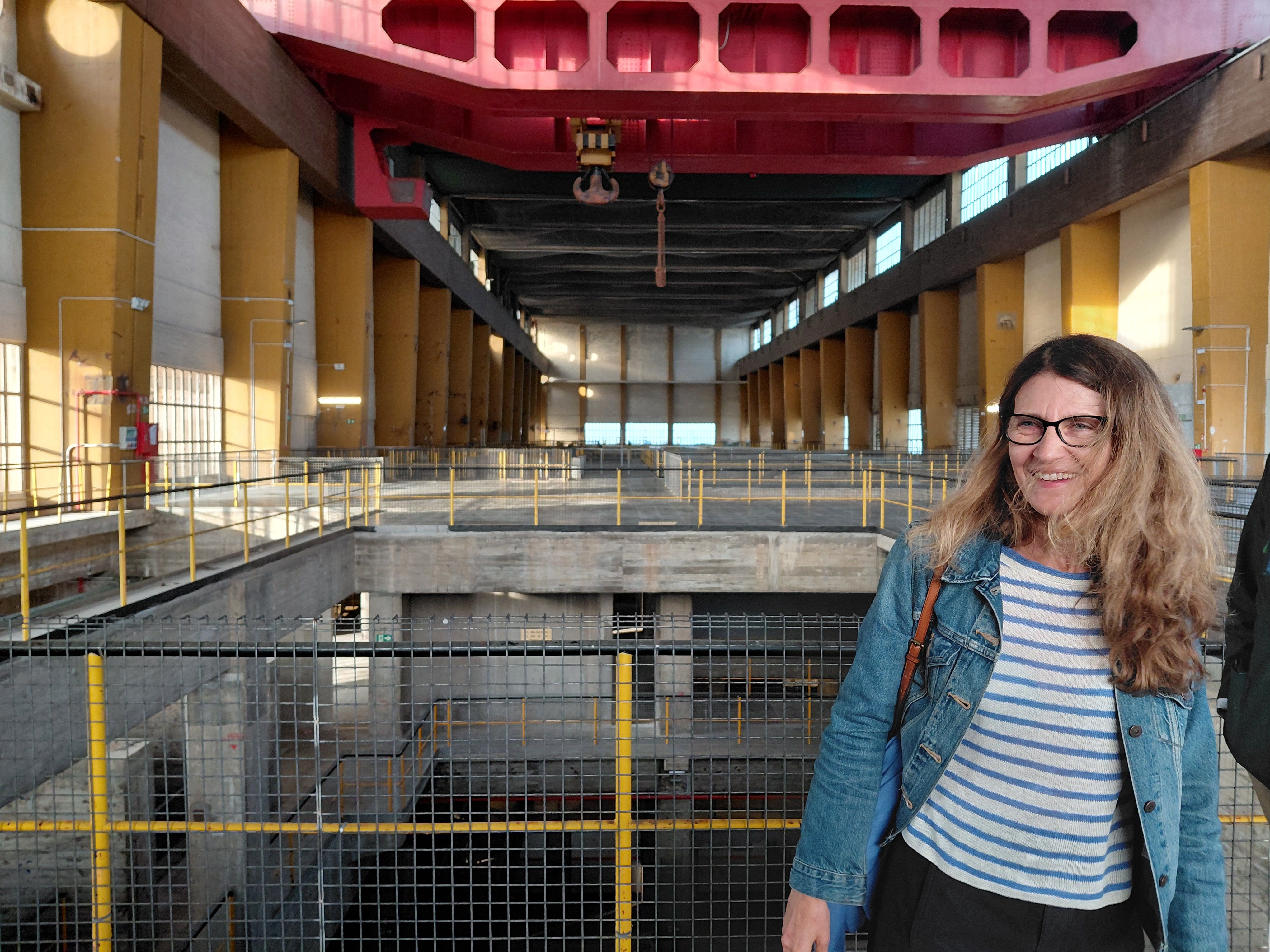
But without a doubt, the highlight was the dinner at les Tres Xemeneies, where the architects of Sant Saver once again took center stage, as they are also the authors of the project for the recovery of the old power plant. The building in Sant Adrià will go from being one of the black spots on the coastline to a new area of metropolitan centrality. There, the Catalunya Media City will be erected, a large hub for the audiovisual industry that will combine public and private investment and aims to be the great engine of an industry that moves 8.6 billion euros a year.
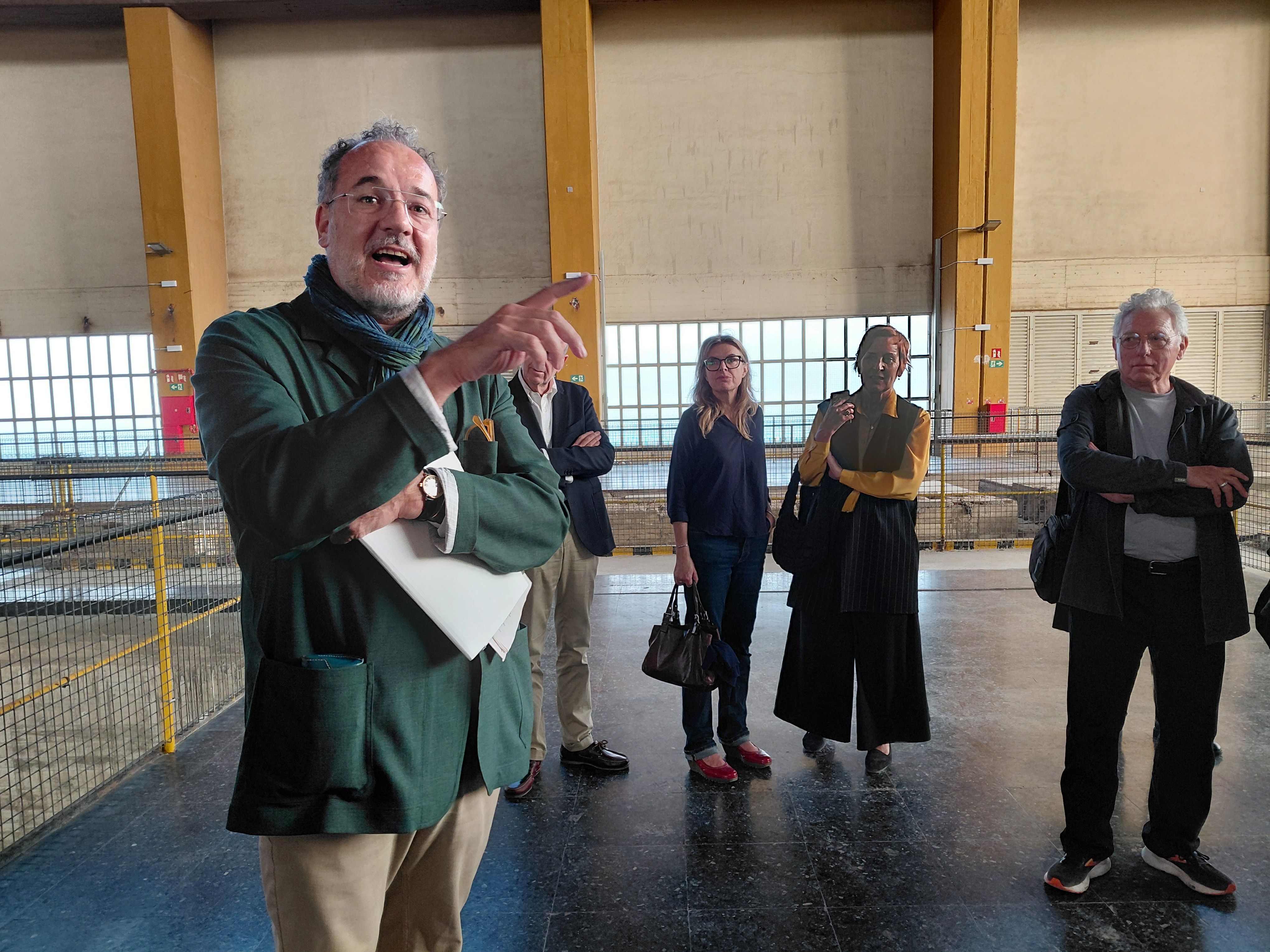
Architects Garcés and De Seta and the director of Turisme de Barcelona, Mateu Hernández, guided a visit through the building, where its impressive architectural power could be seen, especially what was its turbine hall, an enormous space that is being conceived as a large laboratory for audiovisual and the impact of new technologies around artificial intelligence, which are already revolutionizing the world of production. Everyone immediately thinks of the comparison with a similar infrastructure in London that architects Herzog and DeMeuron converted into the current Tate Modern, on the bank of the Thames opposite St. Paul's Cathedral. Both icons of the British capital are separated only by Norman Foster's Millennium Bridge.
It was the floor below the turbines that became an improvised restaurant on Tuesday. A long banquet table brought together journalists, architects, representatives of public administrations, and the business world. Together they shared the dishes that were being served while debating about the city and its future. The impact of tourism, the Sagrada Família, and investments like the one that will come to light in that very place centered the debate.
The thermal power plant reconversion project goes far beyond the audiovisual industry. It will transform the small municipality of Sant Adrià de Besòs, which will cease to be the poor cousin of the metropolitan area into a municipality with a new emerging economy. Next to the power plant, the new Inditex headquarters will also be erected, and an urban plan will be developed that will include housing, industry related to audiovisuals that aims to attract large international private firms, and a large park between the thermal power plant and the sea.
As a whole, it will generate a new vertex on the seafront that will give continuity to the recovery of a coastline, which for decades was lived with its back to the sea, initiated with the Olympic Games, which continued with the Fòrum 2004 and which will now continue in Sant Adrià, which will also become the center of the connection axis between Barcelona and Maresme. Hence, the highly strategic role that the future reserves for it and which will begin to be glimpsed after the summer with the start of the works.
Add The New Barcelona Post as your preferred Google source for free
Stay informed with the latest news.