Barcelona is an innovative city thanks to its business ecosystem, especially those emerging companies that, with modest means, launch fresh and novel projects aimed at reshaping everyday life. It is clear, however, that they cannot do it alone. This is where funding – both public and private – plays the most crucial role. Capital is what turns a good idea into the newest product on supermarket shelves, the next intelligent software, or a new way of working. For years, Catalonia and the Spanish state have sought to keep pace with investment in emerging companies and scale-ups – start-ups that have moved past the initial trial phase to achieve rapid, constant, and sustained growth over time – yet they cannot always compete with foreign markets. From a European perspective, both public and private investment remain slower, more risk-averse, and heavily focused on the short term, stalling the growth of businesses forced to choose between sovereignty and accepting foreign backers. It is these very companies that are now turning to investors to demand change: three key priorities to compete without being forced abroad – a single market, patience, and talent retention.
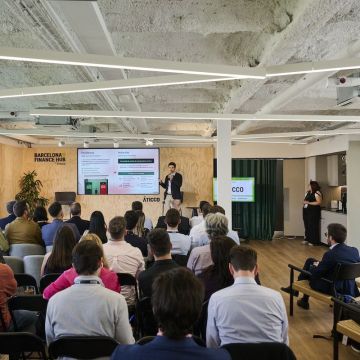
Last Thursday, the Cercle d'Economia convened a symposium around a single question: who funds innovation? During the opening sessions, representatives from the public and private sectors took the stage separately to acknowledge that while they intervened as much as possible, much remained to be done. Two hours later, the founders themselves stepped up: Factorial, Qilimanjaro, and Lumiris Spectral Solutions. Three companies with ambitious, scaled, or scalable undertakings, calling for improvements to the financing landscape to ease their path. The first issue is the fragmentation of the European market. Playing on the European investment board is a formidable challenge. Scalable, international companies inevitably look beyond their country of origin for backing. It comes as no surprise, then, that Catalan start-ups venture into Europe to test the waters. Yet unlike in the United States, each European Union member state has distinct regulations, legal standards, and assessments, making funding exceptionally difficult to secure across a divided market.
"This fragmentation works against companies in their early years," explains Marcel Queralt, Chief Partnerships Officer at Factorial, the Catalan scale-up behind human resources software. Queralt notes that larger, shared projects can scale an enterprise "more rapidly and solidly." He maintains that these investments are the most compelling and that without them, "many of us turn to foreign capital," pointing out that the United States and the United Kingdom dominate their funding rounds.
The United States is Europe's biggest competitor
The United States is Europe's biggest competitor. American investors do not simply fund initiatives within their borders; they cross oceans to take stakes in local ventures. Moreover, when a start-up sets out to raise funds, navigating a unified market proves far easier. "In Europe, we face varying regulations, diverse assessments, and standards that shift from country to country," says Queralt, who underlines that "we are competing against single markets." The reality is that rules and regulations are consistently cited as obstacles for emerging companies, particularly when pursuing European-wide growth in the absence of a unified framework. Consequently, businesses often seek capital outside their native borders or beyond Europe entirely: "We want to grow the company autonomously, but at the end of the day, our priority is to grow," explains Marta P. Estarellas, CEO of Qilimanjaro Quantum Tech, the Catalan quantum computing firm awarded Best Start-up in the World 2024 at the Mobile World Congress (MWC).
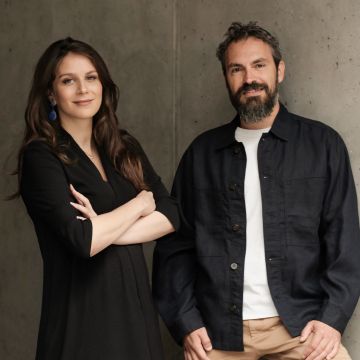
Another cornerstone of competitiveness is long-term financing: patient capital. "Our timelines are far longer; therefore, we require backing that can wait for us – financing tied to milestones rather than rigid deadlines," clarifies Anna Seriola, co-founder and CEO of Lumiris Spectral Solutions. Hers is the smallest of the three firms and the one in its earliest stages. They have developed a medical device to assist fertility and IVF specialists in selecting the optimal embryo for implantation, aiming to achieve faster pregnancies and cut down on failed treatments. It is a sophisticated technology offering considerable growth potential, but it requires investors capable of looking past immediate returns, given that "more capital is needed ahead of the product," Seriola concludes.
Brain drain
Where all three companies unequivocally agree is on the necessity of retaining talent. One may secure ample financing, but without workers, experts, and professionals driving a venture forward, it inevitably stalls. Estarellas asserts that brain drain remains an acute challenge within the Catalan and Spanish business ecosystems. Having lived abroad herself, she recalls encountering numerous Barcelona-born executives leading foreign firms. "Capital must also serve to retain our homegrown talent," she stresses. Seriola echoes this sentiment, noting that her company seeks highly specialised profiles and must compete in a fierce global market to attract them: "Talent stays because we offer meaningful projects," Lumiris Spectral Solutions’ CEO remarks, alluding to the reality that salaries are not always competitive. For his part, Queralt reiterates that talent "is indispensable" to running an enterprise, while conceding that without a single market and streamlined regulation, "it is hard not to pack one's bags."
Add The New Barcelona Post as your preferred Google source for free
Stay informed with the latest news.