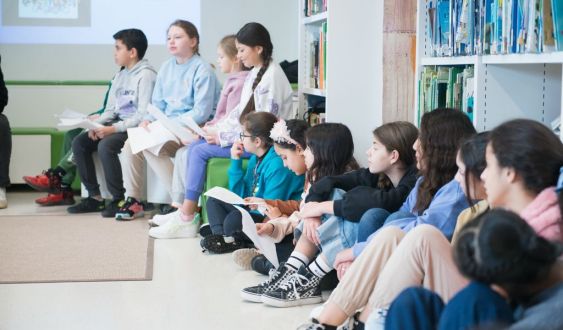
Anguish over exams, problems with friendships and sense of belonging, identity crises, bullying, moments of change and uncertainty. There are many sources of emotional distress that surround children, adolescents, and young people, and they often do not communicate them to their environment and, even less, to a professional who can accompany them in situations of anguish, which can end up leading to crises.
The fragility of emotional well-being and mental health in young people began to worry Adrià Munné during the pandemic. In his environment, he observed more and more young people with emotional difficulties who did not find adequate support, while many families did not know where to turn. "I started to investigate and saw that it was not just my perception, but a global trend," he recalls. At a time when the effects of the pandemic led to a focus on mental health, warning signs began to appear, with data such as around 40% of young people experience situations of emotional distress, but only 10% receive professional help.
This concern of Munné was the seed of what is now Miinta, a Barcelona-based startup that seeks to strengthen the emotional well-being of young people through collaboration between schools, families, and psychologists. Founded in 2023, it started with the purpose of bringing emotional support closer to young people, together with Álvaro Lloret as co-founder.
Reaching adolescents and young people is not easy, nor is it solely a matter of technology, and this was the question Miinta asked itself: how to reach adolescents and young people before emotional distress turned into a crisis? The first option was video calls, with one-hour virtual sessions with a psychologist. However, many adolescents booked the session but ended up not attending.
Then, Miinta opted not only to bring young people to its tool, but the other way around: to bring Miinta to adolescents, through their most common channels. This is how the model through Whatsapp was born, which remains a channel, although with changes: "We saw that through chat we reached young people, but above all they arrived when there was already a problem. And from Miinta we don't want to be just reactive, but we want to do detection and prevention."
Now, with a model primarily channeled through educational centers, the startup anticipates problems with a “prevention system” that follows up once a month, sending a message to families and users. “And many times, a conversation comes out of this message. Thanks to this proactive follow-up, we are able to detect problems before it’s too late.”

Through Miinta’s tools, the startup accompanies more than 4,000 young people. “We have detected more than 400 crises, including suicidal ideations and cases of bullying,” details Munné. Working jointly with schools allows for coordinated action in these situations, through a system by which the educational center assumes the cost of the service and all families can access it, each of whom has an assigned professional. Now, Miinta is present in about thirty educational centers, a figure that the startup aims to double this year.
The range of centers, moreover, is broad: it goes from schools to universities and vocational training centers. In school, they work with families from when children are two years old, and then go through the stage between 8 and 12, before entering adolescence, and up to young people up to 29 years old. In most cases, these are private or subsidized centers, or public ones, sometimes with the cost assumed by the family association, and not directly by the center.
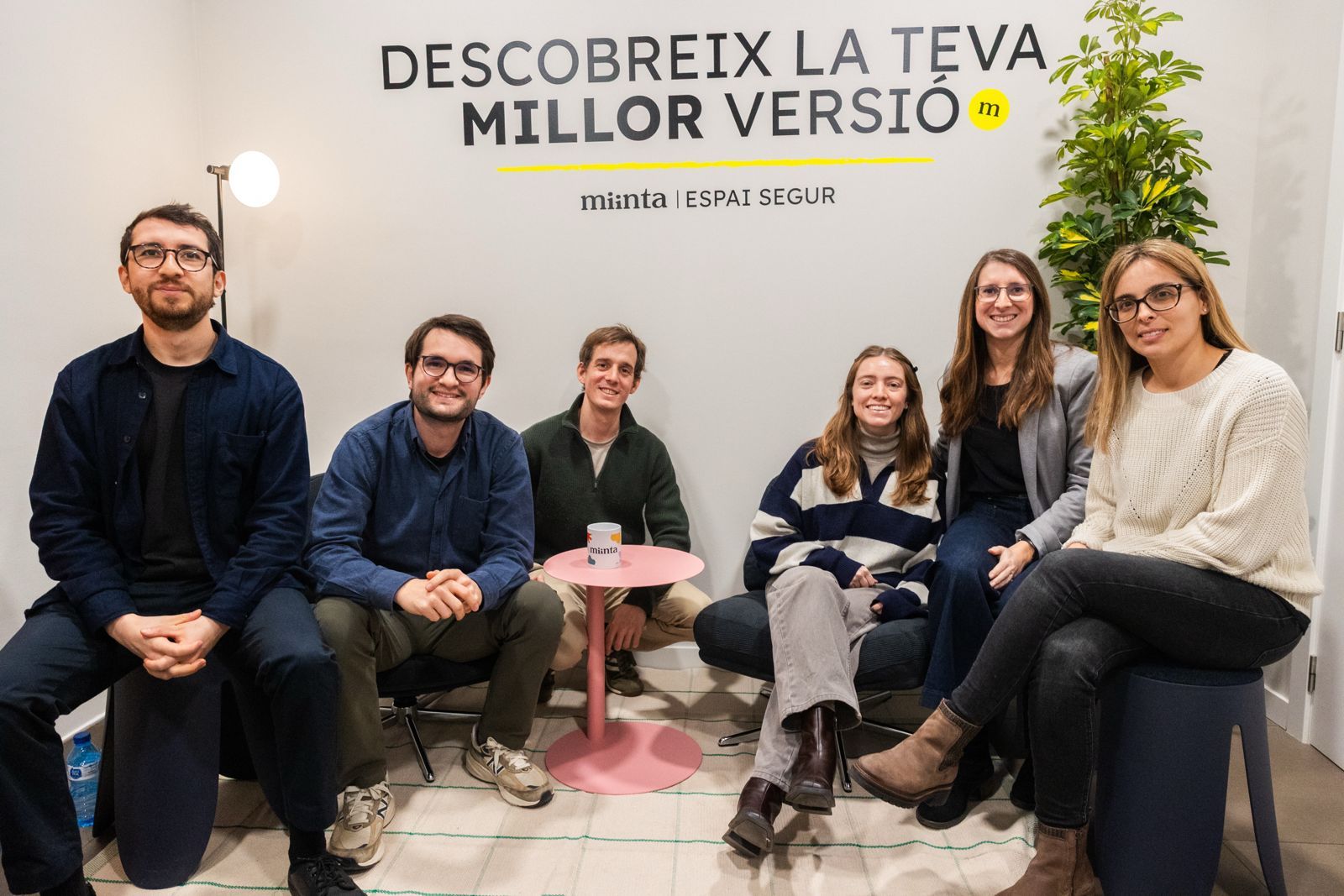
Miinta —which takes its name from mint, seeking freshness to break with stereotypes around mental health— is present in centers in Catalonia as well as in territories such as Madrid, Valencia, and the Balearic Islands, and focuses its next steps from a “very international mindset.” It does so with ten employees and after having raised one million euros through Enisa, the ICF, business angels, and investment funds. And it does so, moreover, giving weight not only to technology, but also to in-person accompaniment: "We believe that, to reach young people and families, the digital component must be included, but also the physical one.”
Thus, the startup has a "hybrid approach, with support from chat and the app and work with schools, and also with physical spaces, designed with young people in mind, at street level and also with a digital experience." Miinta recently opened the first of these spaces, in Mataró, with the triple objective "of eliminating barriers, normalizing the demand for psychological help, and bringing professional support closer to young people and families." After this first center, Miinta plans to open its own space also in Barcelona and Madrid.
As Munné highlights, everything revolves around the goal of increasing accessibility to emotional support. "In fact, 70% of students access an emotional and preventive support service for the first time when they join Miinta." And, after only three months of support, 80% of students experience emotional improvement. And not only in extraordinary situations, but in the daily reality of children, adolescents, and young people: "We want to normalize the act of asking for support." And it is that support should not arrive when a crisis erupts, but much earlier.
Add The New Barcelona Post as your preferred Google source for free
Stay informed with the latest news.