
The scientific ecosystem of Barcelona and its surroundings is key for research that has a decisive impact on society, the economy, and knowledge. This was conveyed by relevant researchers from this ecosystem at the BIST Forum, the annual meeting of the community composed of professionals from the main Catalan research centers, under the umbrella of the Barcelona Institute of Science and Technology (BIST).
"Two decades ago, few people thought that Catalonia could have a research ecosystem of the level we have and a strong knowledge-based economy," highlighted the general director of BIST, Eduard Vallory. And many now continue to see the research system in the Barcelona area as something static, without taking into account its growth and evolution and, above all, its impact. "Our challenge is to make citizens understand that research is a key investment," added Vallory, who praised the vision of scientists before the world. He described it as the vision of a child's curiosity and emotion when discovering the world and trying to understand it; it is trying to find the meaning of life through something that makes sense to oneself.
"This is something totally human about science, and it must be part of how we share and explain it to society," he added. Vallory said this while conversing with scientist Núria Montserrat. The researcher at the Institute for Bioengineering of Catalonia (IBEC) and professor at the Catalan Institution for Research and Advanced Studies (ICREA) highlighted the impact of science on society through research like hers, focused on cells and the changes they undergo. Her advances are aimed at the regeneration of cells and tissues damaged by age or disease, a goal she pursues within the Barcelona scientific ecosystem.
The seven centers that make up BIST bring together 2,600 professionals and have created more than 50 spin-offs since its founding in 2015Before the attendees at the event, in La Pedrera, the prestigious researcher encouraged them to face life from the same perspective with which the emblematic building that hosted the event was designed. Gaudí looked at his projects with nature as a base and from a multidisciplinary angle. Montserrat believes that the same point of view should govern science and, in particular, frontier science, that which generates new knowledge that contributes to changing existing paradigms and models.
"Our obligation is to guarantee that future researchers find the appropriate environment" to carry out their work, Montserrat added. And this environment is already key for the development of a multitude of scientific advances that will be decisive in fields such as health and the environment. This has been confirmed by various researchers, in a conference with mostly female speakers. "Having a structure to collaborate and grow is crucial", remarked Maria Lluch from Pulmobiotics, a startup that combats respiratory diseases through bacteria. "Creating agreements and structures with universities and research institutions is very important," she continued.
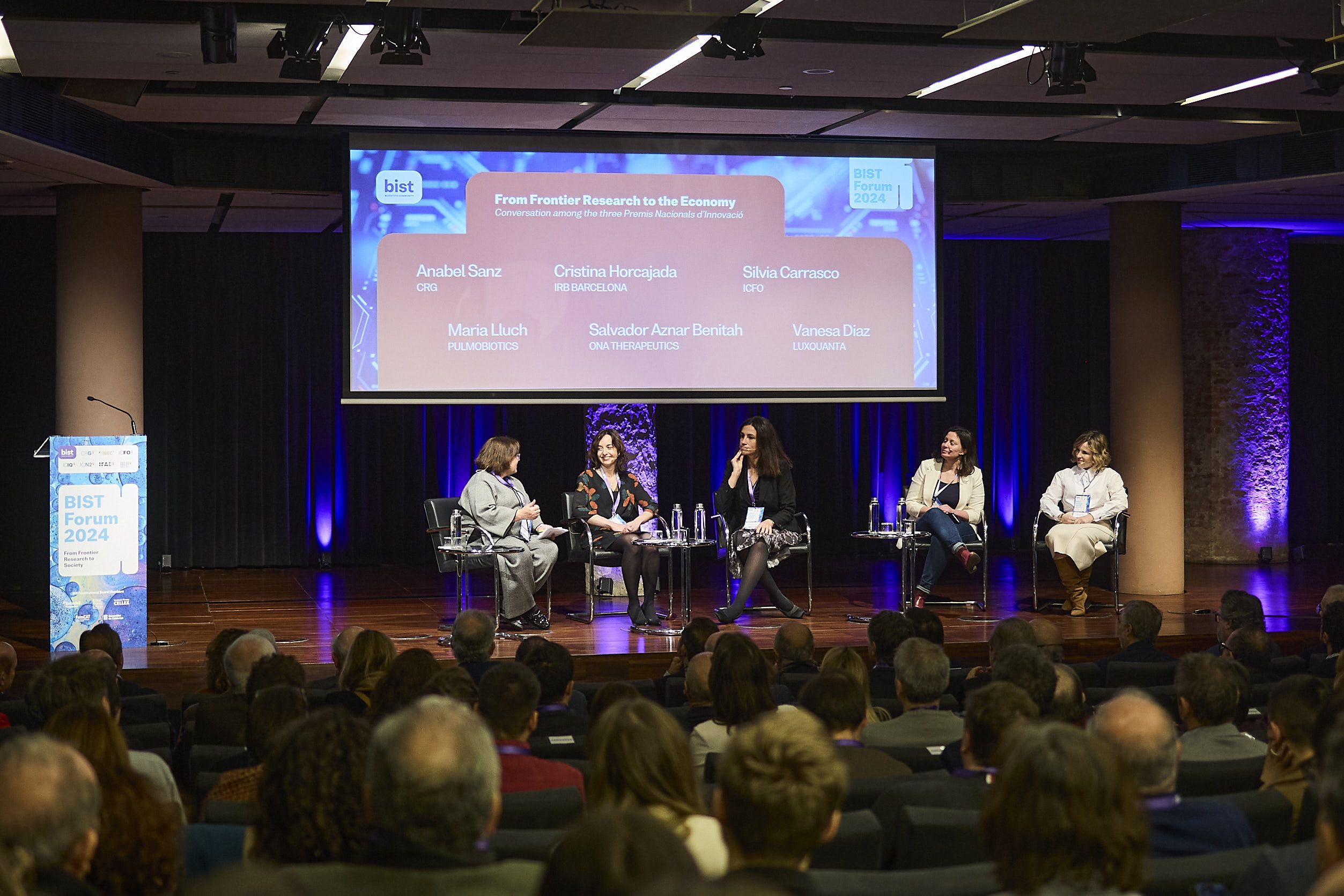
The exchange of ideas to amplify the impact towards a better world is another of the advantages offered by the Barcelona scientific ecosystem, according to Cristina Horcajada, who studies cancer from IRB Barcelona. Thus, this ecosystem is key for researchers and, at the same time, resources and funding are key for this ecosystem, as Silvia Carrasco from the Institut de Ciències Fotòniques (ICFO) recalled. From LuxQuanta, Vanesa Diaz applauded the talent and enthusiasm that this ecosystem harbors: "Get ready for what is to come, because it will be wonderful."
Belonging to this ecosystem has also been key for researchers Katherine Villa, Gerard Ariño and Maria Escudero. From the Institut Català d'Investigació Química (ICIQ), Villa develops nanomaterials and micromotors with great potential in fields such as photodynamic therapy. Born in Colombia, she promotes her research from Barcelona, after an international journey that has taken her to countries like the Czech Republic. Similarly, nearby Germany and distant California have been the bases of Gerard Ariño's research until his return to Catalonia four months ago. Now, he promotes his research to improve cancer detection from the Institut de Física d'Altes Energies (IFAE). His goal? To create a reduced version of the usual scanners, in order to give more patients access to technologies that facilitate diagnosis.
California has also played a key role in the career of Maria Escudero, whose research pivoted between Stanford and Denmark until she settled back in Catalonia, through ICREA. Escudero is now studying green methane as an alternative fuel, especially for aviation, through a group of researchers she has consolidated within the Catalan scientific ecosystem. Of this, she has highlighted the importance of facilities such as the Alba Synchrotron, as well as the capacity to attract international talent, and the "atmosphere of support for research."
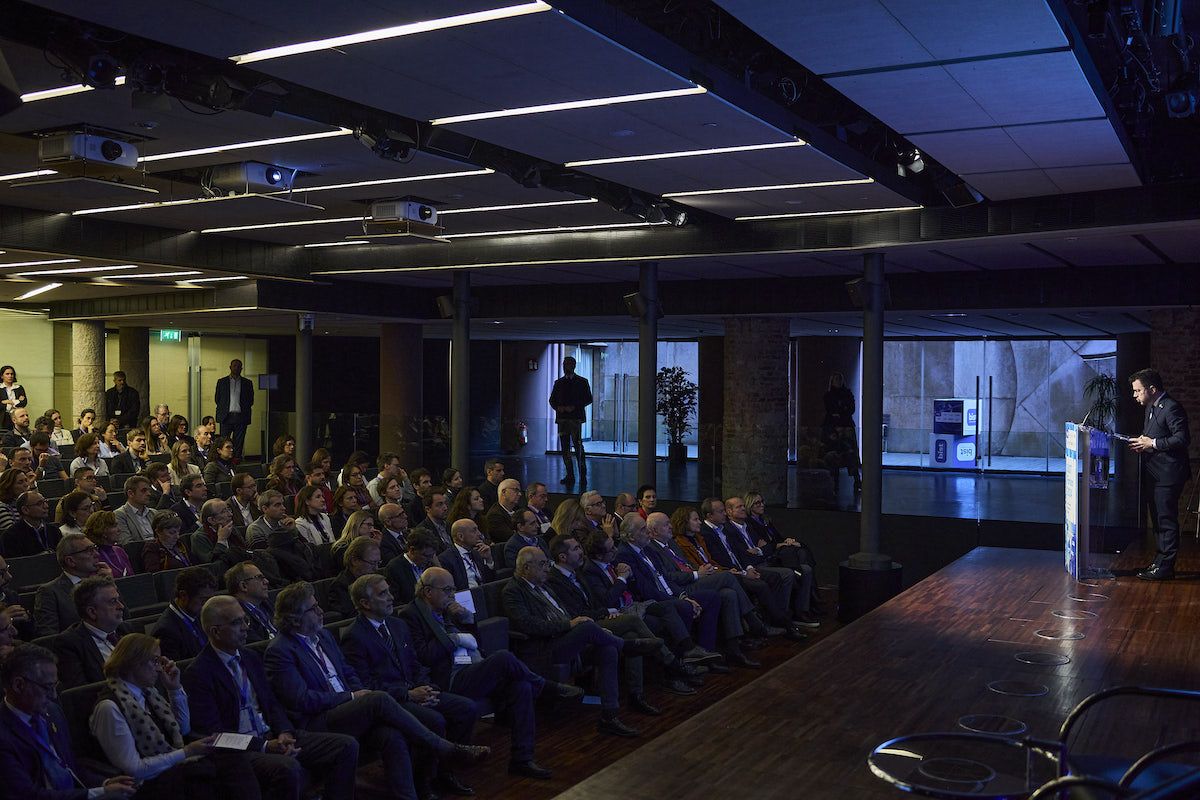
A scientific and research atmosphere that BIST has encouraged since its creation in 2015, when it was founded as a public-private partnership to combine and multiply the impact and excellence of the seven centers that form it. These are CRG, IBEC, ICFO, ICIQ, ICN2, IFAE, and IRB Barcelona, which bring together 2,600 professionals and have created more than 50 spin-offs.
Representatives of this community gathered at this forum, which was opened by the President of the Generalitat, Pere Aragonès. He cited projects such as the Ciutadella del Coneixement and the future chip production center Innofab in Cerdanyola del Vallès, as elements that will contribute to consolidating Catalonia's scientific role. To this end, he also advocated for increasing financial resources for this area, improving the working conditions of scientists, and reducing the bureaucratic burden that hinders their work.
Jaume Collboni asks the scientific community to get involved in the debate on the Airport expansionThe mayor, Jaume Collboni, who closed the forum defending Barcelona's "scientific capital," also mentioned projects such as the Ciutadella. After praising the president of the BIST board of trustees, Andreu Mas-Colell, the mayor concluded the day by making a double request to the scientific community. He asked them to take care of the gender issue in the field of research on the one hand and, on the other, that get involved in the debate on the expansion of El Prat Airport: "It is transcendental to have good connectivity for the transmission of knowledge and the attraction of talent." These are two aspects in which Barcelona and its surroundings already stand out and in which it must continue to advance hand in hand with the scientific ecosystem generated in its institutions and research centers, through its professionals. As Anabel Sanz of the CRG has stated about achieving excellence in research and science: "We have many elements to achieve it; let's achieve it."
Add The New Barcelona Post as your preferred Google source for free
Stay informed with the latest news.
