
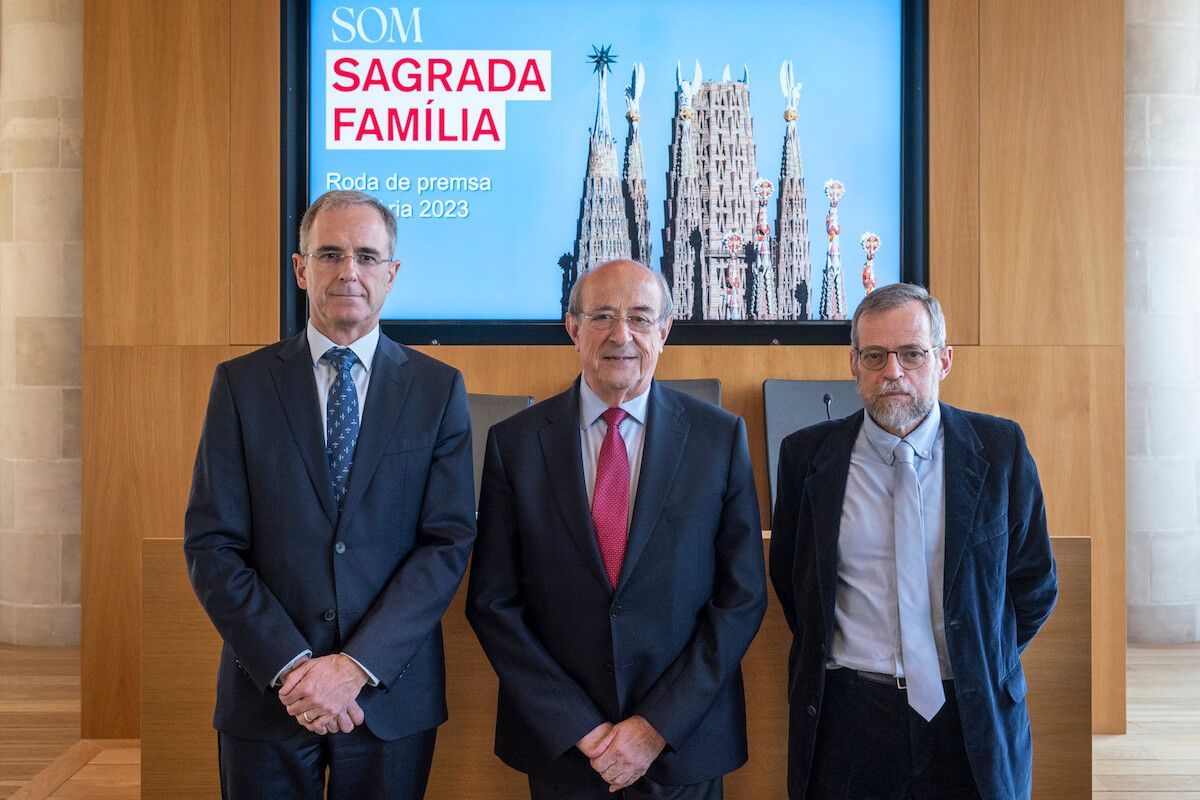
When talking about the Sagrada Família, the first thing that always comes to mind is when it will be finished. It is a question that its construction board avoids being forceful about, especially after the pandemic blew up the last forecast, which expected to have everything ready by 2026. With the return of tourists, the basilica's main source of income, the delegated president of the construction board, Esteve Camps, has ventured to give a new date: "Our hope is that it will be finished in ten years". This would push the calendar to 2034, but it should be noted that last year the goal was set for 2033.
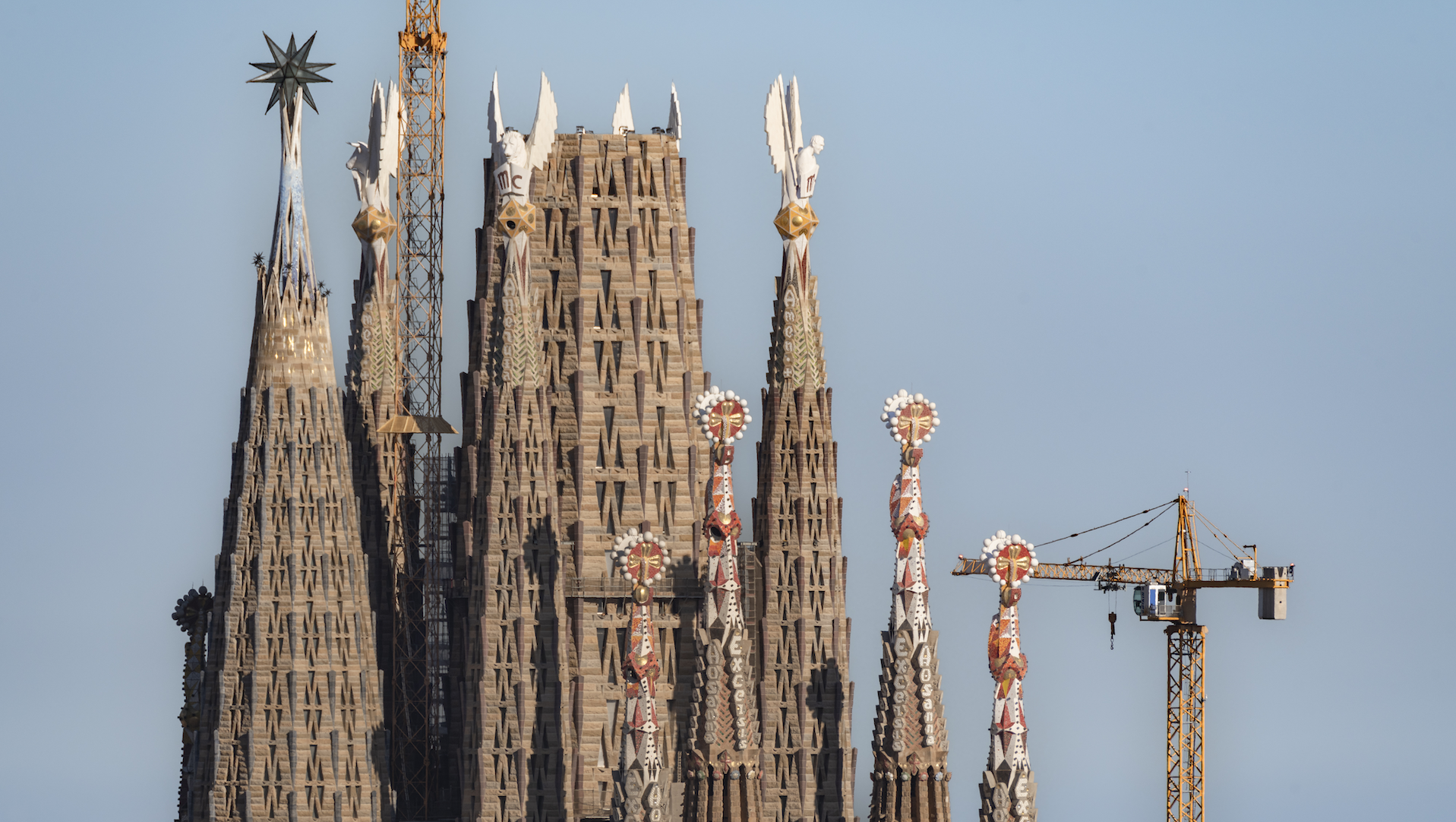
After finishing the Towers of the Evangelists last November, the basilica's calculations foresee the completion of the Assumption Chapel in 2025. Located on the apse facade, the one facing the mountain and overlooking Provença street, the chapel is expected to be open to the street all day. Likewise, in 2026, coinciding with the centenary of Antoni Gaudí's death, the Tower of Jesus Christ is expected to be completed, which will be the tallest, with a total height of 172.50 meters. With a central position in the temple, it will be crowned by a cross with four arms, including a viewpoint. "We will be able to achieve it if there is no event like covid," Camps assured, accompanied by the general director of the construction board, Xavier Martínez, and the chief architect, Jordi Faulí.
Once these two milestones are reached, for which financing, materials, and necessary permits are already secured, the Sagrada Família hopes to focus its efforts on the Glory facade, which will be the main one and is the last one pending. It is located on the sea side, on Mallorca street. Gaudí decided that it would be the one to tell the story of humanity, from Adam and Eve to the final judgment. According to Camps, an international competition is contemplated to decide the artists who will define the three levels that the architect imagined for this part of the basilica ---terrestrial, spiritual, and celestial---, adapting to how the concept of hell has evolved since the architect's time.
That is where the controversial staircase designed by Gaudí comes into play, intended to overcome the four-meter difference in level between Provença and Mallorca. The structure will emerge from inside the temple, passing over traffic. But its execution directly clashes with the apartment blocks that were built in Mallorca, knowing the plans that were underway for the temple. "We will follow exactly what Gaudí told us," Camps remarked. "We are his heirs and we cannot renounce his project. In 1915, in the plan he presented to the City Council, the staircase is evident and is signed by him," he reiterated.
Regarding when the staircase will go ahead, if it does, considering that it will involve expropriations, the construction board does not set dates. "It is the administration that has to decide whether it is done or not. I don't have a crystal ball to know when the administration will decide," stressed its delegated president, who has shown himself in favor of negotiating everything necessary to complete Gaudí's ideas. "The project will be fulfilled to the letter as long as the administration grants the permits," he insisted. "We will finish you is the phrase that we truly have in our hearts and put into practice," he added.
Still below pre-covid visitors
Although the hustle and bustle is constant at the Sagrada Família, whatever the day, at almost all hours, the tourist attraction has not yet recovered the figures it had before the arrival of the pandemic. The temple closed 2023 with more than 4,707,300 visitors, about 10,500 fewer tickets than in 2019, when almost 4,717,900 were sold. "We have not yet reached the 2019 figures but we are about to," Camps defended, a goal they hope to achieve this year.
85% came from outside Spain, with the United States as the main nationality, with 19% of the total. Behind them were France (7.5%), Italy (7.2%) and the United Kingdom (5.9%). The Asian markets still need to fully recover, especially China, with 5.6% of visitors coming from South Korea and 2.2% from Japan.
"We have not yet reached the 2019 figures but we are about to"With these results, the basilica achieved revenues of 126.9 million euros last year. 52% has been allocated to the construction of the temple. The construction board plans to maintain ticket prices, with a range from 26 euros (free entry without going up the towers) to 40 euros (entry with a guided tour and ascent to one of the towers).
Given the complaints from residents who believe it is too expensive, discounts are expected to be approved for Barcelona residents who have participated in any of the open days organized for festivities such as Santa Eulàlia and La Mercè, offering them less sought-after time slots. "Casa Batlló is much more expensive than us. Ours is a reasonable price that has not increased for two years and we are going to maintain it," Camps said.
Add The New Barcelona Post as your preferred Google source for free
Stay informed with the latest news.
