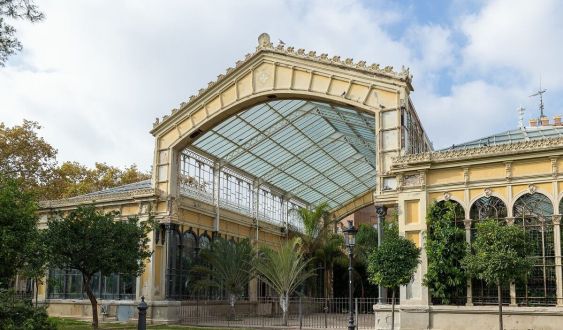
The rehabilitation of one of the forgotten icons of Ciutadella Park, its Hivernacle, is resumed. Out of use for years, its metal structure has long been in poor condition, with a good part of its glass enclosures broken and missing, a situation that has been exaggerated. To the precariousness of the building is added that of the homeless people who live in it. The works to put an end to this abandonment will begin in July and are expected to last for a whole year. With a budget of two million euros, the works will consist of restoring the heritage building and resolving the structural pathologies detected in the failed reform of 2015, which stopped shortly after starting when the company in charge of carrying it out filed for bankruptcy.
The Ciutadella Hivernacle, cataloged as a National Cultural Interest Asset, has an area of 1,000 square meters. Designed by Josep Amargós i Samaranch, it is made up of three longitudinal naves, the central one, which is the tallest, and the two lateral ones, the Picasso nave and the Magnolias nave. The three naves require deep rehabilitation actions, both inside and outside. "This action has been awaited for many years because there was a risk to the structure itself. Finally, we have managed to push this investment forward," celebrates the Deputy Mayor for Urban Planning of Barcelona, Janet Sanz.
Once the rehabilitation is finished, it will be necessary to define what will be done in this building, which depends on Parcs i Jardins. "It is a key building in the daily life of Ciutadella Park that we miss being active as in past times," Sanz defends. Built for the 1888 Universal Exhibition, it was used as a ballroom and conference hall during this great international event. The plants and trees that have historically inhabited its interior have seen it occupied by an exhibition hall, a jazz series, and multiple cultural events, as well as a shop and a restaurant, which closed in 2006.
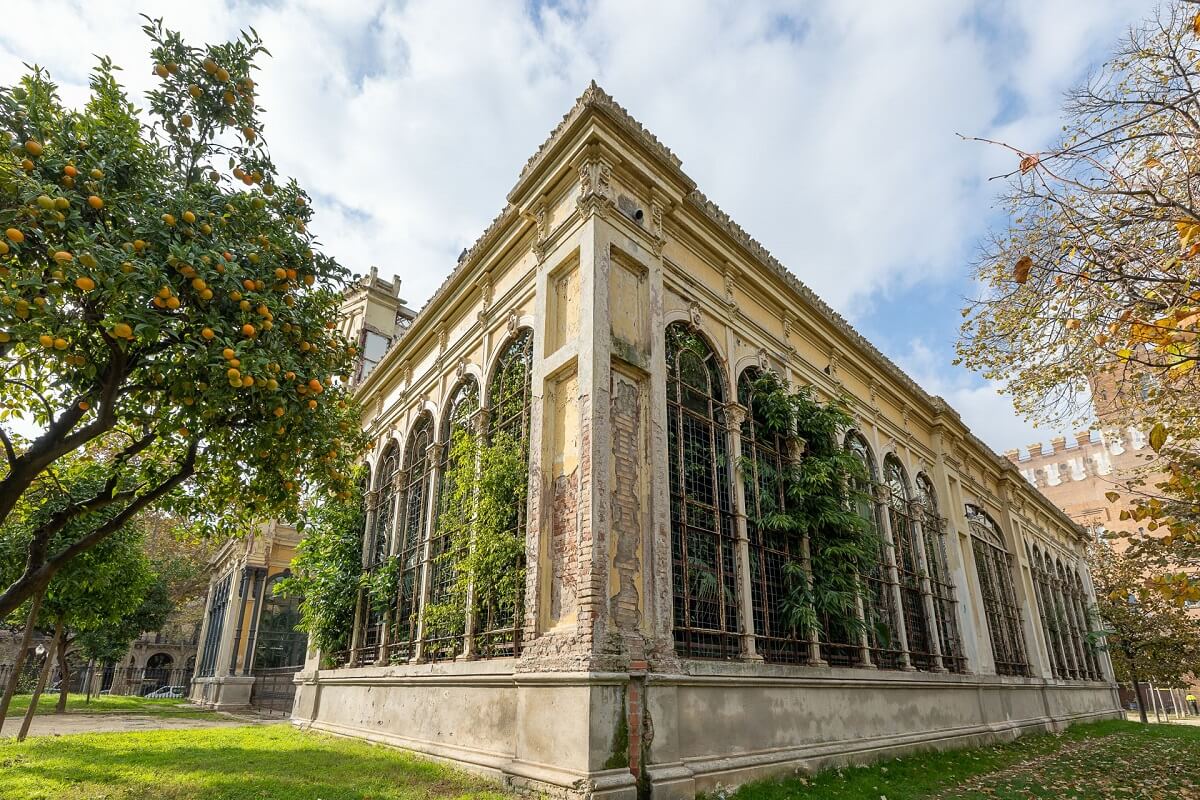
For the City Council, the rehabilitation of the Hivernacle, which joins that of the Martorell Museum, is key to consolidating the Ciutadella Park as a strategic space in the city, after seeing how most of its icons, including the Castell dels Tres Dragons and the Umbracle, have deteriorated. The city wants to boost the park and all the institutions surrounding it, such as the Universitat Pompeu Fabra (UPF), Hospital del Mar, and the Zoo, with a new scientific and cultural centrality through the Ciutadella del Coneixement initiative. This project will begin to be visualized in a new research complex that the UPF, the Spanish National Research Council (CSIC), and the Barcelona Institute of Science and Technology (BIST) will build in the space previously occupied by the Old Central Fish Market, next to the Ciutadella - Vila Olímpica metro stop.
Another building that will also be rehabilitated this year in Barcelona will be the Palau del Marquès d'Alfarràs, located in the Laberinto de Horta park. The rehabilitation of this building, also cataloged as a Cultural Asset of National Interest, will be divided into two phases in 2022 and 2023, with a total budget of 4.1 million euros. The first phase will begin in July of this year, with an allocation of one and a half million euros and will last nine months.
The works in the Palau del Marquès d'Alfarràs will include the consolidation of its structure and its constructive systems. First, the structure, which suffers significant degradation, will be addressed to guarantee the waterproofing and protection of the heritage elements. Subsequently, the facades and floor slabs will be rehabilitated, preserving the characteristics that give identity to the building, and it will be equipped with electrical installation, drains, and lightning rods, with the aim of being able to use it in the future.
Add The New Barcelona Post as your preferred Google source for free
Stay informed with the latest news.
