In Barcelona, there is a garden that, despite being public, is the most secret in the city. It does not have street-level access, nor a grand entrance that invites one to immerse themselves in its nooks and crannies. To access it —we insist it is public—, it is necessary to first enter a hotel, cross the lobby, and then, yes, enjoy the peace and silence in the very heart of the Gòtic neighborhood. It seems unbelievable, but the place exists. It is on Boqueria street and the hotel is the Petit Palace Boqueria Garden.
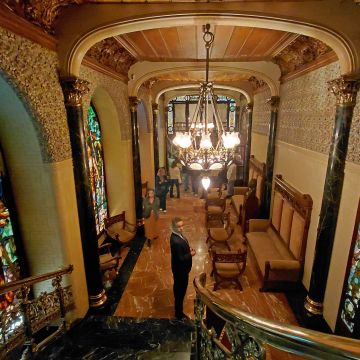
The garden is part of the mansion known as Casa Ignacio de Puig, a work by Josep Puig i Cadafalch from the mid-19th century. To enter this haven of peace and tranquility, one must first pass through the more or less controlled hustle and bustle of Boqueria street, enter the hotel, leave the reception desk on the left, and cross a glass door. And there it is, after climbing a short staircase and leaving behind the small terrace of the hotel bar.
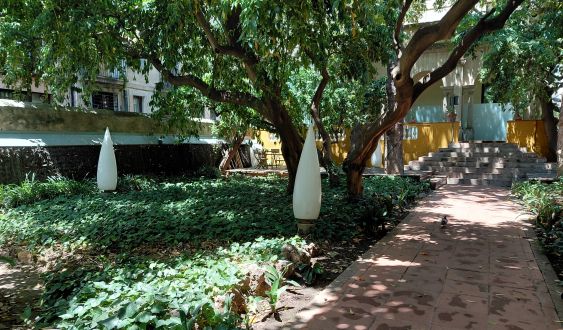
It is a romantic garden, typical of the period when the mansion was built. Paths wind around flowerbeds. A classic balustrade, elevated walkways, laurels, linden trees, and magnolias, among other typical garden plants, including a grotto-shaped fountain. Once one overcomes the somewhat embarrassing experience of crossing the hotel expecting someone to stop them —that never happens—, enjoying in solitude one of those gifts that Barcelona occasionally gives you is amazing. How can a place like this exist?
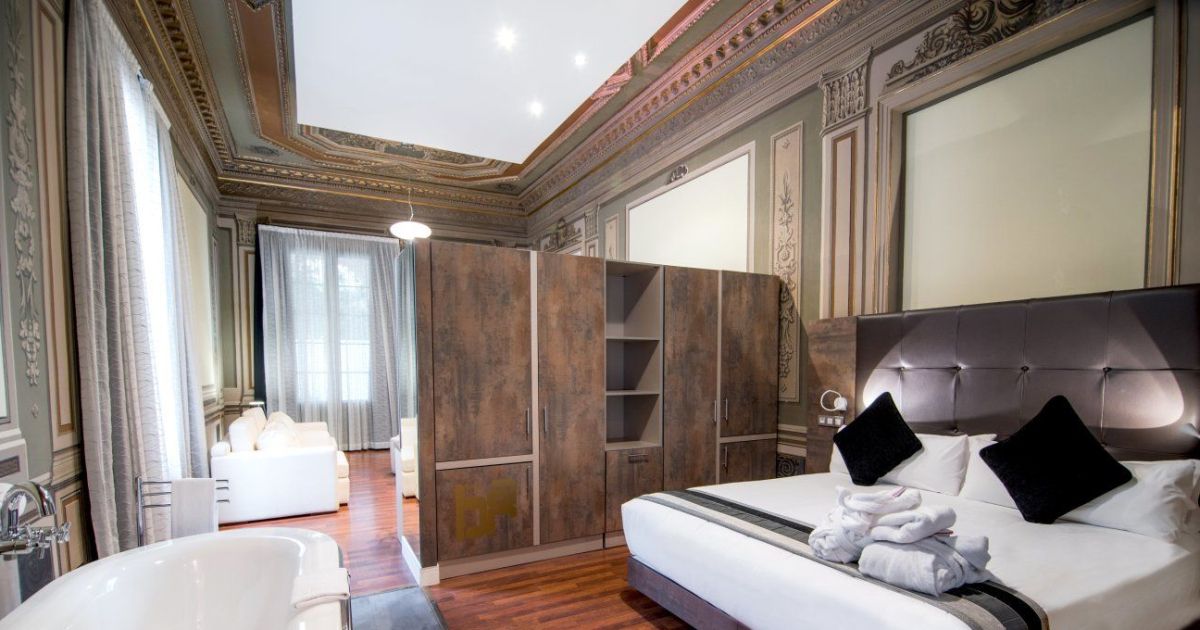
Well, because at the beginning of the 21st century, the property was acquired to be converted into a hotel. The architect Jordi Garcés was chosen to reconvert it. It so happens that his office is on a floor of the neighboring Quintana street and every day he sees the garden from his windows. He undertook the work with great responsibility, as it involved acting on the building of one of the masters of modernism and adapting the garden while respecting the original idea of Narcís Bladó, another architect who for a time traveled through different European capitals to return after a while to Barcelona with fresh ideas.
This is how Puig i Cadafalch and Bladó captured the project of the bourgeois Ignacio de Puig in the mansion. He came into possession of the estate thanks to his marriage to the granddaughter of the patriarch of the family who had resided there since the mid-18th century, Francisco Elías. He was a citizen who had enriched himself through trade, buying three old houses and unifying them to create the estate that is now the hotel. He chose Boqueria street for his residence as an operation of prestige and opulence, near La Rambla and the Liceu, where the new rich sought a place to integrate among the great local fortunes.
At the entrance of the hotel, some unsettling stone faces stand out, over which a legend hangs. It seems that this Elías deserved an exemplary punishment whose typology has not transcended. He was condemned to a civil death, which in his case consisted of having to live permanently in the basement of the house, so that, while his family continued to enjoy luxury and comforts, he had to live miserably amidst the ungrateful conditions of his confinement. The legend says that these faces are portraits of his different stages of despair. Legends have their narrative charm, but it is more plausible to believe that the faces were an architectural resource rather than witnesses of the terrible and supposed punishment.
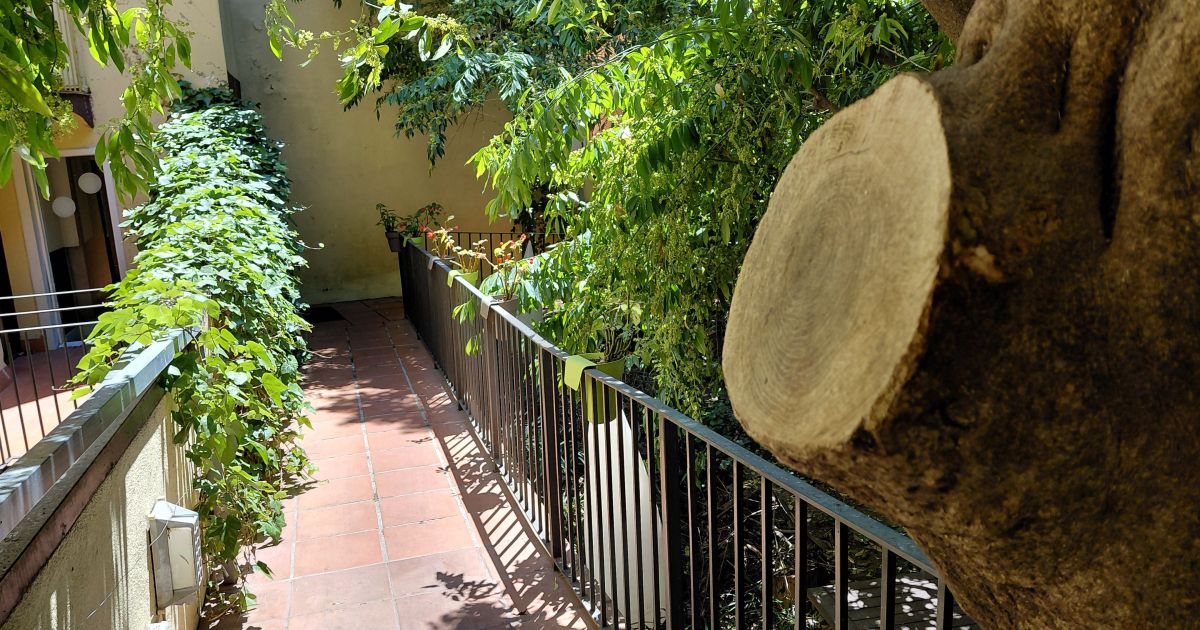
When the hotel was built, an agreement was reached with the city council. Public access was guaranteed in exchange for municipal maintenance. This Gothic Quarter oasis, protected as heritage, has only one drawback. And that is that it is a garden without benches to sit on. Surely it is because it is agreed that the public can enjoy it between 10 in the morning and 7 in the evening, but not to linger there indefinitely.
If you pass by Boqueria street, do not hesitate, make an incursion into the garden, because, although it is secret, it is not forbidden.
Add The New Barcelona Post as your preferred Google source for free
Stay informed with the latest news.