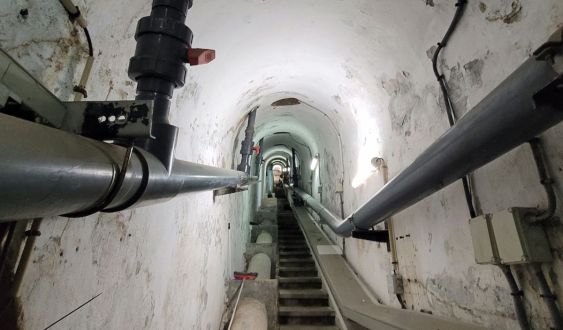
One of Montjuïc's great attractions is the set of fountains and waterfalls that extends along Maria Cristina Avenue and the monumental stairs leading to the Palau Nacional, home of the MNAC. The highlight of the complex is the Font Màgica, which once again spouted colored water during the past Mercè festivities. This is the part that is seen, but for everything to work, a complex system of valves, pumps, and other mechanisms is needed, hidden from mortal eyes underground, in a kind of subterranean city of galleries and tunnels from where everything that happens on the surface is directed.
Thanks to the organization of the 48 H Open House, we were able to access this underworld. We do so through a small door under the grand staircase. It is then that another spectacle begins. Few imagine what is down there, a sub-world created by engineer Carles Buïgas in 1929 as part of that year's International Exhibition, through which the Montjuïc mountain was urbanized and, incidentally, a great and important transformation of Barcelona was undertaken.
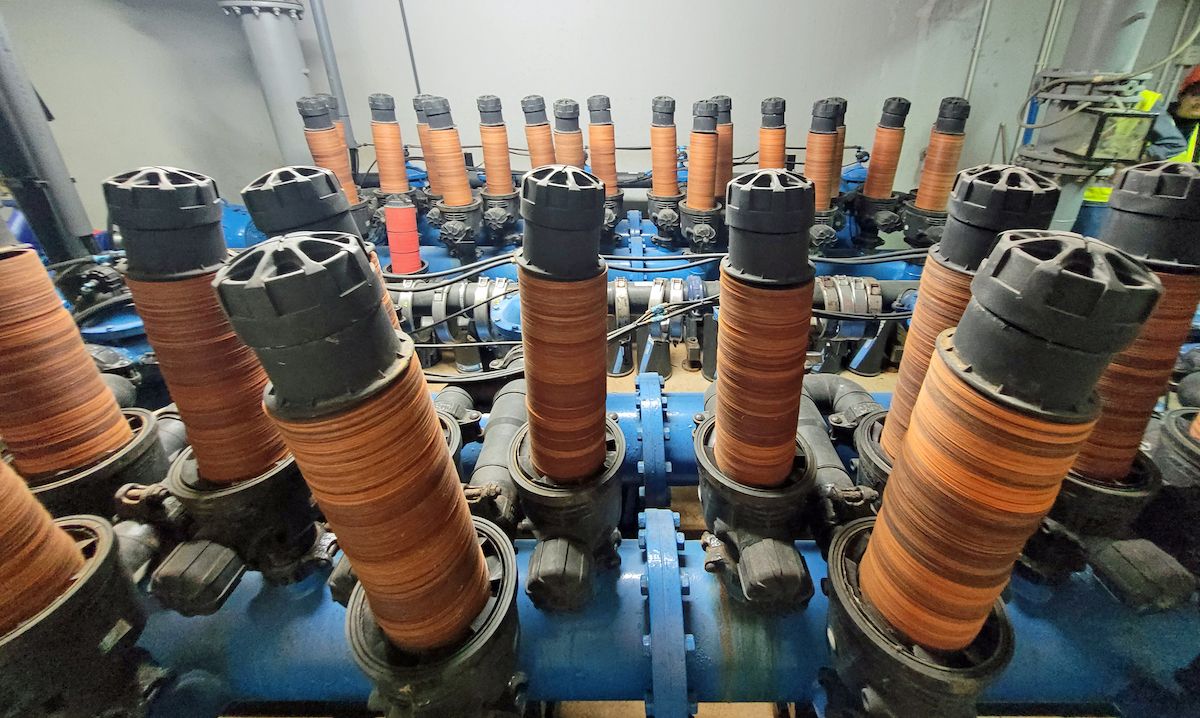
There are two peak moments in this underground tour. One is a long staircase that seems to descend into hell. One does so escorted by endless conduits through which phreatic water pumped from Paral·lel circulates. Part of it comes from the Gran Teatre del Liceu, from pumps that continuously absorb water from the subsoil of La Rambla and which is one of the hearts of the lyrical coliseum. The other is the engine room of the Font Màgica, where the colored prisms responsible for the spectacle can be admired.
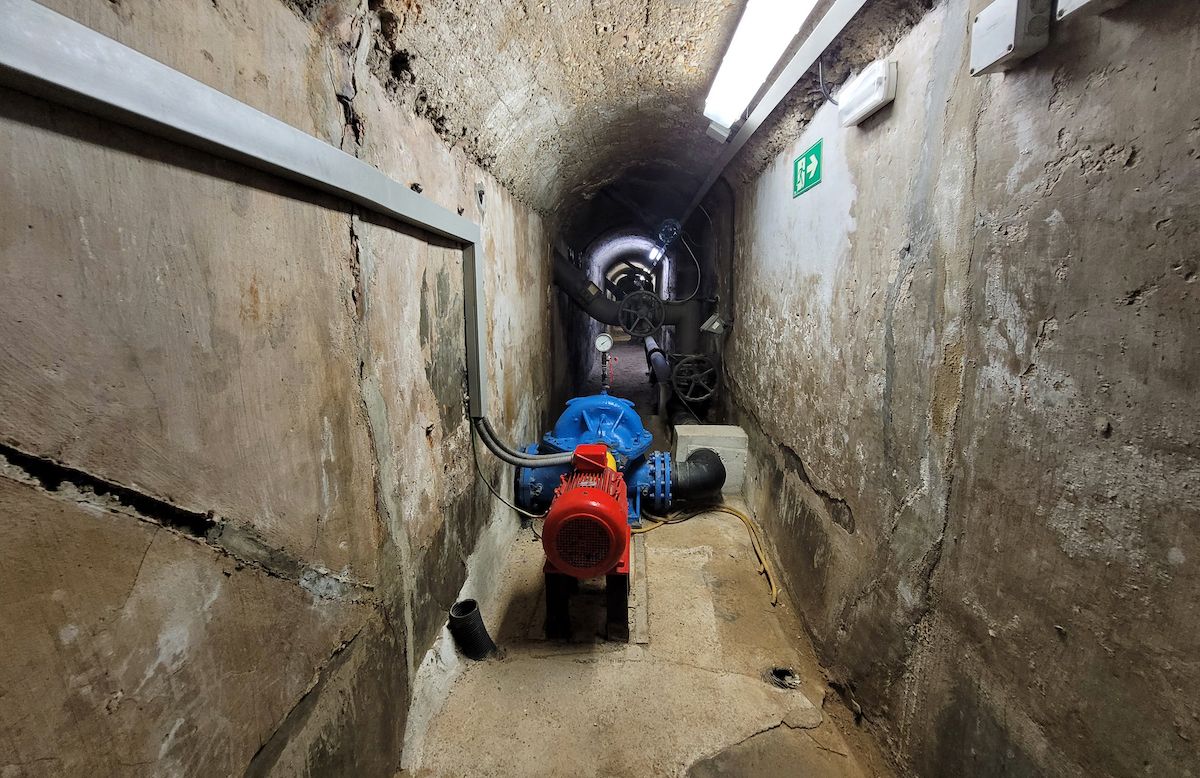
Up to 2,600 liters of water per second gush from the fountain, returning to a circuit that reuses it again. The Font Màgica was able to resume its activity during the last Mercè pyromusical after a long hiatus due to drought, which also forced the closure of the rest of the city's fountains. But even though the surface tap remained closed, life continued underground, where the operators in charge of the complex continued working on the maintenance of the machinery.
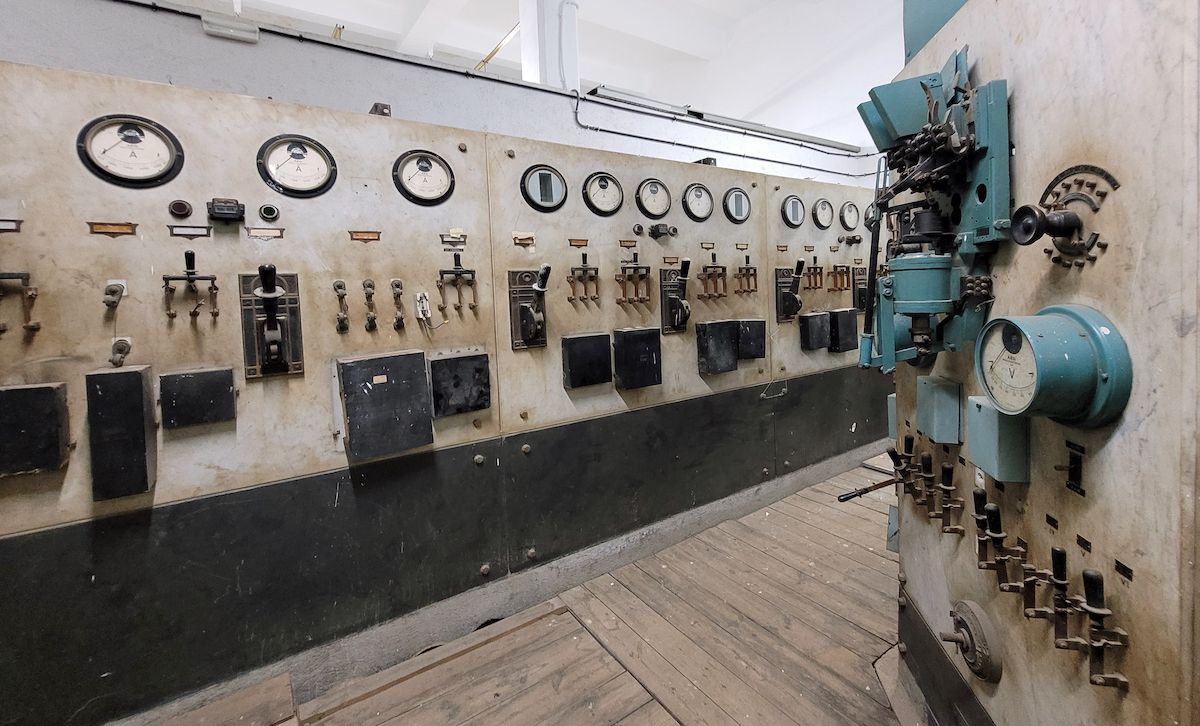
As one walks through this labyrinth of stairs and galleries, one takes a journey through a century-old engineering. Although some of the mechanisms have been replaced and modernized over the last century, some of the pumps are still the originals. In the 1980s, music was incorporated, and shortly before the 1992 Games, the fountain and its machinery underwent a complete restoration. A room with the original controls remains intact, although it no longer works. One leaves that underworld aware that Buïgas's work was quite a feat.
The Font Màgica stands on the site where Josep Puig i Cadafalch originally erected the four columns representing the senyera. They were torn down during the dictatorship of Primo de Rivera, which also subjected the Exhibition to a process of "Spanishization." The columns were one of the victims and were recovered well into the 21st century.
One of the objectives of the International Exhibition was to popularize electricity, but water also gained great prominence, with the Font Màgica as a top element. This circumstance was exploited by the French-origin company Aigües de Barcelona to carry out a major marketing operation. During the event, it donated the water used in all the fountains and waterfalls. In return, it managed to gain a practical monopoly on the water supply to the city and part of the metropolitan area.
Visiting the guts of the fountain also allows one to learn about the scientific foundations Buïgas used to design his technical marvel. The engineer based his design on the principle of total light reflection studied by the Swiss Jean-Daniel Colladon in the 19th century, using water as a guide. It is a phenomenon similar to what happens inside a thin piece of glass. An identical effect occurs inside methacrylate, which later found its application in fiber optics.
In 2029, the centenary of the International Exhibition will be commemorated. By then, Montjuïc is expected to be immersed in its third transformation. The first was a century ago, and the second, on the occasion of the Olympic Games. The third will update the previous ones and aims for the mountain to finally be fully accessible to Barcelona residents.
Add The New Barcelona Post as your preferred Google source for free
Stay informed with the latest news.
