Juan Carlos López was the head of the Barcelona fire department when the fateful January 31, 1994, flames devoured the Gran Teatre del Liceu. He was among the first to warn that the valuable collection of paintings and other artistic objects from the neighboring Cercle del Liceu had to be saved. This is how firefighters, municipal police, and club employees rushed to unhook the canvases and transport them on foot and in a van to the nearby Palau de la Virreina. Despite the alarm, the fire, which started during welding work on the theater stage, did not affect the Cercle, so it remains intact, as does the treasure it protects.
The Cercle del Liceu is a private club related to the lyrical theater but independent of it, although the former cannot be understood without the latter. Its private nature means that access is only allowed to members. This means that admiring its interior is forbidden to the rest of the citizens. An exception is only made when someone outside the entity is invited by one of the members, either to its restaurant or to any other activity.
Once a year, the club opens its doors for the association 48H Open House Barcelona to organize a visit for those who have secured a spot through prior registration. It is one of the few exceptions where the public—a small number of people—has the privilege of solving the mystery of what the Cercle is like inside and admiring up close canvases that can only be seen in photographs, by Casas, Rusiñol, Masriera, Brull, Miralles, Ribera, Urgell, Cusachs, and Canals, among others.
"Until 2001, only men could be members. Women were admitted after a long battle and a close vote"The Cercle del Liceu will celebrate its 180th anniversary next year, just like the great theater. Since then, being a member has only been accessible to the elites of the bourgeoisie. Until 2001, only men could be members. Women were admitted after a long battle and a close vote. Currently, it brings together around a thousand members.
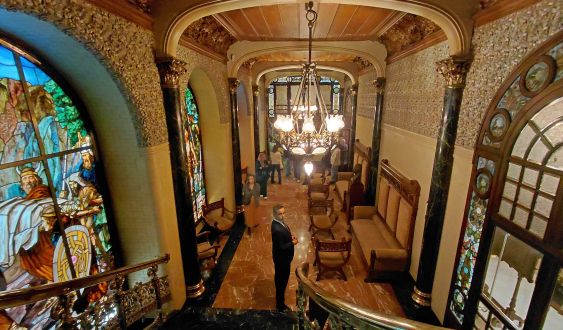
The club and its rooms are a monument to modernism. All spaces have their uniqueness and one could spend one or several entire days admiring each corner. Some of them invite you to sit and contemplate. Nothing more and for an indefinite time. For example, in the room known as Peixera, a set of armchairs with views of the rambla through large windows and from a slight elevation above street level. One can spend hours sitting there watching people —at the moment, construction— pass by on the cosmopolitan promenade.
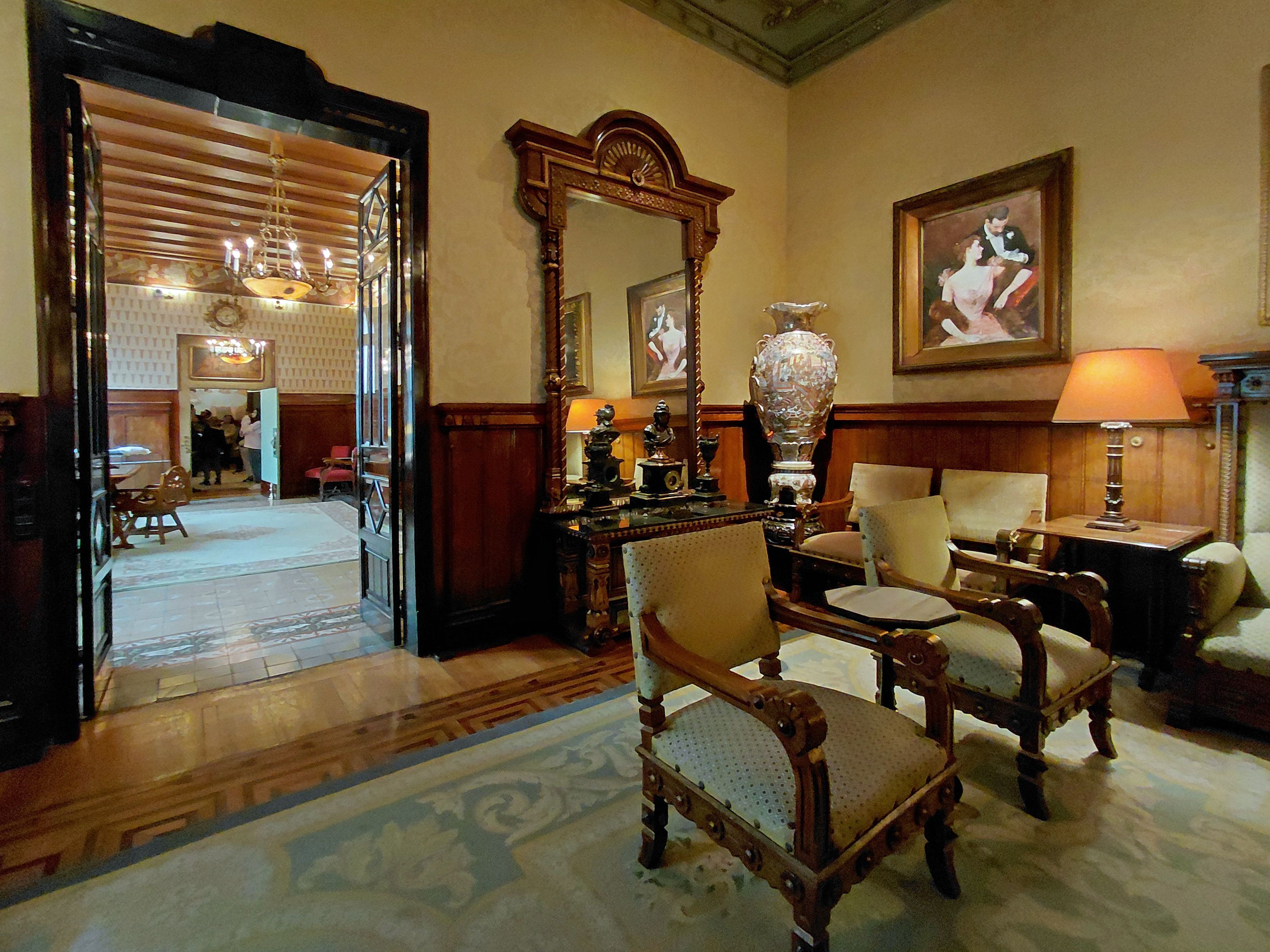
But the great jewel is the set of 12 canvases by Ramon Casas in the old game room, today known as La Rotonda. These are a dozen panels commissioned from the celebrated Catalan painter around 1900. The paintings are inspired by musical themes and the life of the audience during performances at the theater. La Rotonda owes its name to the semicircular shape of the salon, where architecture and works of art dialogue in perfect harmony. It is another of the places where one can escape time sitting on a sofa at the foot of the paintings.
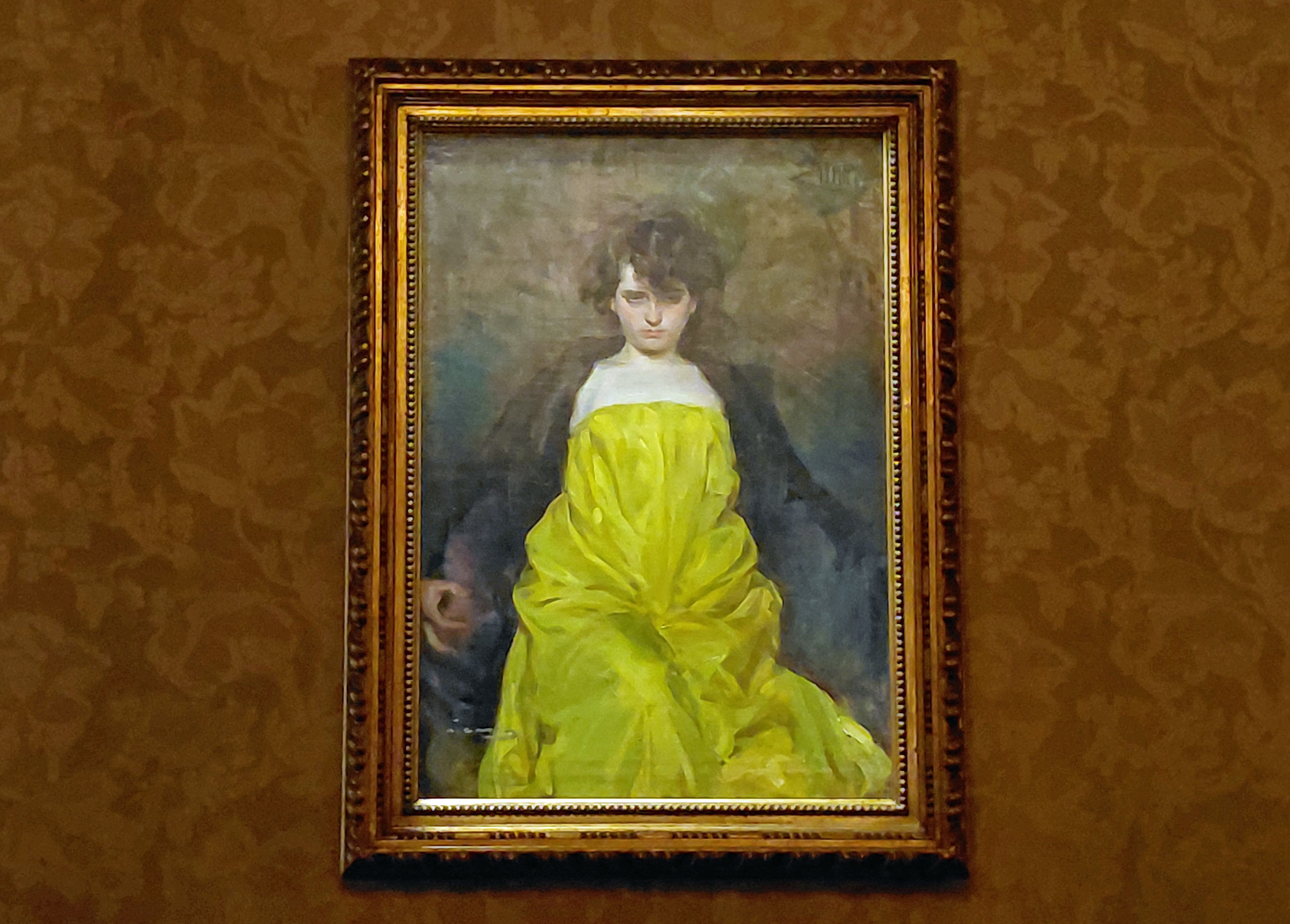
Ramon Casas has a presence distributed throughout the Cercle. In the Gran Saló, one of his most famous works is found. It is the portrait of Júlia Peraire, a young model and lover of the artist. The canvas is known as La Sargantain and produces a kind of hypnotic effect to contemplate it. The Saló Xemeneia, the Alexandre de Riquer, and the Cocteleria are other spaces worth visiting, as well as the lobby and the four stained-glass windows installed in 1905 by Oleguer Junyent with Wagnerian themes. And it is that the German composer has maintained a special idyll with Barcelona since the mid-19th century, where he has a multitude of followers.
The Cercle del Liceu was created on November 20, 1847, a few months after the grand theater was completed, although its origin must be sought a few years earlier in the Societat Auxiliar de Construcció, constituted in 1844 to obtain financing for the theater. In its history, it only closed during the civil war. It has always maintained its exclusive character. So much so that even the fire of 1994 could not enter.
Add The New Barcelona Post as your preferred Google source for free
Stay informed with the latest news.
