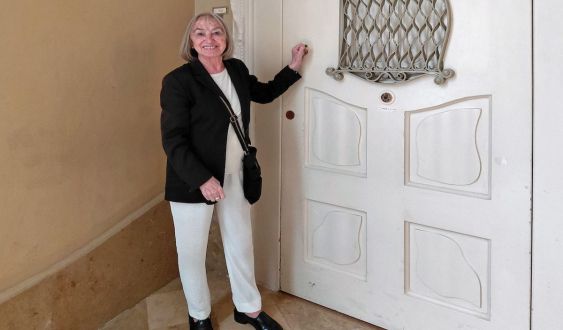
Elvira Roca-Sastre Muncunill is one of the people who have had the privilege of living in La Pedrera, Antoni Gaudí's masterpiece on Passeig de Gràcia. She arrived with her family in 1944, when she was 6 years old, and resided in the building until the early 1990s. These were five decades that she confesses were wonderful. "Since then, La Pedrera has always been my home," she states. Elvira returned to the building a few days ago to visit it again and to review and share her memories.
Elvira's father was the prestigious Barcelona notary Ramon Roca-Sastre, who decided to establish the family residence and his office in La Pedrera. He did so despite the advice against it from his friends, who tried to convince him not to settle there because, they assured him, clients would not come and he would not be able to pay the expensive rent, 1,600 pesetas at the time (about 10 euros at the current exchange rate). It should be remembered that the name Pedrera was a derogatory term with which Barcelonians referred to the building, because they considered it very ugly and that it looked, as its name suggests, like a quarry. However, his friends' predictions were wrong, and Ramon Roca-Sastre soon became the notary of La Pedrera and one of the most popular in the Catalan capital.
The apartment where Elvira grew up —now occupied by other tenants— was very spacious, about 600 square meters, and she remembers its luminosity, its ceilings, and its "fantastic" acoustics. She and her siblings would ride scooters through the house. One of their favorite play areas was the attic floor, where the laundry rooms were, and the rooftop. They played hide-and-seek, thanks to the numerous nooks that Gaudí distributed on the upper floors. On the rooftop, they also went up to hang clothes, a circumstance that at the time annoyed the architect from Reus.
Elvira did not follow her father's vocation and opted for poetry and journalism. She worked at the ACI agency and at Mundo Diario. She was also a film critic for Fotogramas magazine, which allowed her to bring personalities such as Joseph Losey, Federico Fellini, and Jeremy Irons, among others, to the building. "Everyone was amazed by La Pedrera," she adds. This former tenant returns whenever she can to the building that was her home. Exhibitions are a perfect excuse to do so. "I don't miss any," she says. Currently, and until January 25, a magnificent exhibition on the sculptor Cristina Iglesias can be visited.
La Pedrera is one of only three properties that Gaudí designed to house homes, along with Casa Batlló and Casa Calvet. Also known as Casa Milà, after the family who commissioned it, its construction began in 1906 and finished in 1912. It was the first building on Passeig de Gràcia to have underground parking for carriages. Although they already had an automobile instead of a carriage, this is one of the characteristics that Elvira also fondly remembers, that they could access directly by car.
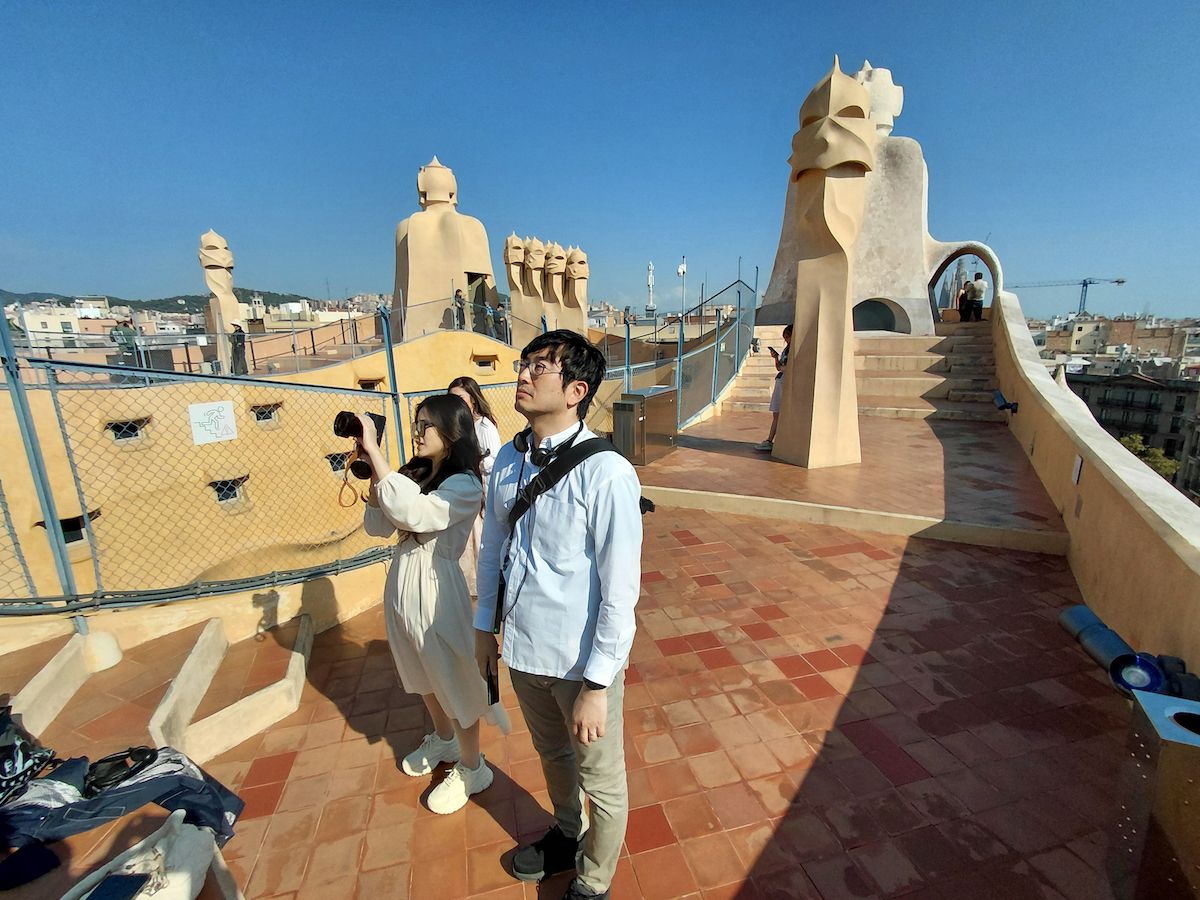
Today, the rooftop, with its sculpture-chimneys that hosted so many hours of play for the notary's daughter and the rest of the children who lived there, is one of the most iconic elements of Gaudí's universe. The architect had even planned an enormous sculpture of the Virgin Mary at the top. Discrepancies with the Milà family prevented it. Another of the emblematic spaces are the attics with their brick arches, which today have a museum use, where some of the spectacular models can be admired.
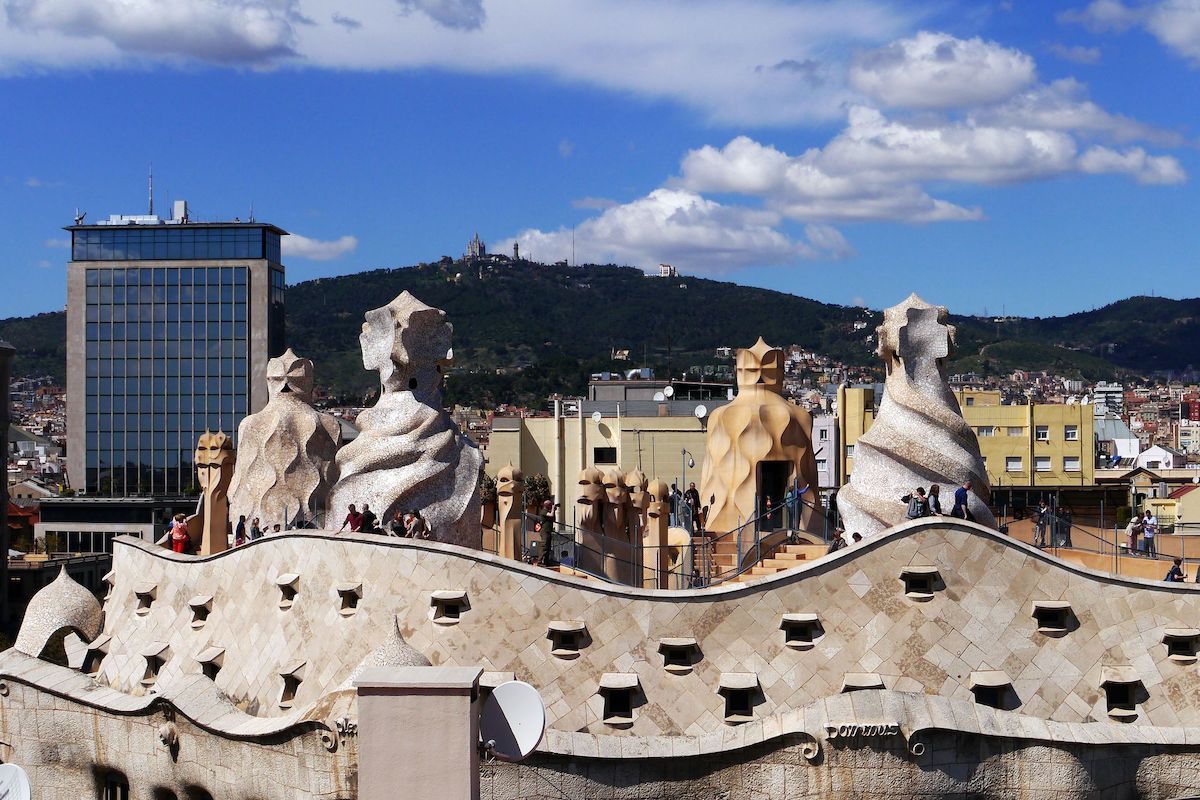
The attics were temporarily converted into apartments in 1953, which required adding new chimneys that contrasted with those designed by Gaudí. They were finally demolished, although one was preserved as a witness. Gaudí also designed the rooftop so that the Sagrada Família could be contemplated from it. In fact, the temple is framed within an arch, and can also be seen from the rooftop of Casa Batlló.
In one of the floors that can be visited today, a canvas with a painted macaw can be seen. It belonged to Mrs. Milà and became a very popular pet among the tenants and the people who used to walk in front of La Pedrera. It used to stay on the main balcony and made a lot of noise. These are just some of the experiences and memories of a former resident of La Pedrera.
Add The New Barcelona Post as your preferred Google source for free
Stay informed with the latest news.