La Rambla is a diverse mosaic that brings together attractions and uses of all kinds. Whoever passes through Barcelona's most famous avenue does so for a particular reason, whether to contemplate its architecture, visit one of its shops, eat in its restaurants, check off a must-see on the city's list, go from one point to another dodging tourists or, for more than 185 years now, to delve into the lyrical universe of the Gran Teatre del Liceu.
Three decades after the fire that devoured it, the Liceu continues to attract the attention of those who stroll along La Rambla, whether or not they are going to the grand theater. And it does so by valuing its trajectory, but focusing on its future, with new proposals, experimenting with new lyrical formats and promoting its expansion to a second venue, known as Liceu Mar.
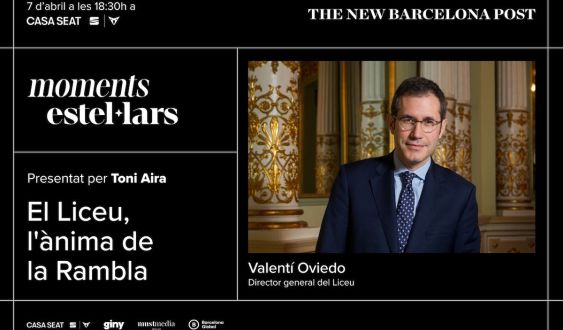
To outline this future and review this trajectory, the general director of the Liceu, Valentí Oviedo, will star in the next event of Moments Estel·lars. The new session of the cycle, organized by The New Barcelona Post, will take place on April 7 at 6:30 p.m. at Casa Seat, where Oviedo will converse with journalist and UPF-BSM professor Toni Aira. To attend as an audience member and be able to ask Oviedo questions, free prior reservation is required.
Under the name of El Liceu, the soul of La Rambla, the session will look at the future of the Liceu with Oviedo, taking a journey from its origin, linked to the surroundings of La Rambla from the beginning. The seed of what is now the emblem of lyricism germinated in 1837 in the current Portal de l'Àngel, and shortly after it was decided to build a new building to house the institution in an old convent, located on La Rambla, which had been opened less than 80 years earlier following the layout of the medieval wall.
Since the first stone of the Liceu was laid in 1845 until today, its stage has hosted the most prestigious performers of each moment; it has acted as a lever from which to elevate local talents; it has housed great productions, and has even seen how flames have engulfed the Liceu not once, but twice. The first, 14 years after the new building was inaugurated, when in 1861 a fire started in the tailoring shop completely destroyed the hall and the stage; the second, in 1994, after which it was rebuilt again. It reopened in 1999 with Turandot, under the stage direction of Núria Espert, and once again positioned itself as a benchmark in lyricism.
Now, the Liceu looks to the future accommodating classical opera and new formats that appeal to its usual audience and new spectators. How does the institution plan to reach these new audiences while remaining faithful to its essence? How does the Liceu want to position itself in the future? How does it want to cross its borders? How can it accommodate an institution that grows more and more, also with new educational and social proposals? Perhaps, one answer is to open up beyond its historic walls through a second venue, and what better place in Barcelona than to do it by the sea, specifically, in another historic enclave of the city and where La Rambla flows into: the Port Vell.
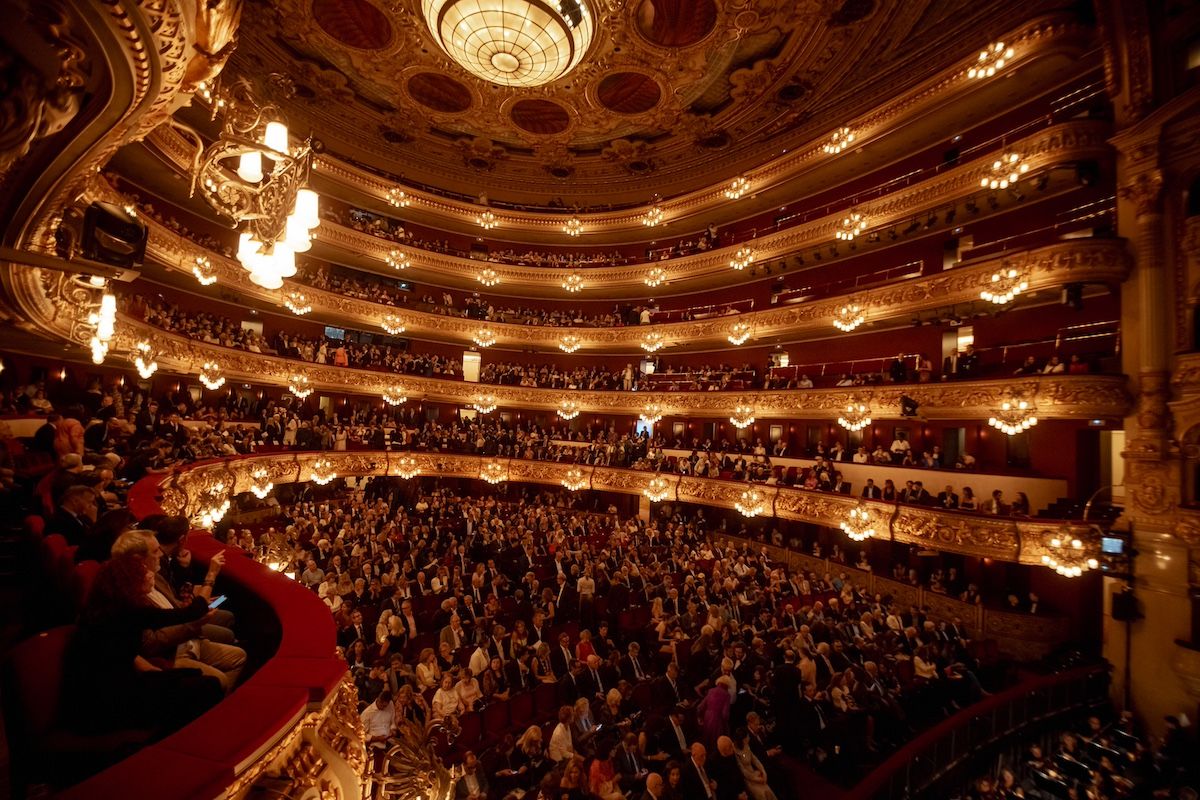
The project, which was announced two years ago initially planned for the old Imax space, was halted by the celebration of the America's Cup, and has been reactivated after the competition and after it was ruled out that it would be held again in the city. It was a few days later, at the end of October, when the Port of Barcelona and the theater signed an agreement to take steps forward in the concretization of the future Liceu Mar, which no longer has the Imax as its only possible location. And it is that, after the America's Cup gave the building a second life with a dissemination center about the competition, it is no longer so clear that the old Imax is condemned to demolition. Thus, new possibilities open up for the Liceu to expand its space, which will be addressed with Oviedo in Moments Estel·lars, in a session organized, as usual, with the collaboration of Casa Seat, Must Media Group and Barcelona Global.
Oviedo has been at the helm of the Liceu's management as general director since 2018. Born in Manresa in 1977, he is also a member of the general board of the European association Opera Europa since 2021. The general director, who has extensive experience in the management of cultural facilities, graduated in Business Administration from the Universitat Autònoma de Barcelona (UAB), and has an MBA from IE Business School and a management development program (PDD) from IESE.
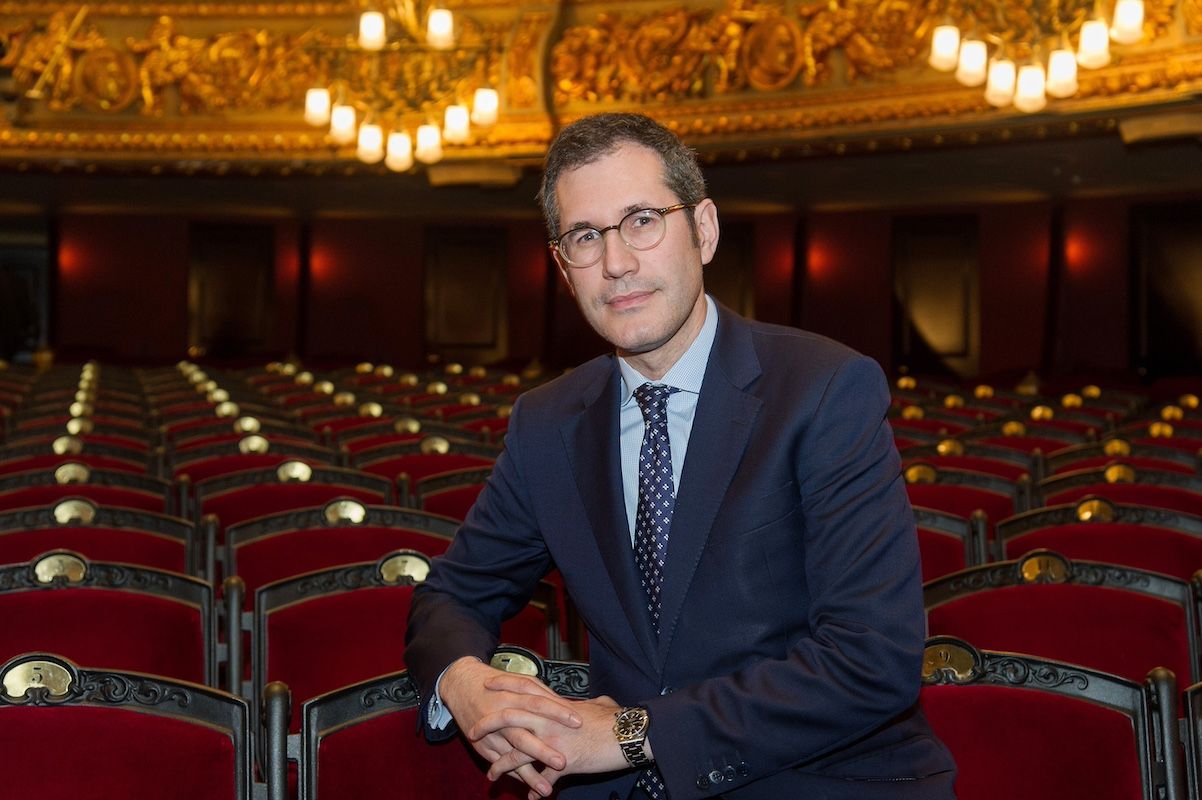
Through his training, he began his career in the finance and marketing areas of multinational companies in the industrial and mass consumption sectors, until he entered the cultural field when in 2008 he became director of the municipal company Manresana d'Equipaments Escènics, responsible for the management of the Kursaal Theater and the Conservatori Theater in Manresa.
Once within the cultural sphere, there was no turning back. Oviedo was appointed in 2013 manager of the L'Auditori i l' OBC consortium, a position he held until 2016, when he was designated manager of the Institut de Cultura de Barcelona (Icub). Oviedo, who is a member of the City Council's Advisory Committee on Creativity, has collaborated as a teacher in finance and marketing at the University of Barcelona (UB) and has been a member of the board of the Association of Cultural Managers of Catalonia, among other entities linked to culture.
Add The New Barcelona Post as your preferred Google source for free
Stay informed with the latest news.